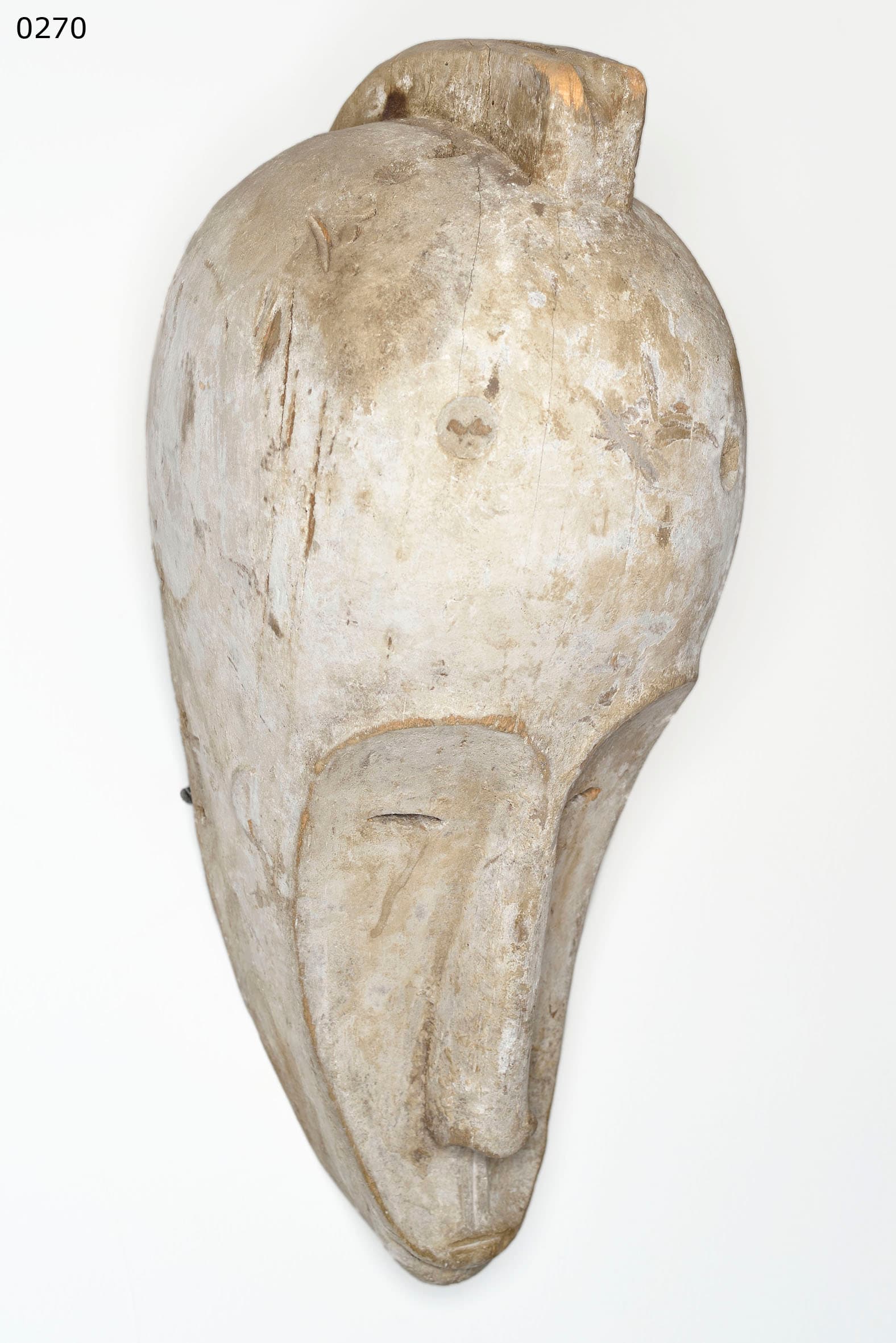
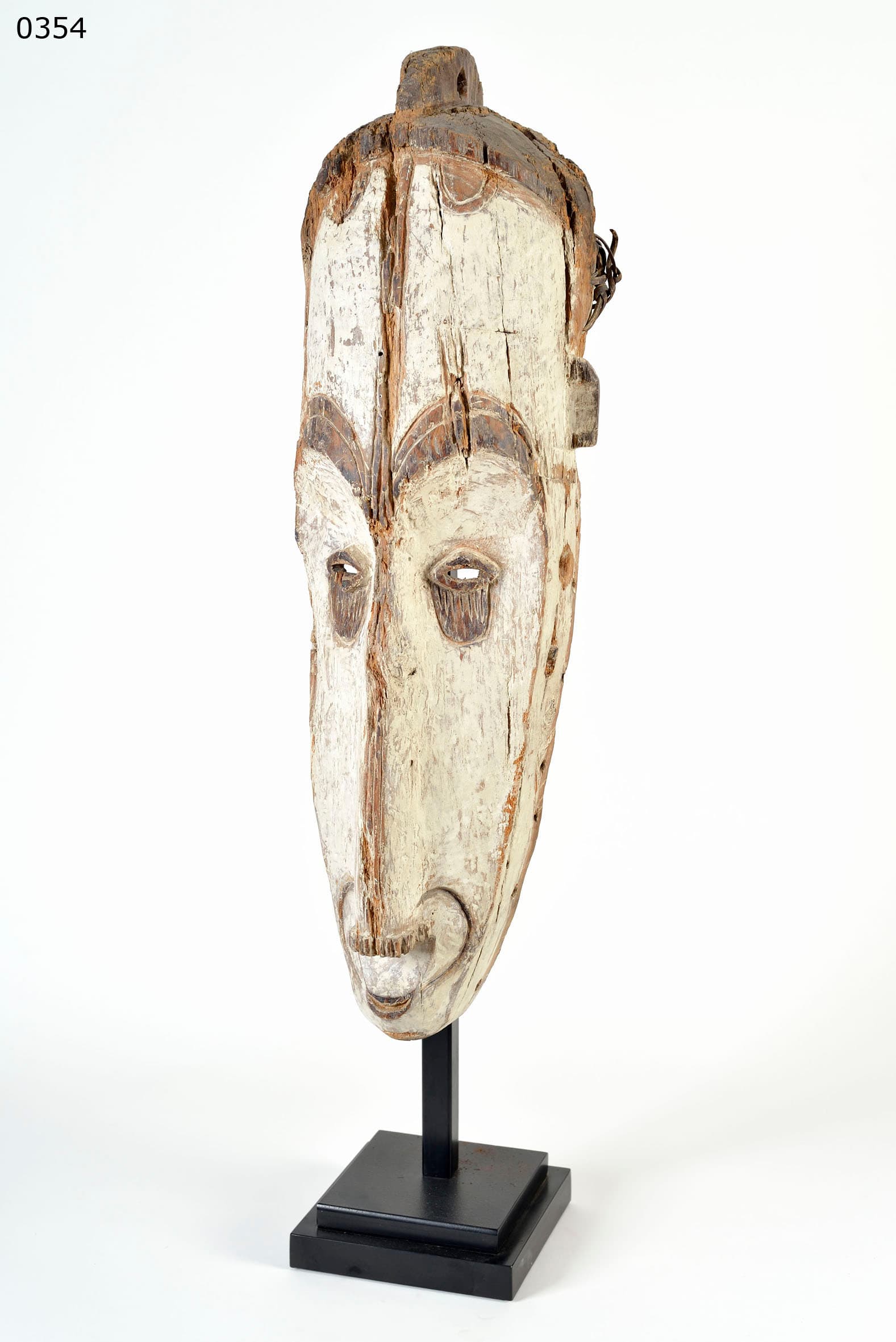
Eine elegante, langgestreckte Fang Ngil-Maske (Mitte 20. Jh., 43 cm) aus Gabun - stark mit weißem Kaolinpigment überzogen, mit hochgewölbten Augenbrauen, schmal geschlitzten Augen, einer scharf geschnitzten, außergewöhnlich langen Nase und horizontalen geometrischen Skarifikationen auf den Wangen. Die Ränder weisen erhebliche Gebrauchsspuren und Pigmentverluste auf, so dass das darunter liegende oxidierte Holz zum Vorschein kommt.
1. Die Ngil-Ästhetik der weißen Eleganz
Diese Maske zeigt die charakteristischen Merkmale der Fang Ngil-Ästhetik.
- Extreme geometrische Streckung: Der Bildhauer hat einen Zustand tiefer jenseitiger Gelassenheit angestrebt - das Gesicht ist zu einem ausgeprägten Oval gestreckt, das von der langen, geschwungenen vertikalen Linie der Nase dominiert wird, die sich mit der stark gewölbten, durchgehenden Linie der Stirn kreuzt.
- Kaolin als Zeichen der Geisterwelt: Die weiße Färbung, die mit heiligem Kaolin-Ton (Pemba) erzielt wurde, gilt traditionell als Verweis auf die Geisterwelt - sie kennzeichnet das Gesicht als hellsichtigen Vorfahren oder als mächtiges Wesen, das von den Toten zurückkehrt, um unter den Lebenden zu wandeln.
2. Soziale Kontrolle und die Ahnengerichtsbarkeit
Trotz ihres friedlichen Aussehens sind weißgesichtige Fang-Masken eng mit gesellschaftlicher Kontrolle und Gerechtigkeit verbunden.
- Nächtlicher Inquisitionseinsatz: Historisch gesehen wurden diese Masken von der Geheimgesellschaft Ngil (und später von verwandten Anti-Hexerei-Bewegungen in der Mitte des 20. Jahrhunderts) bei nächtlichen Zeremonien mit Fackeln getragen.
- Lügen durchschauen: Der Darsteller, der durch sein Kostüm übernatürlich groß wirkte, fungierte als Inquisitor - der strenge, teilnahmslose Gesichtsausdruck der Maske und die schmalen, schielenden Augen suggerierten, dass der Geist durch Lügen und Täuschung "hindurchsehen" konnte, um versteckte Zauberer zu einem Geständnis zu bewegen.
3. Authentischer Kaolinabbau
Die Oberfläche weist entsprechende Alterungsmerkmale auf.
- Natürlich geriebenes Pigment: Das weiße Kaolin-Pigment wurde nicht mit synthetischen Bindemitteln aufgemalt - es wurde in das Holz gerieben; über Jahrzehnte hat sich diese fragile Schicht natürlich abgebaut, getrocknet und abgeblättert.
- High-Point Wear Reveals Heartwood: Die hohen Punkte der Nase, Stirn und Kinn wurden vollständig durch die Handhabung nackt gerieben, die warme tief oxidiert dunkelbraun Kernholz offenbart; der innere Rand zeigt dunkle ölige Schweiß-Flecken, was auf eine Nutzung als funktionelles, getanztes Objekt vor dem Eintritt in den Kunstmarkt hindeutet.
Zusammenfassung
Diese langgestreckte Fang-Maske strahlt eine tiefe spektrale Gelassenheit aus und ist eine Studie der geometrischen Abstraktion in Gabun. Die tief verblichene Kaolinpatina und die inneren Gebrauchsspuren sprechen für eine aktive Nutzung im Kontext der Ahnenjustiz.
KI-unterstützt erstellt aus Sammlungsgutachten, Objektfotografie und eigener Recherche, redaktionell geprüft. Fehler sind möglich — Hinweise darauf sind uns willkommen. Zum Verfahren →