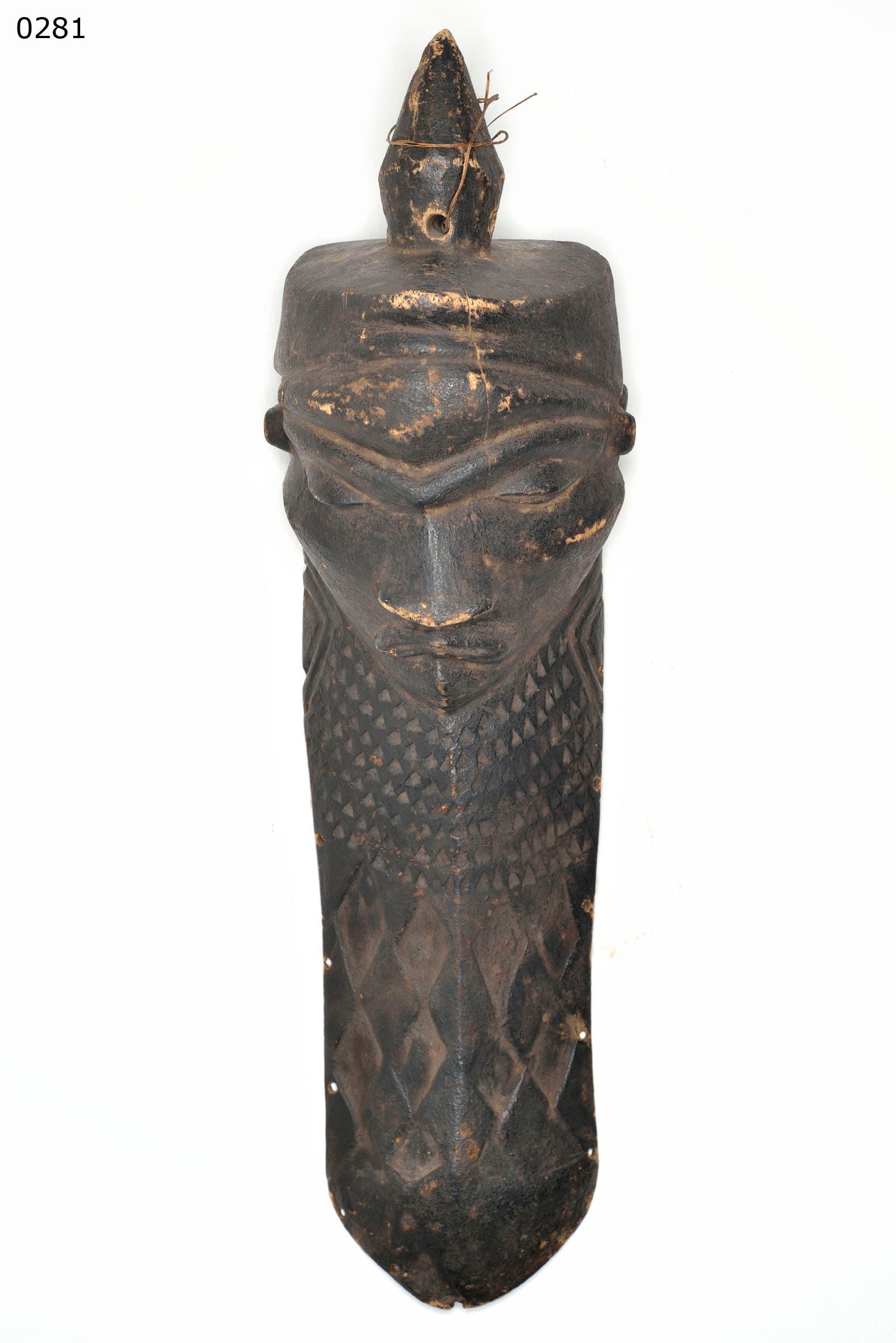
Eine auffällige, kompakte Pende Mbuya Gesichtsmaske (Mitte 20. Jh., 26 cm) aus der DR Kongo – eine klassische Ausprägung der herzförmigen Pende-Struktur, mit einer durchgehenden, schweren V-förmigen Augenbraue, nach unten gewölbten Augen und einer scharf vorspringenden dreieckigen Nase. Das trockene, tief gealterte Holz ist mit abwechselnden geometrischen Zonen aus verblichenen roten, weißen und dunklen Erdpigmenten bemalt.
1. Die Mbuya-Ästhetik und Gesichtsgeometrie
Die Zentral-Pende sind weltweit für die Mbuya-Maskierungstradition bekannt, die auf einer sehr spezifischen, standardisierten Gesichtsgeometrie beruht.
- V-Unibraue + Dreiecksnase: Das bestimmende Merkmal - die schwere, ungebrochene Brauenlinie, die sich zum Nasenrücken hin absenkt.
- Schlafzimmeraugen-Introspektion: Die schweren, nach unten gerichteten Augen projizieren eine Aura von Unnahbarkeit, Introspektion und altertümlicher Feierlichkeit, indem sie geometrische Volumen manipulieren, um einen intensiven psychologischen Ausdruck zu erzeugen.
2. Mukanda-Initiation und Dorftheatralik
Die Mbuya-Maskerade ist ein spektakuläres theatralisches Ereignis, mit dem die erfolgreiche Rückkehr der Jungen aus den Mukanda (zermürbende, isolierte Beschneidungs- und Initiationslager) gefeiert wird.
- Dorfarchetypen-Darsteller: Die Masken stellen eine große Anzahl von Dorfarchetypen, Vorfahren und komödiantischen Figuren dar - den Häuptling, den Flirt, den Wahrsager, den Narren.
- Satirische Pantomime: Die Darsteller führen aufwendige satirische Pantomimen auf, die die Gemeinschaft unterhalten und gleichzeitig die moralischen Grenzen und sozialen Normen für die neu initiierten Männer verstärken.
3. Pigment Oxidation und Performance Abnutzung
Die Patina legt einen Gebrauch bei rituellen Festen nahe.
- Gebundene einheimische Pigmente: Natürliche Polychromie (weißes Kaolin, rotes Tukula, schwarzer Ruß) ist tief verblasst, abgeblättert und hat sich mit der Zellstruktur des trockenen Holzes verbunden – ein Prozess, der für traditionell hergestellte Stücke charakteristisch ist.
- Dusty Matte Reibung Oberfläche: Sie verzichtet auf kommerziellen Lack und bewahrt stattdessen eine staubige, matte Oberfläche mit deutlichen Reibungs- und Verschleißspuren entlang des Kinns und des Innenrands, was auf eine tatsächliche Verwendung durch einen Tänzer hindeutet.
Zusammenfassung
Diese Maske der Pende Mbuya zeigt eine klassische Umsetzung der dramatischen V-förmigen Gesichtsgeometrie und des für die kongolesische Porträtmalerei charakteristischen Ausdrucks mit schweren Lidern. Die tief verblichenen einheimischen polychromen Pigmente und die Gebrauchsspuren machen sie zu einem anschaulichen Zeugnis des Mukanda-Initiationszyklus.
KI-unterstützt erstellt aus Sammlungsgutachten, Objektfotografie und eigener Recherche, redaktionell geprüft. Fehler sind möglich — Hinweise darauf sind uns willkommen. Zum Verfahren →