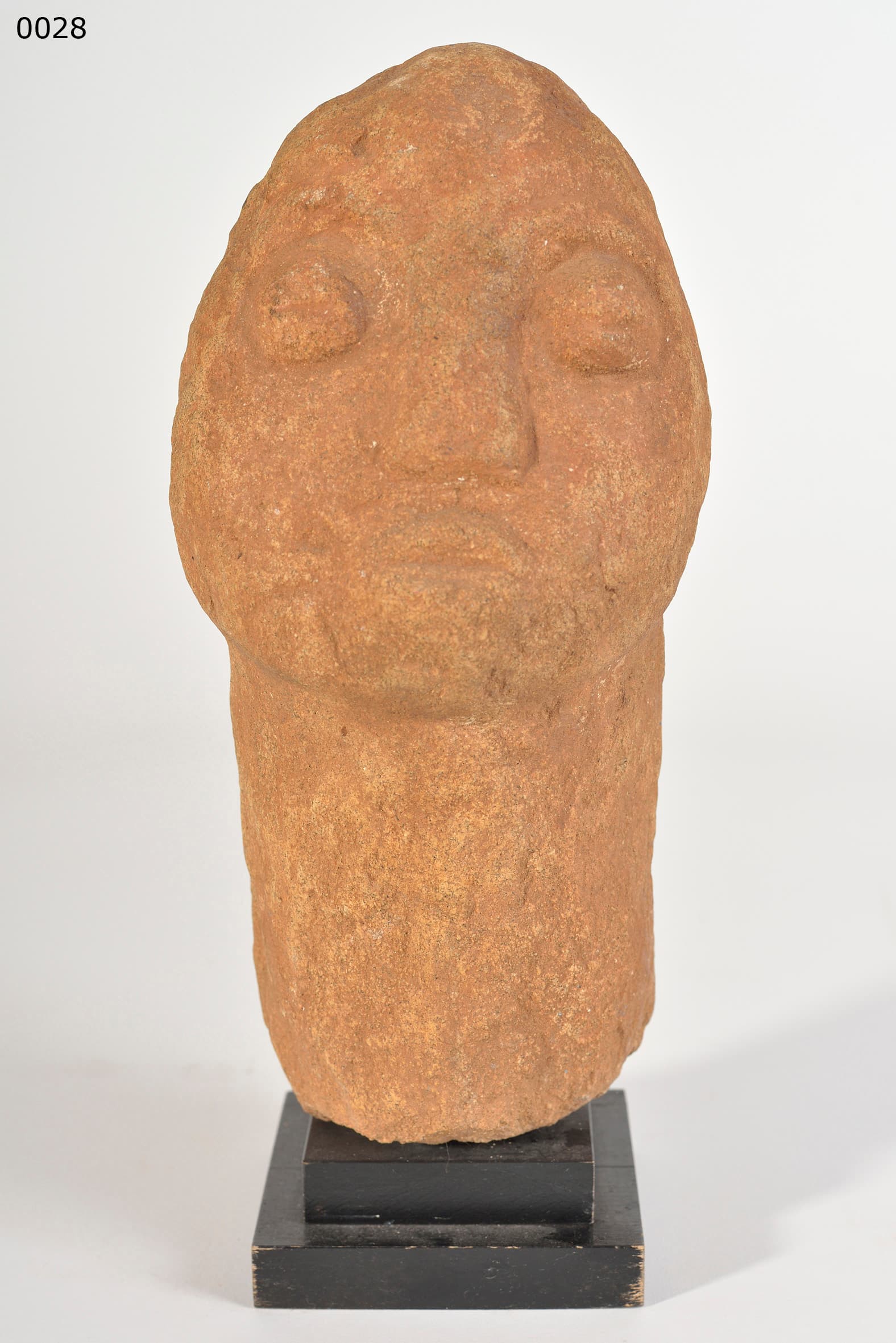
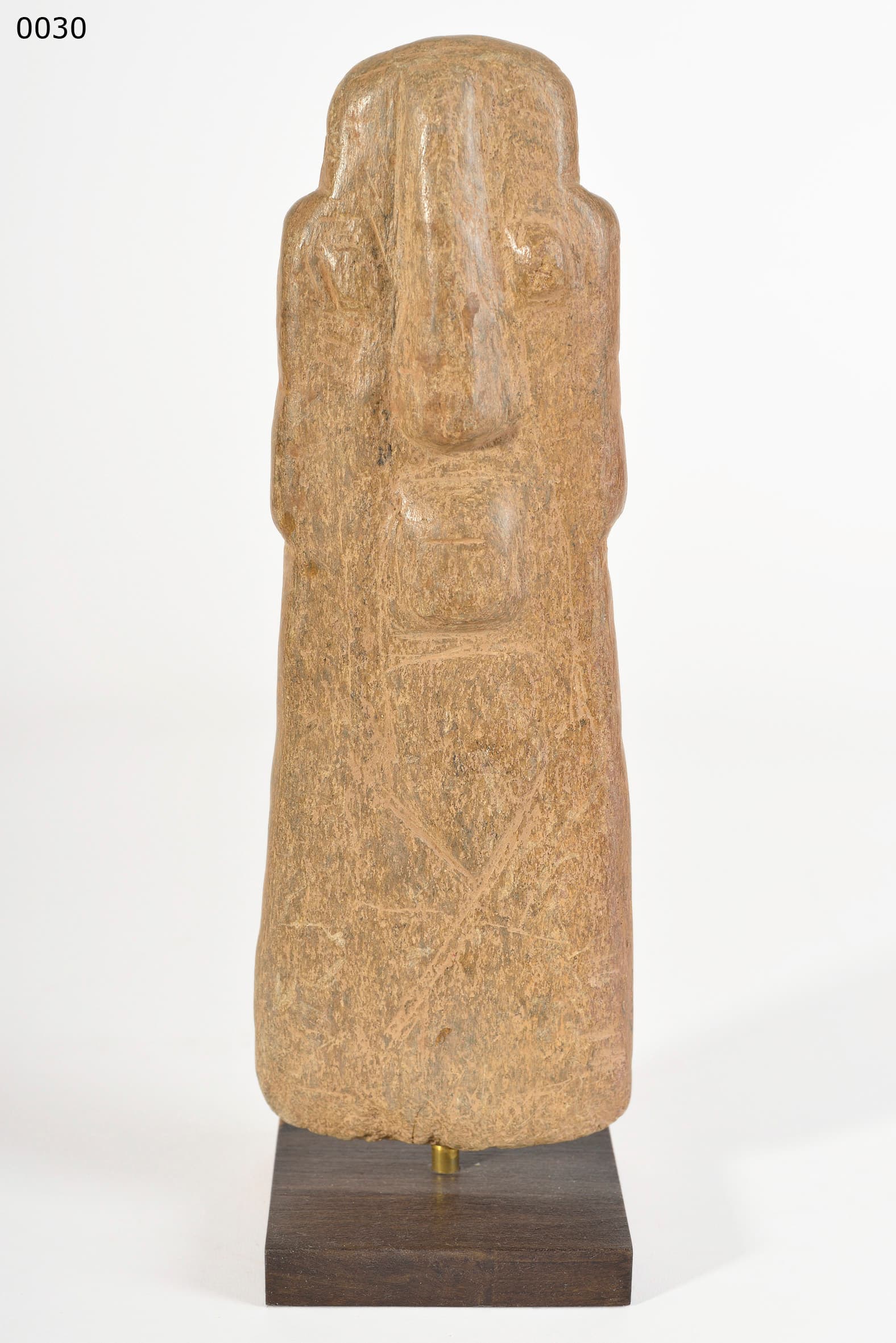
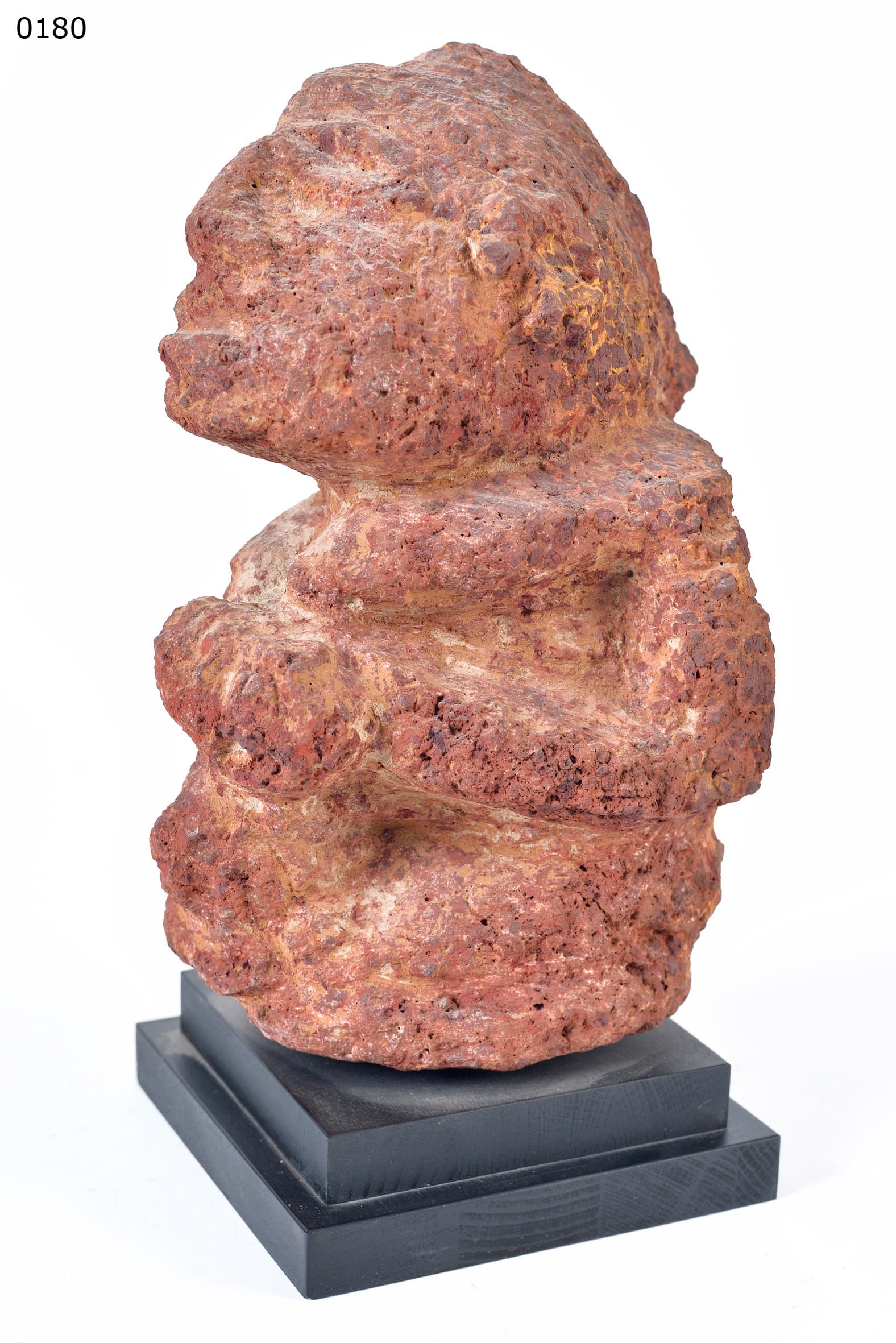
Diese archaische Figur ist aus dichtem, grobem, rötlich-braunem Stein gemeißelt und zeigt eine stark verkürzte, phallusförmige menschliche Gestalt mit rundem Kopf, einem schwachen horizontalen Mund-Nasen-Rücken und ohne ausgeprägte Gliedmaßen. Der Stein ist stark zerklüftet und vollständig mit einer alten, verkalkten Erdschicht und starker geologischer Verwitterung überkrustet.
1. Ästhetischer Stil und regionale Charakteristika
Steinmetzarbeiten sind in Afrika südlich der Sahara ein seltenes Phänomen, was diesem archaischen, mit den Kurumba assoziierten Stück eine besondere Bedeutung verleiht. Die Ästhetik ist von einem ausgeprägten Minimalismus geprägt. Der Bildhauer reduzierte die menschliche Form auf einen massiven geometrischen Block und verwendete nur tiefe Schnitte, um die Stirn und den Kiefer anzudeuten. Die Schwierigkeit, dichten Stein ohne Metallwerkzeuge zu bearbeiten, legte diesen reduktionistischen Ansatz nahe. Das Ergebnis ist ein Werk, das Beständigkeit und ursprüngliche Schwere ausstrahlt.
2. Rituelle Funktion und religiöse Bedeutung
Diese Steinfiguren, die mit alten Nekropolen oder Schreinen in der Sahelzone assoziiert werden, dienten vermutlich als Grabmale oder Ahnenabbildungen. In den frühen animistischen Gesellschaften war Holz dafür bekannt, zu verrotten und von Termiten befallen zu werden. Um den Geist eines mächtigen Vorfahren dauerhaft in der Erde zu verankern, wurde sein Bildnis daher oft aus beständigem Stein gehauen. Direkt in den Boden eingelassen, diente die Figur als Medium, das es den Nachkommen ermöglichen sollte, Trankopfer zu bringen und den landwirtschaftlichen Segen der Erdgeister zu erbitten.
3. Physische Patina und Altersnachweis
Die Altersschätzung des 12. bis 16. Jahrhunderts ist mit dem extremen lithischen Verfall des Objekts vereinbar. Die ursprünglichen Werkzeugspuren, Rillen und feinen Gesichtsdetails wurden durch den Einfluss von Wind, Wasser und Reibung am Boden im Laufe der Zeit stark geglättet. Der Stein besitzt eine glatte, wellenförmige Patina, deren Poren mit verkalkten Mineralien und sahelischer Erde gefüllt sind – ein Grad der geologischen Verwitterung, der für eine langfristige Lagerung im Boden und eine archäologische Herkunft spricht.
Zusammenfassung
Diese steinerne Grabfigur gilt als ein seltenes Zeugnis der sahelischen Steinmetzkunst und verweist auf das Streben nach geistiger Beständigkeit. Ihre strenge geometrische Abstraktion und die tiefgreifende geologische Verwitterung machen sie zu einem bemerkenswerten Artefakt des frühen Westafrika.
KI-unterstützt erstellt aus Sammlungsgutachten, Objektfotografie und eigener Recherche, redaktionell geprüft. Fehler sind möglich — Hinweise darauf sind uns willkommen. Zum Verfahren →