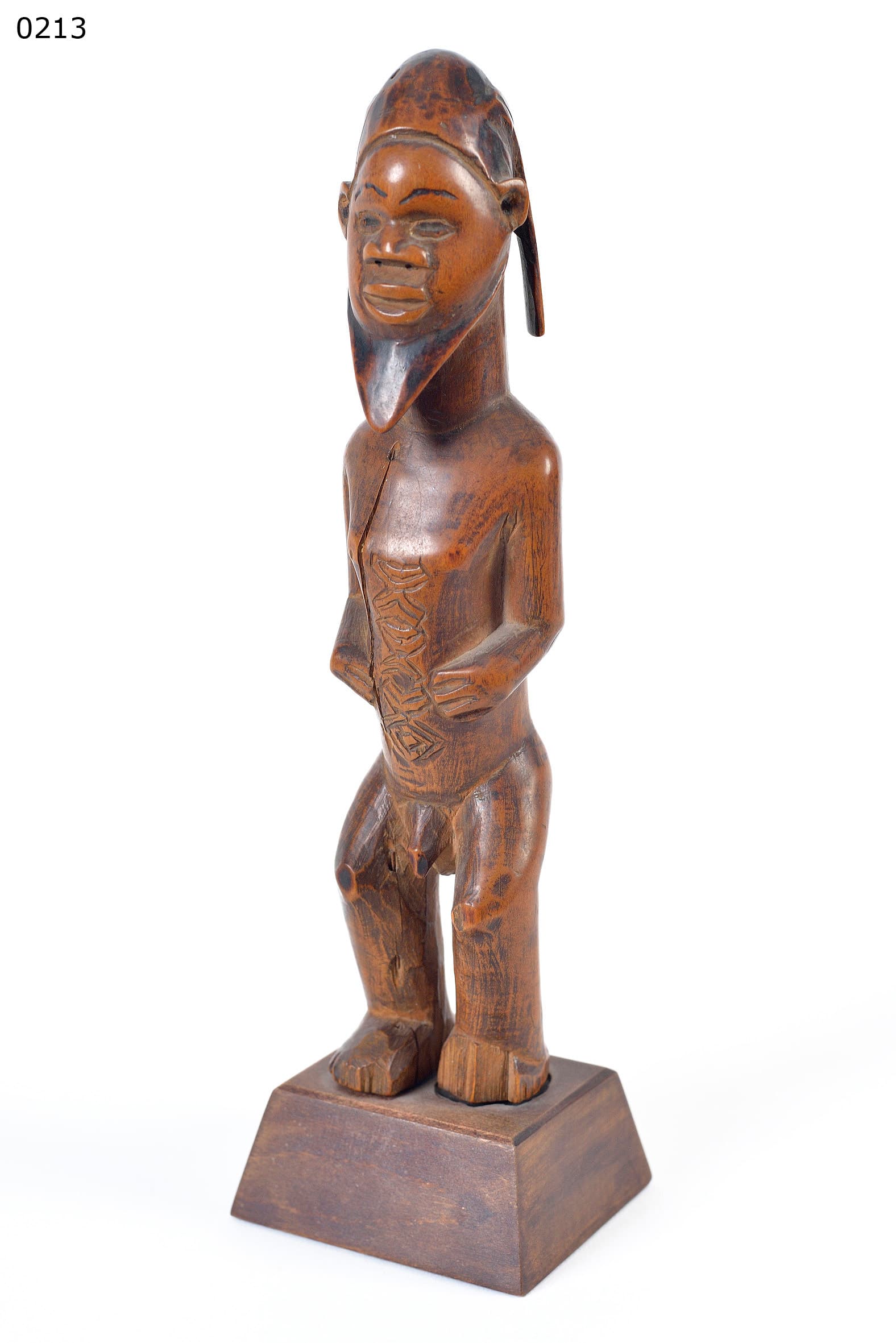
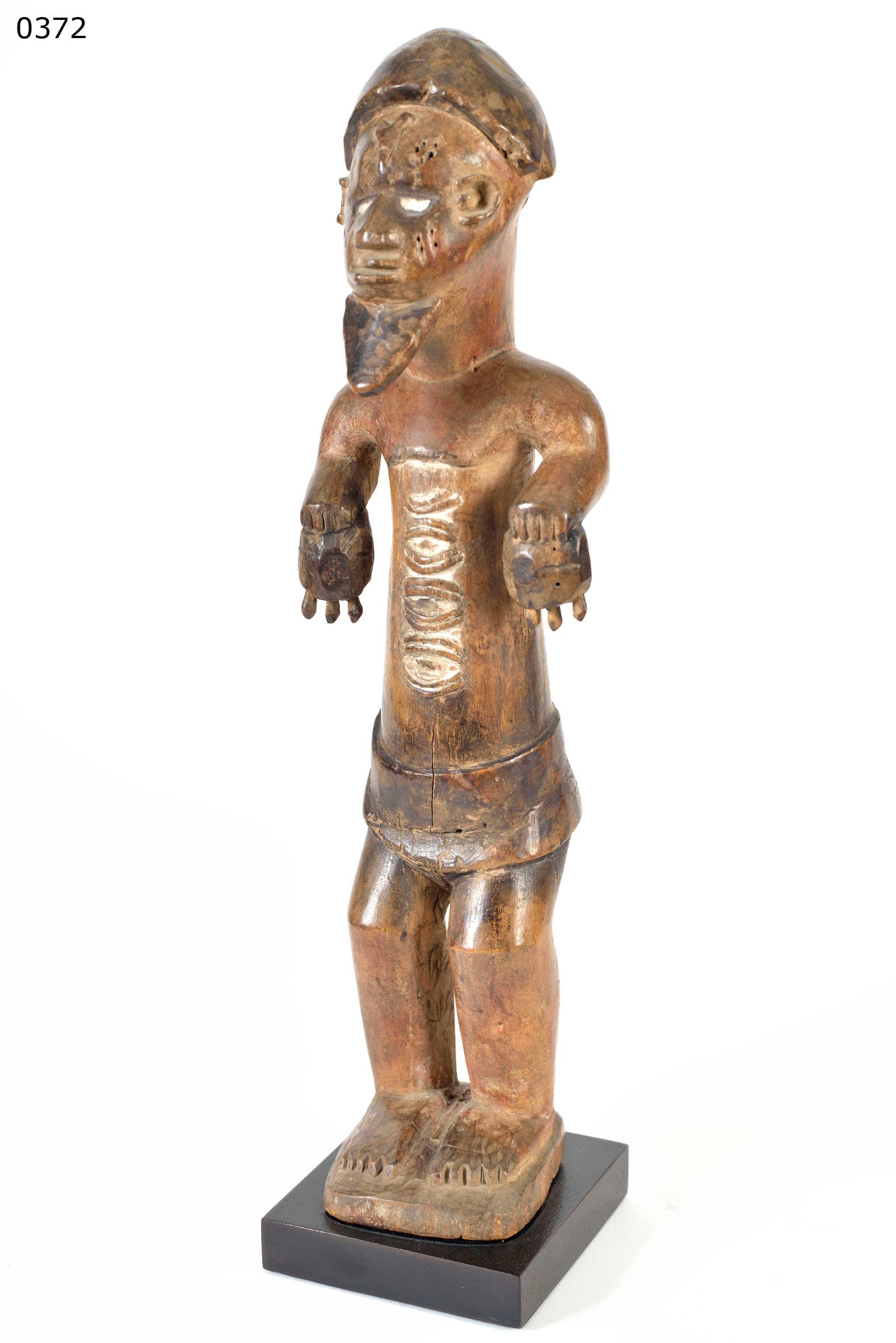
Diese auffällige Gesichtsmaske aus Holz hat ein längliches Profil, stark verdeckte Augen, eine markante kantige Nase und einen vorspringenden, offenen Mund mit sichtbaren geschnitzten Zähnen. Das dunkle, oxidierte Holz weist eine tiefe, krustige zeremonielle Patina auf, mit alten, unregelmäßigen Austrocknungsrissen, die über die Stirn verlaufen.
1. Ästhetischer Stil und regionale Merkmale
Obwohl auf dem Arbeitsblatt Nigeria vermerkt ist, wird der Name Bembe traditionell mit Zentralafrika in Verbindung gebracht. Die aggressive, kantige Schnitzerei dieser Maske steht jedoch in engem Zusammenhang mit den wilden, expressionistischen Traditionen der Hochebene von Cross River oder Benue River in Nigeria. Der Bildhauer hat die kinetische Aggression in den Vordergrund gestellt, indem er den Kiefer nach vorne schob und scharfe, gefletschte Zähne schnitzte. Die tiefliegenden, ausgehöhlten Augen erzeugen intensive, dramatische Schatten, die bei einem Tanz im Feuerschein furchterregend gewirkt hätten.
2. Rituelle Funktion und Geheimbundkontext
Masken mit derart offen zur Schau gestellten Zähnen und aggressiver, kantiger Geometrie werden typischerweise mit wilden Buschgeistern oder richterlichen Geheimgesellschaften in Verbindung gebracht. Die Maske wird bei nächtlichen Tänzen, Einweihungen oder Beerdigungen mächtiger Männer getragen und dient dazu, die soziale Kontrolle zu verstärken. Die gefletschten Zähne sind eine universelle Warnung vor Hexerei und sozialen Übertretungen und ermöglichen es dem Träger, die ungezähmten, gefährlichen Kräfte der Wildnis zu kanalisieren, um das Dorf von bösartigen Energien zu reinigen.
3. Physische Patina und Altershinweise
Die Oberfläche der Maske zeigt Spuren, die für eine langfristige rituelle Verwendung sprechen. Das Holz ist von einer dicken, trockenen und ungleichmäßigen Kruste aus Ruß, Schweiß und Opfertränken umhüllt. Die tiefen Austrocknungsrisse auf der oberen Kuppel sind stabil und mit altem Staub gefüllt, was nahelegt, dass das Holz über viele Jahrzehnte hinweg getrocknet und zusammengezogen wurde. Der innere Rand der Maske weist glatte, ölige Abnutzungsspuren auf, wo er wiederholt am Gesicht des Tänzers gerieben wurde.
Zusammenfassung
Diese heftig expressionistische Maske ist eine kraftvolle physische Manifestation der spirituellen Durchsetzung und der energy des Buschgeistes. Ihre aggressive, zahnartige Geometrie und die dicke, verkrustete Opferpatina machen sie zu einem hochaktiven, zeremoniellen Artefakt des frühen 20. Jahrhunderts.
KI-unterstützt erstellt aus Sammlungsgutachten, Objektfotografie und eigener Recherche, redaktionell geprüft. Fehler sind möglich — Hinweise darauf sind uns willkommen. Zum Verfahren →