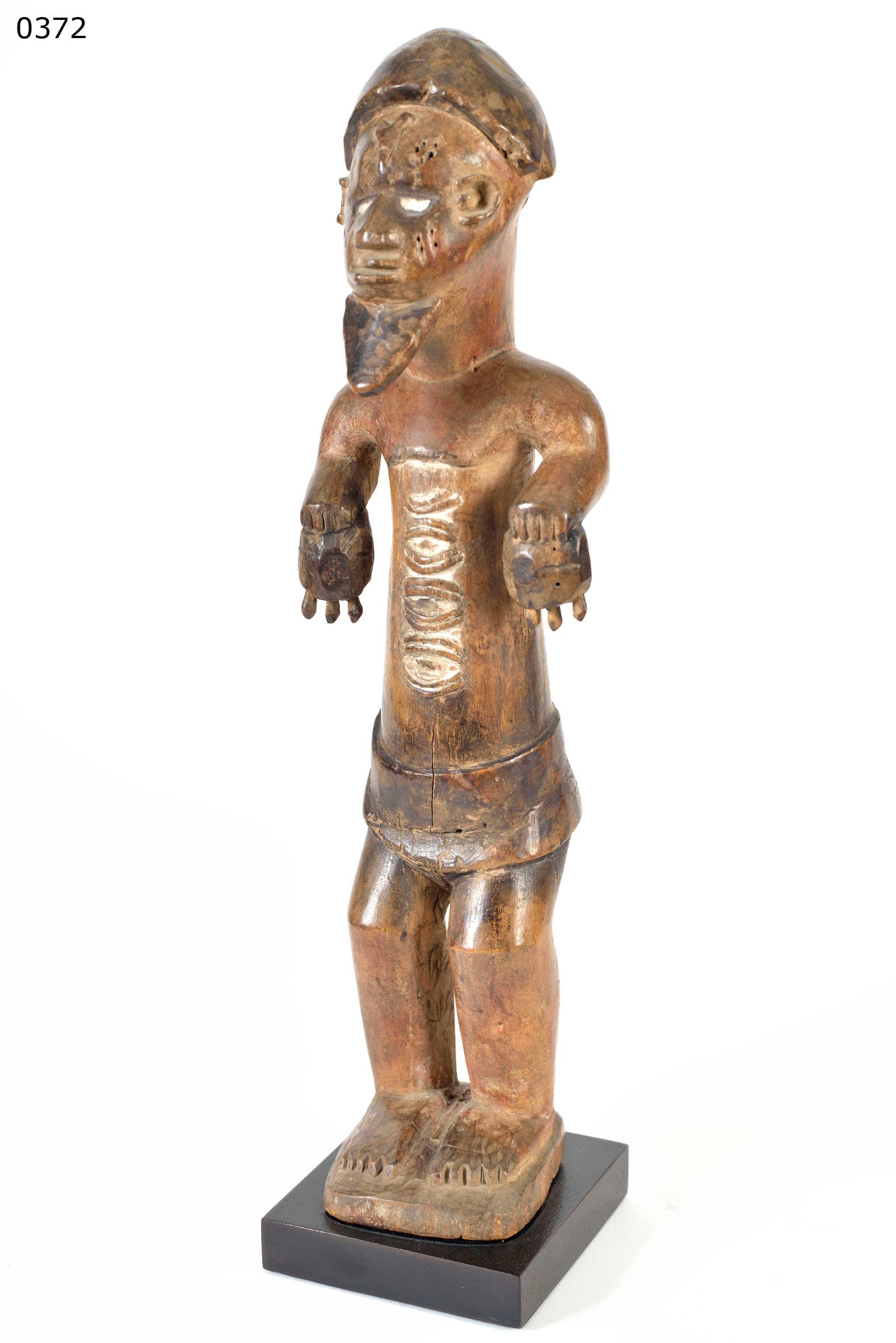
Eine kleine, fein detaillierte, stehende Holzfigur (wohl 1. Hälfte 20. Jh., 19 cm) von den Bembe aus der DR Kongo - ein hervorstehender, dreieckiger Bart, große Kaffeebohnen-Augen, komplexe, erhabene Skarifikationsmuster über dem Bauch, das dichte Holz ist zu einer glatten, dunklen Patina poliert.
1. Miniaturmonumente für die Ahnen
Die Bembe sind bekannt für ihre präzisen Miniaturskulpturen, die eine monumentale Wirkung entfalten können.
- Volumetrische Proportionen: Zu den klassischen Merkmalen der Bembe gehören ein großer, ausdrucksstarker Kopf, der die Weisheit betont, und muskulöse, leicht gebeugte Beine, die Bereitschaft und Vitalität signalisieren.
- Bart als Rang: Der ausgeprägte dreieckige Bart ist das visuelle Kennzeichen eines eingeweihten, geachteten Ältesten der Gemeinschaft - kein allgemeiner Mensch, sondern eine besondere Art von Autorität.
2. Kraftobjekte und die Gefäße der Ahnen
Bembe-Figuren fungieren traditionell als Kraftobjekte oder Ahnengefäße, vergleichbar mit den minkisi der Kongo-Tradition.
- Weihe durch einen Nganga: Ein Ritualspezialist weiht die Figur, indem er magische Substanzen (bilongo) in einen Hohlraum - in der Regel in der Bauch- oder Analregion - einführt, um das Objekt zu aktivieren.
- Anker für einen Geist: Einmal aufgeladen, verankert die Statue einen Ahnengeist, den der Besitzer um Schutz vor Hexerei, Erfolg bei der Jagd oder Heilung bitten kann.
3. Keloid-Narifikation und taktile Politur
Die erhabenen Bauchmuster und die glänzende Oberfläche dokumentieren die häusliche Geschichte dieser Figur.
- Kulturelle Markierungen: Keloidnarben stehen für Zivilisation, Ausdauer und Stammesidentität.
- Nicht opferbedingte Abnutzung: Die glatte, glänzende, dunkle Patina an den hohen Punkten spricht für eine intime, kontinuierliche Handhabung – ein Hinweis auf ein privat verehrtes Familienobjekt, das stilistisch dem frühen 20. Jahrhundert nahesteht, und nicht auf ein Opferaltarstück.
Zusammenfassung
Diese männliche Bembe-Figur, die eine bemerkenswerte skulpturale Spannung in eine Miniaturform bringt, gilt als ein charakteristisches Beispiel kongolesischer Ahnenschnitzerei. Die detaillierten Skarifikationen und die glänzende Patina machen sie zu einem beachtenswerten ethnografischen Artefakt.
KI-unterstützt erstellt aus Sammlungsgutachten, Objektfotografie und eigener Recherche, redaktionell geprüft. Fehler sind möglich — Hinweise darauf sind uns willkommen. Zum Verfahren →