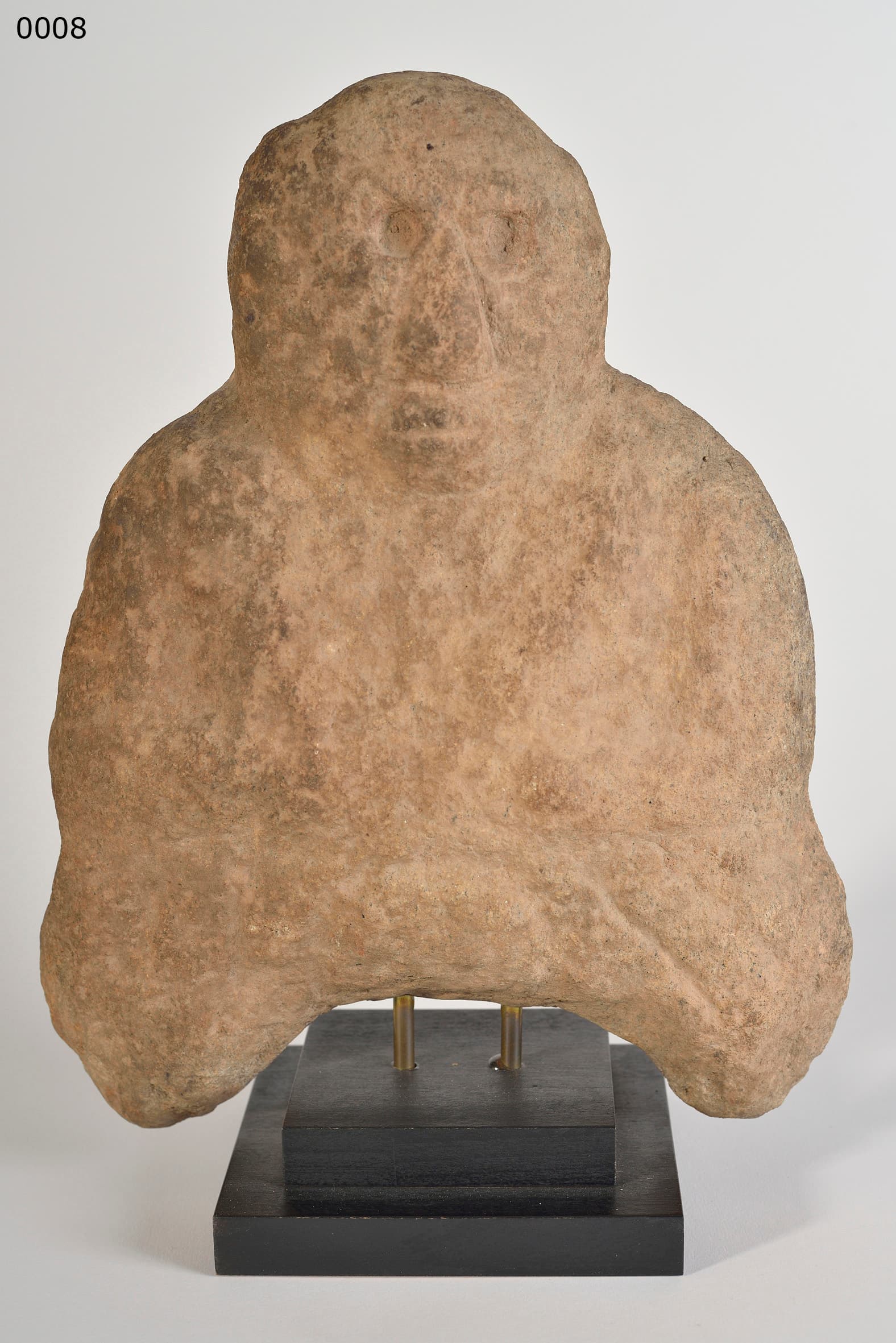
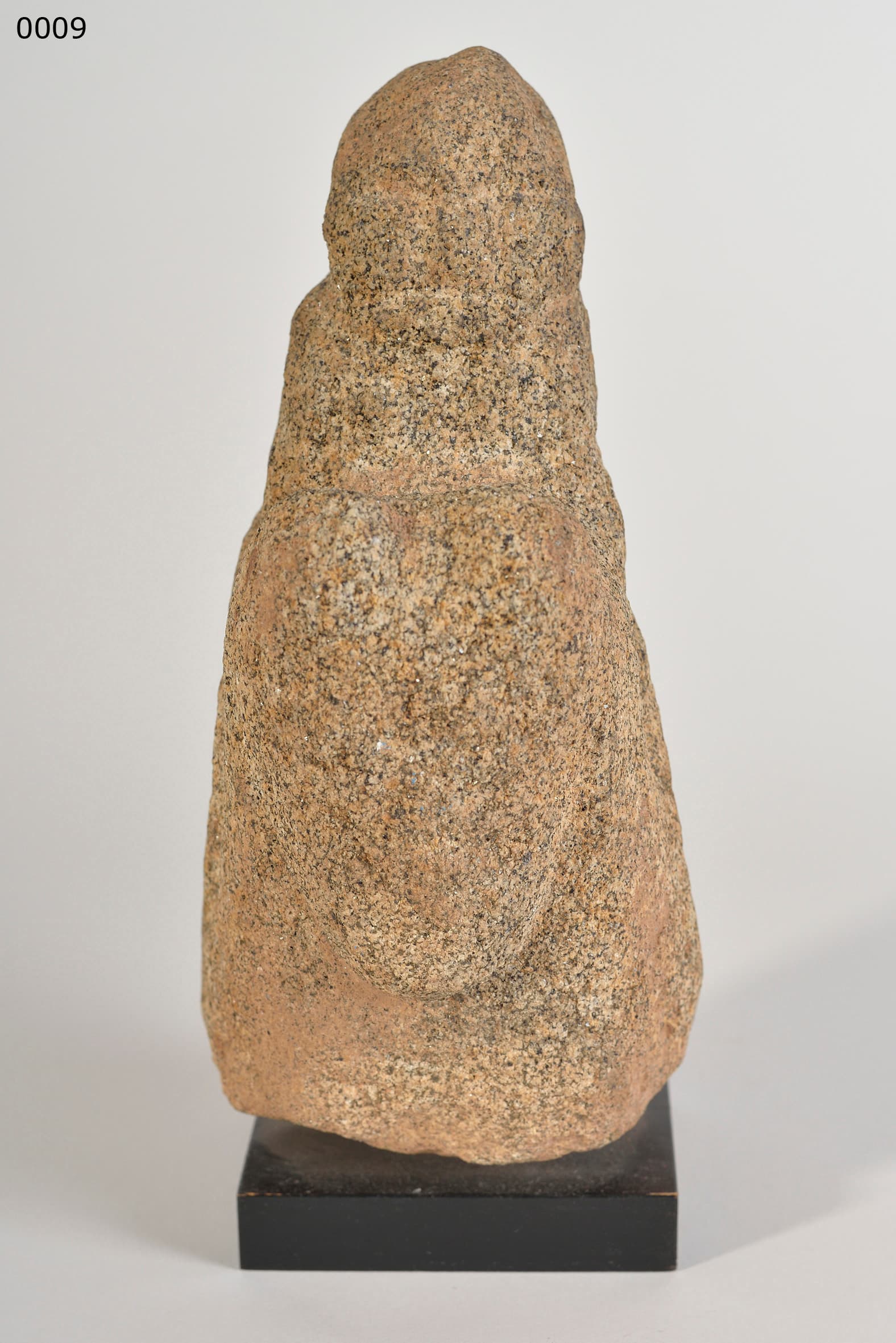
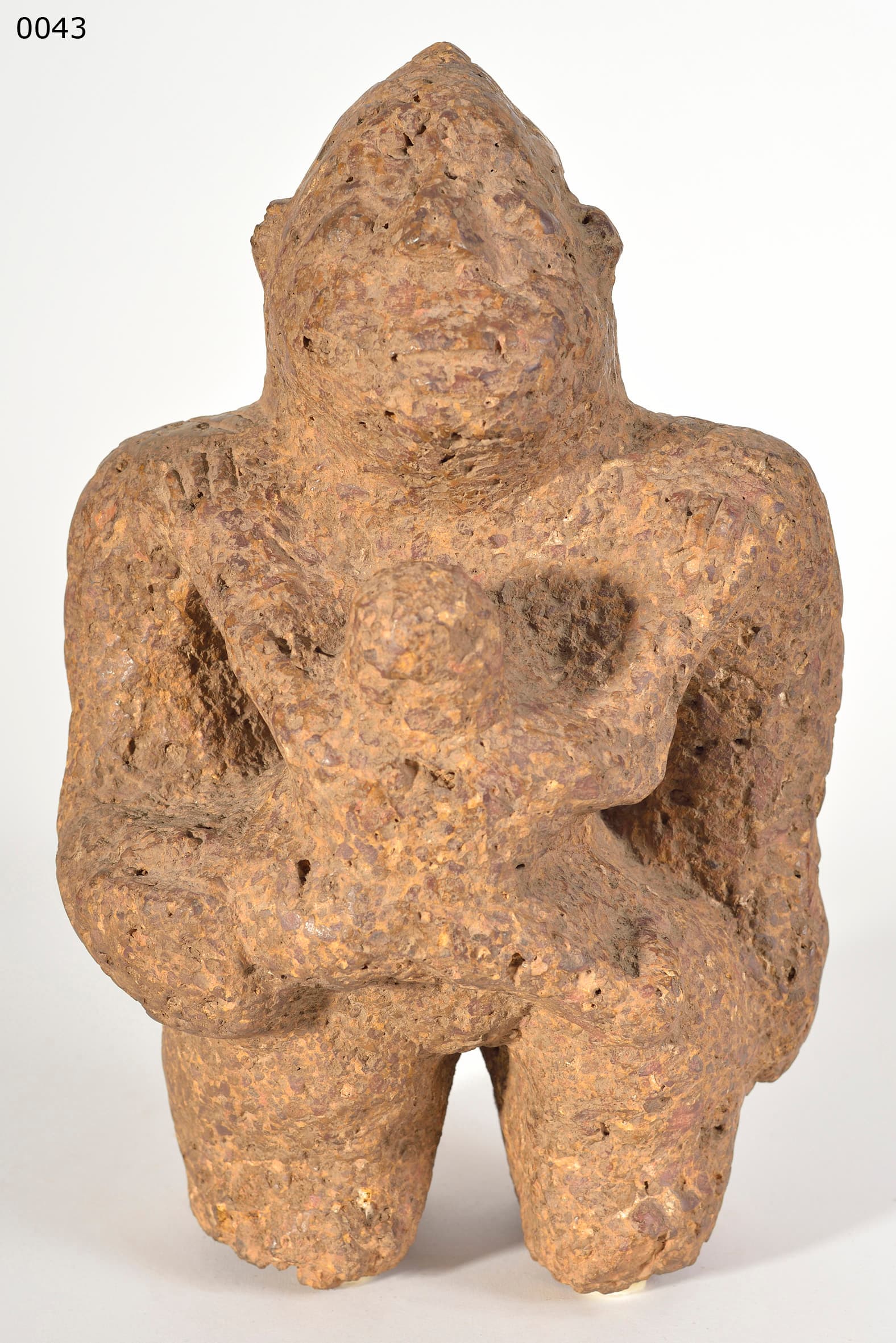
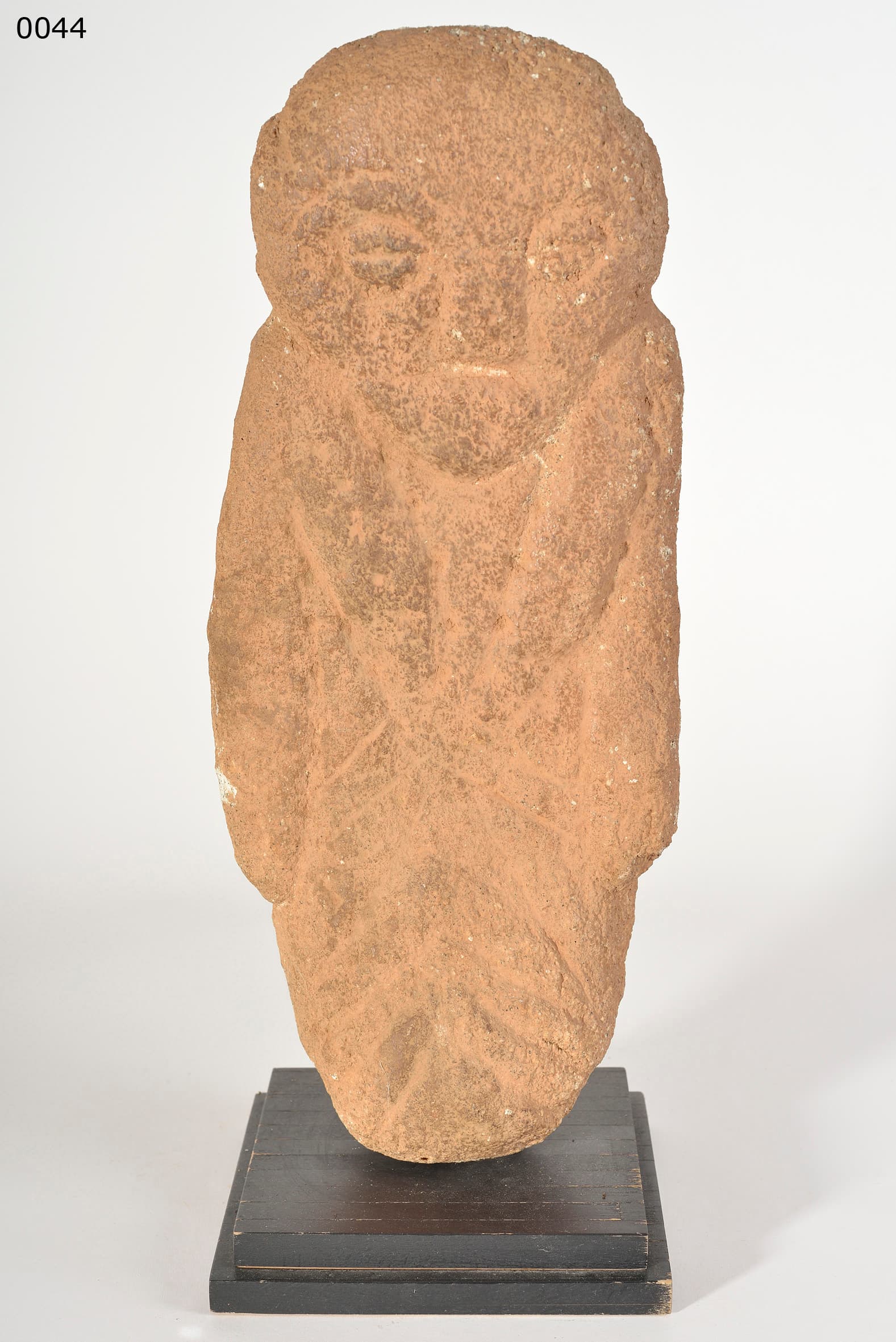
Diese antike, phallische Steinfigur zeigt einen verkürzten menschlichen Kopf mit ausgeprägter Stirn, einem vertikalen Nasenrücken und rudimentären Armen, die in flachem Relief gegen den säulenartigen Torso gemeißelt sind. Das schwere, graubraune Gestein ist durch tiefgreifende geologische Verwitterung und Kalkablagerungen vollständig abgerundet.
1. Ästhetischer Stil und regionale Eigenheiten
Die Nyonyosi gelten als die alten Ureinwohner der Region Burkina Faso, bevor sie von den eindringenden Mossi-Reichen assimiliert wurden. Ihre Steinmetzkunst gilt als selten und ist minimalistisch geprägt. Der Schnitzer hat das Porträt eines menschlichen Vorfahren mit einer reinen, phallischen Silhouette verschmolzen. Diese Dualität ist für die alte westafrikanische Ästhetik von zentraler Bedeutung: Das menschliche Gesicht identifiziert den spezifischen Vorfahren, während die phallische Säule die universelle, generative Kraft der Erde und die ungebrochene Kontinuität des Stammbaums symbolisiert.
2. Rituelle Funktion und religiöse Bedeutung
Diese schweren Steinsäulen, die in heiligen Hainen oder direkt auf den Erdgräbern prominenter Häuptlinge errichtet wurden, galten als Symbole der Beständigkeit. Im Gegensatz zu Holz, das mit der Zeit von Termiten zerfressen wird, sorgte Stein dafür, dass der Geist des Vorfahren dauerhaft in dem jeweiligen Gebiet verankert war. In Zeiten der Dürre oder Hungersnot versammelten sich die Nachfahren um diese Säulen und gossen Trankopfer auf den Stein, um die Geister der tiefen Erde zu "füttern" und um landwirtschaftliche Fruchtbarkeit und Überleben zu bitten.
3. Physische Patina und Altersnachweis
Die Datierung auf das 12. bis 16. Jahrhundert wird durch die tiefgreifende geologische Erosion des Objekts gestützt. Die einstmals scharfen Schnitte der Nase und der Arme mit Flachrelief sind durch Jahrhunderte von Wind und Regen völlig aufgeweicht und abgestumpft. Die poröse Steinmatrix ist mit nicht entfernbaren, verkalkten Mineralablagerungen und gehärteter sahelischer Erde gesättigt. Dieser Grad an lithischer Glättung und Mineralisierung ist schwer künstlich herbeizuführen und spricht für einen antiken archäologischen Ursprung.
Zusammenfassung
Diese Grabfigur aus Nyonyosi-Stein ist ein seltener, monumentaler Anker in der prähistorischen spirituellen Landschaft von Burkina Faso. Ihre Verschmelzung von Ahnenporträts mit generativer, phallischer Geometrie, gepaart mit tiefgreifender archäologischer Verwitterung, macht sie zu einem bedeutenden historischen Relikt.
KI-unterstützt erstellt aus Sammlungsgutachten, Objektfotografie und eigener Recherche, redaktionell geprüft. Fehler sind möglich — Hinweise darauf sind uns willkommen. Zum Verfahren →