Diese vielfältige Gruppe geschmiedeter Eisenfiguren reicht von hohen, stark abstrahierten, stabförmigen Silhouetten (Nr. 528) bis zu detaillierteren Darstellungen eines sitzenden, Pfeife rauchenden Häuptlings (Nr. 527), einer Mutterschafts-Familiengruppe (Nr. 526) und einer Frau, die eine Schale hält (Nr. 525). Das Eisen aller Figuren weist eine einheitliche, tief entsteinte, dunkelbraune und krustig oxidierte Rostpatina auf.
1. Ästhetischer Stil und regionale Charakteristika
Diese Figuren sind eine faszinierende Umsetzung der Ästhetik der hölzernen Lobi-Bateba in geschmiedetes Metall. Die Lobi-Schmiede verwendeten eine schnelle Heißschmiedetechnik, die zu einer linearen, drahtähnlichen Abstraktion führte, bei der dynamische Körperhaltung und Silhouette Vorrang vor feinen anatomischen Details haben. Die Körper sind gestreckt und stilisiert, wobei das Eisen verdreht ist, um Gliedmaßen und Attribute (wie die Pfeife oder das Kind) anzudeuten. Diese minimalistische, eisenschwere Ästhetik vermittelt eine Aura von undurchdringlicher Verteidigung, die perfekt zu der rauen, unbarmherzigen Umgebung in Burkina Faso passt.
2. Rituelle Funktion und Geheimbundkontext
Wie ihre hölzernen Gegenstücke dienen diese Eisenfiguren als Vermittler für die thila (Naturgeister) innerhalb der Lobi thil-du (Schreinräume). Eisen besitzt jedoch seine eigene, furchterregende spirituelle Kraft (nyama). Eiserne Bateba gelten als besonders mächtige Blitzableiter für bösartige Magie, die in der Lage sind, Hexen physisch zurückzuschlagen. Die verschiedenen Körperhaltungen stehen für bestimmte Bitten an die Geister: Die Mutterfigur bittet um Fruchtbarkeit, der Schüsselträger um landwirtschaftliche Erträge, und der sitzende Häuptling demonstriert patriarchalische Dominanz und unnachgiebigen Schutz der Abstammung.
3. Physische Patina und Altersnachweis
Die Echtheit dieser gesamten Gruppe wird durch den gleichmäßigen, starken metallurgischen Verfall aller Stücke bestätigt. Das Eisen weist eine dicke, körnige Kruste aus tiefbraunem Magnetit-Rost auf, mit starken Löchern, die sich in die scharfen Kanten des ursprünglichen Schmiedeteils gefressen haben. Es gibt keine Anzeichen für modernes Drahtbürsten oder Eintauchen in Säure; die Oberflächen behalten das authentische, staubige, ungestörte Rostprofil von Objekten, die über ein halbes Jahrhundert lang auf feuchten, irdenen Altären gelegen haben.
Zusammenfassung
Diese umfassende Gruppe von Lobi-Eisenaltarfiguren bietet einen spektakulären Überblick über die spirituelle Schmiedekunst der Burkinabe. Ihre strenge, drahtartige Abstraktion und ihre tief entsteinte, authentische Rostpatina zementieren ihren Status als grimmige, höchst aktive Beschützer des traditionellen Lobi-Haushalts.
KI-unterstützt erstellt aus Sammlungsgutachten, Objektfotografie und eigener Recherche, redaktionell geprüft. Fehler sind möglich — Hinweise darauf sind uns willkommen. Zum Verfahren →
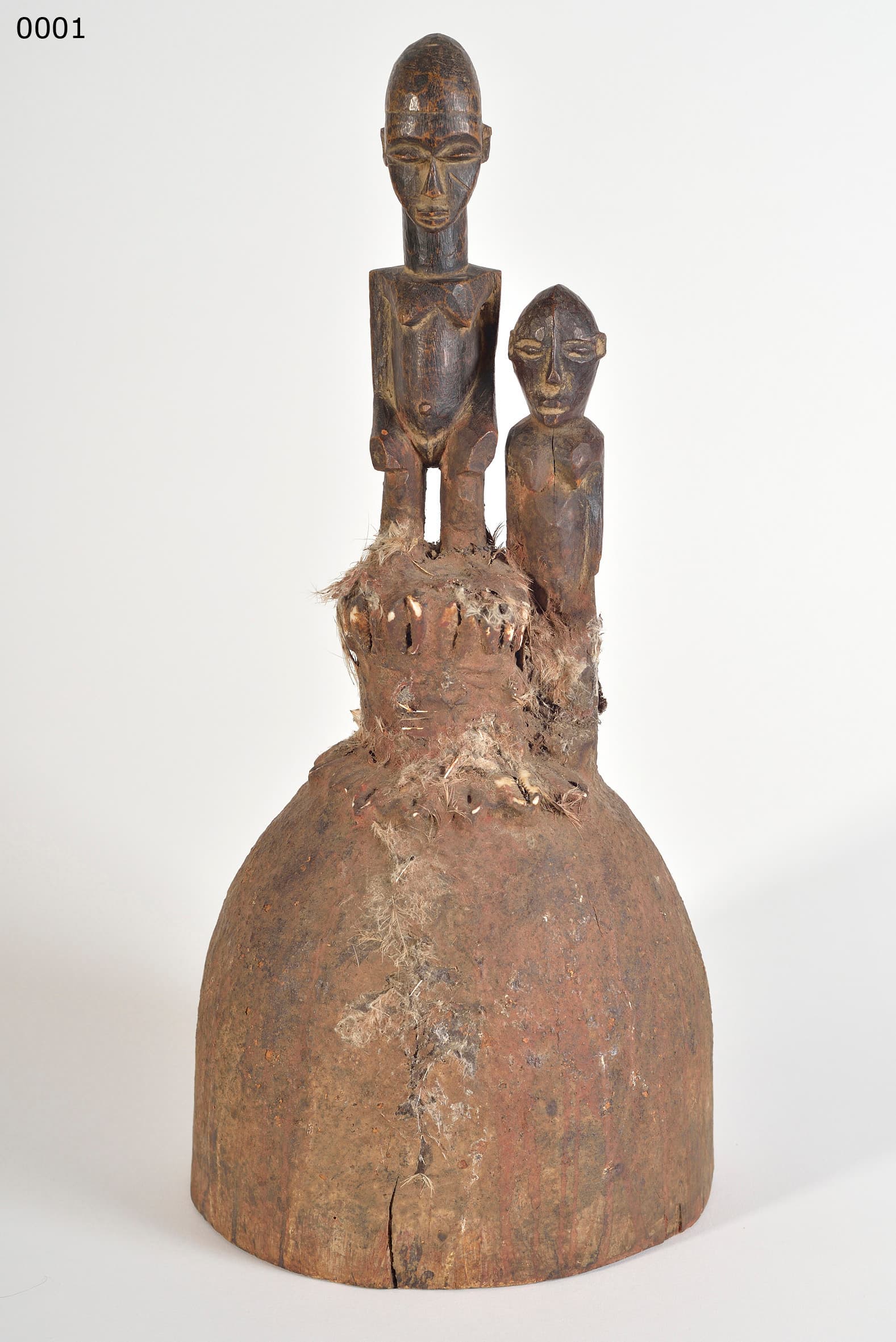
Schreinaltar mit Ehepaar BATEKE
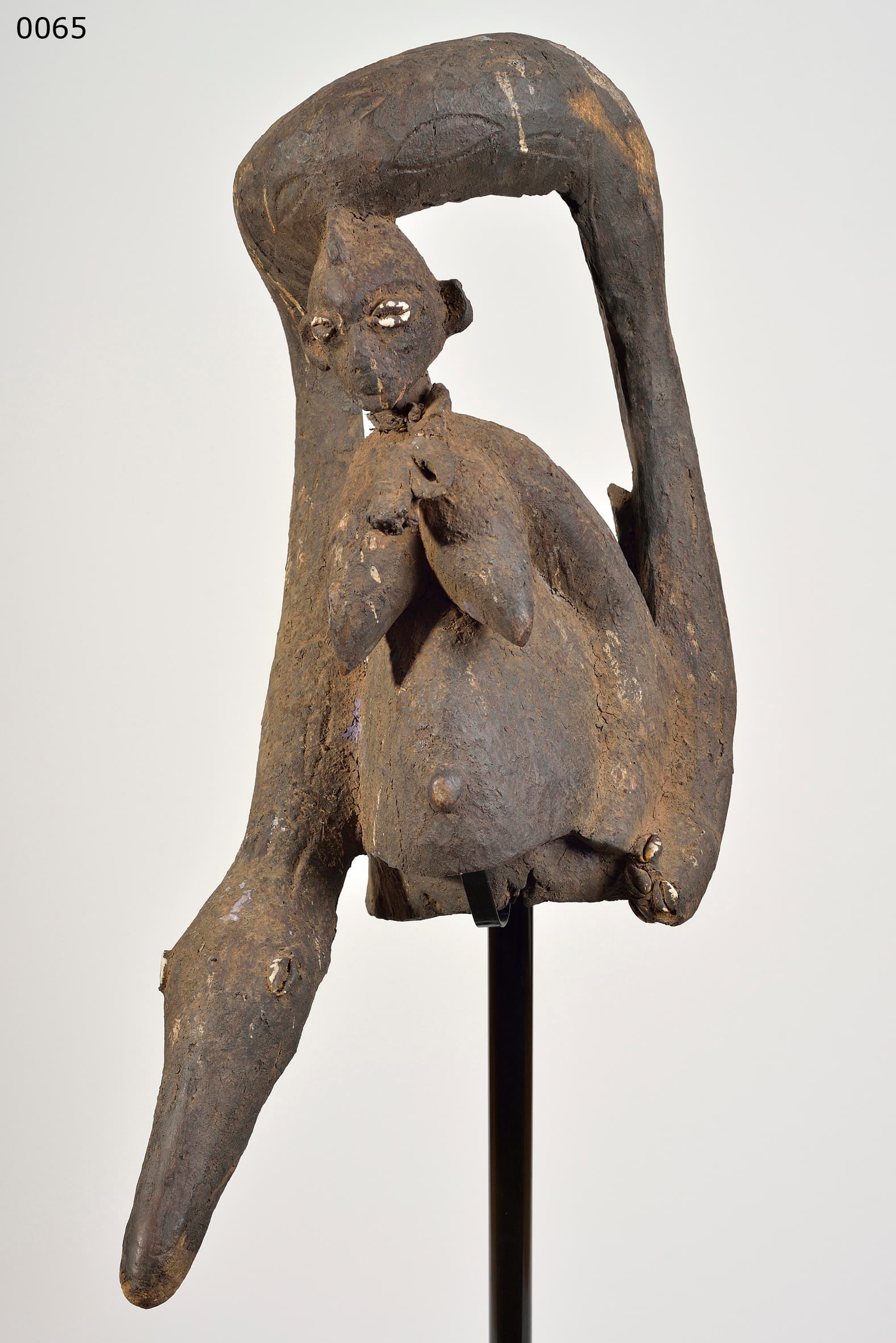
Seltene Kopfhaubenmaske
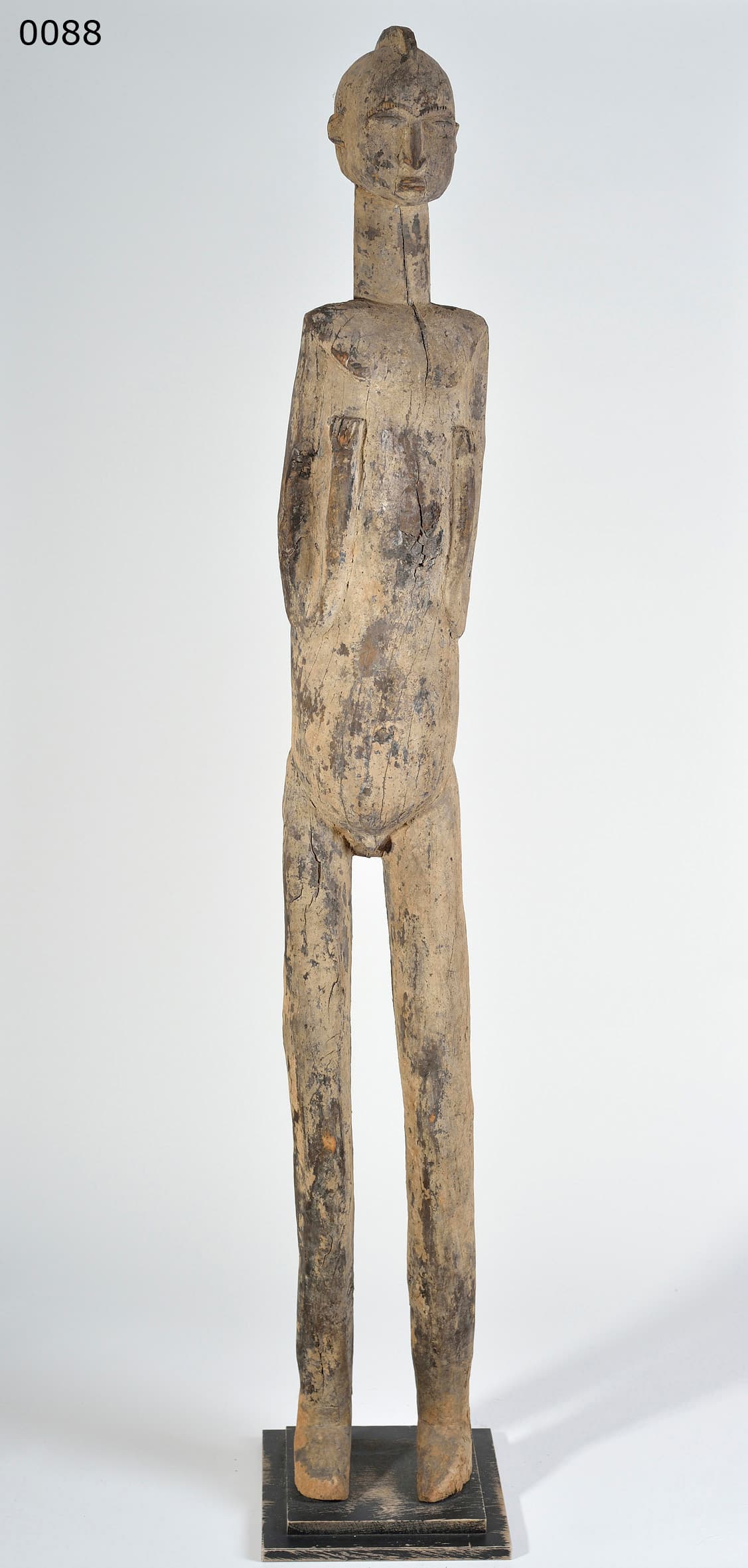
Schreinfigur, die einen BATEBA-Geist darstellt (ungewöhnlich groß, selten)