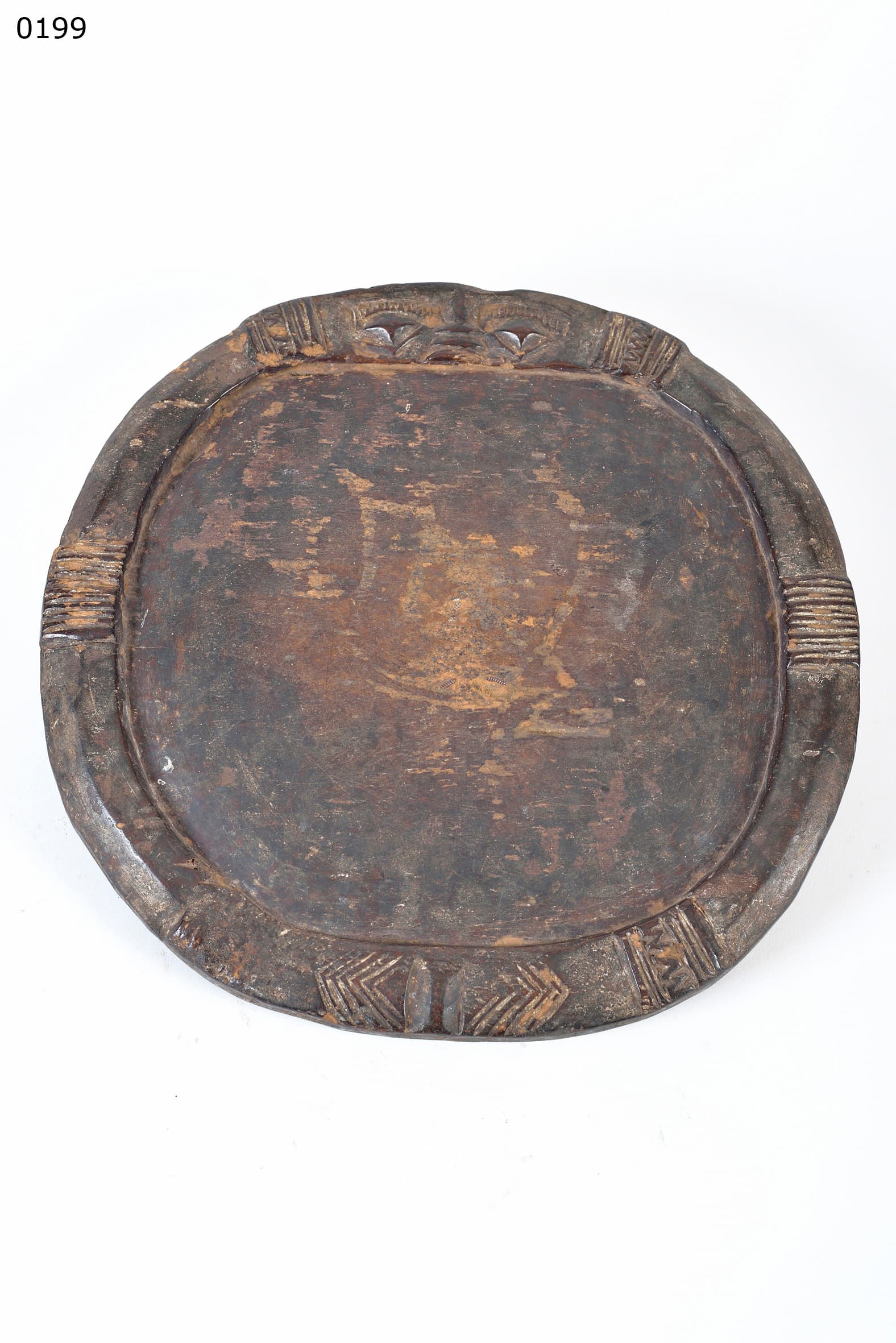
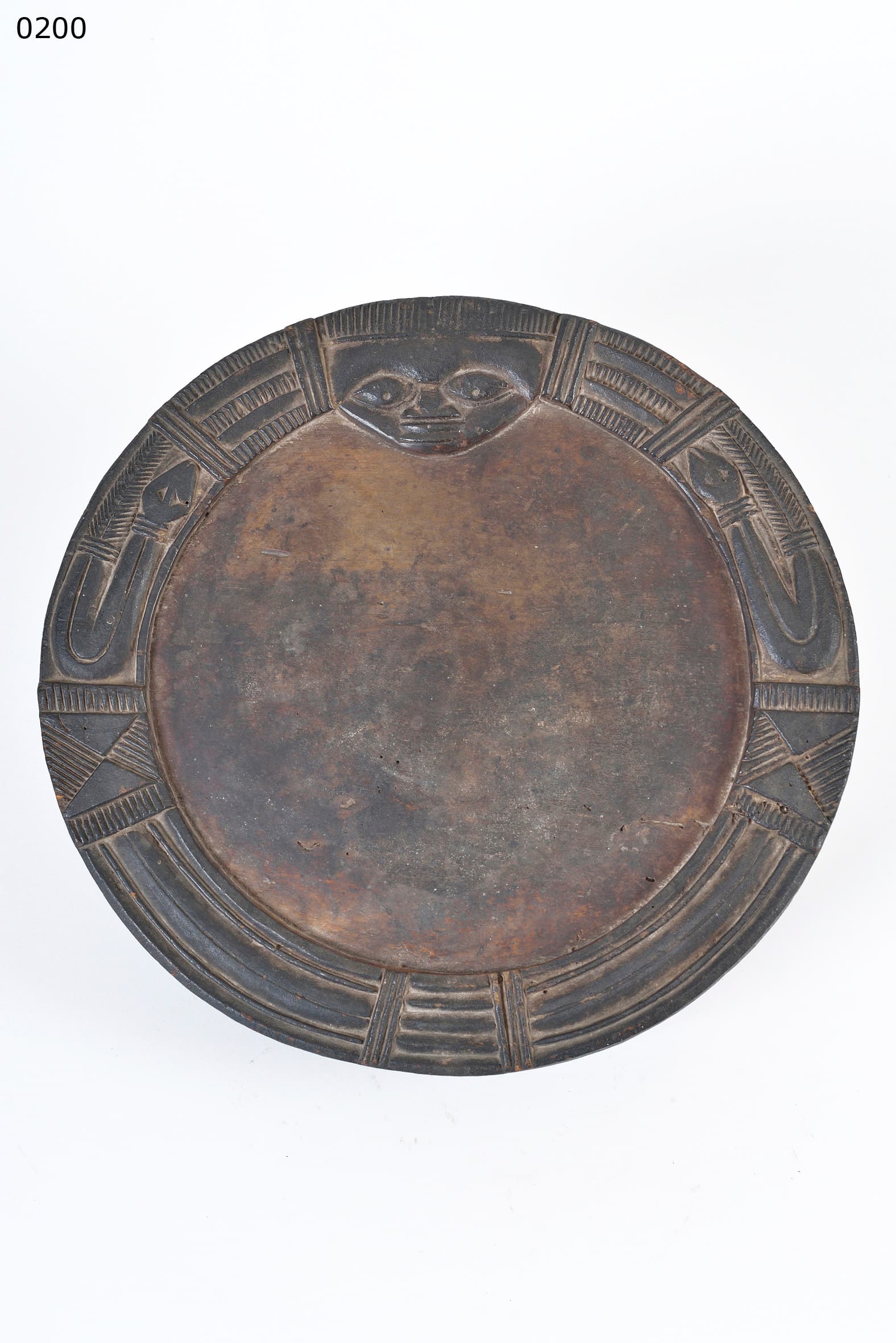
Diese beiden kolossalen hölzernen Helmmasken weisen monumentale Aufbauten auf: Die eine zeigt einen berittenen Krieger, der einen Speer hält, und die andere eine stehende weibliche Figur, die ein Kind auf dem Rücken trägt. Beide Masken sind hell polychromiert mit Spuren von roten, blauen und weißen Pigmenten auf stark verwittertem, altersgedunkeltem Holz.
1. Ästhetischer Stil und regionale Eigenheiten
Die aus der Region Ekiti im Yorubaland stammenden Epa- (oder Elefon-) Masken gehören zu den größten und komplexesten geschnitzten Holzkonstruktionen in Afrika. Die Ästhetik wird durch eine ausgeprägte zweiteilige Struktur bestimmt: eine untere, groteske, topfartige Helmmaske (die die rohen, ungezähmten Kräfte der Erde oder der Unterwelt darstellt), die eine massive, kunstvolle und bunt bemalte obere Ebene trägt. Die oberen Ränge zeigen hier die klassischen Yoruba-Proportionen und die Hierarchie, wobei die massiven Köpfe der Hauptfiguren ihre innere spirituelle Kraft (orí) und ihre absolute Dominanz über die kleineren Begleitfiguren oder Tiere betonen.
2. Rituelle Funktion und Geheimbund-Kontext
Diese monumentalen Masken stehen im Mittelpunkt des Epa-Festes, einer gemeinschaftsweiten Feier der sozialen Ordnung, der Fruchtbarkeit und der Verehrung bestimmter Ahnenarchetypen. Die Reiterfigur stellt den Jagunjagun (den großen Krieger oder Gründerkönig) dar, der kriegerischen Schutz und männliche Vitalität symbolisiert. Die weibliche Figur stellt die Olomoyeye (die große Mutter) dar und symbolisiert Fruchtbarkeit, Pflege und die Fortführung des Stammbaums. Das erfolgreiche Tanzen und Springen mit diesen massiven Gewichten, die manchmal bis zu 60 Pfund wiegen, wird von unglaublich starken jungen Männern getragen und sichert den Wohlstand der Gemeinschaft für das kommende Jahr.
3. Physische Patina und Altersnachweis
Das hohe Alter und die Authentizität dieser Masken werden durch ihre komplexe Oberflächengeschichte nahegelegt. Die ursprünglichen polychromen Farben (oft aus natürlichen Tonen, Rotholz und frühem importierten Reckitt-Blau) sind stark verblasst, abgeblättert und in die poröse Holzmaserung oxidiert. Die unteren Helmränder weisen starke, geglättete Abnutzungsspuren auf, wo sie schwer auf den Schultern und Köpfen der Tänzer ruhten, während die massiven, schweren Holzblöcke tiefe, natürliche Austrocknungsrisse von jahrzehntelanger jahreszeitlicher Ausdehnung und Kontraktion aufweisen.
Zusammenfassung
Dieses Paar Yoruba-Epa-Masken stellt eine monumentale Darstellung westafrikanischer Performance-Kunst dar. Ihr großes Ausmaß, ihre komplexe soziale Ikonographie und ihre stark verwitterte Patina sprechen für eine traditionelle Nutzung und machen sie zu bedeutenden Zeugnissen des nigerianischen Kulturerbes.
KI-unterstützt erstellt aus Sammlungsgutachten, Objektfotografie und eigener Recherche, redaktionell geprüft. Fehler sind möglich — Hinweise darauf sind uns willkommen. Zum Verfahren →