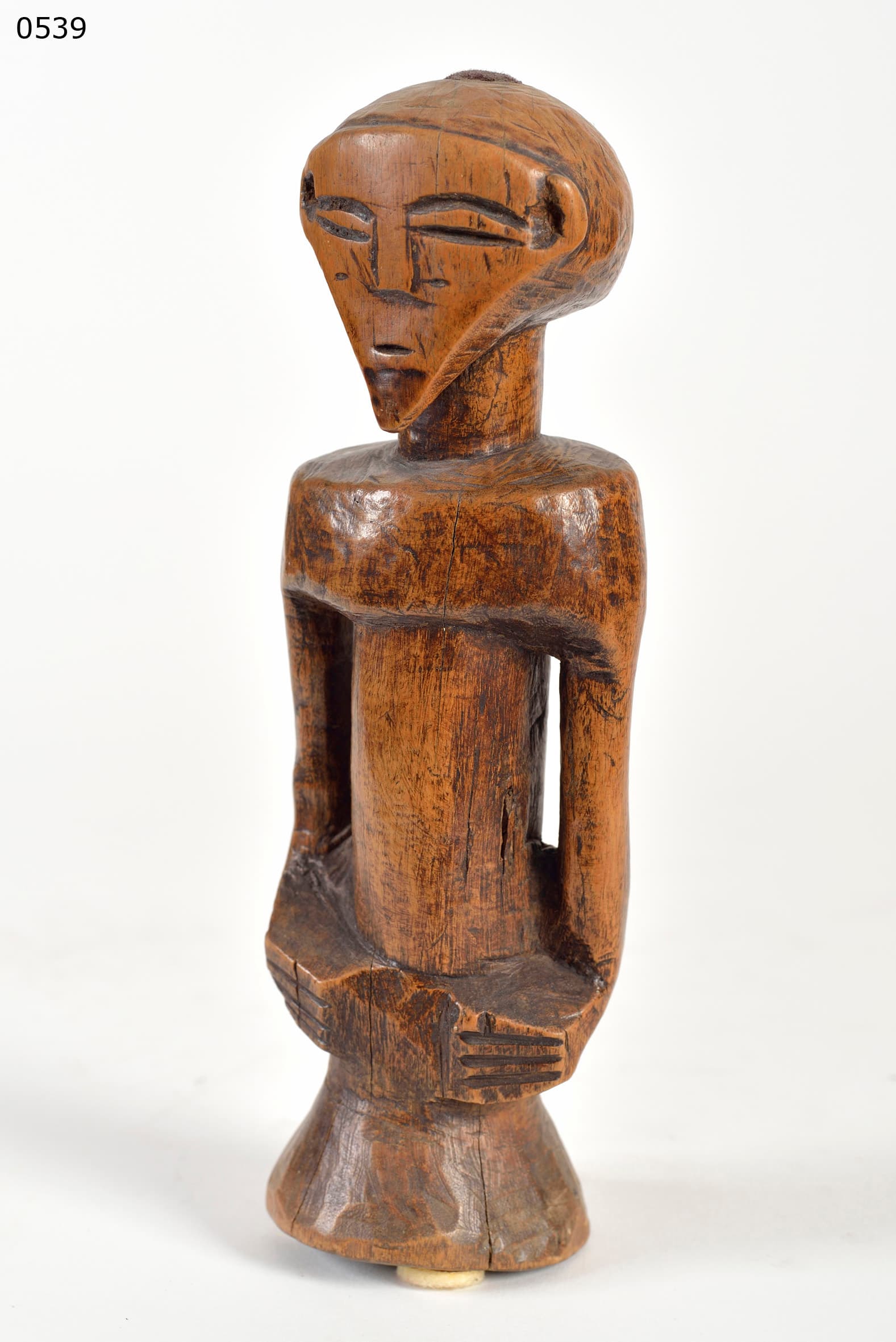
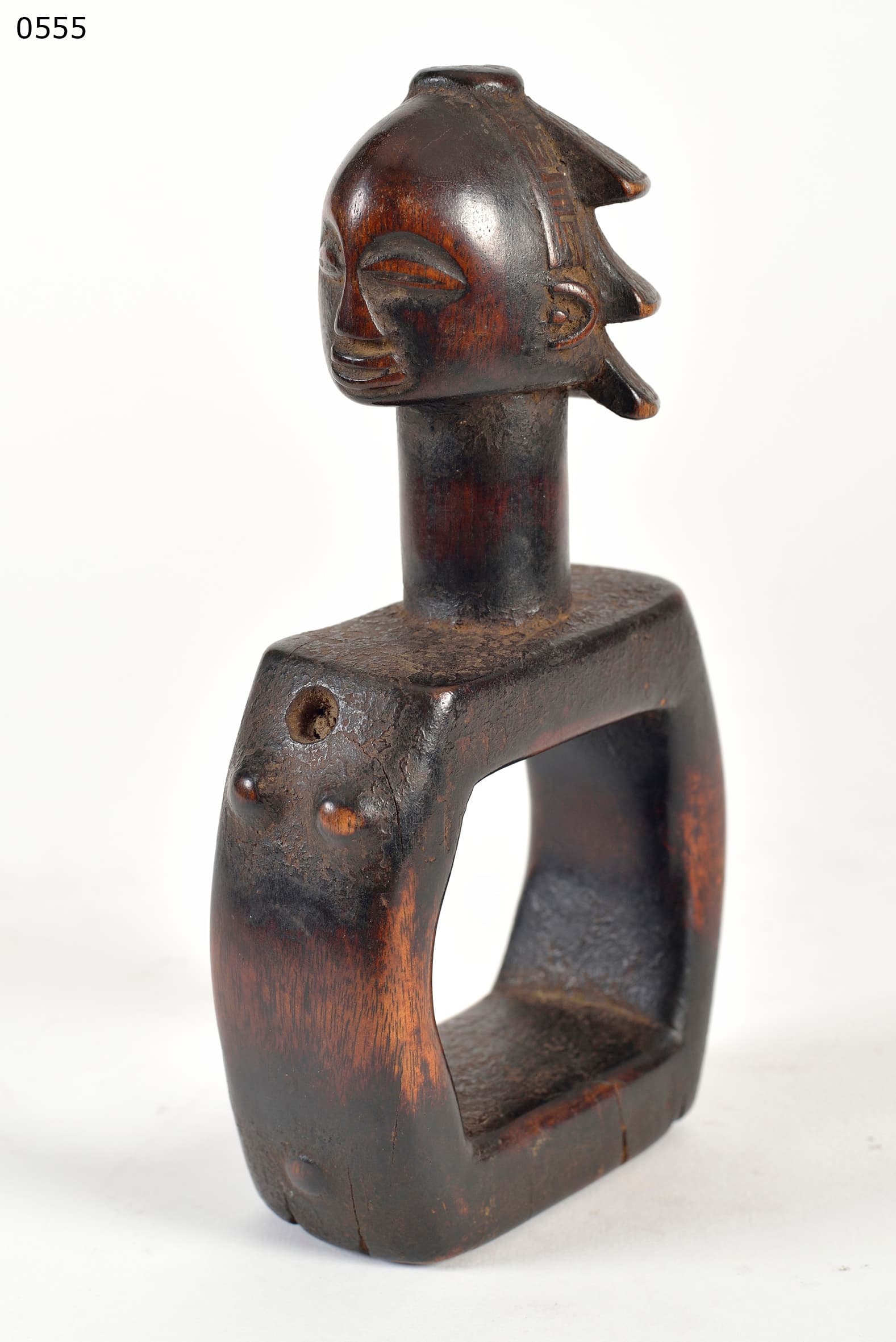
Diese Holzschnitzerei zeigt eine kniende weibliche Figur, die mit erhobenen Händen eine breite, flache, runde Schale oder einen Sitz auf ihrem Kopf trägt. Das Holz hat eine tiefe, geschwärzte und stark strukturierte Oberfläche mit geometrischen Ritzmustern, die in den Rumpf eingeritzt sind.
1. Ästhetischer Stil und regionale Charakteristika
Bei diesem Objekt handelt es sich um eine klassische Darstellung der Luba-Mboko (heilige Schalenträgerin) oder des königlichen Karyatidenhockers. Die Ästhetik konzentriert sich ganz auf das Luba-Ideal der weiblichen spirituellen Stärke und körperlichen Schönheit. Der große, ruhige Kopf, die tief eingemeißelten Unterleibsskarifikationen (mabinda) und die Haltung der erhobenen, stützenden Arme vermitteln immense Würde. Der weibliche Körper fungiert als architektonische und spirituelle Grundlage und trägt visuell das Gewicht des königlichen oder göttlichen Objekts, das sie hochhält.
2. Rituelle Funktion und Geheimbund-Kontext
In der Kosmologie der Luba gelten Frauen als die einzigen Gefäße, die stark genug sind, um die mächtigen Geister verstorbener Könige und Gottheiten aufzunehmen. Wenn sie als Schemel fungierte, war sie der buchstäbliche und metaphorische Sitz der Macht des Königs (Mulopwe), sie enthielt seinen Geist und sicherte sein göttliches Recht auf Herrschaft. Wenn er als Schale (Mboko) diente, wurde er von einem königlichen Wahrsager der Bilumbu benutzt, um heilige weiße Kaolin-Kreide (Pemba) aufzubewahren, die während der Trance auf das Gesicht gestrichen wurde, um die Augen für das Reich der Ahnen zu öffnen.
3. Physische Patina und Altersnachweis
Im Gegensatz zu vielen Luba-Objekten, die eine hochpolierte, glänzende Oberfläche aufweisen, weist dieses Stück eine stark oxidierte, verkrustete und geschwärzte Patina auf. Diese stark strukturierte Oberfläche deutet darauf hin, dass es nicht in einer unberührten königlichen Schatzkammer aufbewahrt wurde, sondern in einer dunklen, raucherfüllten Schreinumgebung intensiv und aktiv benutzt wurde und häufig Trankopfer oder Salbungen erhielt. Die Ränder der Schale und die Knie weisen authentische, geglättete Abnutzungserscheinungen auf, die von der Handhabung und dem Ruhen auf dem Boden herrühren.
Zusammenfassung
Dieses nicht gelistete Karyatidenobjekt der Luba ist ein tiefgründiges Symbol der zentralafrikanischen matriarchalischen Macht und des göttlichen Königtums. Seine elegante, tragende Architektur und seine tief verkrustete, aktive Schreinpatina machen ihn zu einem höchst bedeutenden Artefakt der Luba-Spiritualität.
KI-unterstützt erstellt aus Sammlungsgutachten, Objektfotografie und eigener Recherche, redaktionell geprüft. Fehler sind möglich — Hinweise darauf sind uns willkommen. Zum Verfahren →