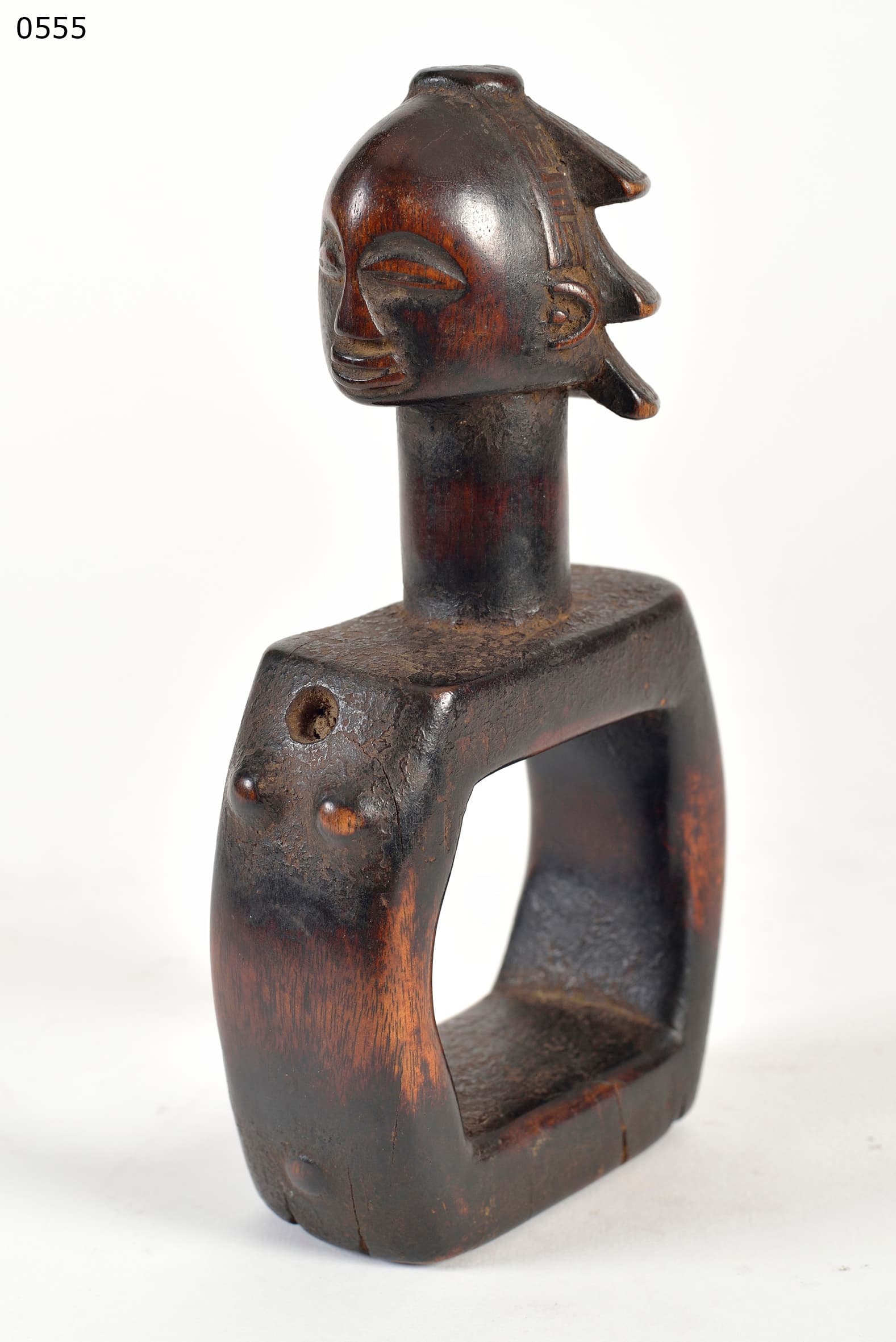
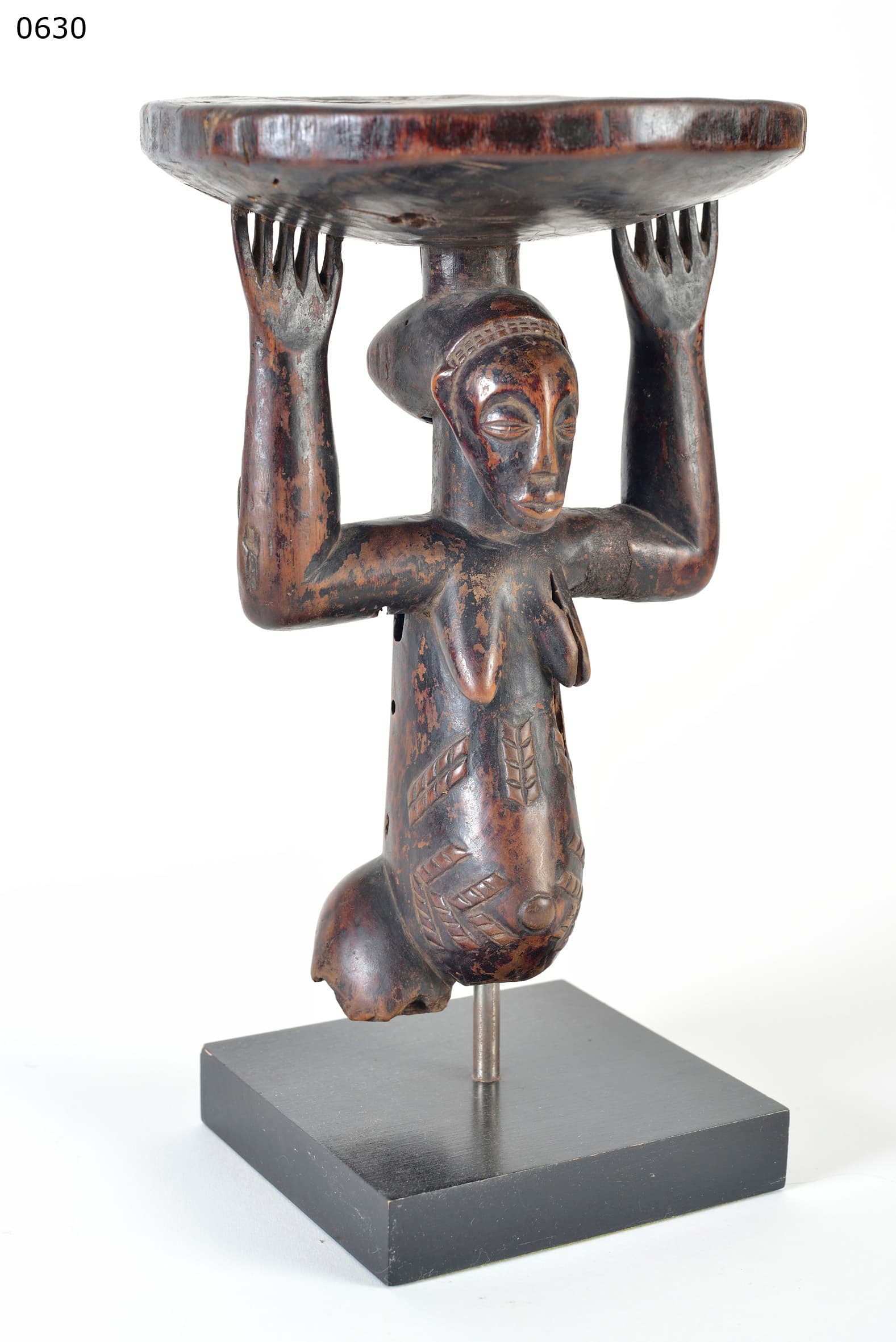
Diese kleine, stumpfe Holzfigur zeichnet sich durch ein überproportional großes, flaches, herzförmiges Gesicht, eine hohe, gewölbte Stirn und rudimentäre Arme aus, die auf dem Unterkörper ruhen. Die Oberfläche weist eine ausgeprägt glatte, glänzende, honigbraune Patina auf.
1. Ästhetischer Stil und regionale Charakteristika
Während die Luba für ihre heiteren, sehr naturalistischen Frauenfiguren bekannt sind, lässt sich dieses Stück einem ausgeprägten, abstrakteren Substil zuordnen, der möglicherweise aus den Randgebieten des Luba-Reiches stammt, wo Einflüsse der Kusu- oder Hemba-Kulturen einfließen. Die Abstraktion des Gesichts zu einem umgekehrten Dreieck und die Reduzierung des Körpers auf geometrische Blöcke betonen die geistige Innerlichkeit der Figur gegenüber dem physischen Realismus.
2. Rituelle Funktion und Geheimbund-Kontext
Dieses Objekt wird nicht als königliches Prestigeobjekt interpretiert, sondern als eine intime Kraftfigur oder das Werkzeug eines Wahrsagers. Solche kleinen Statuen, die von einem Bilumbu (Wahrsager) verwendet wurden, wurden oft mit Ölen eingerieben und in geflochtenen Körben zusammen mit Knochen, Muscheln und anderen Materialien aufbewahrt. Sie dienten traditionell als physische Verankerung für die Geister der Vorfahren und unterstützten den Wahrsager bei der Diagnose von gesellschaftlichen Unruhen, Krankheiten oder den Ursachen von Konflikten.
3. Physische Patina und Spuren des Alters
Die Patina dieses Stücks spricht für ein hohes Alter und eine traditionelle Nutzung. Das Holz hat eine glasartige, hochglänzende Reibungspatina entwickelt, insbesondere an der markanten Stirn und am Rumpf. Diese spezielle Art von glänzender, honigfarbener Oberfläche gilt als charakteristisch für Stücke, die über Generationen hinweg berührt, mit Palmöl gepflegt und während ritueller Beratungsgespräche in den Händen gehalten wurden.
Zusammenfassung
Diese stark abstrahierte Luba-Powerfigur zeigt eine bemerkenswerte Abweichung vom klassischen Naturalismus des Stammes und konzentriert sich stattdessen auf eine ausgeprägte psychologische Intensität. Die dichte Reibungspatina deutet auf eine jahrzehntelange Nutzung im Rahmen der traditionellen Wahrsagerei hin.
KI-unterstützt erstellt aus Sammlungsgutachten, Objektfotografie und eigener Recherche, redaktionell geprüft. Fehler sind möglich — Hinweise darauf sind uns willkommen. Zum Verfahren →