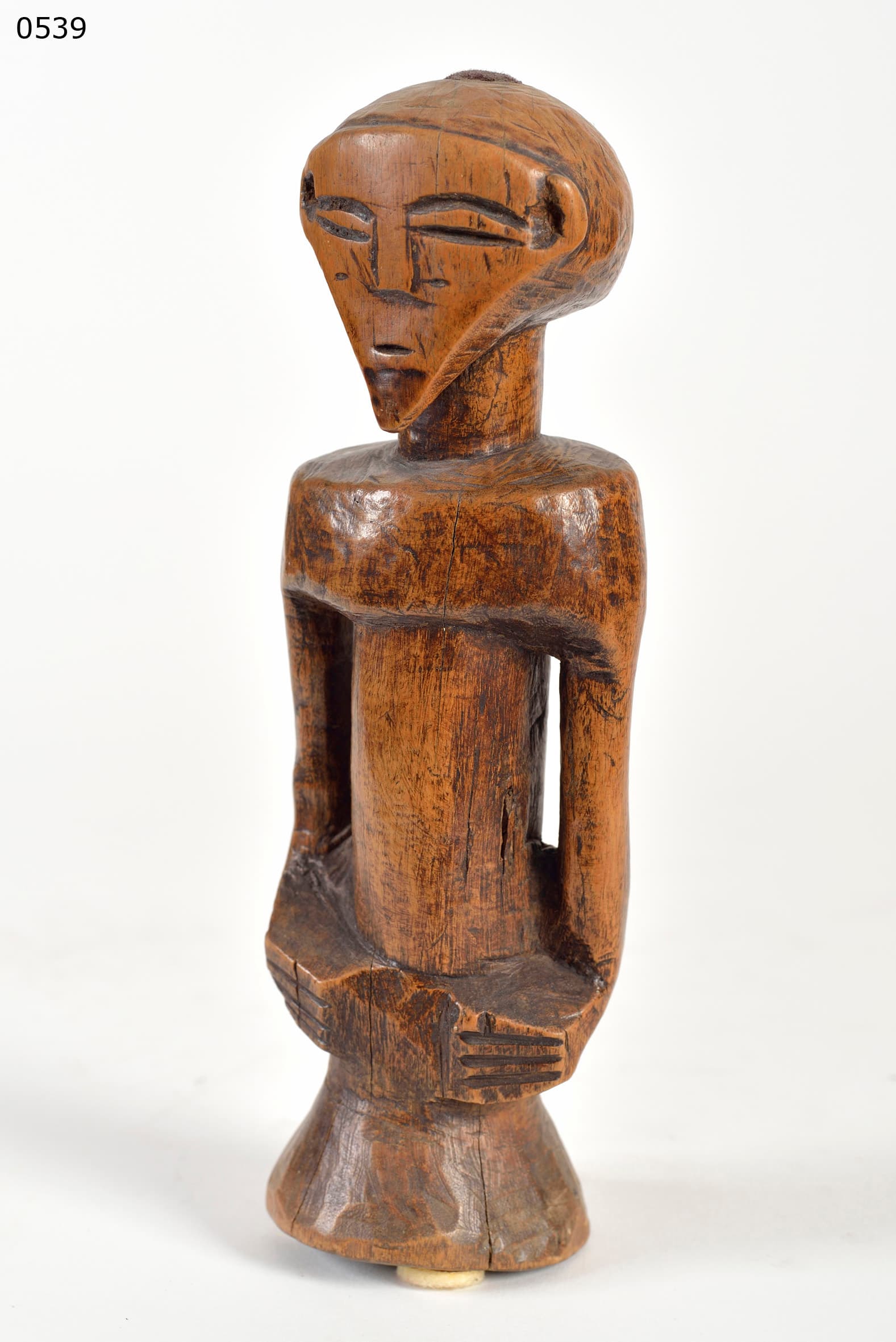
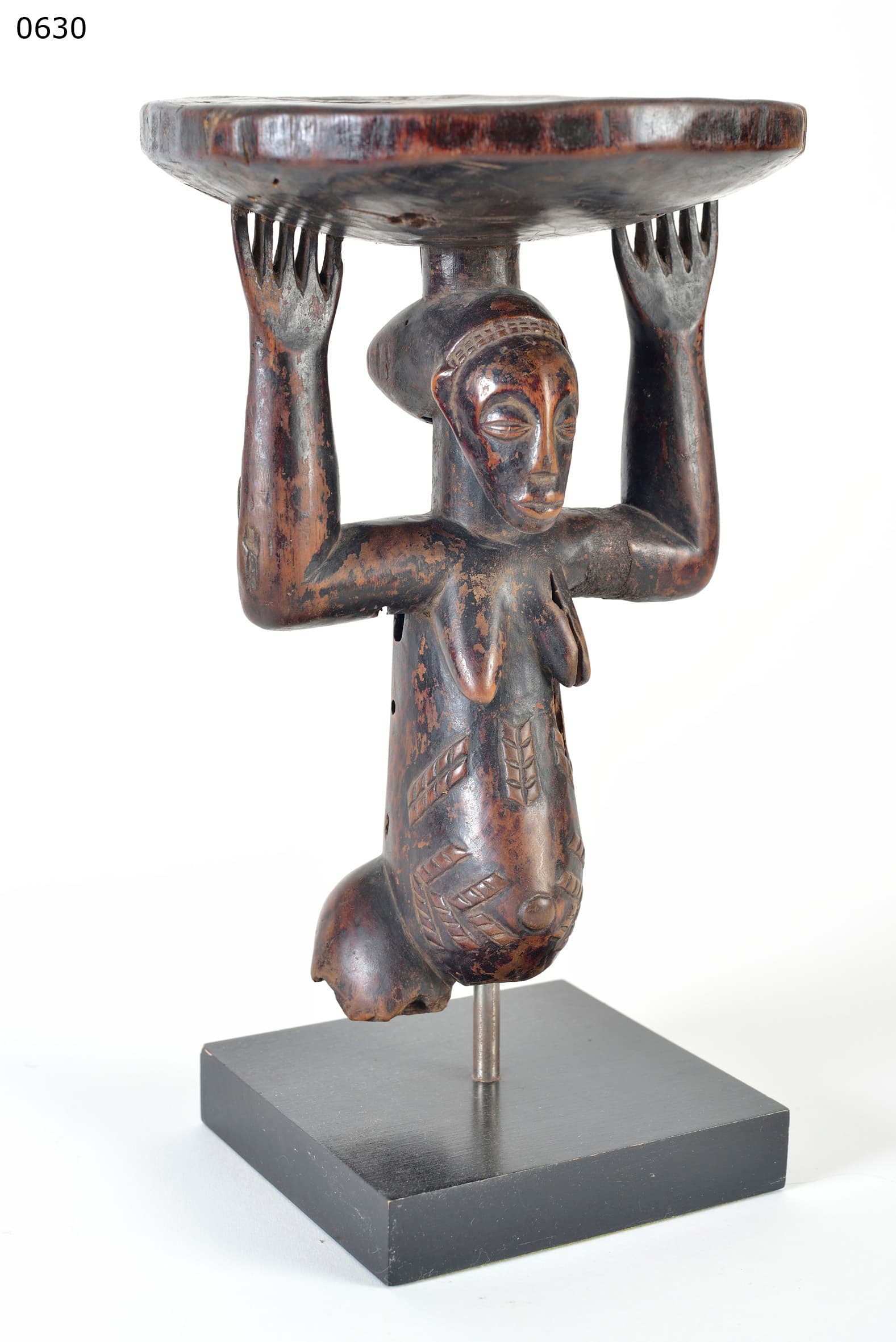
Dieses höchst ungewöhnliche Holzgerät besteht aus einem fein geschnitzten, heiteren Frauenkopf, der nicht auf einem Torso, sondern auf einem großen, hohlen, rechteckigen, durchbrochenen Rahmen ruht. Das Holz ist außergewöhnlich dunkel und trägt eine glasige, geriebene Patina über dem Rahmen und den Gesichtszügen.
1. Ästhetischer Stil und regionale Eigenheiten
Auch wenn sie allgemein als Figur bezeichnet wird, handelt es sich um ein Kakishi oder Lubuko (Reibungsorakel), das von den Luba, Songye und den benachbarten Kuba-Völkern verwendet wird. Der Schnitzer hat den menschlichen Körper auf geschickte Weise auf ein interaktives Werkzeug reduziert. Der Kopf bewahrt das klassische, heitere Schönheitsideal der Luba - er repräsentiert den hellsichtigen Geist eines Ahnen -, während der Körper zu einem funktionalen, ergonomischen Rechteck abstrahiert ist, das ganz auf die Mechanik der Weissagung ausgerichtet ist.
2. Rituelle Funktion und Geheimbundkontext
Dieses Objekt ist das wichtigste Diagnosewerkzeug eines Bilumbu (Wahrsagers). Während einer Konsultation, bei der die Ursache einer Krankheit, eines plötzlichen Todes oder von Hexerei ermittelt werden soll, hält der Rutengänger den rechteckigen Rahmen in der Hand und reibt einen kleinen Holzklotz (oder reibt den Rahmen selbst) an einer Oberfläche entlang. Während der Wünschelrutengänger eine Liste von Verdächtigen oder Ursachen rezitiert, greift der Geist ein; wenn die richtige Antwort gesprochen wird, "klebt" das Orakel auf mysteriöse Weise an der Oberfläche oder verbindet sich durch Reibung mit ihr und überbringt das Urteil der Ahnen.
3. Physische Patina und Altersnachweis
Die Patina gilt als ein wichtiges Indiz für den rituellen Gebrauch eines Reibungsorakels. Ein intensives, wiederholtes Reiben hat die Holzfasern des rechteckigen Rahmens zusammengedrückt und eine glatte, dunkle, spiegelnde Politur geschaffen, die synthetische Wachse nur schwer nachbilden können. Das heitere Gesicht des Geistes weist ebenfalls sanfte Abnutzungsspuren auf, die darauf zurückzuführen sind, dass es vor den Wahrsagesitzungen gehalten und mit Palmöl gesalbt wurde.
Zusammenfassung
Dieses Luba-Friktionsorakel ist eine raffinierte Verschmelzung von klassischer Porträtkunst und funktionellem, kinetischem Design. Die ausgeprägte Reibungspatina entlang des Sockels und des Rahmens spricht für eine Nutzung als aktives Instrument der spirituellen Gerechtigkeit Zentralafrikas.
KI-unterstützt erstellt aus Sammlungsgutachten, Objektfotografie und eigener Recherche, redaktionell geprüft. Fehler sind möglich — Hinweise darauf sind uns willkommen. Zum Verfahren →