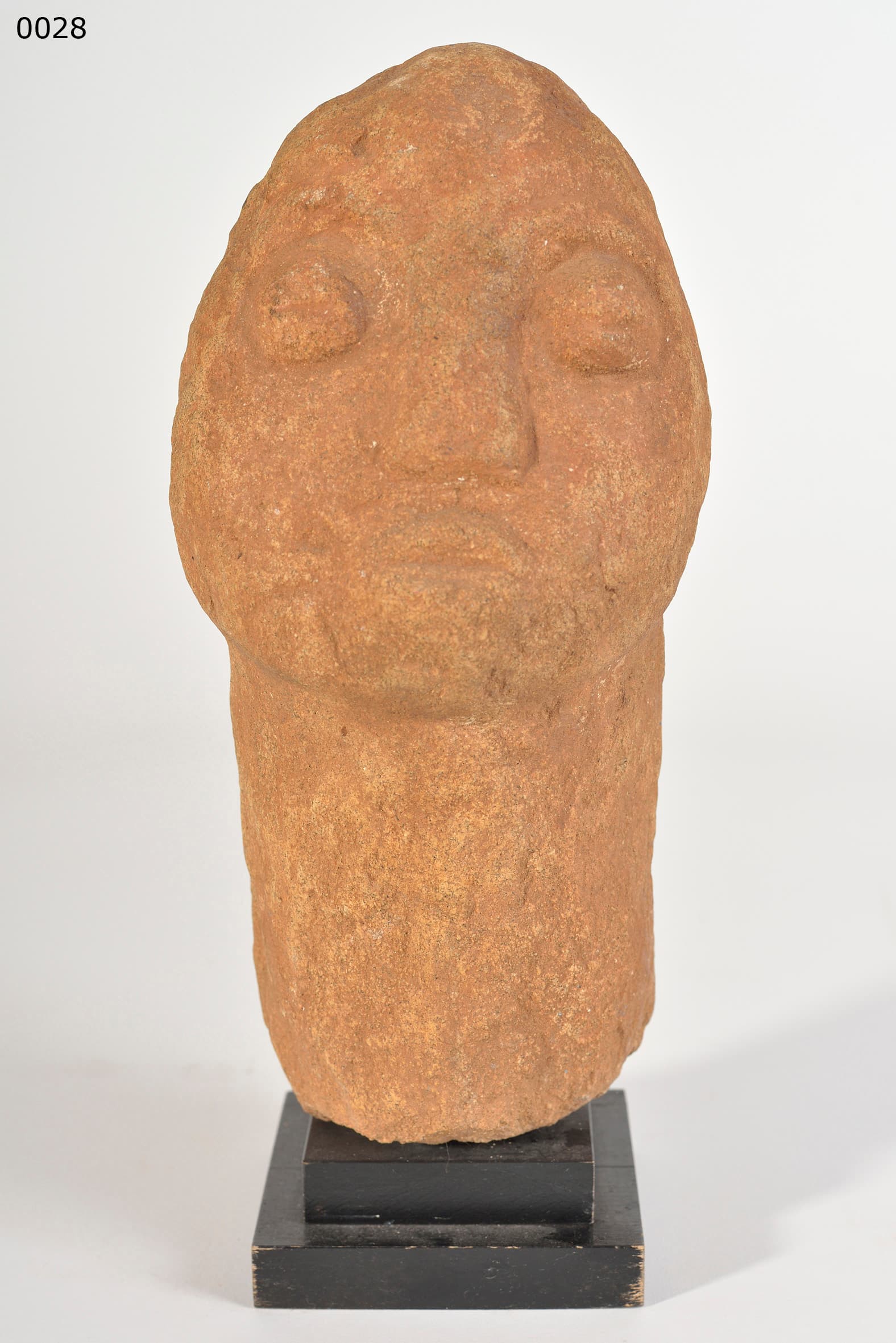
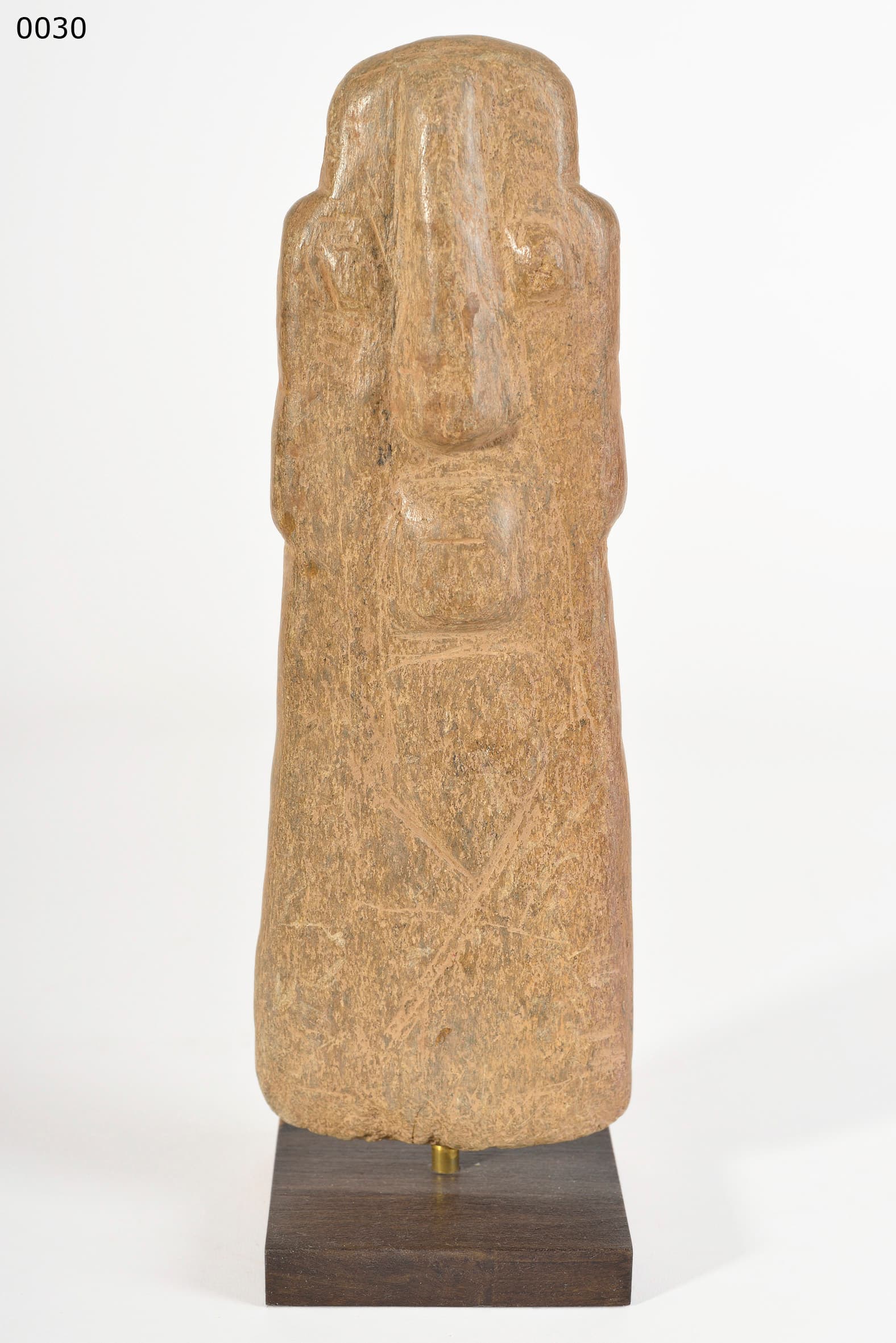
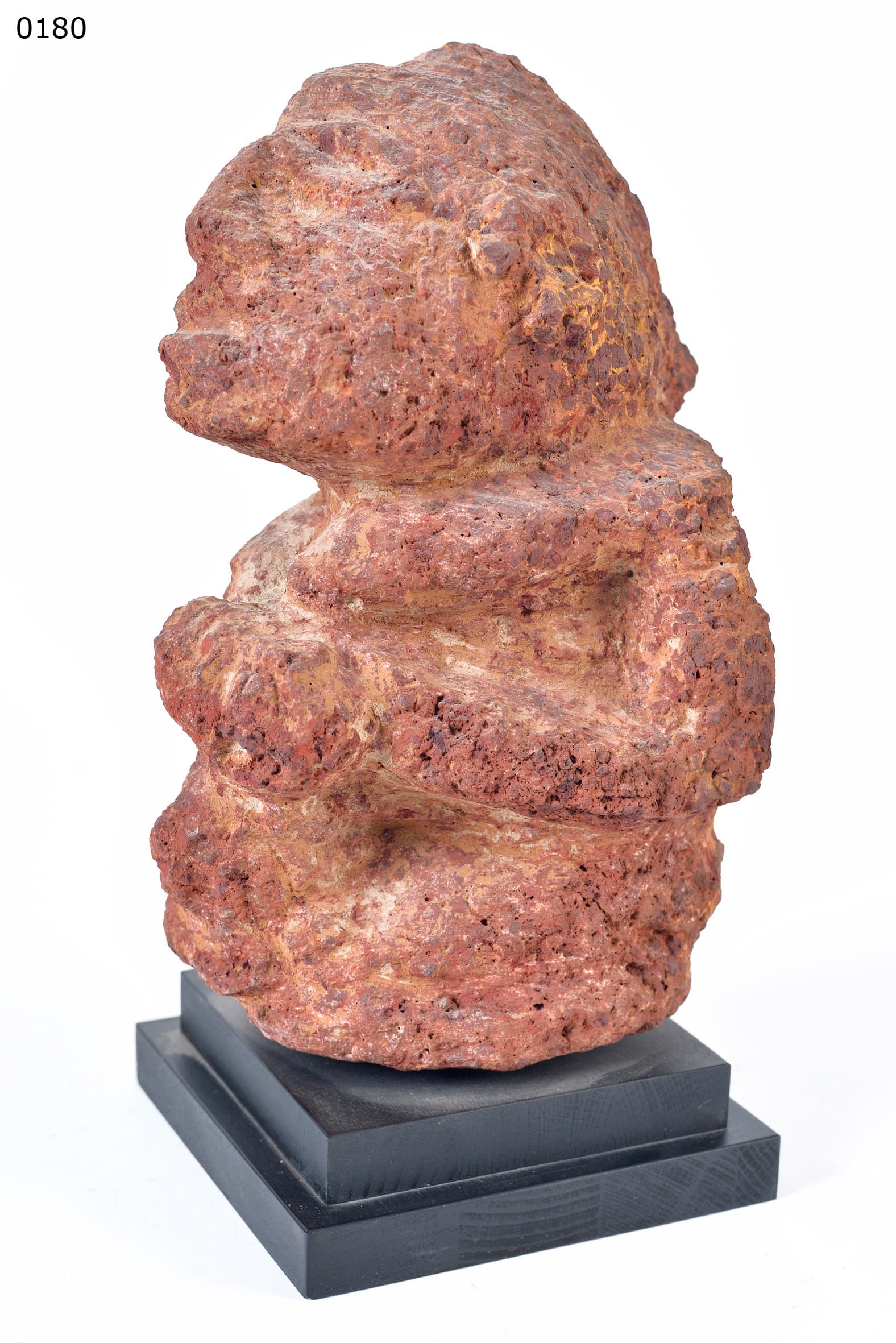
Diese hohe, archaische Säule ist aus einem dichten, groben, hellbraunen Stein gemeißelt und zeigt einen stark verkürzten menschlichen Kopf mit einer schwachen horizontalen Stirn und einem vertikalen Nasenrücken, der fließend in einen dicken, charakterlosen zylindrischen Körper übergeht. Der Stein ist stark zerklüftet und weitgehend mit einer alten, verkalkten Erdschicht überzogen.
1. Ästhetischer Stil und regionale Merkmale
Während hölzerne Antilopenkopfbedeckungen die bekanntesten Kunstwerke des Kurumba-Volkes in Burkina Faso sind, gelten ihre älteren lithischen Traditionen als selten und weisen eine stark minimalistische Ästhetik auf. Die Ästhetik dieser Grabfigur beruht auf klarem, architektonischem Volumen. Der Bildhauer nutzte reduzierte Schnitte, um eine menschliche Präsenz auf der Steinsäule anzudeuten. Dieser reduktionistische Ansatz vermittelt den Eindruck von Dauerhaftigkeit und stellt das Gewicht des Materials über die detailreiche Darstellung.
2. Rituelle Funktion und religiöse Bedeutung
Diese Steinsäulen, die mit alten Schreinen oder Grabstätten in der Sahelzone assoziiert werden, dienten traditionell als Grabmarkierungen für hochgestellte Persönlichkeiten. Um den Geist eines Ahnen in der Erde zu verankern, wurde das Bildnis in diesen Gemeinschaften oft aus widerstandsfähigem Stein gehauen. Senkrecht in den Boden eingelassen, diente die Figur als Verbindung, die es den Nachkommen ermöglichen sollte, mit den Erdgeistern in Kontakt zu treten und um Schutz vor Dürre zu bitten.
3. Physische Patina und Altersnachweis
Die Altersschätzung des 12. bis 16. Jahrhunderts ist vereinbar mit den deutlichen Verwitterungsspuren des Objekts. Ursprüngliche Werkzeugspuren und Rillen sind durch die Einwirkung von Wind, Wasser und Bodenreibung weitgehend geglättet worden. Der Stein weist eine geglättete, wellenförmige Patina auf, deren Poren mit kalzifizierten Mineralien und Erdrückständen gefüllt sind – ein Verwitterungsgrad, der auf einen langwierigen, natürlichen Alterungsprozess hindeutet.
Zusammenfassung
Diese Kurumba-Grabfigur gilt als seltenes Zeugnis sahelischer Steinkunst und als Ausdruck des Wunsches nach spiritueller Beständigkeit. Ihre strenge geometrische Abstraktion und die ausgeprägte Verwitterung zeichnen dieses Objekt des frühen Westafrika aus.
KI-unterstützt erstellt aus Sammlungsgutachten, Objektfotografie und eigener Recherche, redaktionell geprüft. Fehler sind möglich — Hinweise darauf sind uns willkommen. Zum Verfahren →