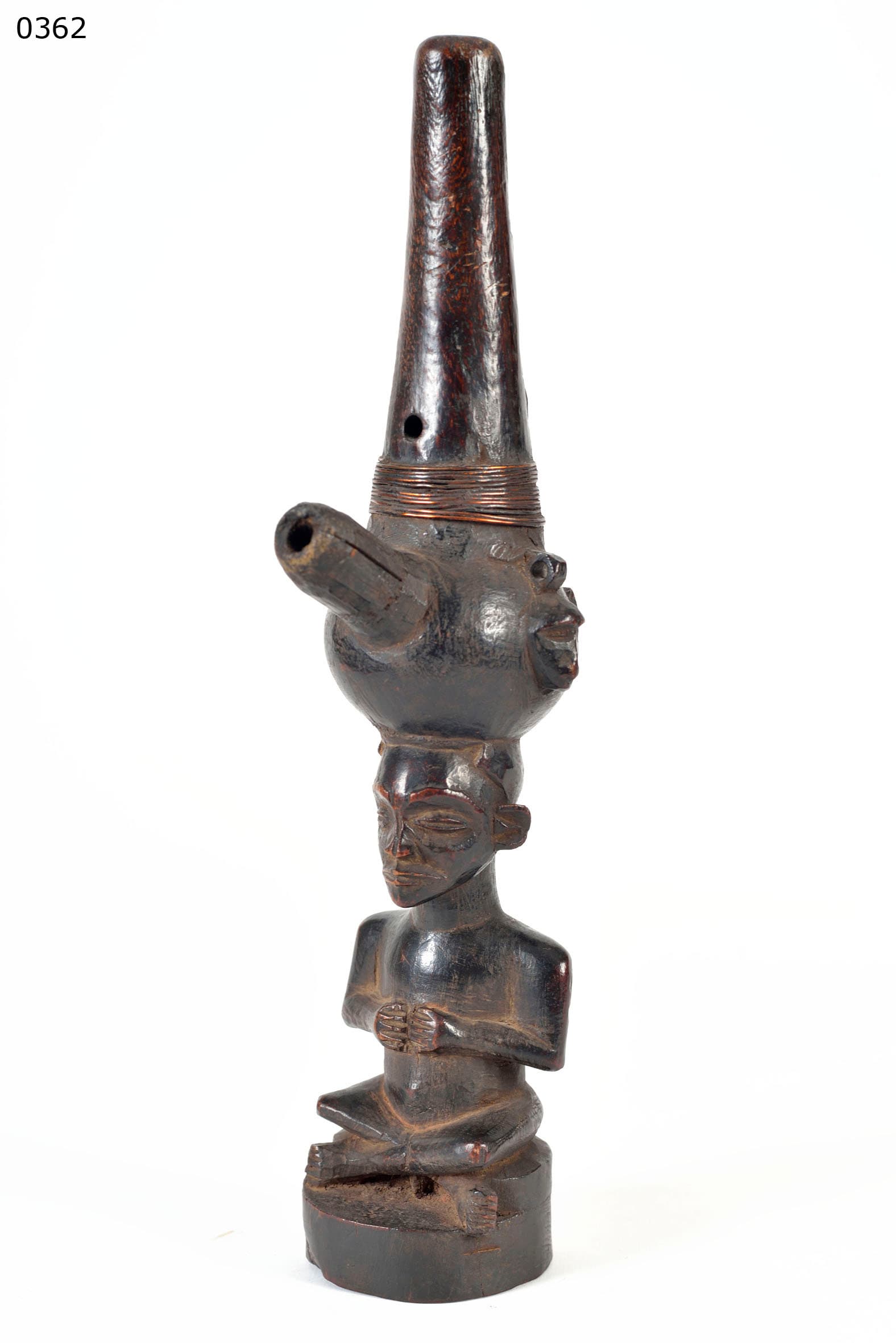
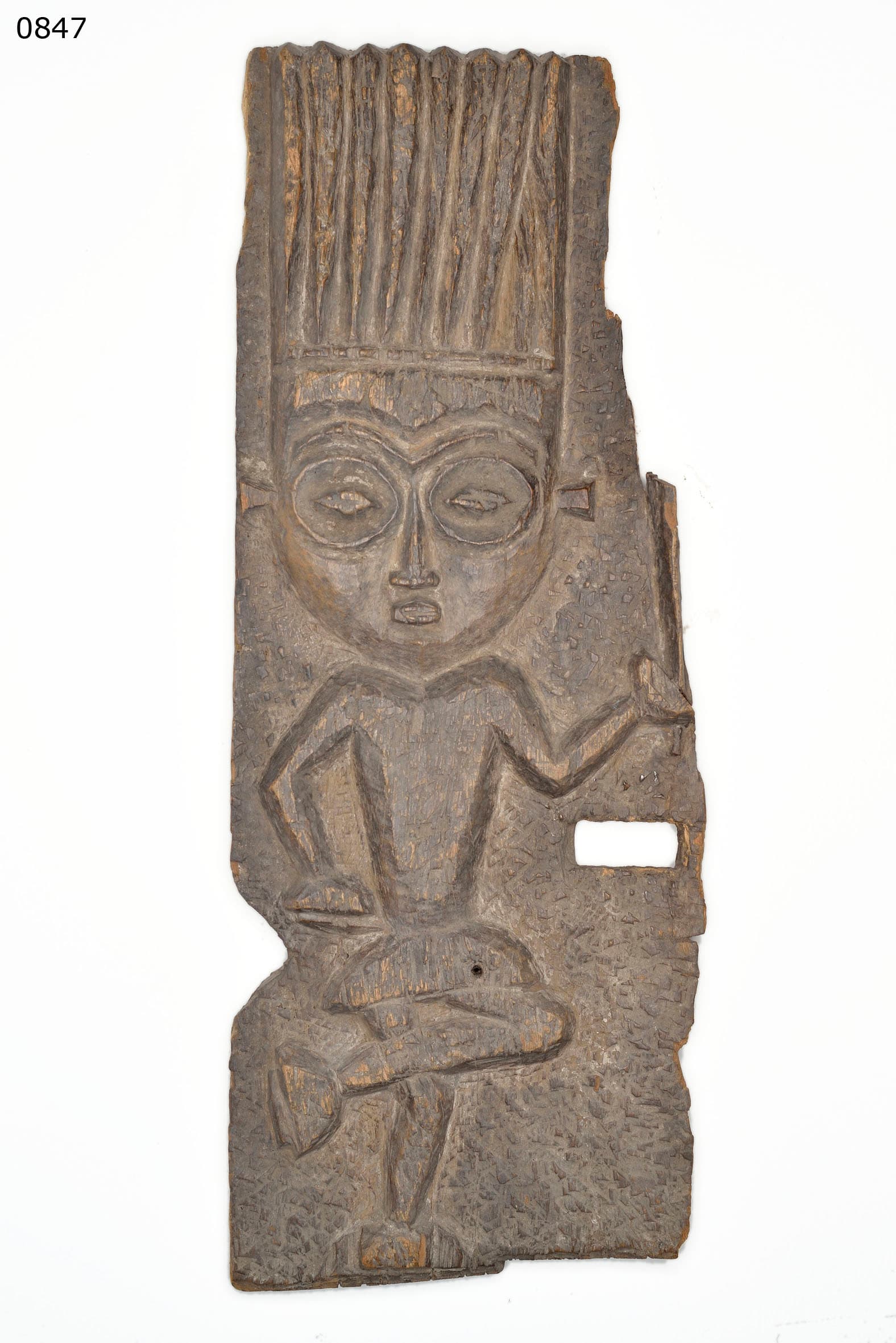
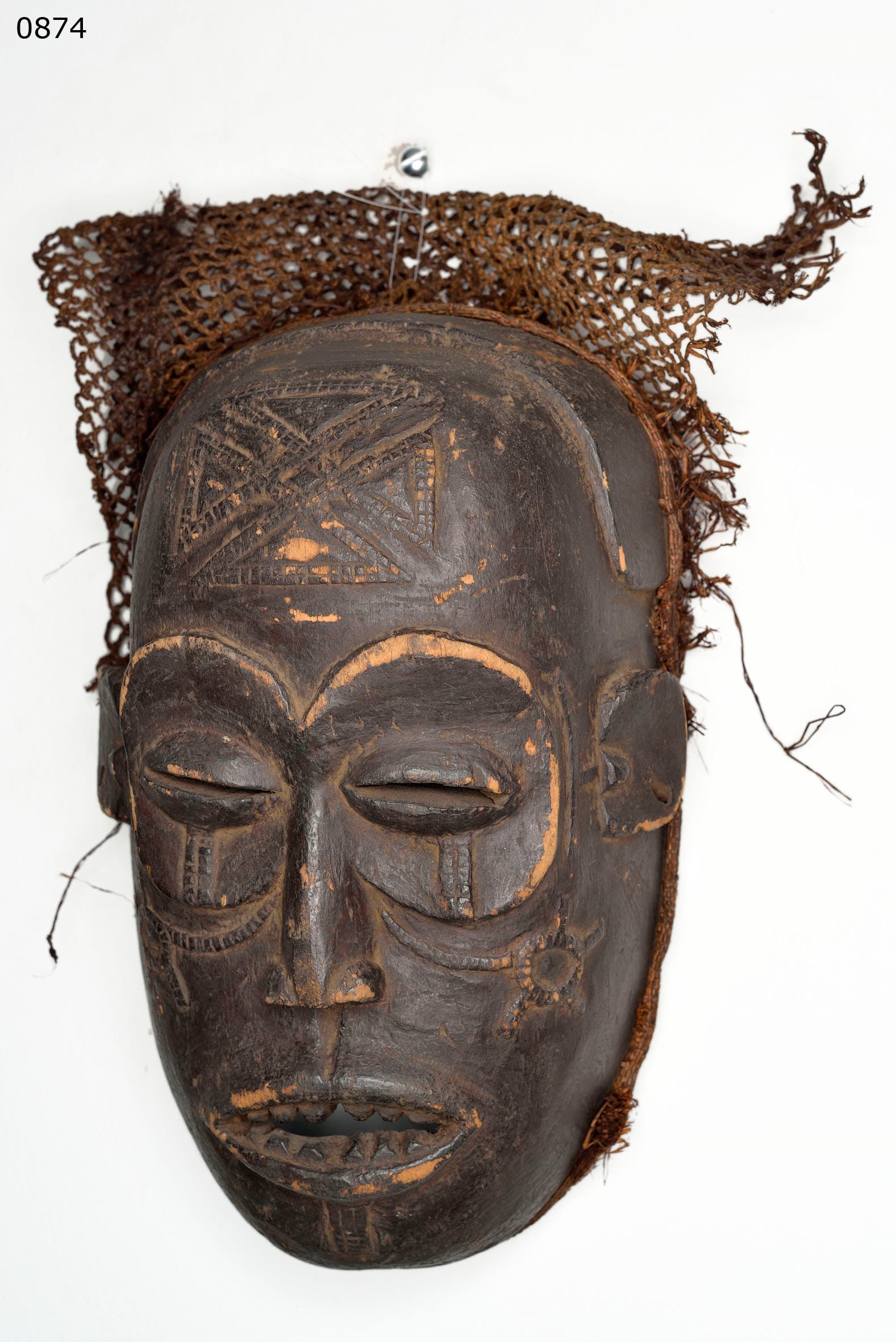
Diese robuste Holzfigur steht mit gebeugten, leicht angewinkelten Knien und über dem Bauch zusammengefassten Händen. Sie hat einen übergroßen Kopf mit einer klassischen, ausladenden Frisur und markanten Kaffeebohnenaugen. Das extrem trockene, stark oxidierte Holz weist eine dunkle, krustige und stark verwitterte Oberfläche auf.
1. Ästhetischer Stil und regionale Charakteristika
Das Volk der Chokwe in Angola ist für seinen künstlerischen Kanon bekannt, der Muskelkraft, königliche Autorität und dynamische Spannung betont. Diese Statue verkörpert diese Eigenschaften perfekt durch ihre gebeugte, athletische Haltung, die einen Krieger suggeriert, der bereit ist, in die Schlacht zu ziehen. Der massiv überdimensionierte Kopf ist mit den geschwungenen, verschlungenen Linien des mutwe wa kayanda (dem traditionellen gewebten Prestige-Kopfschmuck der Aristokratie) geschmückt, der die Figur sofort als männliche Elite oder als überragenden Häuptling ausweist.
2. Rituelle Funktion und Geheimbund-Kontext
Diese Skulptur stellt einen Mwanangana (einen vergötterten königlichen Häuptling oder Gründungsvorfahren) dar. Die Figur, die in einem kommunalen Stammesschrein (hamba) aufgestellt ist, dient als physische Verbindung zwischen der lebenden Gemeinschaft und den mächtigen Geistern der Toten. Die Ältesten brachten der Statue Gebete und Opfergaben dar, um sich den Segen des Ahnen für Fruchtbarkeit, Jagdgeschick und Erfolg in der Kriegsführung zu sichern. Die Hände, die auf dem Bauch ruhen, betonen den Magen als Zentrum des Lebens, der Verdauung und der Kontinuität der Abstammung.
3. Physische Patina und Altersnachweis
Der physische Verfall dieser Statue bestätigt das jahrzehntelange aktive Leben im Schrein. Das dichte Tropenholz ist vollständig ausgetrocknet, was zu einem leichten, stark oxidierten Kern mit deutlichen, natürlichen Altersrissen geführt hat. Die Oberfläche ist stark mit einer dicken, brüchigen Schicht aus getrocknetem Blut, Palmöl und angesammeltem Staub verkrustet, die die ursprünglichen, scharfen Schnitzspuren von Gesicht und Kopfschmuck aufgeweicht und verwischt hat, was auf eine intensive rituelle Salbung in der ersten Hälfte des 20.
Zusammenfassung
Diese Ahnenstatue der Chokwe ist ein eindrucksvoller Ausdruck der königlichen Ästhetik Angolas und strahlt rohe physische Spannung und patriarchalische Autorität aus. Ihr klassischer aristokratischer Kopfschmuck und die stark verkrustete, durch die Bearbeitung abgenutzte Patina machen sie zu einem herausragenden Artefakt der Ahnenverehrung.
KI-unterstützt erstellt aus Sammlungsgutachten, Objektfotografie und eigener Recherche, redaktionell geprüft. Fehler sind möglich — Hinweise darauf sind uns willkommen. Zum Verfahren →