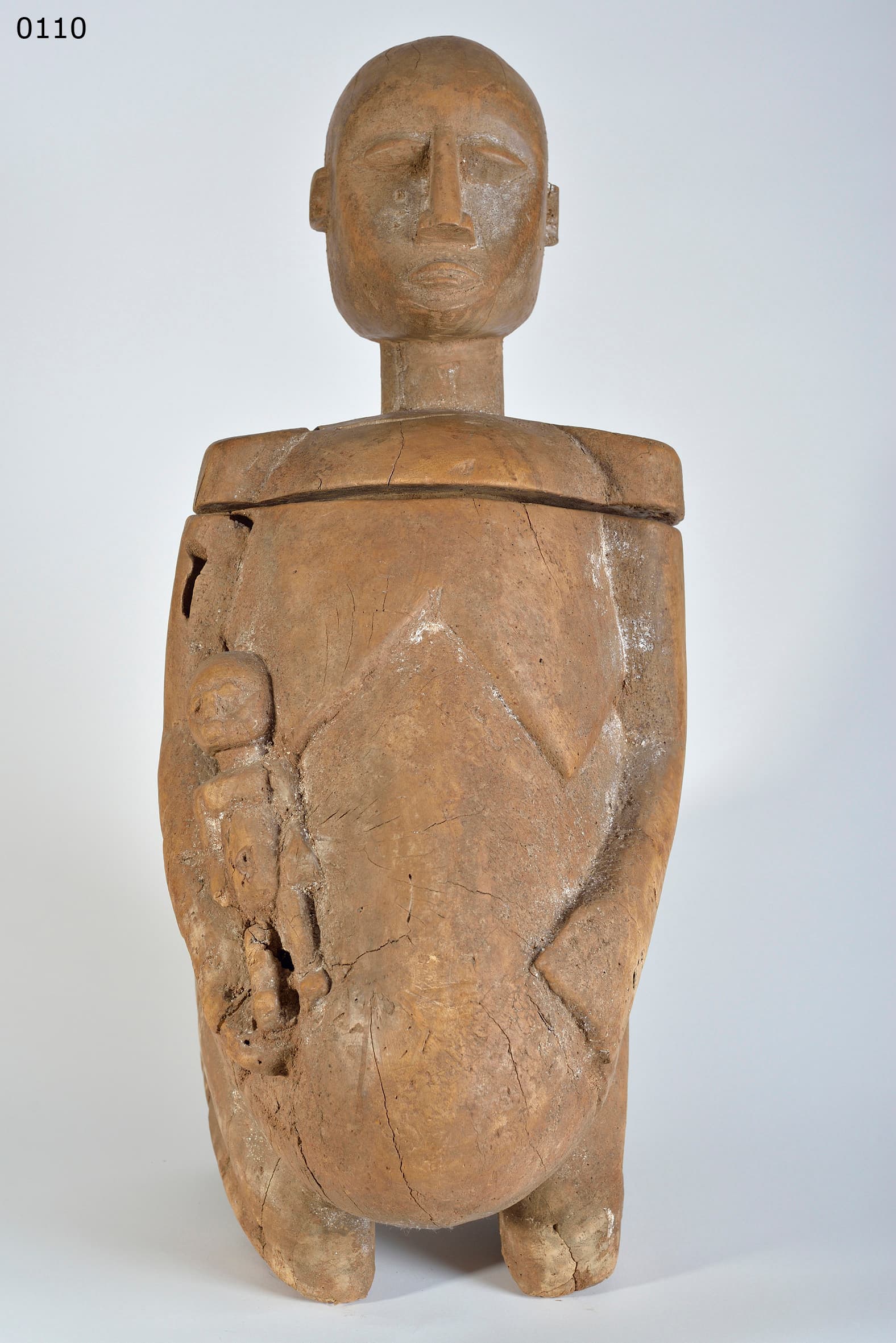
Eine archaische, stark verwitterte Holzfigur, die starr mit den Händen auf dem Bauch steht. Sie zeigt starke Austrocknung, ein erodiertes Gesicht und einen um die Hüften gewickelten Metalldraht.
1. Ästhetischer Stil und regionale Eigenheiten
Diese Figur ist ein klassisches Beispiel für einen bateba phuwe (gewöhnlicher Bateba), der sich durch seine starre, symmetrische und frontale Haltung auszeichnet. Die Lobi-Schnitzer vermieden absichtlich einen übertriebenen Realismus und konzentrierten sich stattdessen auf dichte, blockige Volumina, die ein Gefühl von unnachgiebigem spirituellem Gewicht vermitteln, das für ein Objekt, das übernatürliche Kräfte beherbergen soll, notwendig ist. Die frontale Symmetrie ist funktional diagnostisch: Die Aufgabe eines Phuwe ist es, Wache zu halten, und seine Ikonographie muss eher ständige Wachsamkeit als Aktion oder Bewegung vermitteln.
2. Rituelle Funktion und Mechanik des Thil-Schreins
In der Lobi-Kosmologie ist der Schöpfergott weit entfernt, so dass sich die Menschen zum Schutz auf die Naturgeister (thila) verlassen. Bateba sind die physischen, hölzernen Gefäße, die von Wahrsagern in Auftrag gegeben werden, um diese Geister zu beherbergen. Diese spezielle Figur wurde in dunklen, privaten Hausschreinen (thildu) aufbewahrt und diente als Wächter, der Hexerei, Krankheit und Unglück vom Haushalt abwehren sollte. Der Metalldraht an der Taille könnte ein Schutzamulett oder einen Miniatur-Lendenschurz gehalten haben - eine Personalisierung, die Wünschelrutengänger oft anbrachten, um der Figur eine bestimmte Aufgabe zuzuweisen.
3. Physische Patina und Altersindikatoren
Die physischen Merkmale dieser Figur sprechen für ein hohes Alter. Das Holz ist stark ausgetrocknet, was zu tiefen, strukturellen Rissen und der Erosion der Gesichtszüge zu einer abstrakten Silhouette geführt hat. Die trockene, verkrustete und stark oxidierte Oberfläche ist vereinbar mit einer Zuschreibung in das 19. Jahrhundert und deutet auf eine längere Verweilzeit in einem traditionellen Schrein aus Lehmziegeln hin. Das Muster der Erosion - die Gesichtszüge wurden aufgeweicht, während die strukturellen Massen erhalten blieben - steht im Einklang mit einer jahrzehntelangen Aufbewahrung in einer feuchten, rauchgefüllten Schreinumgebung.
Zusammenfassung
Eine ausdrucksstarke und archaische Lobi-Bateba, die als physischer Anker für schützende Dorfgeister gedient haben dürfte. Seine stark erodierte Oberfläche, die auf das 19. Jahrhundert hindeutet, macht das Objekt zu einem anschaulichen Zeugnis der komplexen animistischen Traditionen Burkina Fasos.
KI-unterstützt erstellt aus Sammlungsgutachten, Objektfotografie und eigener Recherche, redaktionell geprüft. Fehler sind möglich — Hinweise darauf sind uns willkommen. Zum Verfahren →
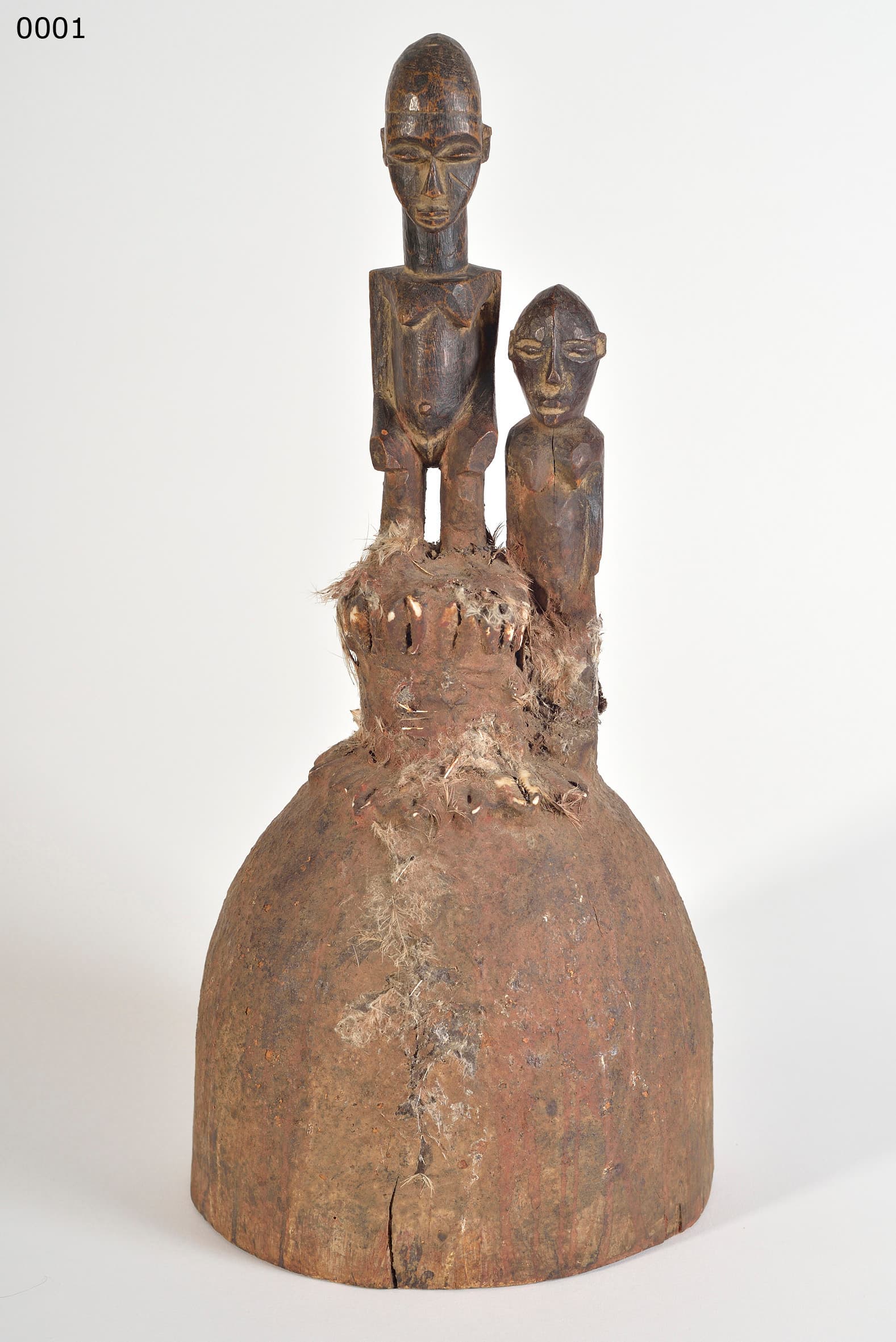
Schreinaltar mit Ehepaar BATEKE
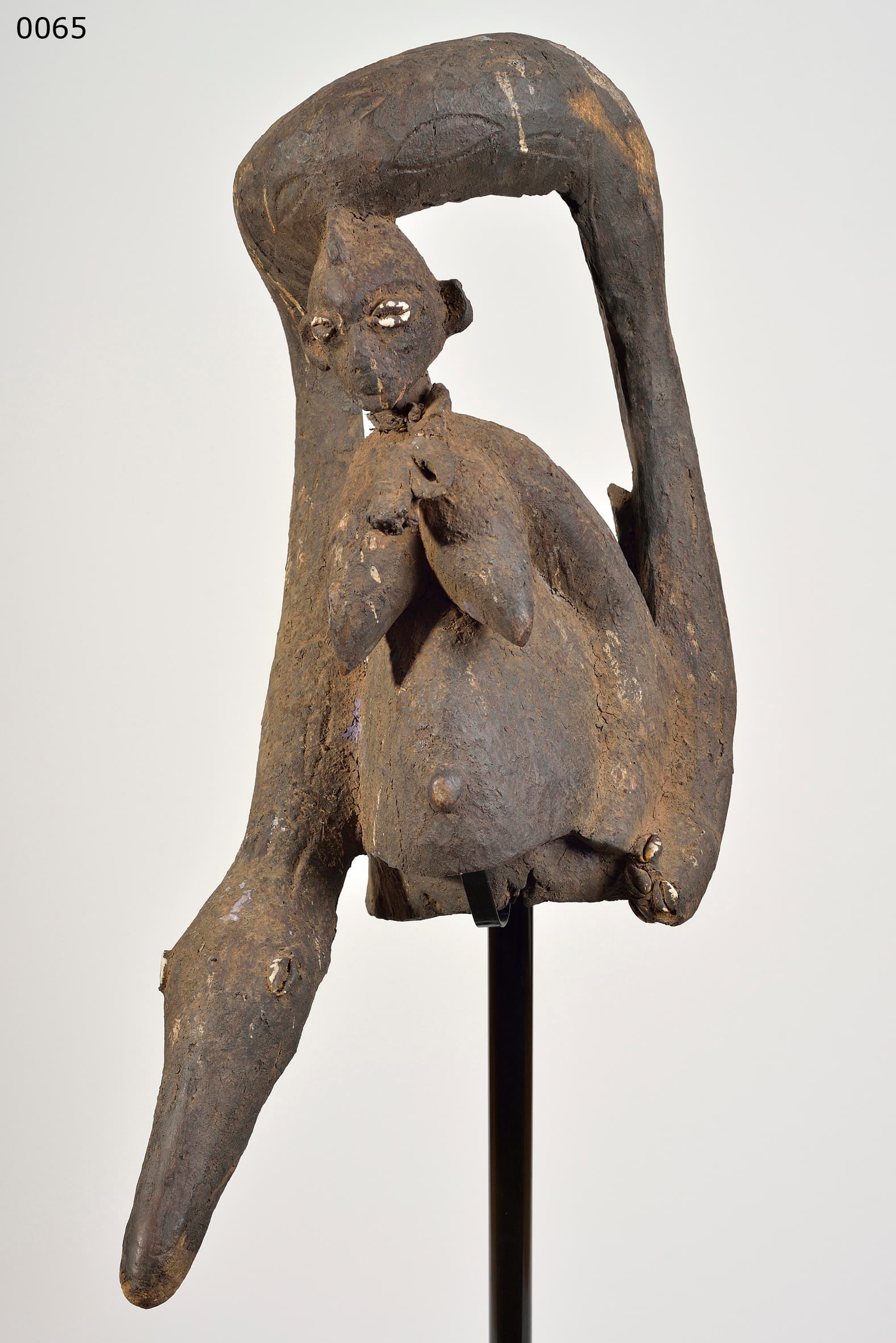
Seltene Kopfhaubenmaske
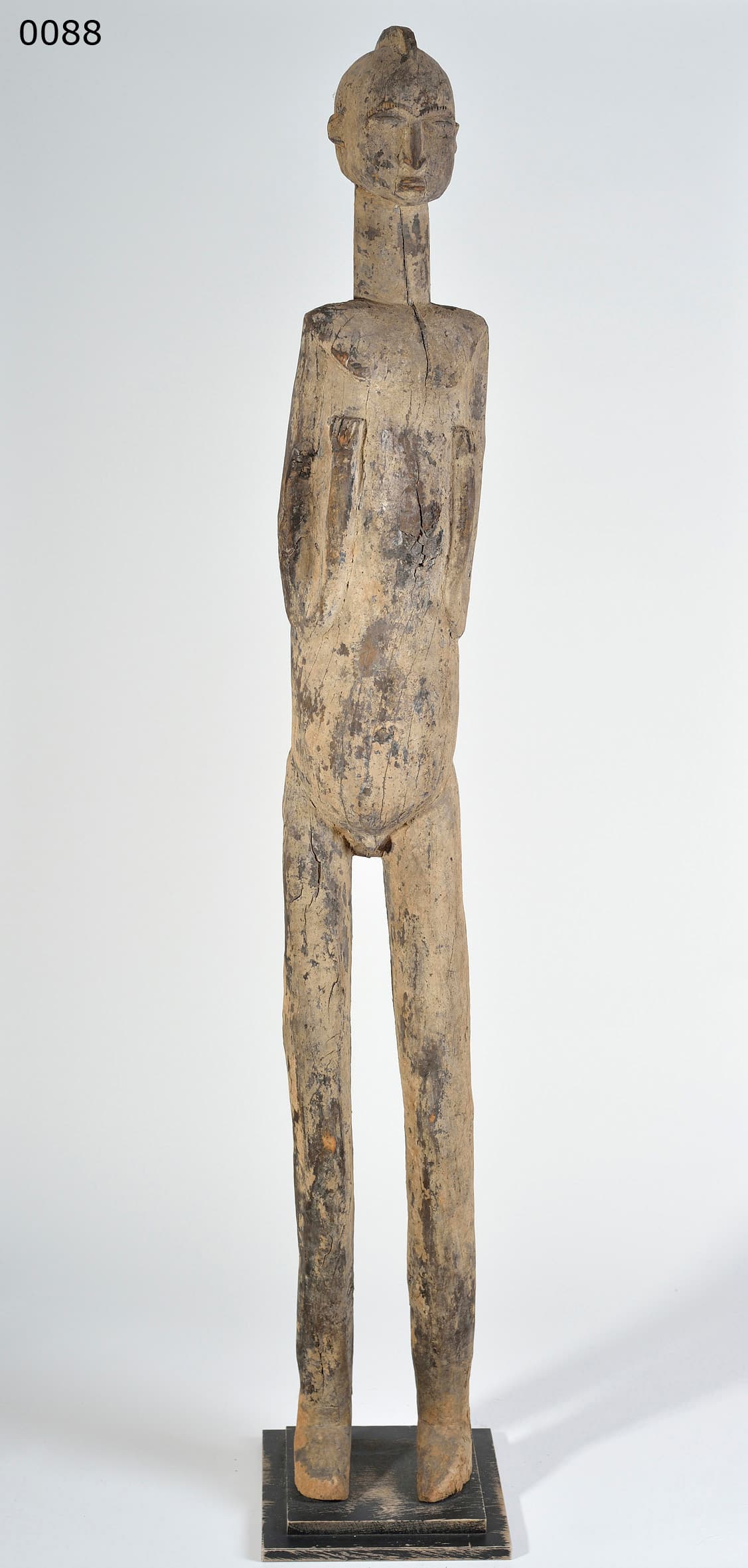
Schreinfigur, die einen BATEBA-Geist darstellt (ungewöhnlich groß, selten)