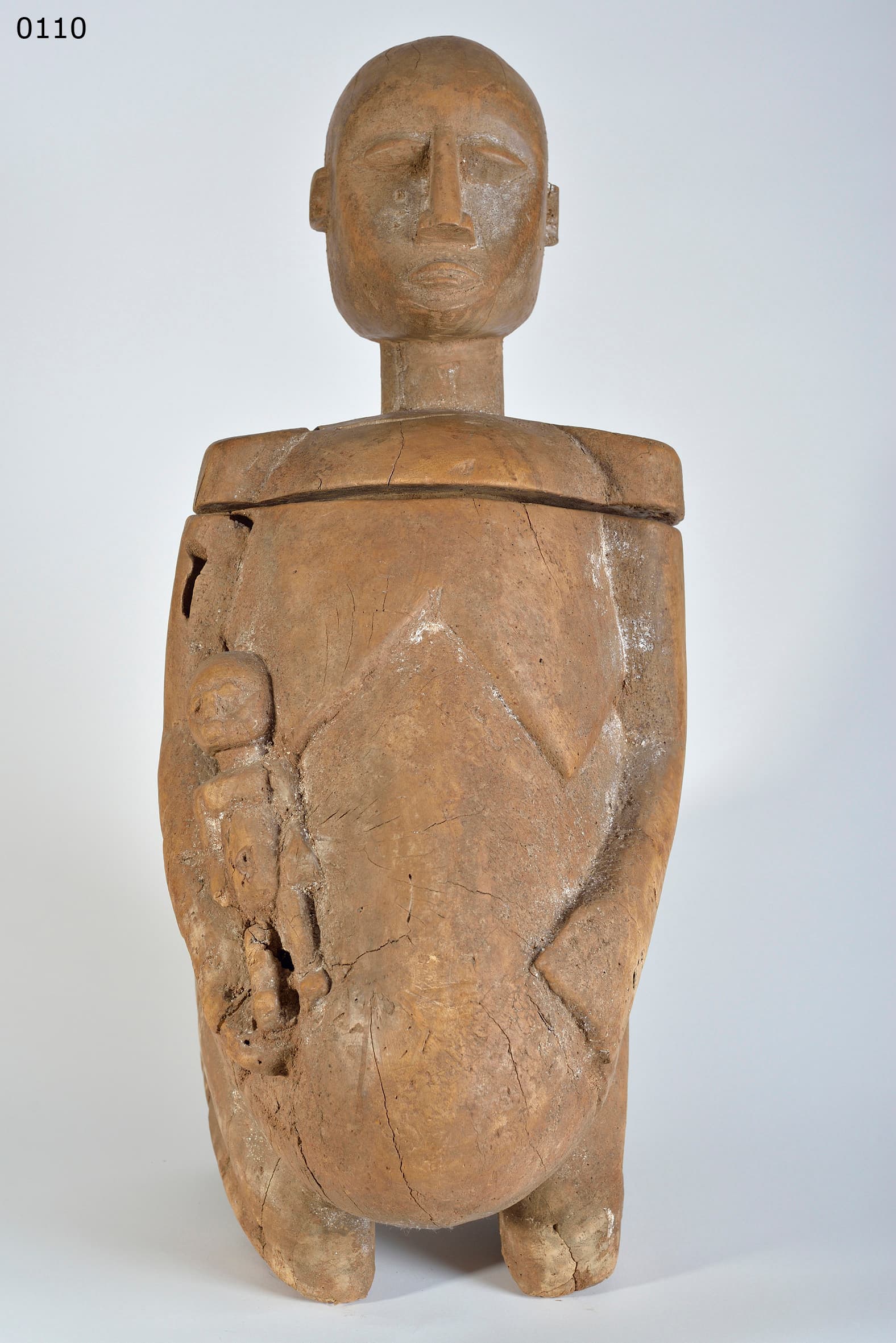
An archaic, deeply weathered wooden figure standing rigidly with hands resting on its abdomen, showing severe desiccation, an eroded face, and a metal wire wrapped around its hips.
1. Aesthetic style and regional traits
This figure is a classic example of a bateba phuwe (ordinary bateba), characterized by its rigid, symmetrical, and frontal posture. Lobi carvers intentionally avoided hyper-realism, instead focusing on dense, blocky volumes that convey a sense of unyielding spiritual weight, necessary for an object designed to house supernatural forces. The frontal symmetry is consistent with its traditional role: a phuwe's function is to stand watch, and its iconography typically communicates fixed alertness rather than action or motion.
2. Ritual function and thil shrine mechanics
In Lobi cosmology, the creator god is distant, so humans rely on nature spirits (thila) for protection. Bateba are the physical, wooden vessels commissioned by diviners to house these spirits. Kept in dark, private domestic shrines (thildu), this specific figure stood as a sentinel, tasked with warding off witchcraft, illness, and misfortune from the household. The metal wire at the waist may have held a protective amulet or a miniature loincloth — a personalization that diviners often added to anchor a specific assigned task to the figure.
3. Physical patina and age characteristics
The physical characteristics of this figure suggest significant age. The wood shows severe desiccation, resulting in deep, structural fissures and the erosion of the facial features into a haunting, abstract silhouette. This dry, crusty, and heavily oxidized surface is consistent with the 19th-century attribution, surviving long-term exposure in a traditional mud-brick shrine. The pattern of erosion — facial features softened while structural masses survive — is consistent with a multi-decade tenure in a humid, smoke-filled shrine environment.
Summary
A deeply evocative Lobi bateba that serves as a physical anchor for protective village spirits. Its heavily eroded surface is consistent with a 19th-century origin, representing Burkina Faso's complex animist traditions.
Written with AI assistance from the collection appraisal, object photography and our own research; editorially reviewed. Mistakes are possible — corrections are welcome. How we work →
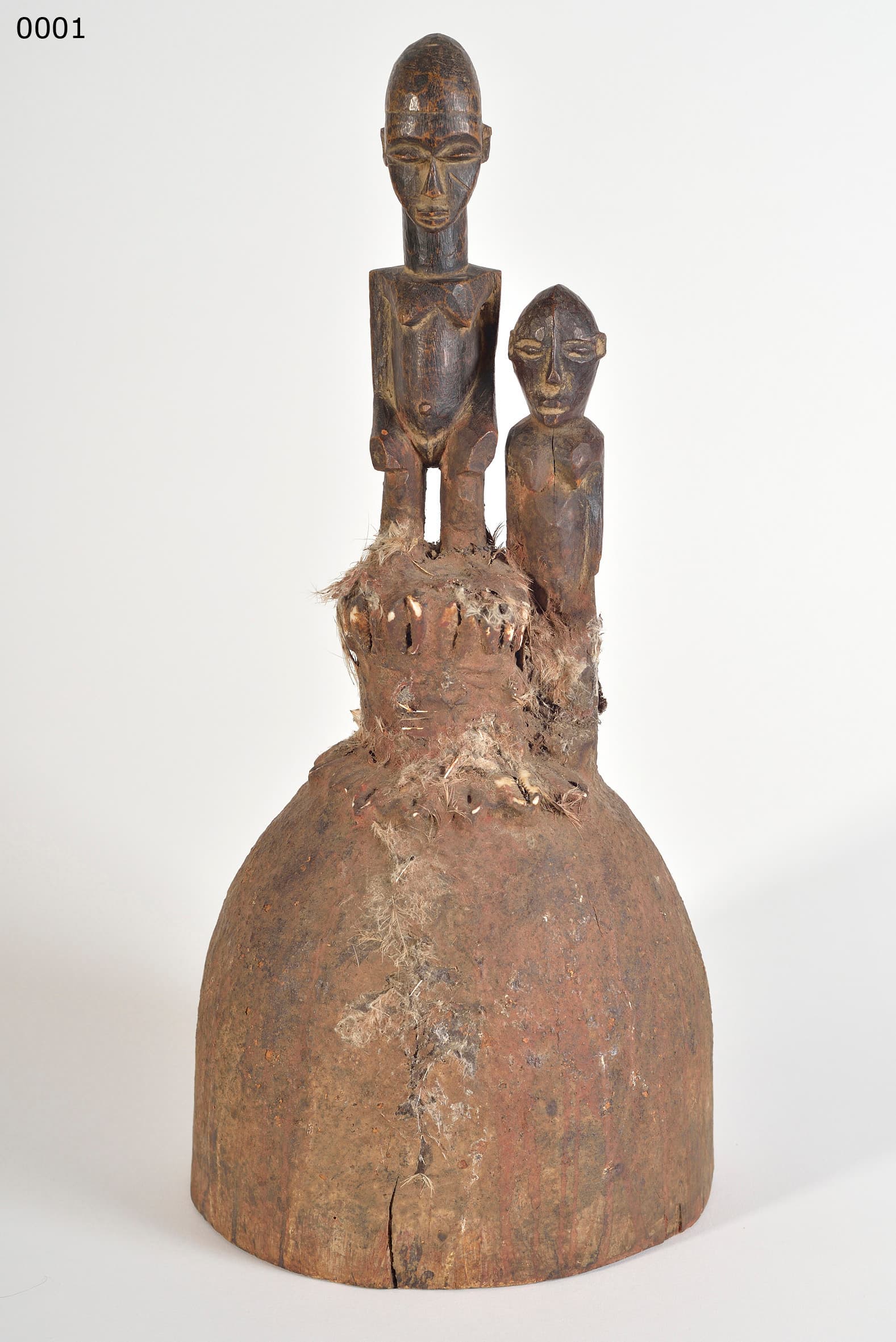
shrine altar with BATEKE couple
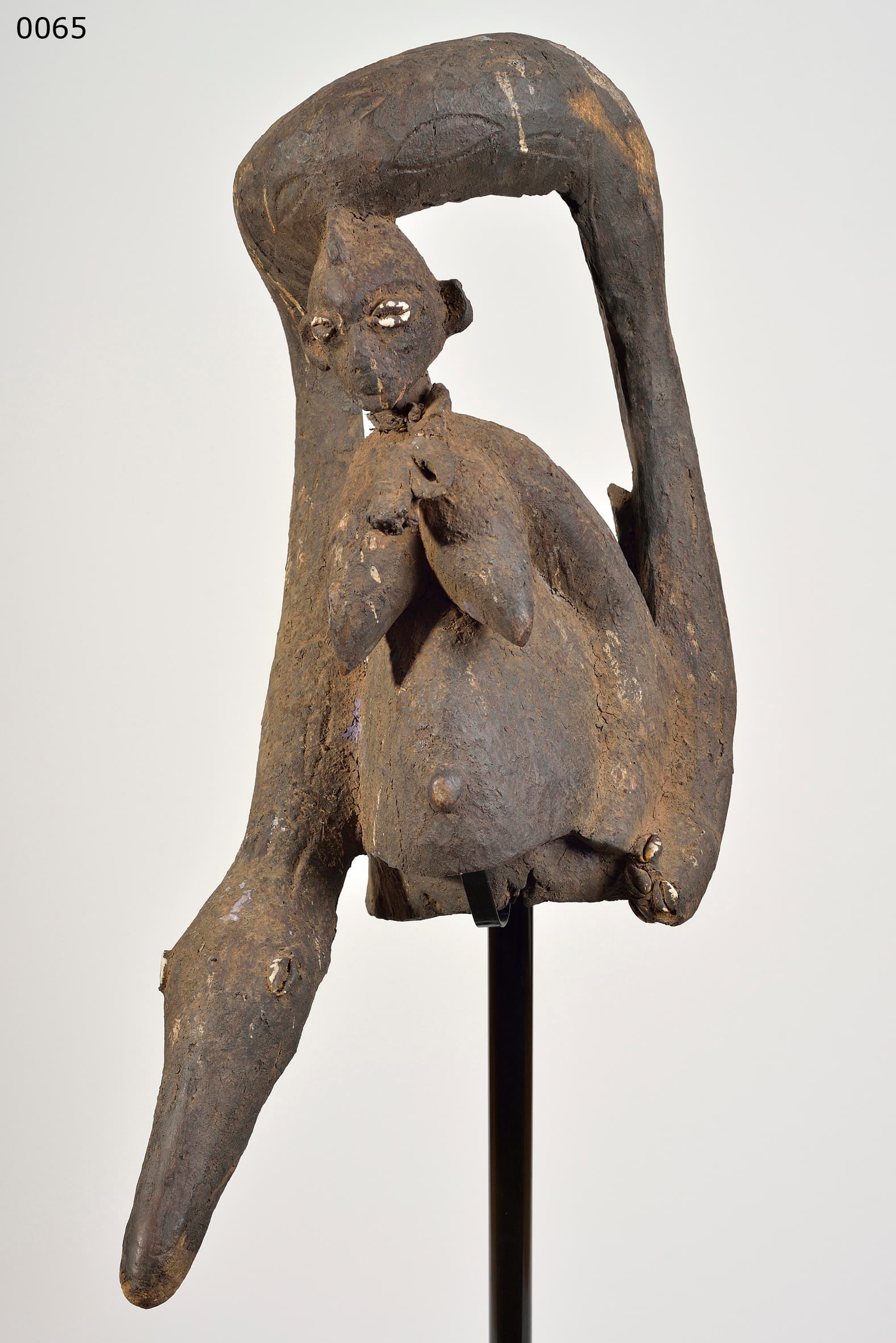
rare head crest mask
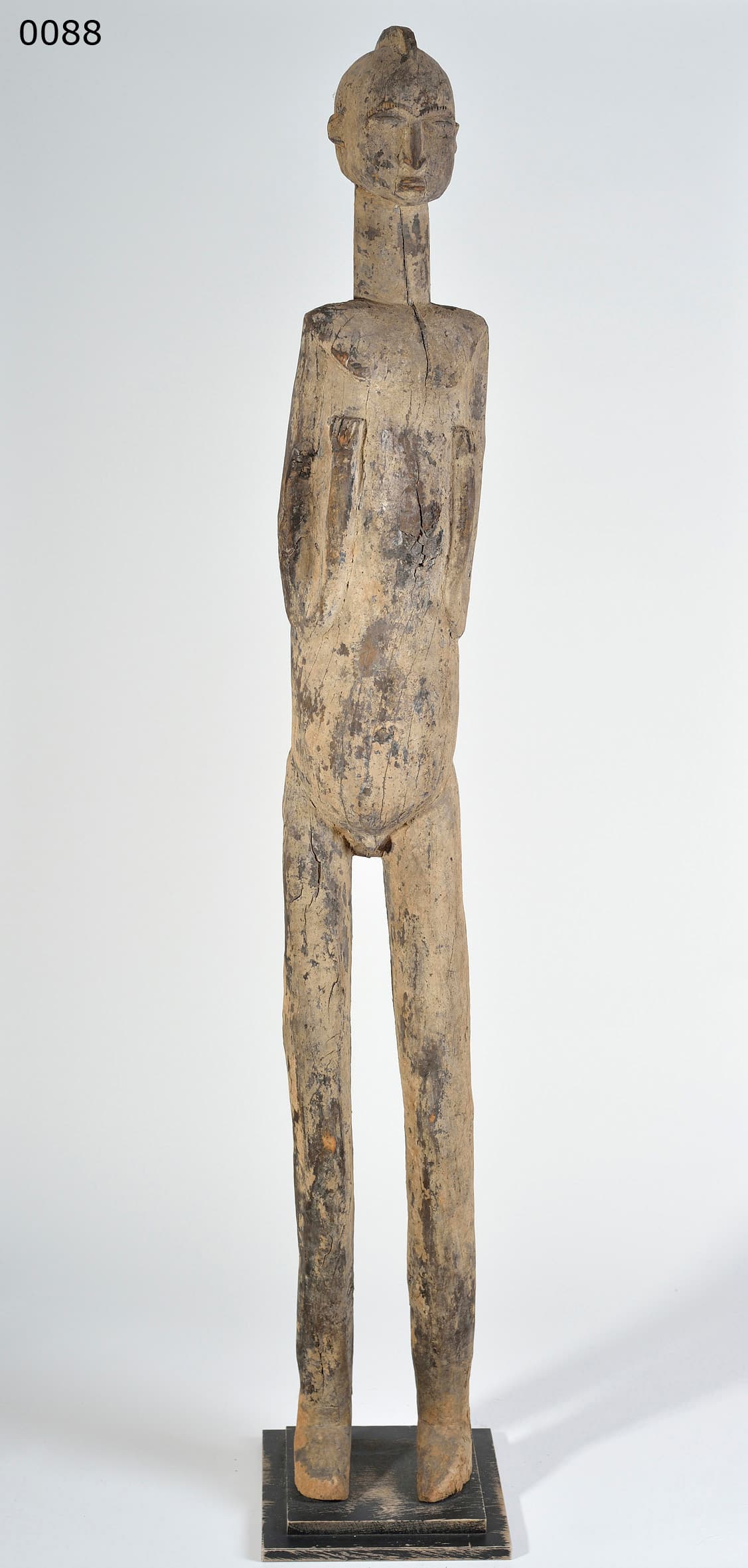
shrine figure representing a BATEBA spirit (unusually tall, rare)