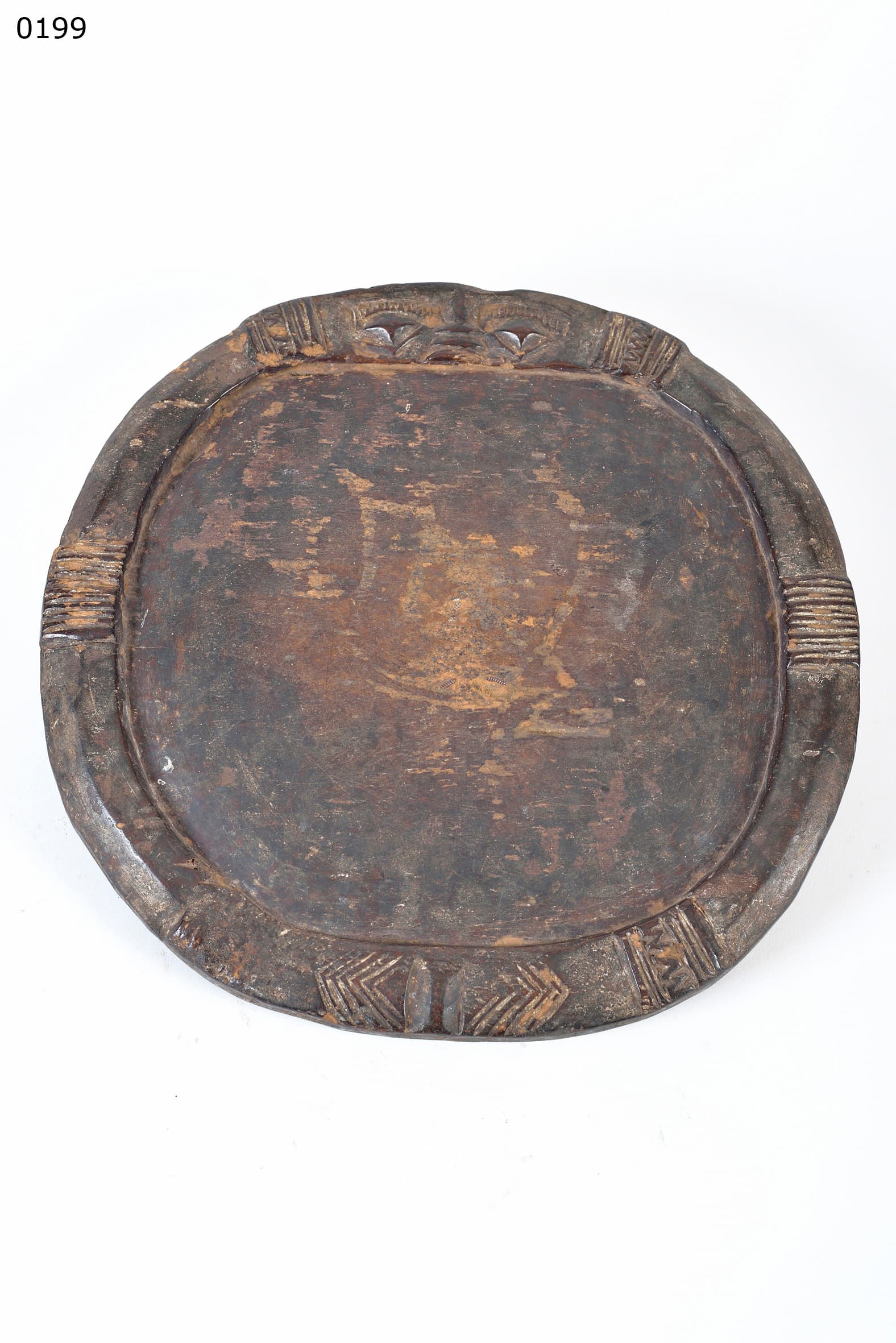
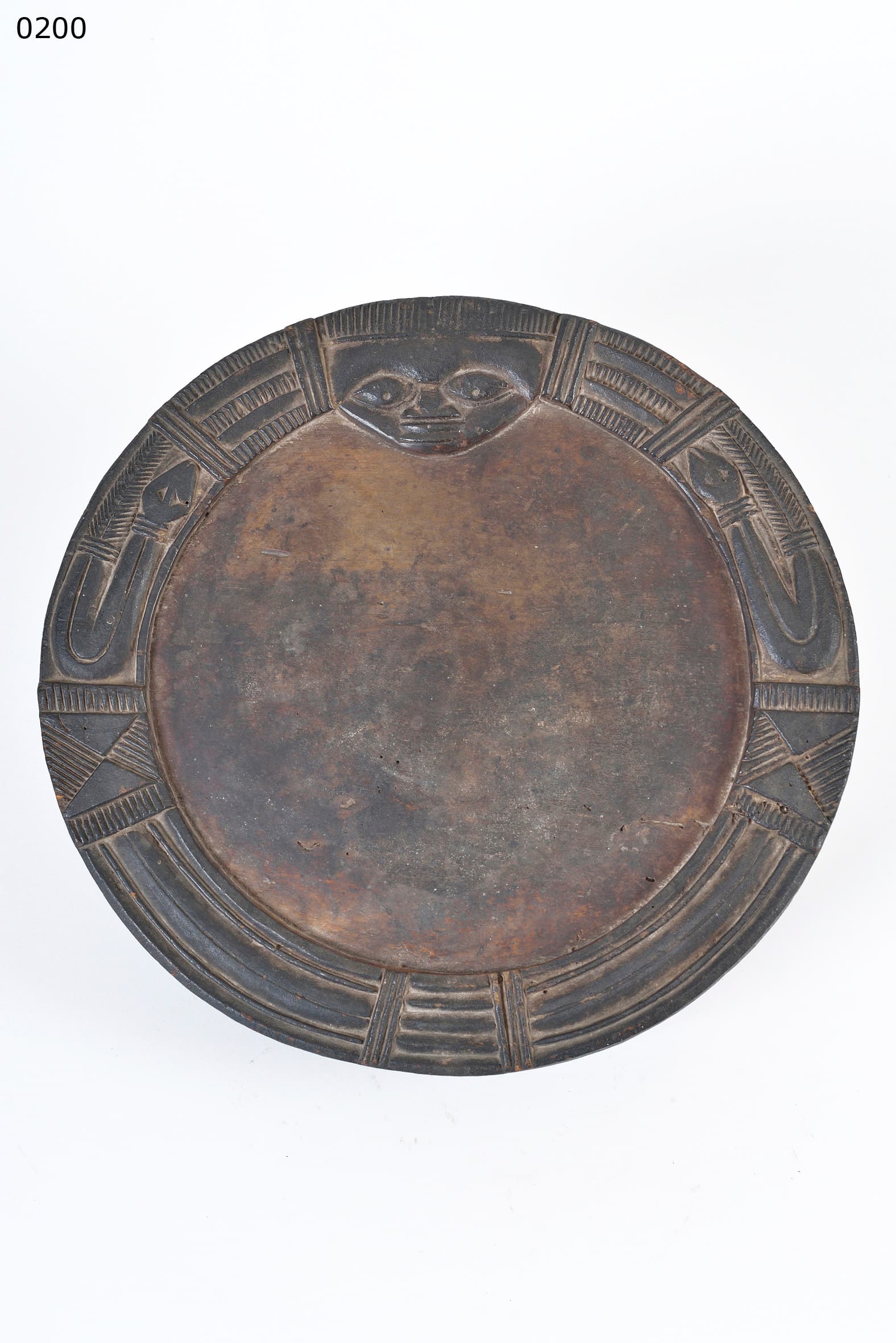
Eine stehende hölzerne weibliche Zwillingsfigur, die mit mehreren Strängen bunter Glasperlen um Hals, Taille und Handgelenke geschmückt ist. Sie hat eine hohe, kantige Frisur mit blauem Pigment und großen, markanten Gesichtszügen.
1. Ästhetischer Stil und regionale Eigenheiten
Dieser Ere Ibeji repräsentiert die klassischen ästhetischen Ideale der Yoruba-Holzschnitzerei und stammt wahrscheinlich aus den Regionen Oyo oder Osogbo. Die Figur stellt den verstorbenen Säugling nicht als Baby, sondern als körperlich reifen Erwachsenen in der Blüte seines Lebens dar. Der unverhältnismäßig große Kopf, der die spirituelle Essenz (ase) beherbergt, und die komplizierte, hochgeschlossene Frisur spiegeln den immensen Respekt wider, der Zwillingen in der Yoruba-Kosmologie entgegengebracht wird. Die Darstellung der Figur als reifer Erwachsener und nicht als Säugling ist selbst von lehrhafter Bedeutung - die Zwillingstheologie der Yoruba geht davon aus, dass der Geist des ibeji auch nach dem Tod des Kindes weiter reift, so dass die Figur in ihrem entsprechenden Entwicklungsstadium dargestellt werden muss.
2. Rituelle Funktion und Zwillingsverehrung
Die Yoruba haben eine der höchsten Zwillingsraten der Welt, und Zwillinge gelten als heilige Wesen, die entweder großes Glück oder schreckliches Unglück bringen können. Nach dem Tod eines Zwillings wurde diese Skulptur in Auftrag gegeben, um als Ruhestätte für die Seele zu dienen. Die Mutter behandelte die Skulptur genauso wie das überlebende Kind - sie wusch sie, fütterte sie und schmückte sie mit teuren importierten Glasperlen, um den Geist zu besänftigen. Die Arbeit der Hingabe war beträchtlich und kontinuierlich, wobei der Tagesablauf der Mutter auf die fortlaufende materielle Versorgung des verstorbenen Zwillings ausgerichtet war.
3. Physische Patina und Alterungsspuren
Die physische Oberfläche dieses Ibeji ist ein Abbild der mütterlichen Hingabe. Das Haar ist voll mit einheimischem Reckitt's Blue Pigment (ein wertvoller Handelsartikel, der zur Verehrung von Geistern verwendet wird), während in den tiefen Ritzen des Körpers Spuren von rotem Rotholzpulver (osun) zu finden sind, mit dem das Holz gesalbt wurde. Die glatten, handgescheuerten markanten Merkmale zeugen von jahrzehntelanger liebevoller Behandlung. Die Kombination mehrerer verschiedener ritueller Substanzen, die sich in unterschiedlichen anatomischen Zonen angesammelt haben, ist ein vielschichtiges chronologisches Zeugnis, das bei einer kürzlich hergestellten Figur in dieser Form selten anzutreffen ist.
Zusammenfassung
Ein zentraler und tief berührender Yoruba ere ibeji, der die kulturelle Verehrung und den komplexen kosmologischen Glauben an Zwillinge widerspiegelt. Die reichhaltigen Pigmentschichten, die importierten Perlen und die Patina sprechen für ein authentisch genutztes rituelles Objekt von hoher Qualität.
KI-unterstützt erstellt aus Sammlungsgutachten, Objektfotografie und eigener Recherche, redaktionell geprüft. Fehler sind möglich — Hinweise darauf sind uns willkommen. Zum Verfahren →