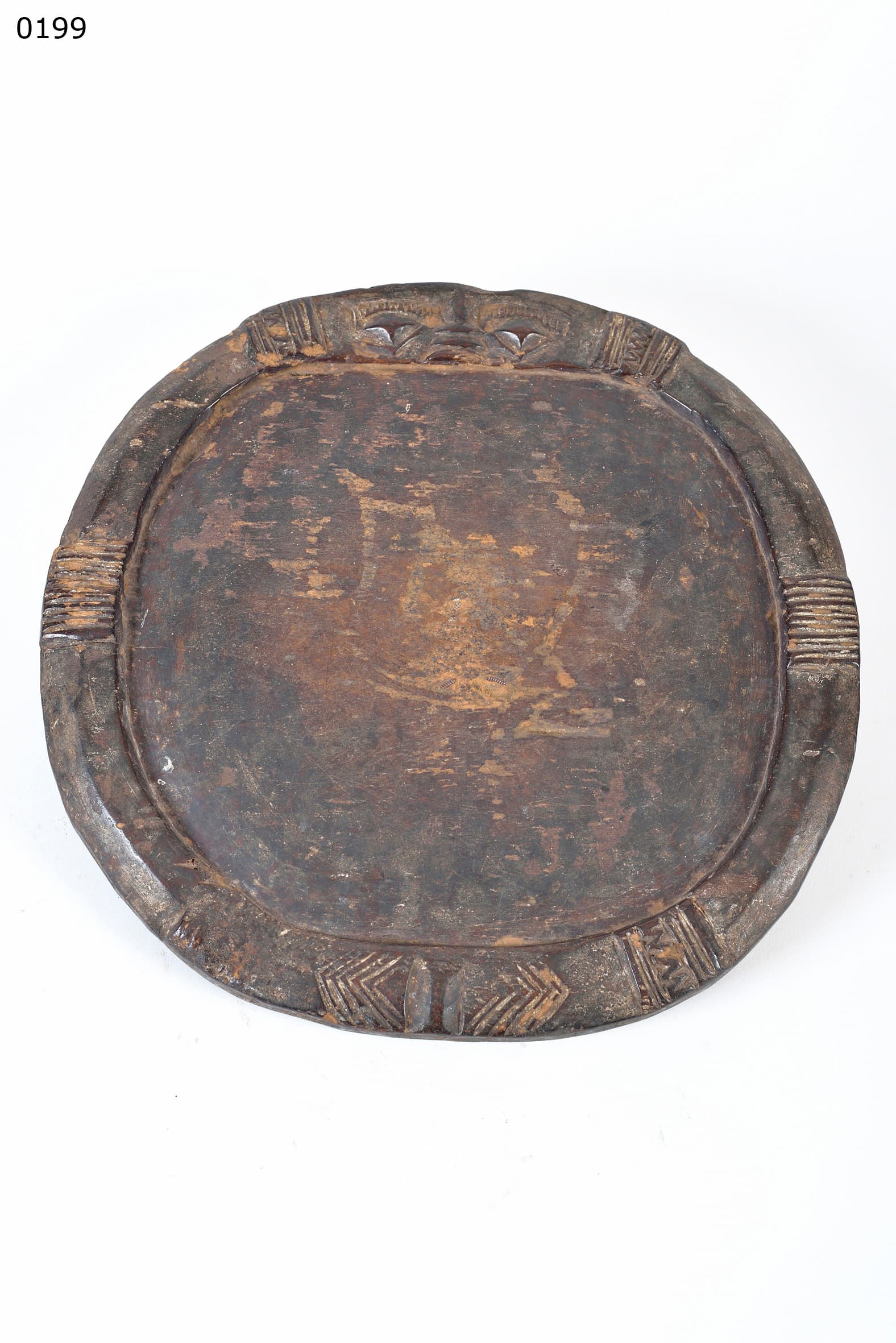
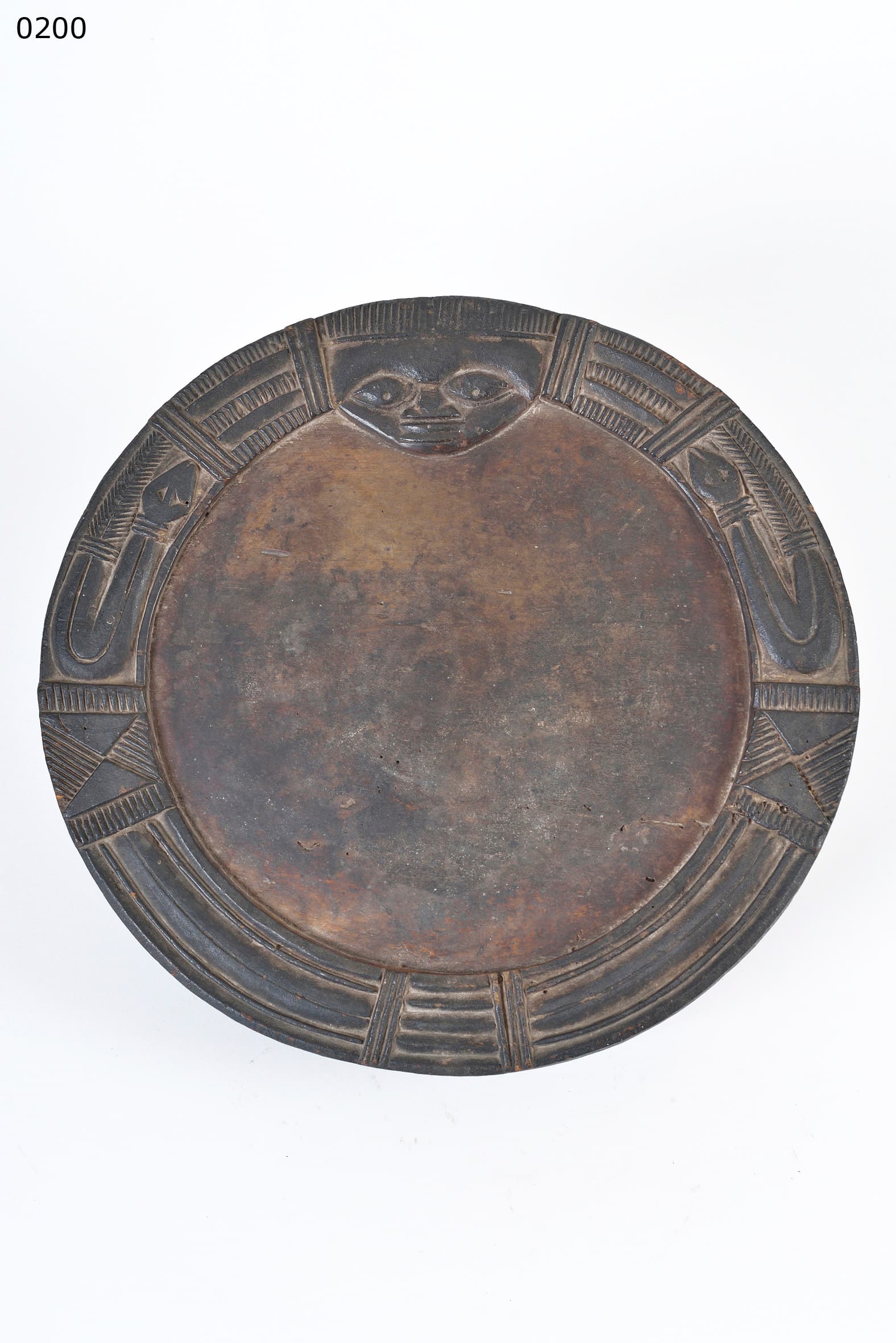
Ein männliches und ein weibliches Paar hölzerner Zwillingsfiguren mit stark ausgeprägten, langgestreckten dreieckigen Köpfen, tief eingeschnittenen linearen Gesichtsskarifikationen und hohen, spitzen Frisuren. Beide Figuren weisen eine dunkle, gleichmäßig polierte Patina auf.
1. Ästhetischer Stil und regionale Merkmale
Dieses Paar weicht vom verbreiteten Naturalismus vieler Yoruba-Darstellungen ab und zeigt einen spezifischen regionalen Stil, der mit dem Egba- oder dem nördlichen Oyo-Gebiet in Verbindung gebracht werden kann. Die Gesichter sind als scharfe, umgekehrte Dreiecke dargestellt, die von wulstigen Augen und ausgedehnten Skarifikationen (Pele-Zeichen) dominiert werden. Diese geometrische Stilisierung unterscheidet sich von den runderen, klassischen Ibeji-Formen. Das dreieckige Gesichtsvokabular legt eine werkstattspezifische Zuordnung nahe und könnte bei einem weiteren regionalen Vergleich zur Identifizierung der Schnitzlinie beitragen.
2. Rituelle Funktion und das Taiwo/Kehinde-Paar
Diese Figuren wurden zur Darstellung eines gemischtgeschlechtlichen Zwillingspaars (traditionell Taiwo und Kehinde genannt) geschnitzt und sollten sicherstellen, dass das tiefe spirituelle Band zwischen den Geschwistern nicht durch den Tod unterbrochen wird. Durch die mutmaßlich gleichzeitige Beauftragung eines Schnitzers suchte die Familie das Gleichgewicht und die Dualität zu bewahren, die in der spirituellen Philosophie der Yoruba eine zentrale Rolle spielen, und zu verhindern, dass der überlebende Zwilling (oder zukünftige Kinder) in die Geisterwelt gerufen wurde. Die stilistische Einheitlichkeit ist ikonographisch bedeutsam; sie verweist im rituellen Kontext auf den Glauben, dass die beiden Seelen eine Einheit bleiben, selbst nachdem der Tod sie getrennt hat.
3. Physische Patina und Altersnachweis
Die physische Oberfläche dieser Figuren zeigt eine ausgeprägte Struktur. Die dunkle, glänzende Patina ist mit einer langjährigen rituellen Pflege vereinbar – etwa durch das wiederholte Bestreichen mit Palmöl und Ruß. Diese Patina mildert die kantigen Schnitzereien ab und stützt eine zeitliche Einordnung in das frühe 20. Jahrhundert. Die gleichmäßige Beschaffenheit der Patina auf beiden Figuren legt eine parallele rituelle Behandlung des Paares über einen längeren Zeitraum nahe.
Zusammenfassung
Ein stark stilisiertes Paar männlicher/weiblicher Yoruba ere ibeji, das eine ungewöhnliche regionale Geometrie aufweist. Ihre übereinstimmende skulpturale Gestaltung und die tiefe Patina machen sie zu charakteristischen Beispielen westafrikanischer Andachtskunst.
KI-unterstützt erstellt aus Sammlungsgutachten, Objektfotografie und eigener Recherche, redaktionell geprüft. Fehler sind möglich — Hinweise darauf sind uns willkommen. Zum Verfahren →