Ein Paar grob geschnitzter, minimalistischer Holzfiguren (eine männliche, eine weibliche) mit spitzen, kuppelförmigen Köpfen und kurzen, blockigen Gliedmaßen. Beide Figuren sind vollständig in eine dicke, geschwärzte und teerartige Opferpatina gehüllt.
1. Ästhetischer Stil und regionale Eigenheiten
Diese Figuren sind im üblichen Phuwe-Stil geschnitzt, der sich durch eine steife, frontale und unnachgiebige Haltung auszeichnet. Der Lobi-Schnitzer lässt die Formen absichtlich grob und blockhaft; die ästhetische Schönheit des Objekts ist völlig zweitrangig gegenüber seiner funktionalen Fähigkeit, einen Geist zu beherbergen. Es sind Gefäße der Macht, keine Kunstobjekte zur öffentlichen Zurschaustellung. Die absichtliche Rauheit ist selbst das Funktionssignal - eine übermäßig verfeinerte Bateba würde eher auf einen dekorativen als auf einen funktionalen Auftrag hindeuten.
2. Rituelle Funktion und symmetrisches Gleichgewicht
In der Lobi-Kosmologie verlangen die spirituellen Kräfte der Natur (thila) oft nach einer Darstellung in Form von Paaren. Ein männlicher und ein weiblicher Bateba, die zusammen auf einem Schrein platziert werden, stehen für das kosmische Gleichgewicht und stellen sicher, dass die aggressiven, schützenden Qualitäten des Männchens durch die nährenden, fruchtbaren Qualitäten des Weibchens harmonisiert werden. Diese Dualität ist für die Aufrechterhaltung des allgemeinen spirituellen Gleichgewichts des Haushalts unerlässlich. Der spezifische Wunsch des thil nach einem gepaarten Auftrag wird durch den Wahrsager mitgeteilt und stellt eher eine bestimmte rituelle Vorschrift als eine stilistische Wahl dar.
3. Physische Patina und Altersindikatoren
Das dominierende Merkmal dieses Paares ist seine intensive, undurchsichtige Patina. Sie wurden in den dunklen Nischen eines aus Lehmziegeln errichteten Thildu (Schreinraum) aufbewahrt und erhielten unzählige Opfergaben aus Blut, Hirse und Palmöl. Diese geronnene, geschwärzte Kruste gilt als physisches Indiz für ihre "Fütterung" und verweist auf ihre Funktion als aktive magische Mittel, die im frühen 20. Jahrhundert verortet werden. Die übereinstimmende Tiefe der Kruste bei beiden Figuren spricht für eine parallele, über einen langen Zeitraum erfolgte rituelle Behandlung des Paares.
Zusammenfassung
Dieses Lobi-Altarpaar veranschaulicht die nüchterne, kompromisslose Natur animistischer Schreinobjekte in Burkina Faso. Die raue, blockige Schnitzerei und die intensiven, teerähnlichen Opferkrustierungen legen nahe, dass es sich um historisch aktive spirituelle Gefäße handelt.
KI-unterstützt erstellt aus Sammlungsgutachten, Objektfotografie und eigener Recherche, redaktionell geprüft. Fehler sind möglich — Hinweise darauf sind uns willkommen. Zum Verfahren →
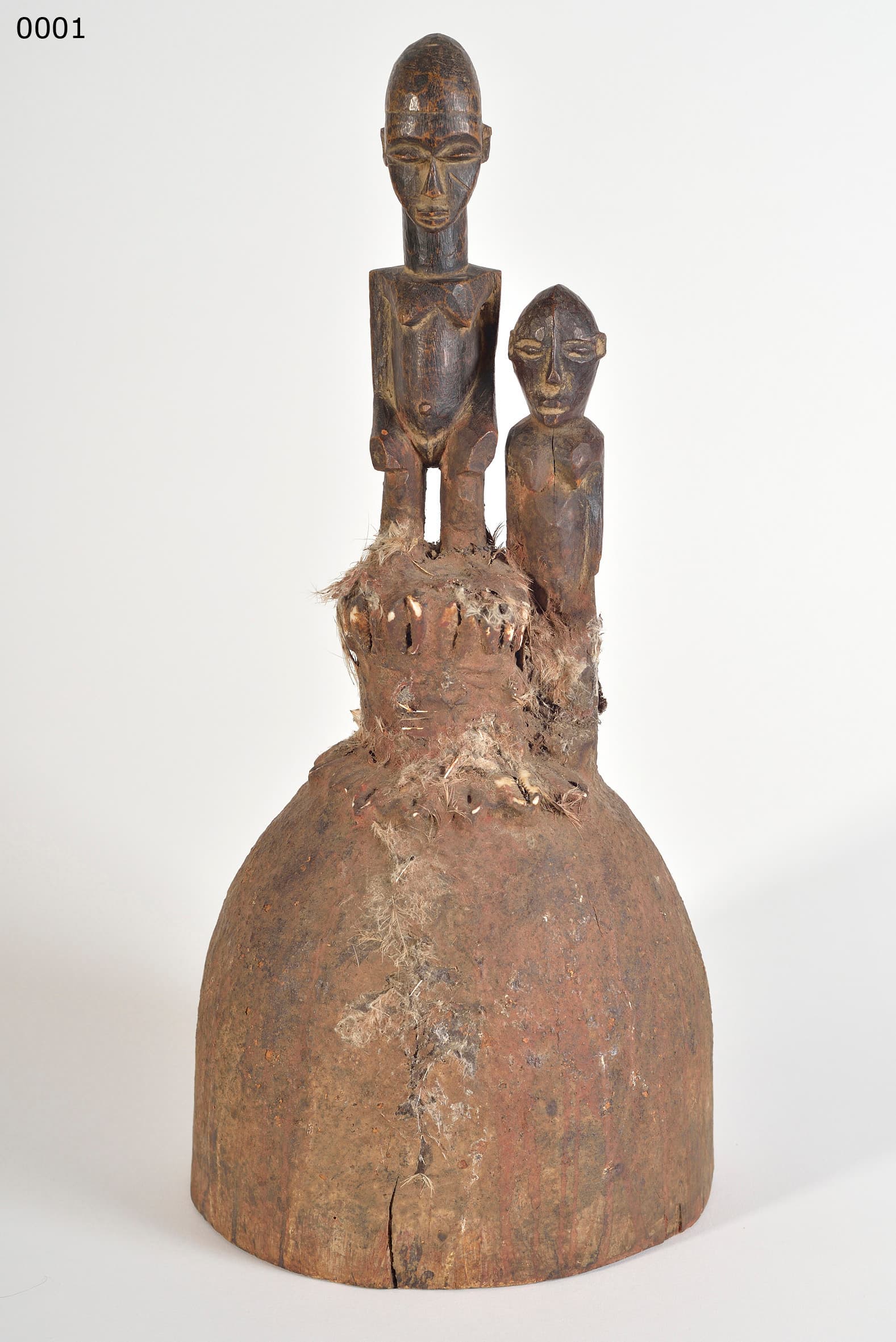
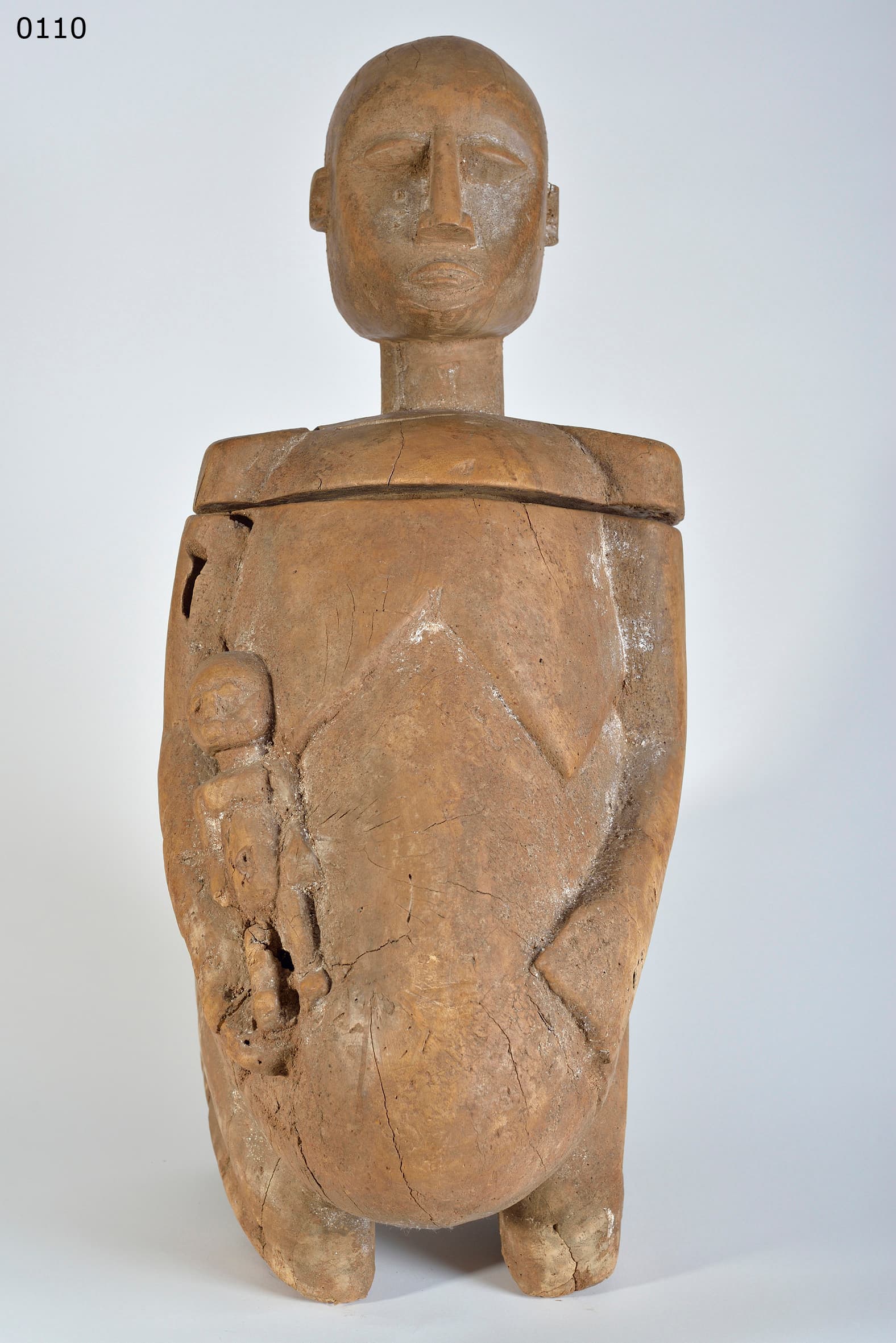
Schreinaltar mit Ehepaar BATEKE
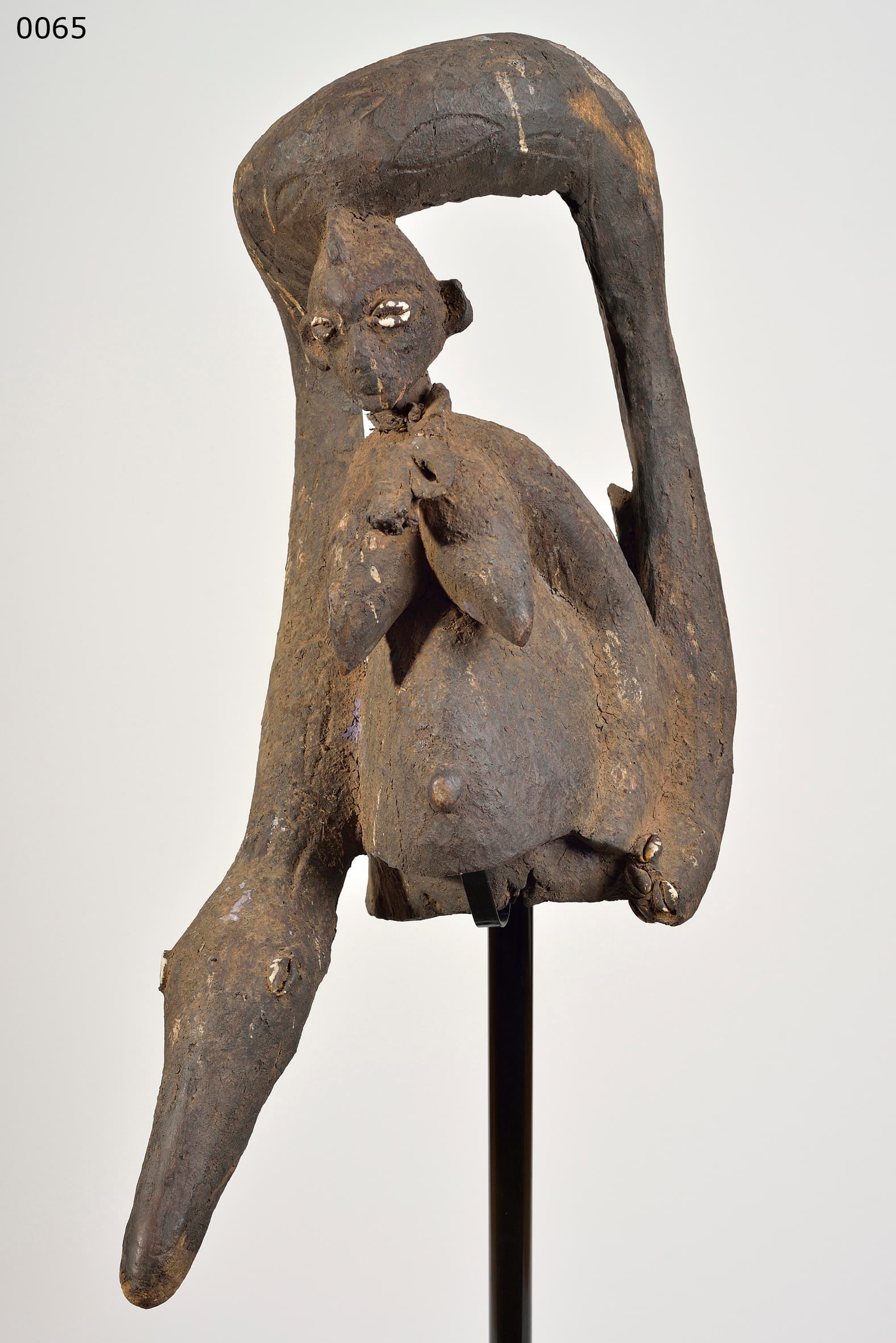
Seltene Kopfhaubenmaske
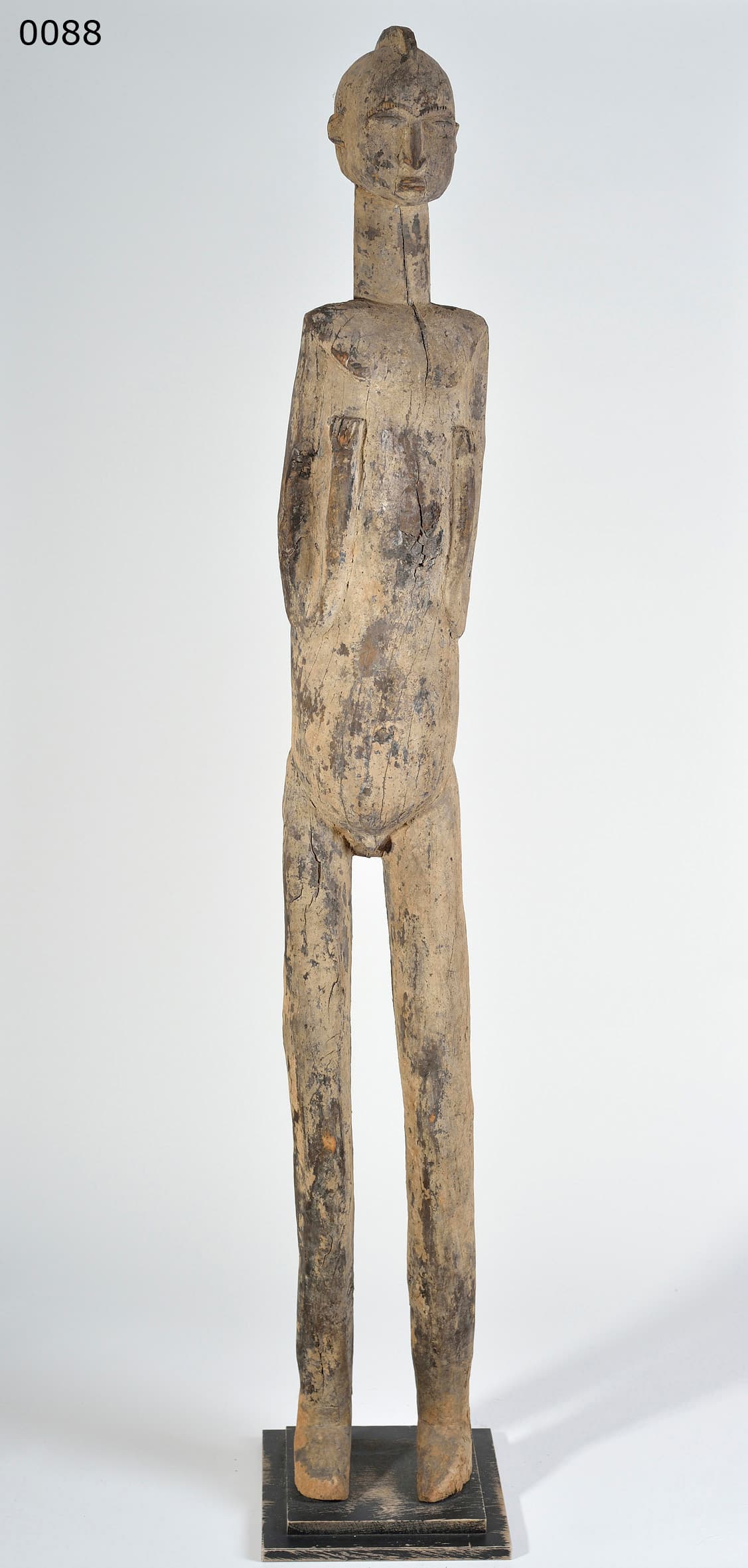
Schreinfigur, die einen BATEBA-Geist darstellt (ungewöhnlich groß, selten)