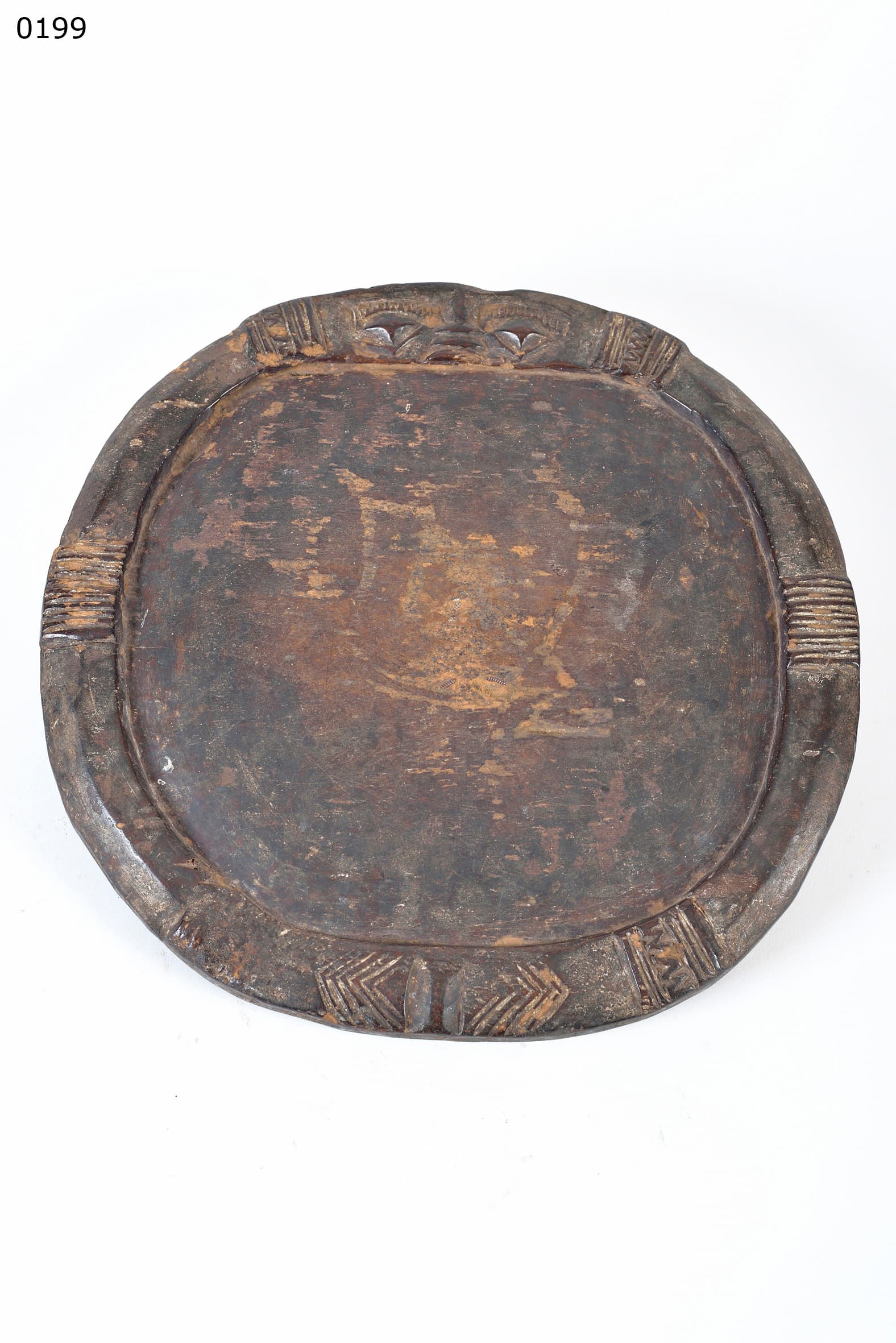
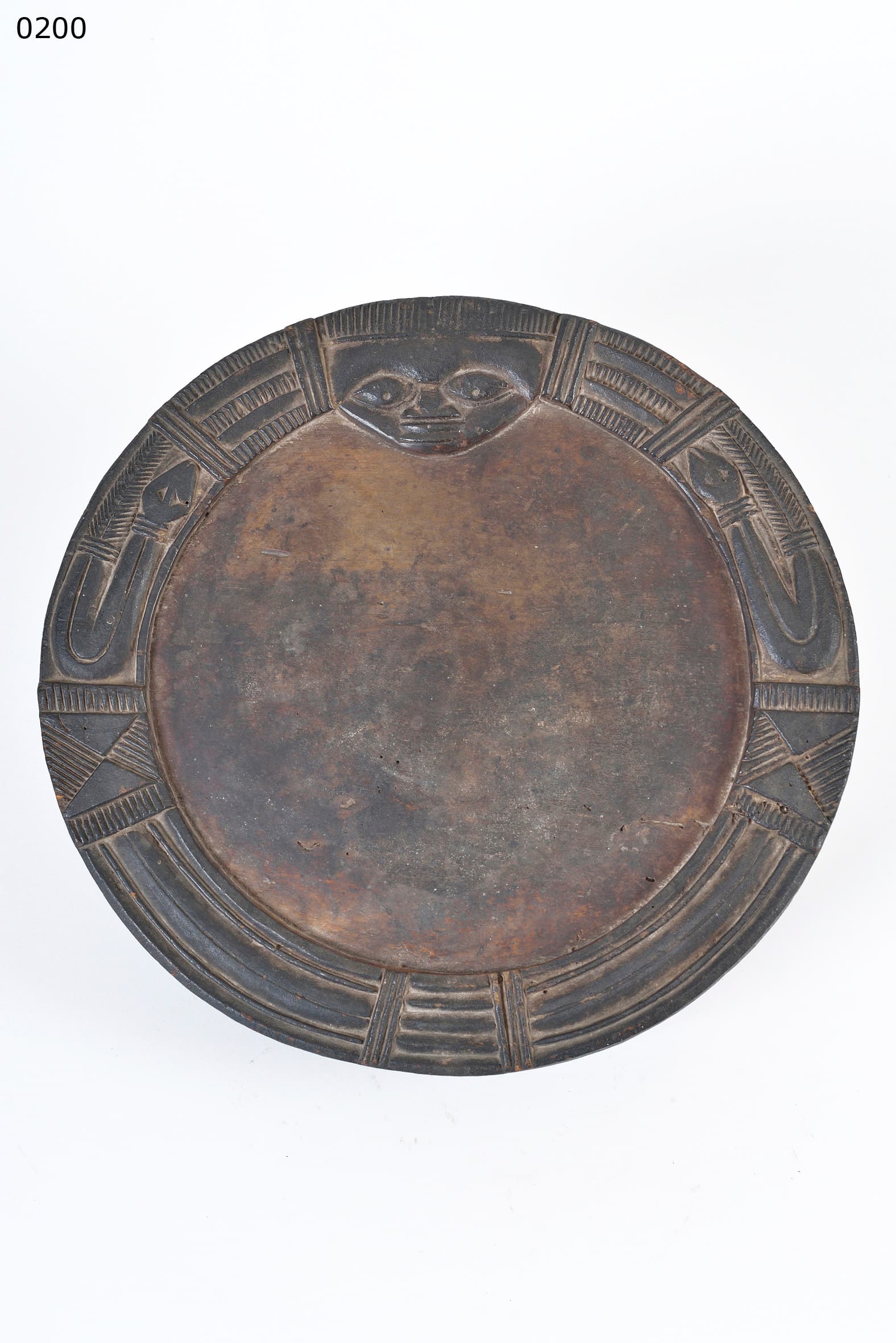
Eine dunkle, glatt polierte hölzerne Reiterfigur, die einen Krieger oder König darstellt, der eine Axt hält und fest auf einem stilisierten, kurzbeinigen Pferd sitzt. Das Stück weist klassische Yoruba-Gesichtsproportionen mit hervorstehenden, wulstigen Augen und eine tiefe, handgescheuerte rotbraune Patina auf.
1. Ästhetischer Stil und regionale Züge In der klassischen Yoruba-Kunst gilt die Reiterfigur (jagunjagun, d. h. Krieger, oder ein Oba) als ein bedeutendes Emblem für kriegerische Überlegenheit und hohe politische Autorität. Da Pferde in den tsetsefliegengefährdeten Wäldern Südnigerias unglaublich selten und teuer im Unterhalt waren, vermittelt die Darstellung eines Mannes zu Pferd sofort Reichtum und Eroberungsmacht. Der überproportional große Kopf des Reiters unterstreicht seine Ori (spirituelle Bestimmung und Weisheit).
2. Rituelle Funktion und Ogun-Verbindung
Diese Skulptur wurde wahrscheinlich als Altarstück für einen Haus- oder Gemeindeschrein in Auftrag gegeben. Sie könnte einen mächtigen vergöttlichten Vorfahren, einen historischen militärischen Anführer oder einen Aspekt von Ogun, dem grimmigen Yoruba-Orisha des Eisens, des Krieges und der Technologie, darstellen. Die vom Reiter gehaltene Axt stellt eine weitere Verbindung zwischen der Figur und kriegerischen Handlungen sowie der Überwindung physischer oder spiritueller Hindernisse für den Verehrer her. Die Figur verkörpert somit sowohl politische als auch göttliche Autorität in einer einzigen ikonografischen Aussage.
3. Physische Patina und Alterungsspuren
Trotz der Diskrepanz zwischen den Tabellenwerten handelt es sich um eine fein ausgeführte Hartholzschnitzerei. Die tiefe, glänzende, rötlich-braune Patina ist das Ergebnis kontinuierlicher einheimischer Pflege. Um das Holz zu schützen und den Geist im Inneren zu ehren, wurde die Figur wiederholt mit Palmöl und möglicherweise Rotholzpulver (osun) eingerieben. Die weichen Ränder an der Schnauze des Pferdes und das Gesicht des Reiters sprechen für eine über längere Zeit erfolgte taktile Verehrung.
Zusammenfassung
Eine charakteristische Yoruba-Reiterfigur, die die kriegerische Macht, den Reichtum und das spirituelle Schicksal der nigerianischen Elite zum Ausdruck bringt. Die feine Schnitzerei, die symbolische Bewaffnung und die reichhaltige Patina machen sie zu einem repräsentativen Beispiel traditioneller Schreinkunst.
KI-unterstützt erstellt aus Sammlungsgutachten, Objektfotografie und eigener Recherche, redaktionell geprüft. Fehler sind möglich — Hinweise darauf sind uns willkommen. Zum Verfahren →