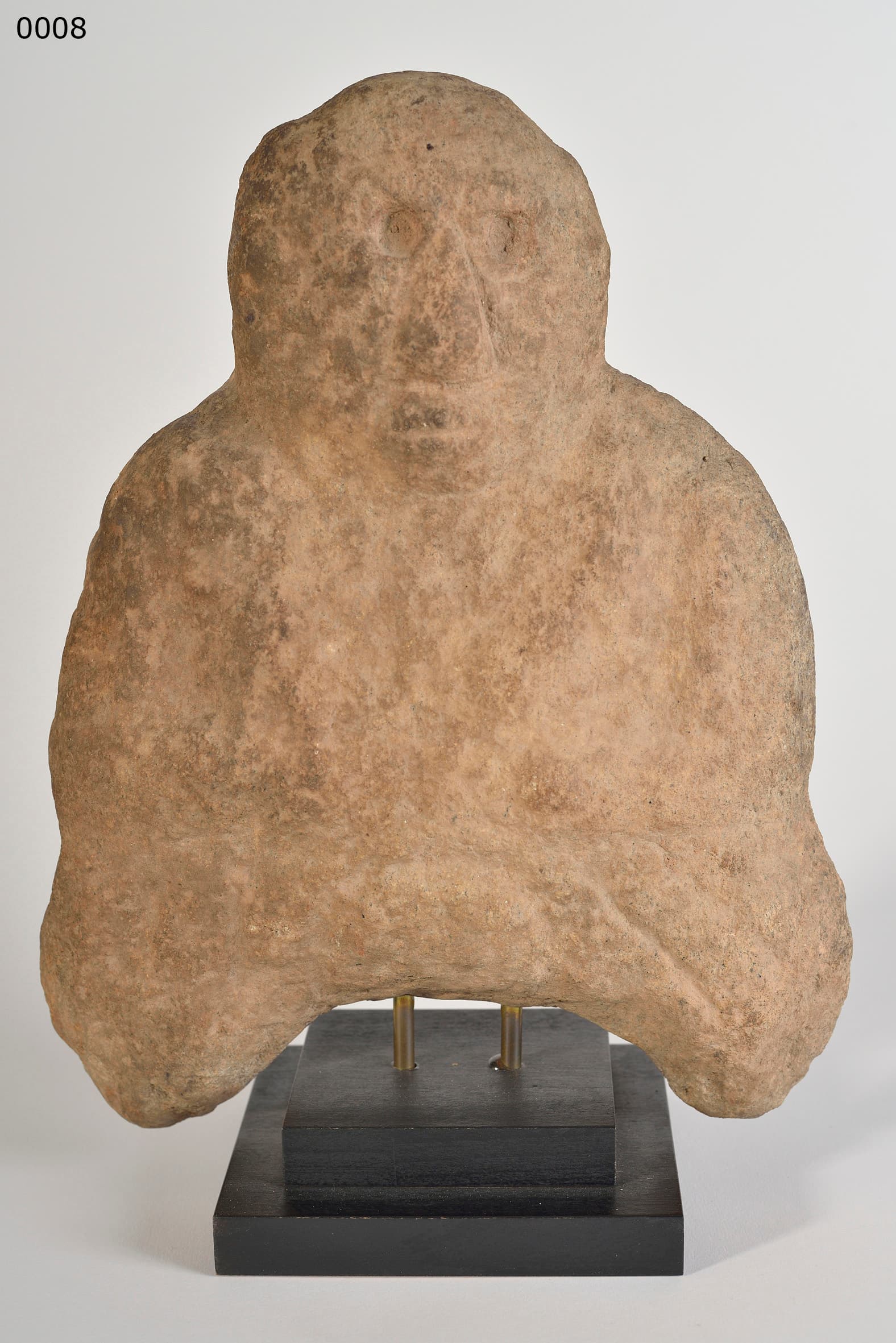
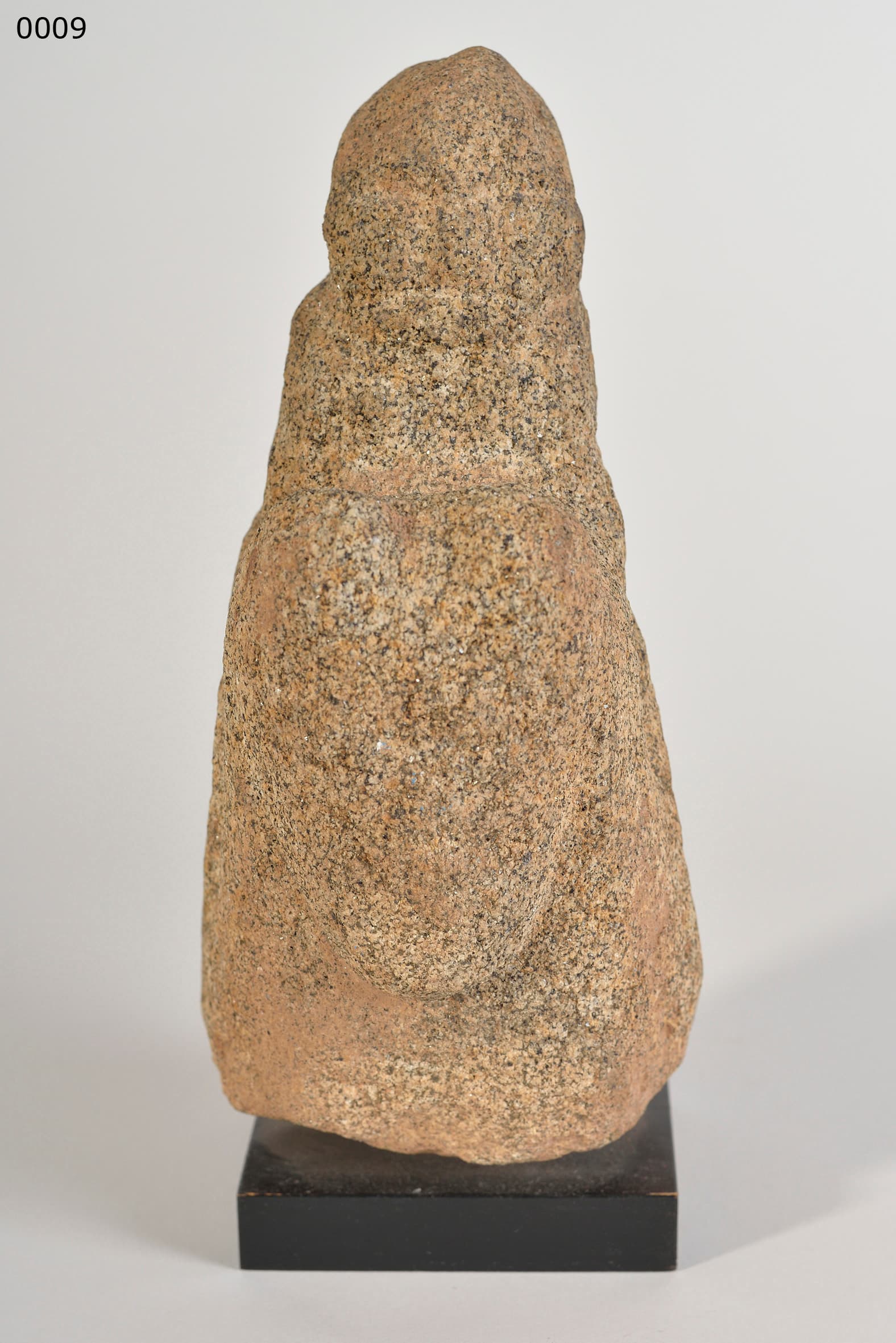
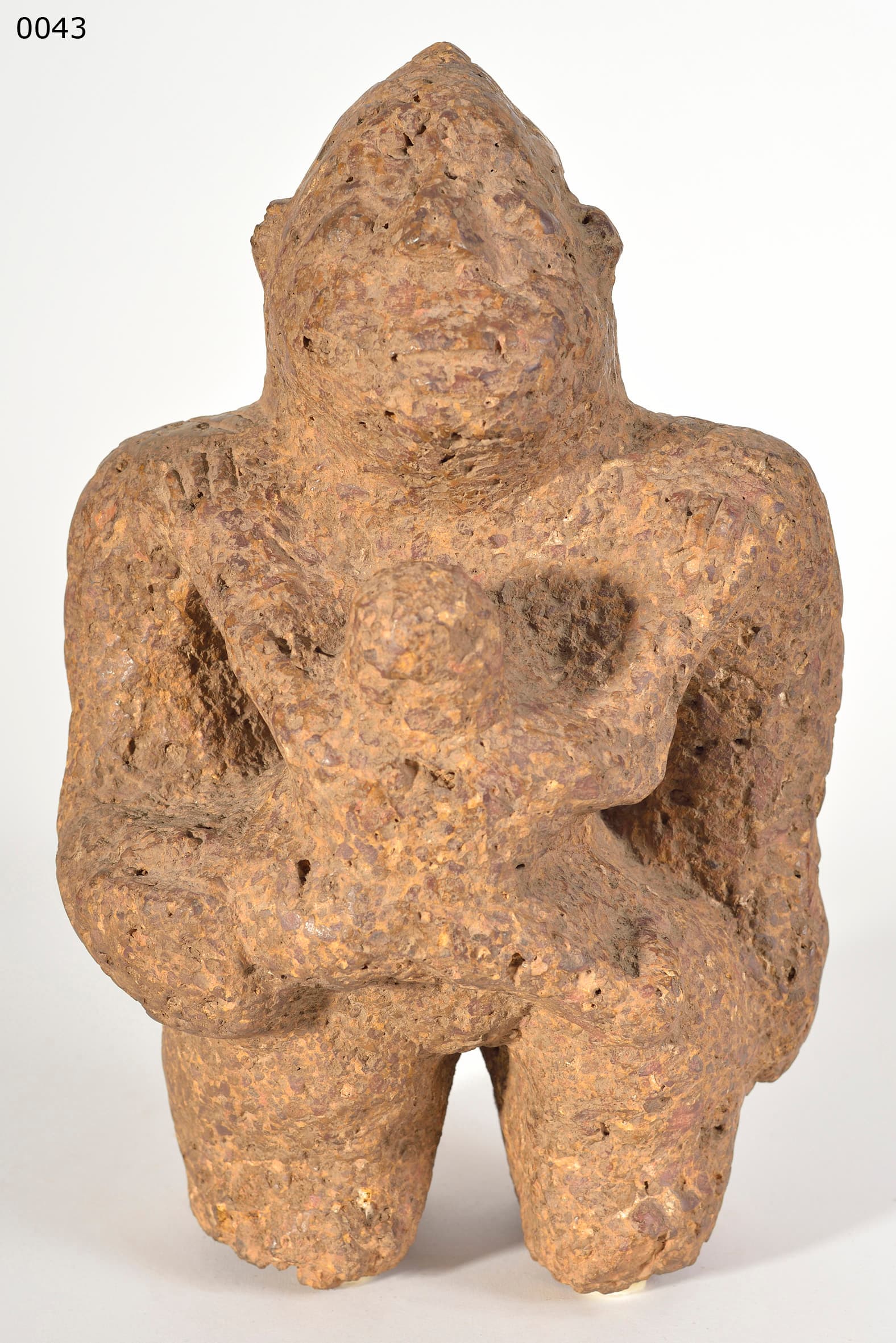
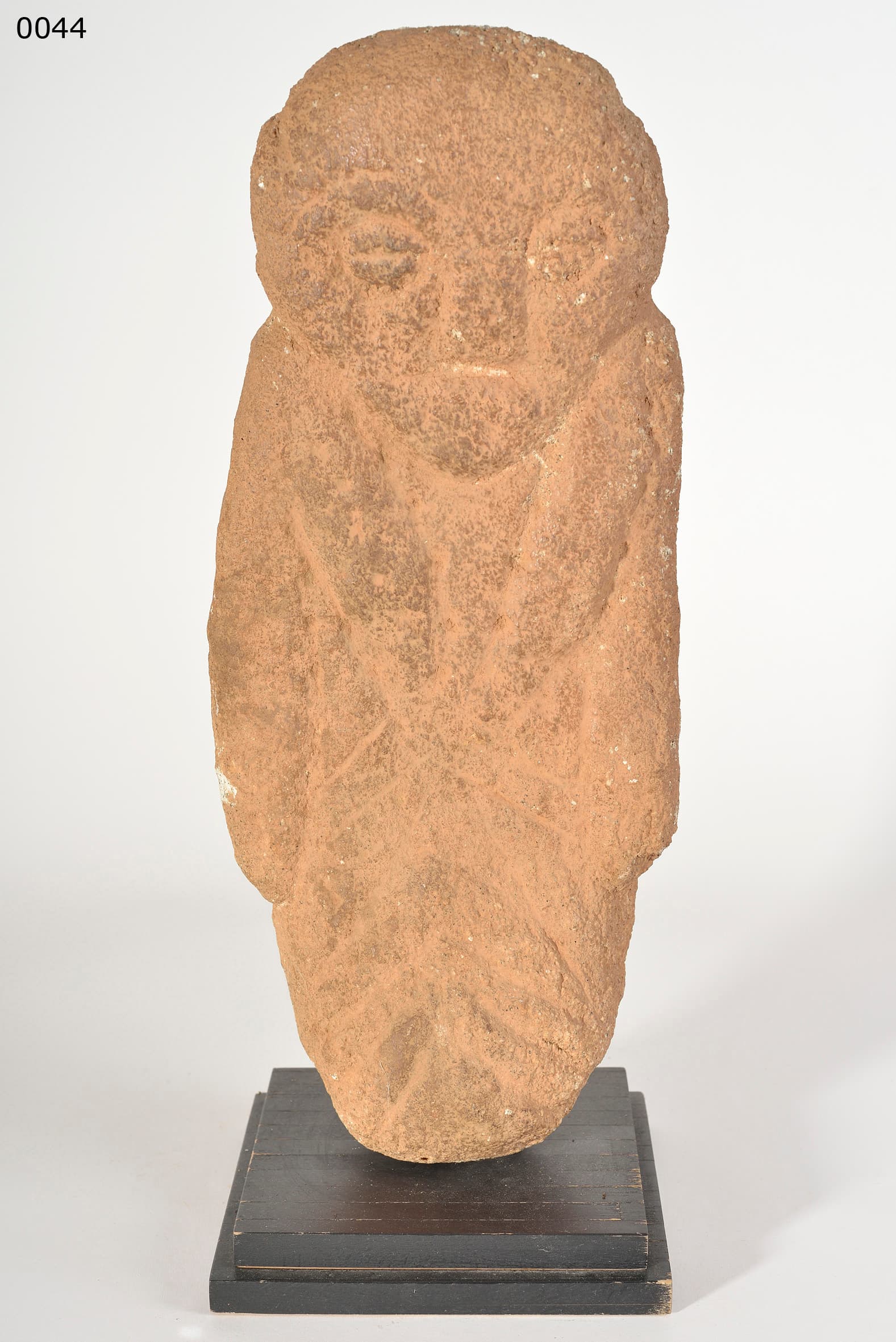
Eine stark erodierte flache Steinstele (12.-16. Jh., 58 cm) aus Nyonyosi in Burkina Faso - eine aus dichtem Laterit gemeißelte Platte mit aufgeweichten Ritzlinien und verschwommenen geometrischen Markierungen.
1. Die "Meister der Erde"
Die Nyonyosi sind die ursprünglichen Vor-Mossi-Bewohner des burkinischen Plateaus.
- Stein über Holz: Im Gegensatz zu ihren späteren Nachbarn bearbeiteten die Nyonyosi dichten Laterit und Granit, um eine unzerbrechliche, dauerhafte Verbindung zum Land herzustellen.
- Reine Abstraktion: Gegenstand 132 stellt das minimalste Ende der Tradition dar - eine flache, eingeritzte Platte, deren Geometrie allein die Heiligkeit der darunter liegenden Bestattung markiert.
2. Ein anonymer Marker
Diese Stele ist frei von figurativen Merkmalen und verlässt sich auf Ort und Muster.
- Gebietsbezeichnung: Über einem Grabhügel angebracht, verschlüsselten die Einkerbungen des Steins die Zugehörigkeit zu einer Abstammungslinie, die der Gemeinschaft bekannt war, ohne dass ein Porträt erforderlich war.
- Geistersitz: Die flache Oberfläche diente auch als Plattform für Trankopfer, die von den Nachkommen über Generationen hinweg ausgeschüttet wurden.
3. 12. bis 16. Jahrhundert Erosion
Die Verwitterung ist das letzte Indiz für die Authentizität der Platte.
- 500-800 Jahre ausgesetzt: Jahrhunderte der Sonne der Sahelzone, vom Wind verwehter Sand und Regen haben die Meißelspuren abgerundet und die ursprünglichen Einschnitte verwischt.
- Mit dem Land verschmolzen: Die Oberfläche des Steins liest sich nun halb als Schnitzerei, halb als Geologie - die Kunst kehrt buchstäblich zur Erde zurück.
Zusammenfassung
Diese Nyonyosi-Platte ist die minimalste Stimme der Tradition. Der verwitterte Monolith markiert eine anonyme, aber ehrenvolle Bestattung und beansprucht die Erde im Namen der frühesten Bewohner Burkina Fasos.
KI-unterstützt erstellt aus Sammlungsgutachten, Objektfotografie und eigener Recherche, redaktionell geprüft. Fehler sind möglich — Hinweise darauf sind uns willkommen. Zum Verfahren →