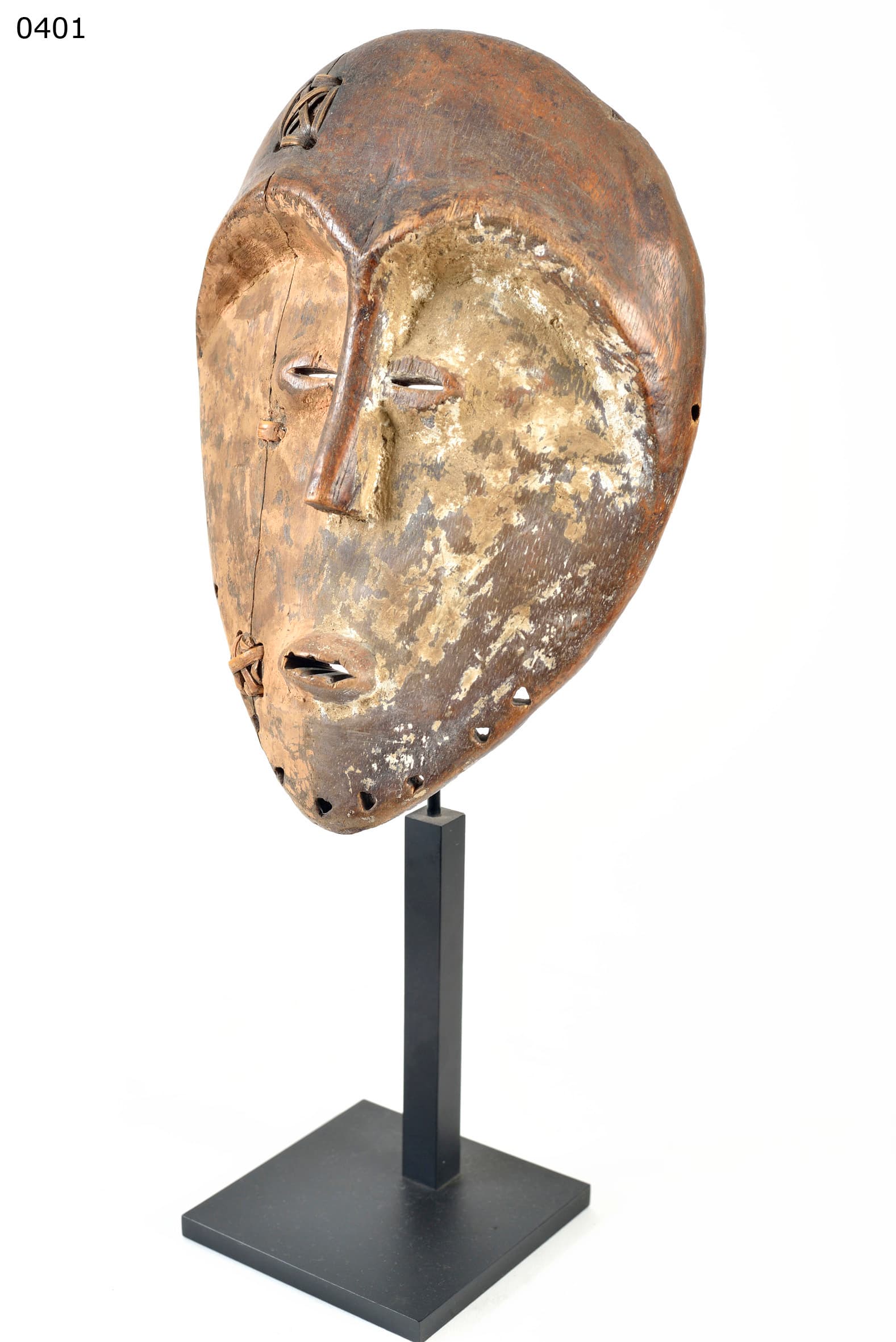
Eine kleine, ovale Holzmaske mit konkavem, herzförmigem Gesichtsfeld, schmalen Kaffeebohnenaugen und einem kleinen Mund. Sie ist stark mit weißem Kaolin-Ton überzogen und hat ein kleines Büschel Naturfaser am Kinn.
1. Ästhetischer Stil und regionale Eigenheiten
Diese Maske ist ein Beispiel für den klassischen Lukwakongo-Stil des Lega-Volkes. Sie ist sofort an ihrer strengen, minimalistischen Geometrie zu erkennen: das tief konkave, herzförmige Gesicht und die hervorstehenden, geschlitzten "Kaffeebohnen"-Augen. Die Lega vermeidet absichtlich den Naturalismus und entscheidet sich stattdessen für ein hochgradig standardisiertes, leicht lesbares visuelles Symbol, das sofort die Zugehörigkeit und den Rang innerhalb ihrer komplexen sozialen Struktur signalisiert. Die visuelle Standardisierung ist institutionell sinnvoll - Bwami-Masken müssen in der gesamten Gesellschaft erkennbar sein, so dass individuelle kreative Variationen zugunsten der kanonischen Form unterdrückt werden.
2. Rituelle Funktion und Bwami-Pädagogik
Diese Maske wurde bei öffentlichen Tänzen nicht über dem Gesicht getragen. Stattdessen ist sie ein Rangabzeichen, das dem Yananio-Grad des Bwami-Geheimbundes angehört. Bei geschlossenen Initiationszeremonien wird die Maske in der Hand gehalten, an den Arm geschnallt oder an einen Zaun gehängt. Sie wird als pädagogisches Mittel zur Veranschaulichung bestimmter Sprichwörter verwendet, die den Eingeweihten wichtige moralische Lektionen über soziale Harmonie, Zurückhaltung und Weisheit vermitteln. Der nicht getragene Gebrauch dieser Masken ist an sich schon charakteristisch - die visuelle Kultur der Bwami funktioniert eher über die Darstellung von Sprichwörtern als über performativen Tanz.
3. Physische Patina und Altersnachweis
Der starke Auftrag von weißem Kaolin ist entscheidend für die spirituelle Wirksamkeit der Maske, da Weiß das Objekt direkt mit dem Reich der Ahnen und der moralischen Reinheit in Verbindung bringt. Der dicke, krustige und aktiv abblätternde Zustand dieses Pigments, das sich über dunkles, oxidiertes Holz gelegt hat, bestätigt die wiederholte rituelle Verwendung. Der spröde, gealterte Zustand des Faserbartes ist ein weiteres Indiz für seine Herkunft aus dem kongolesischen Regenwald im frühen 20.
Zusammenfassung
Eine typische Lega-Bwami-Maske, die mit ihrer strengen, konkaven Geometrie und weißem Kaolin tiefgründige moralische Sprüche vermittelt. Die authentische, abblätternde Pigmentierung und die originalen Faserbefestigungen machen sie zu einem hervorragenden Dokument der zentralafrikanischen Geheimgesellschaften.
KI-unterstützt erstellt aus Sammlungsgutachten, Objektfotografie und eigener Recherche, redaktionell geprüft. Fehler sind möglich — Hinweise darauf sind uns willkommen. Zum Verfahren →