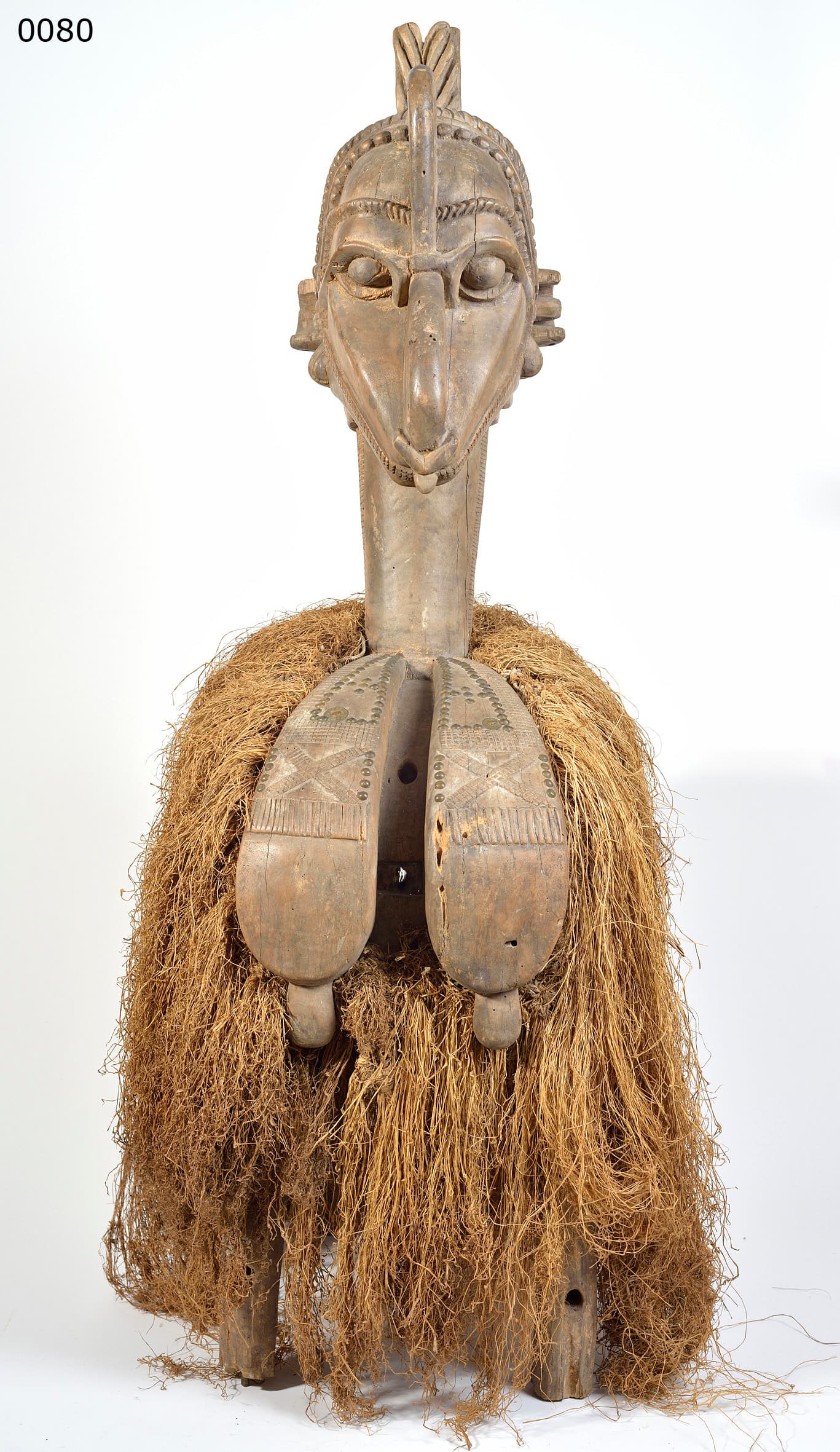
Eine monumentale Gesichtsmaske aus Holz, die von einer massiven, geschwungenen, aquilinen Nase und einem hohen sagittalen Kamm dominiert wird. Der Umfang des Gesichts und die geometrischen Linien um die Augen sind stark mit Reihen von oxidierten Kupfer- oder Messingnägeln umrandet.
1. Ästhetischer Stil und regionale Eigenheiten
Das Volk der Baga in Guinea ist vor allem für seinen massiven Nimba- (oder D'mba-) Schulterkopfschmuck bekannt, der die idealisierte stillende Mutter feiert. Diese Gesichtsmaske ist eine verkleinerte Übersetzung genau dieser ikonografischen Sprache. Der markante, geschwungene Scheitel und die massive, schnabelartige Nase sind Baga-Ideale für Schönheit, Macht und Adel, die eher eine schützende, nährende Ahnenpräsenz als ein buchstäbliches menschliches Porträt darstellen. Die Wappen- und Nasensilhouette ist die formale Signatur der Baga, die selbst in diesem verkleinerten Maßstab erkennbar ist.
2. Rituelle Funktion und importiertes Prestige aus Messing
Die großflächige Verwendung von Kupfer- oder Messingnägeln ist eine bewusste Zurschaustellung von Reichtum. Im traditionellen Westafrika waren importierte Messing-Polsternägel teure Prestigeobjekte. Durch die Verzierung der Maske mit diesen reflektierenden Metallspitzen erhöhte der Besitzer den wirtschaftlichen und spirituellen Wert des Objekts, indem er sicherstellte, dass es bei wichtigen Erntefesten oder Initiationsriten das Licht einfängt und die Zuschauer blendet. Die Integration importierter industrieller Materialien in die traditionelle Maske ist selbst ikonografisch bedeutsam - sie verortet die Maske innerhalb der kolonialen Handelswirtschaft und bewahrt gleichzeitig ihre vorkoloniale spirituelle Funktion.
3. Physische Patina und Altersindikatoren
Das Artefakt weist eine vielschichtige Nutzungsgeschichte auf. Das Holz weist eine tiefe, leicht verkrustete braune Patina auf, wobei das auffälligste Merkmal - der Steg der massiven Nase - durch die jahrzehntelange Handhabung völlig glatt und etwas heller geworden ist. Die Kupfernägel sind stark oxidiert und weisen tiefgrünen Grünspan auf, was eine Verwendung im frühen 20. nahelegt.
Zusammenfassung
Eine bemerkenswerte Baga-Maske, die die monumentale Nimba-Ästhetik in einer tragbaren, hochdekorierten Gesichtsmaske verdichtet. Die ausgiebige Verwendung von oxidiertem Prestige-Metall und die reiche, handgescheuerte Patina sprechen für ein außergewöhnliches ethnografisches Objekt.
KI-unterstützt erstellt aus Sammlungsgutachten, Objektfotografie und eigener Recherche, redaktionell geprüft. Fehler sind möglich — Hinweise darauf sind uns willkommen. Zum Verfahren →

Cresthead Schlangenmaske

Zoomorphe Schreinfigur (wird bei rituellen Zeremonien verwendet)
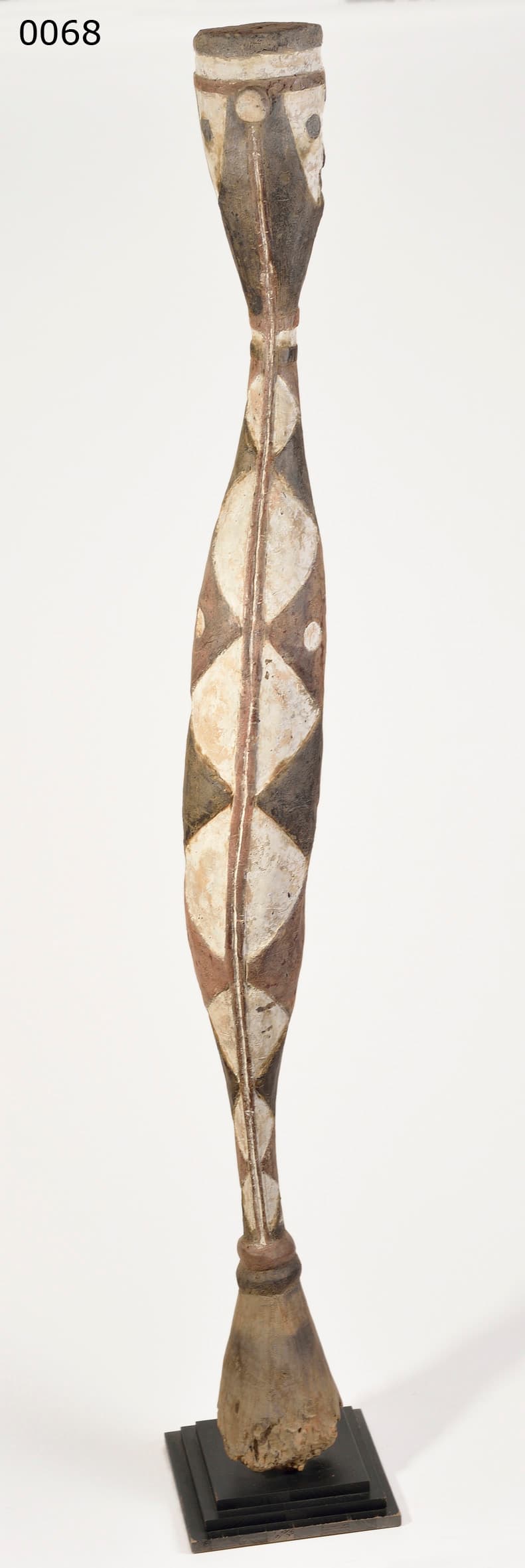
Schlangenkopfwappen