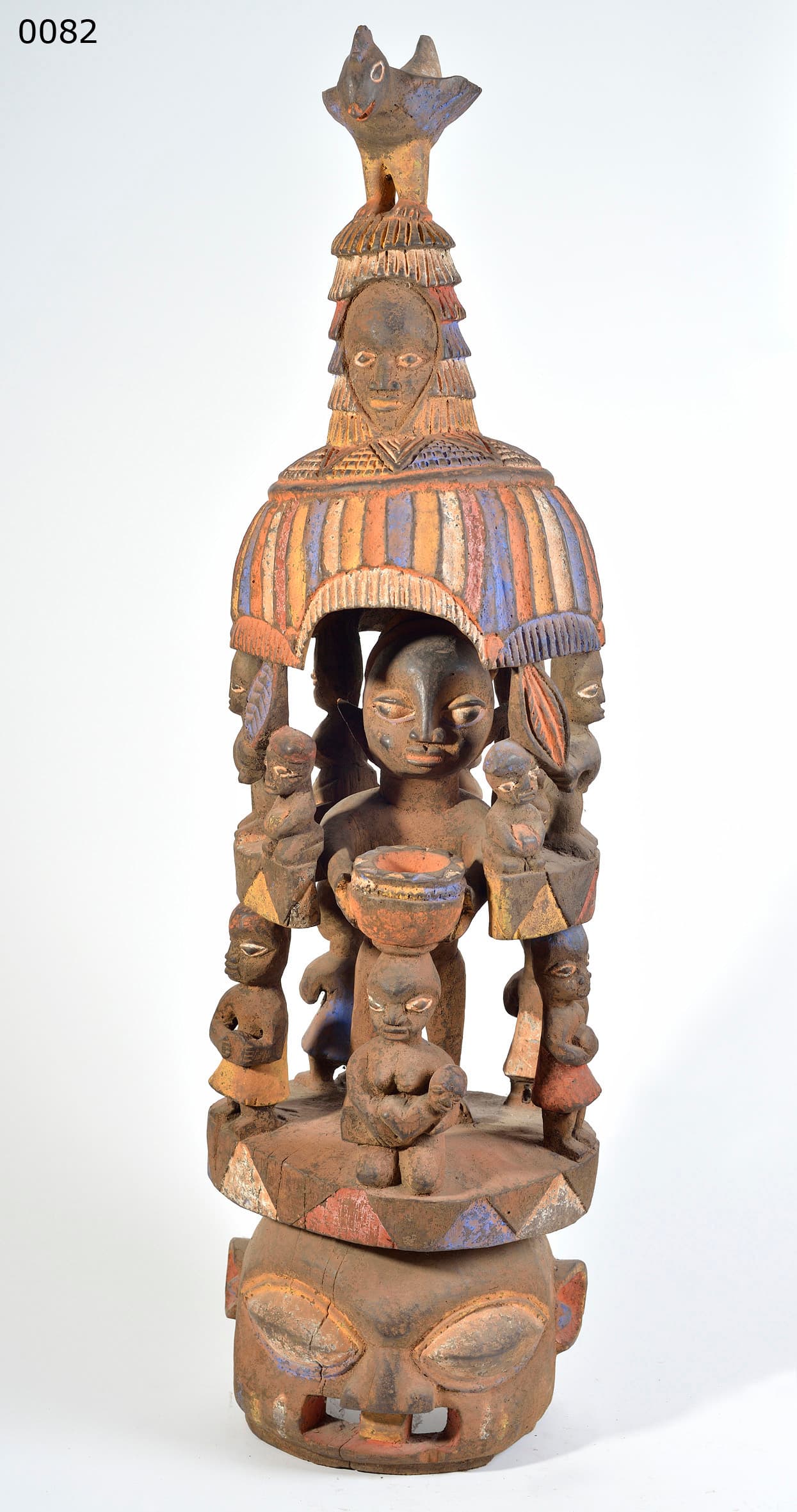
A highly complex wooden sculpture: a kneeling woman holds a domed, lidded vessel that rests on small kneeling female figures with raised arms. Two blue-painted birds perch on the lid. Ingeniously, a completely free-moving, fully carved human head is trapped within the openwork structural base beneath the vessel.
1. Aesthetic Style and Structural Complexity
This sculpture from the Nago (a Yoruba subgroup in Benin) is a highly accomplished example of technical woodcarving. The aesthetic balances the serene, idealized face of the kneeling woman with the geometric patterns of the domed lid and body, which carry traces of blue, red and ochre paint; two blue-painted birds crown the lid. As the collection catalogue notes, a notable feature of the carving lies in the base: a "head between the supporting figures, which is completely separate from the rest of the sculpture." The carver has successfully created a "cage" holding a free-moving, independent human head, all sculpted from a single, continuous block of wood. This technical feat may have been designed to elicit admiration and demonstrate the skill of the artisan.
2. Ritual Function and the Diplomacy of Kola
In Yoruba and Nago society, the offering of kola nuts is a highly formalized gesture of hospitality and respect. As the collection catalogue notes, this elaborate lidded vessel is associated with use as a prestigious serving container for these sacred nuts; offering kola from such an object elevated the exchange into a demonstration of the host's wealth and status. Refusing a nut from this bowl was traditionally considered a severe insult. When not in diplomatic use, the figure was kept on a domestic altar — common in Yoruba culture — to hold offerings for the deities.
3. Patina, Material Weathering, and Indications of Use
The wood exhibits a deep, multi-toned handling patina. The birds on the lid, the female figure's shoulders, and the rim of the bowl have been polished to a dark, oily sheen, consistent with handling. The interior of the bowl shows a dry, slightly stained surface consistent with the storage of organic nuts. The free-moving head within the base shows wear consistent with rattling against its wooden cage over time.
Summary
This Nago serving bowl is a highly complex example of West African woodcarving, featuring a free-moving head trapped within its base. It serves as a compelling physical testament to the rituals of Yoruba hospitality and domestic veneration.
Written with AI assistance from the collection appraisal, object photography and our own research; editorially reviewed. Mistakes are possible — corrections are welcome. How we work →