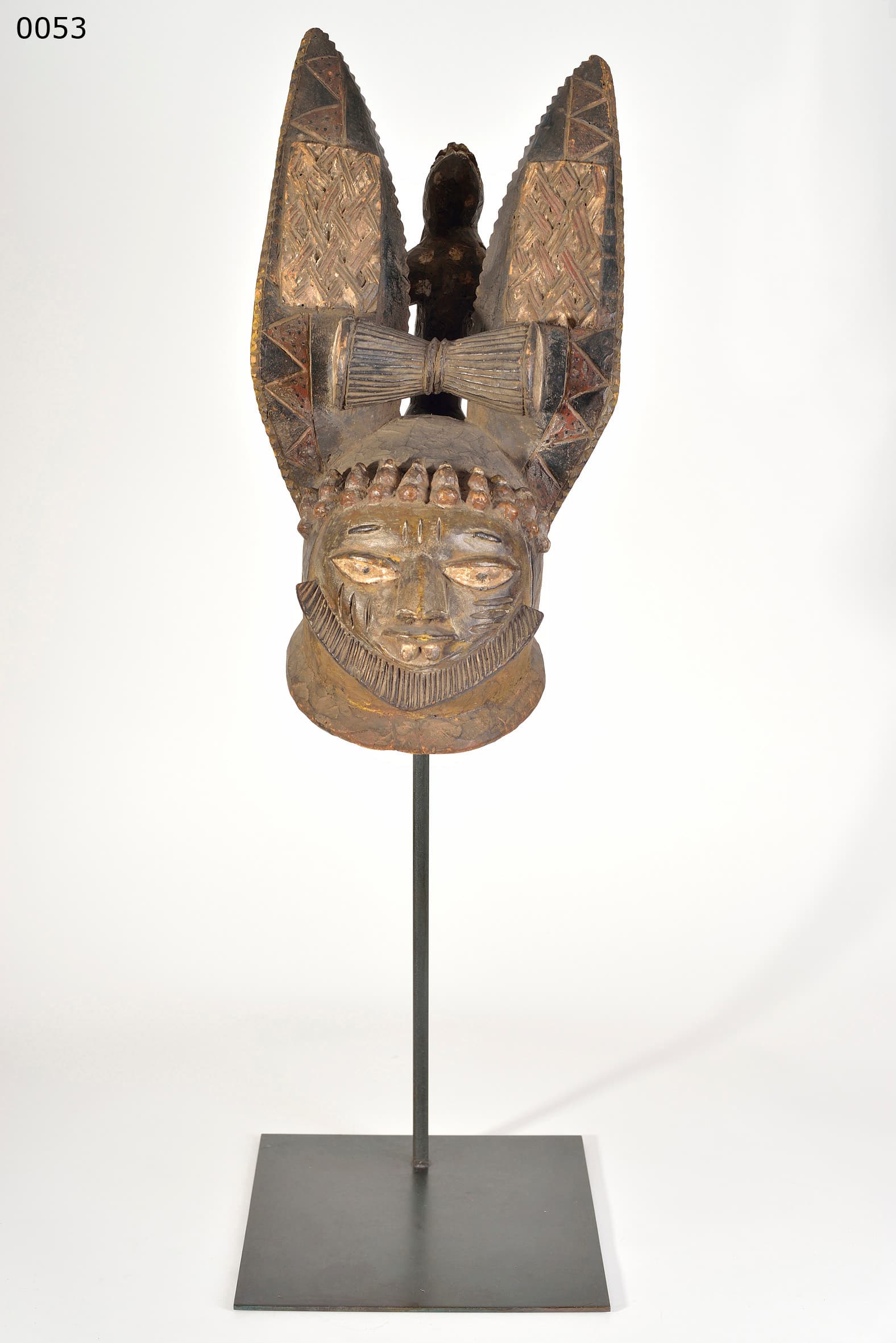
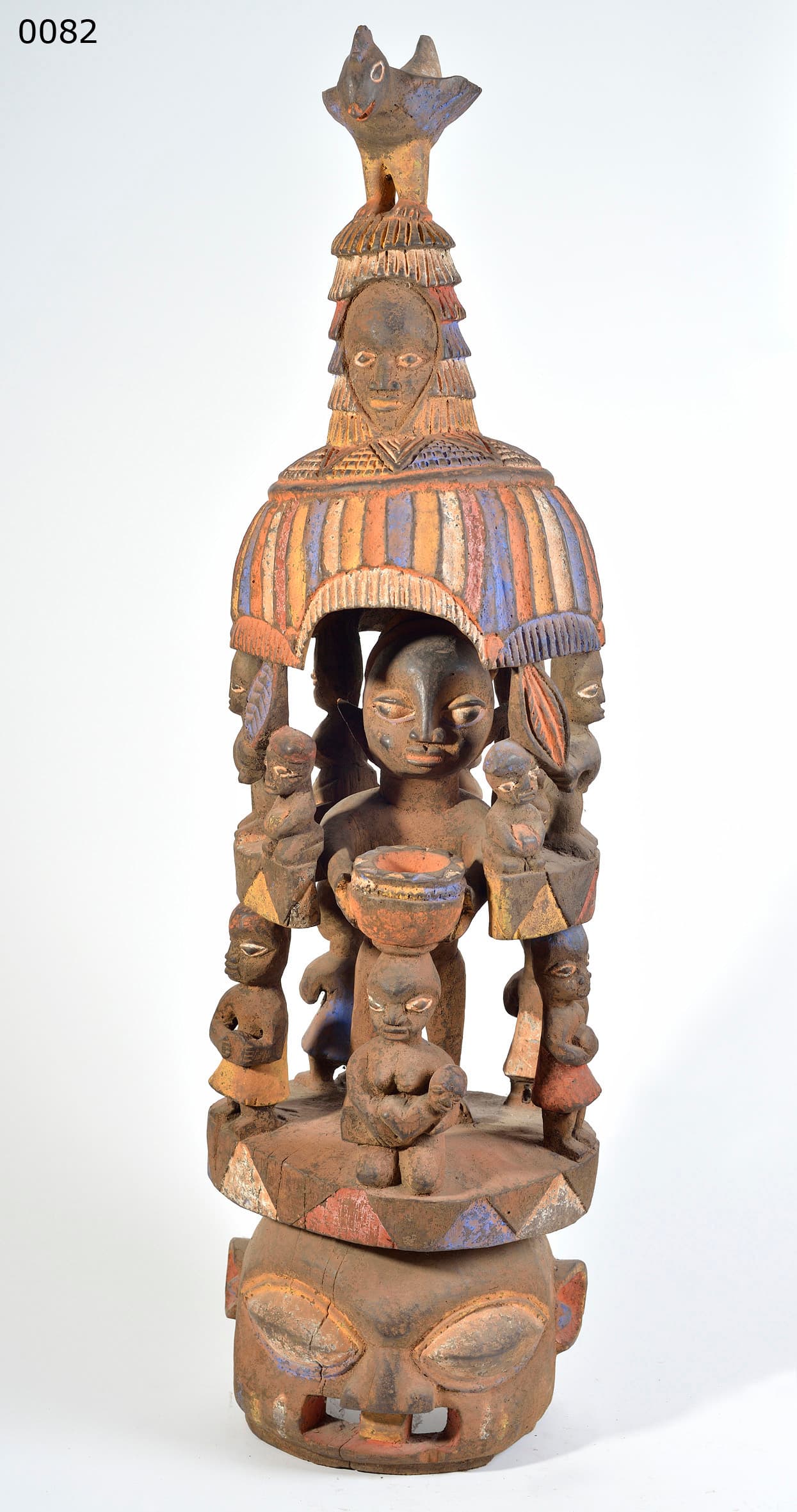
A colossal, 150 cm tall wooden helmet mask. The lower section forms a large, grotesque face, while the massive superstructure depicts a prominent equestrian figure (a rider on a horse or mule) completely surrounded by a dense retinue of smaller carved attendants.
1. Aesthetic Style and the Towering Superstructure
This monumental sculpture is a classic Yoruba Epa mask, renowned as one of the most physically massive and structurally complex mask types in Africa. The aesthetic is divided into two distinct halves. The bottom is a pot-like helmet featuring a stylized, abstract face looking out into the spiritual realm. The top is an explosion of narrative carving; the artist has created a towering, multi-figure tableau dominated by the central equestrian figure. As Hornek notes, only selected craftspeople are permitted to produce these masks — and some of these artisans have stepped out of the shadows of anonymity to become known by name beyond their group's borders, which is "quite unusual for African carvers."
2. Ritual Function and the Acrobatic Feat
The Epa festival, held annually or biannually in northern Yoruba communities, is a profound test of physical and spiritual endurance. As Hornek confirms, the festival lasts several days; local families compete to see who can be represented by the most beautiful and labor-intensive mask. Masks are cleaned, repaired, and touched up with paints before presentation as prestigious objects to be admired. Hornek emphasizes the astonishing physical demands: it is "scarcely imaginable that young mask dancers could dance and execute acrobatic tricks with such heavy, oversized helmet masks on their heads." The festivals recall the past through dance and mask presentation, strengthening social cohesion across the community.
3. Patina, Material Weathering, and Indications of Age
The wood bears a complex, layered patina. The polychrome pigments used to paint the rider and attendants have heavily flaked and faded, showing wear consistent with exposure to the elements during multi-day festivals. The interior of the massive pot-helmet shows severe, smoothed abrasion and deep darkening, compatible with the physical friction of a dancer's head. Historic, indigenous repairs and natural desiccation cracks along the massive base suggest kinetic, physically demanding use.
Summary
This colossal Epa mask represents a fusion of monumental sculpture and physical performance. Its towering equestrian superstructure and worn interior make it a significant example of Yoruba community pageantry and named-artisan craftsmanship.
Written with AI assistance from the collection appraisal, object photography and our own research; editorially reviewed. Mistakes are possible — corrections are welcome. How we work →