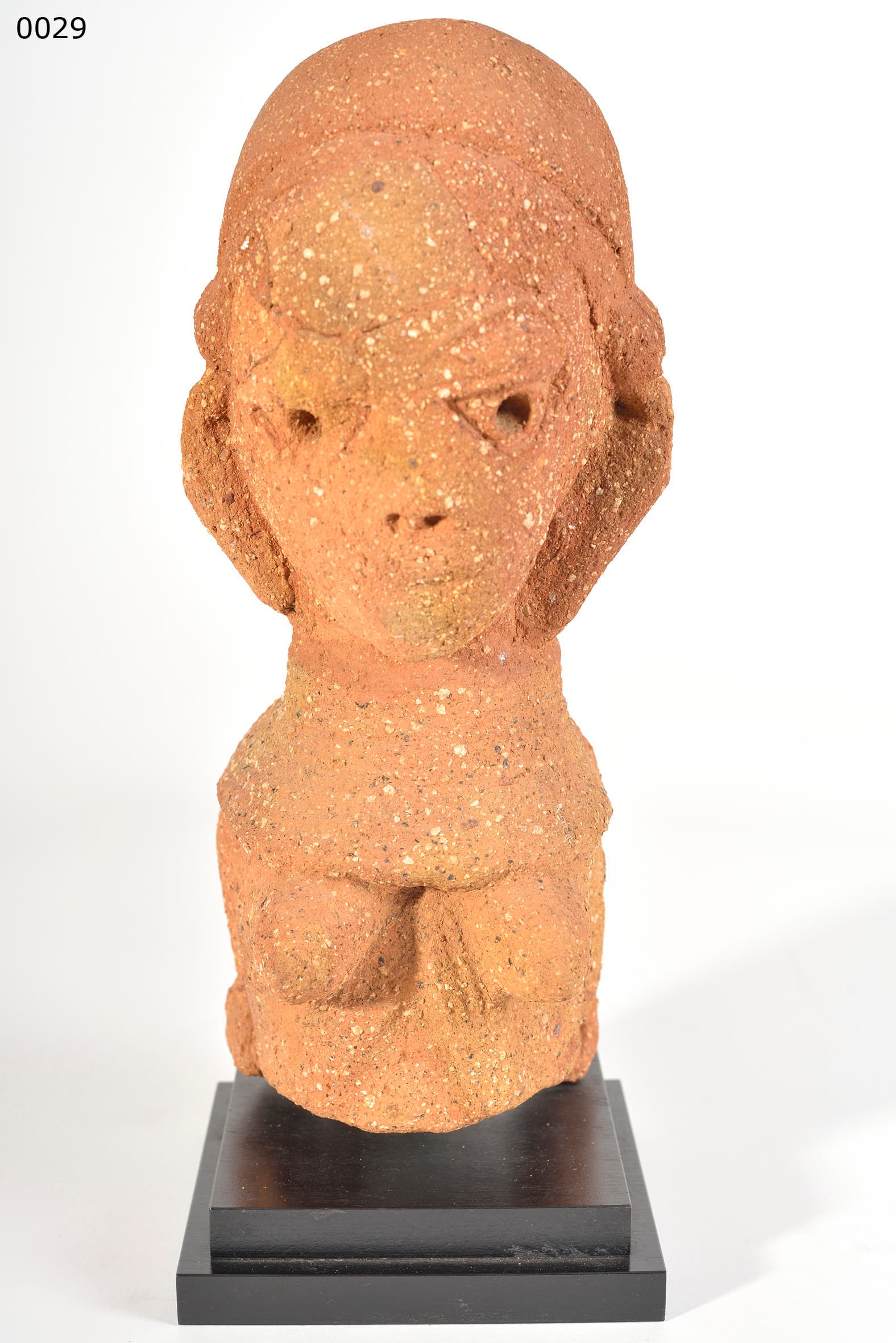
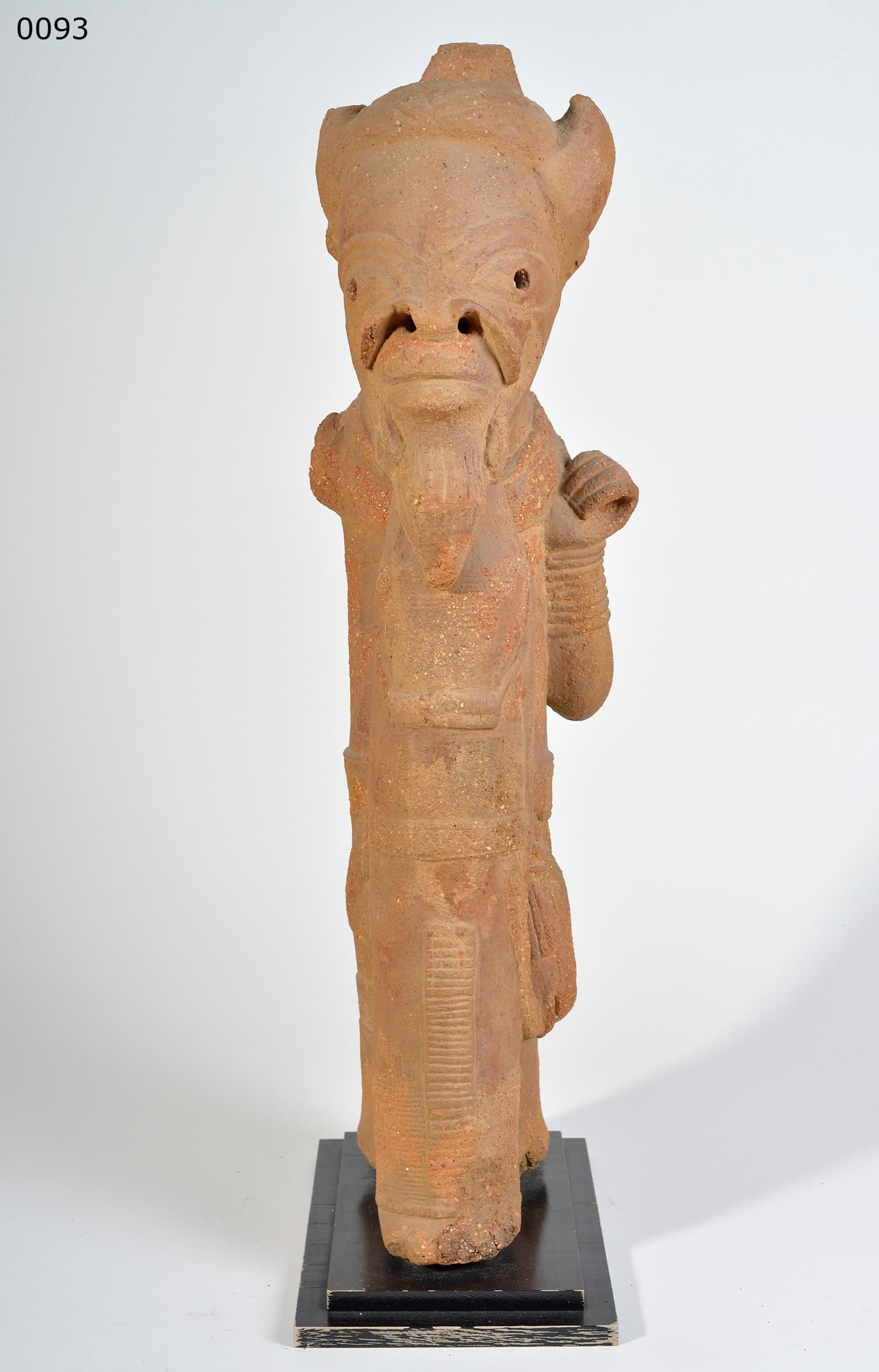
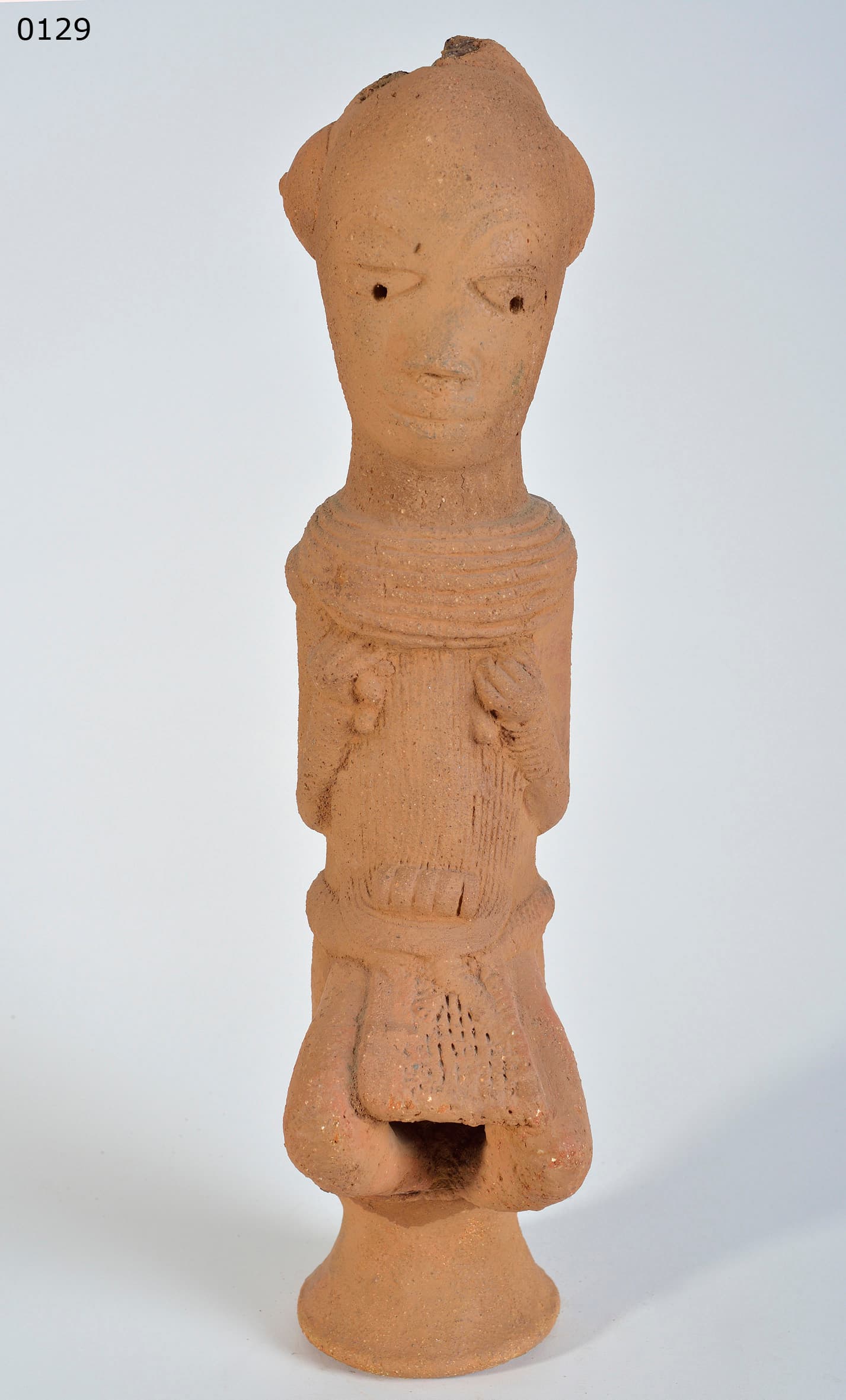
This miniature (14 cm) terracotta sculpture depicts a seated or kneeling figure with arms resting on its knees, featuring a large, elaborate bun-like coiffure and thick neck rings. The reddish clay surface is heavily weathered, exhibiting microscopic pitting and earthen encrustations.
1. Aesthetic style — Nok miniatures and triangular geometry
The Nok culture (500 BCE – 200 CE) of central Nigeria produced the earliest known sculptural tradition in Sub-Saharan Africa. While famous for life-sized heads, they also created highly detailed miniatures like this one. It displays the classic, rigid geometric conventions of the Nok style: the deeply pierced, triangular or elliptical eyes with arched eyebrows, and a highly stylized, sweeping coiffure. The oversized head resting on a compressed, seated body emphasizes the intellect and spiritual power of the subject over anatomical realism.
2. Ritual function — elite adornment and talismanic function
The intricate detailing of the beaded neck rings and the elaborate hairstyle indicates that this figure represents an individual of high social rank or a specific deity. Due to its small size, it was likely utilized as a prestige pendant or a highly personal amulet, carried by Nok elites to invoke ancestral protection or to signal their elevated status. The deep piercing of the eyes and mouth is both stylistic and technically necessary, allowing steam to escape during the firing of the clay to prevent the piece from exploding in the kiln.
3. Physical patina — sub-saharan archaeological weathering
The antiquity of this terracotta, consistent with the Nok period, is reflected upon its surface. It does not possess the sharp, crisp lines of a modern casting; instead, the fired clay has been softly abraded by prolonged burial in the acidic soils of the Jos Plateau. The presence of deeply integrated, calcified soil concretions within the recesses of the coiffure and the pierced eyes is consistent with an ancient, excavated origin.
Summary
This seated terracotta miniature encapsulates the sophisticated geometric stylizations of the ancient Nok civilization. Its abraded surface and calcified earth accretions are consistent with an ancient origin, supporting its attribution to this archaeological tradition.
Written with AI assistance from the collection appraisal, object photography and our own research; editorially reviewed. Mistakes are possible — corrections are welcome. How we work →