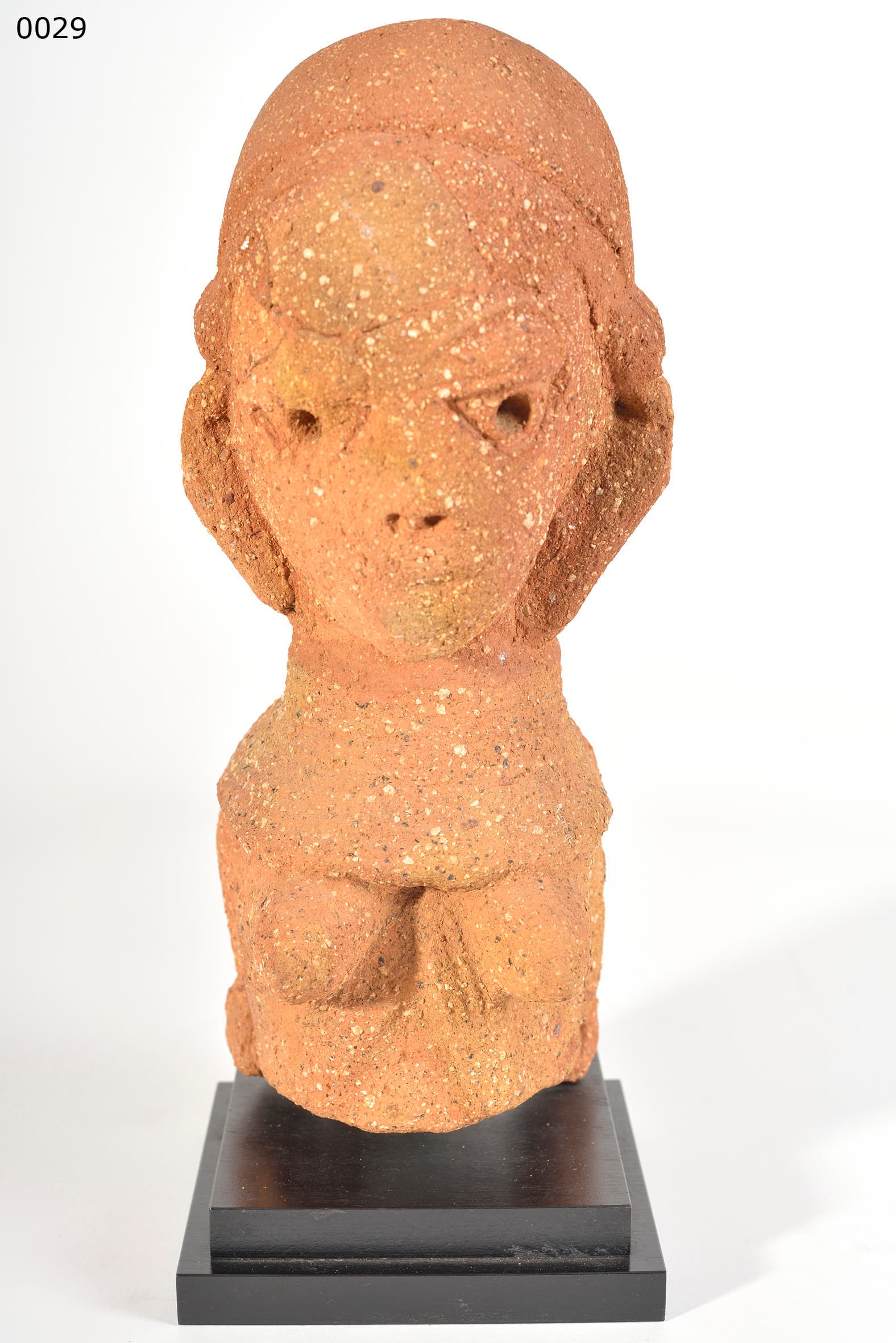
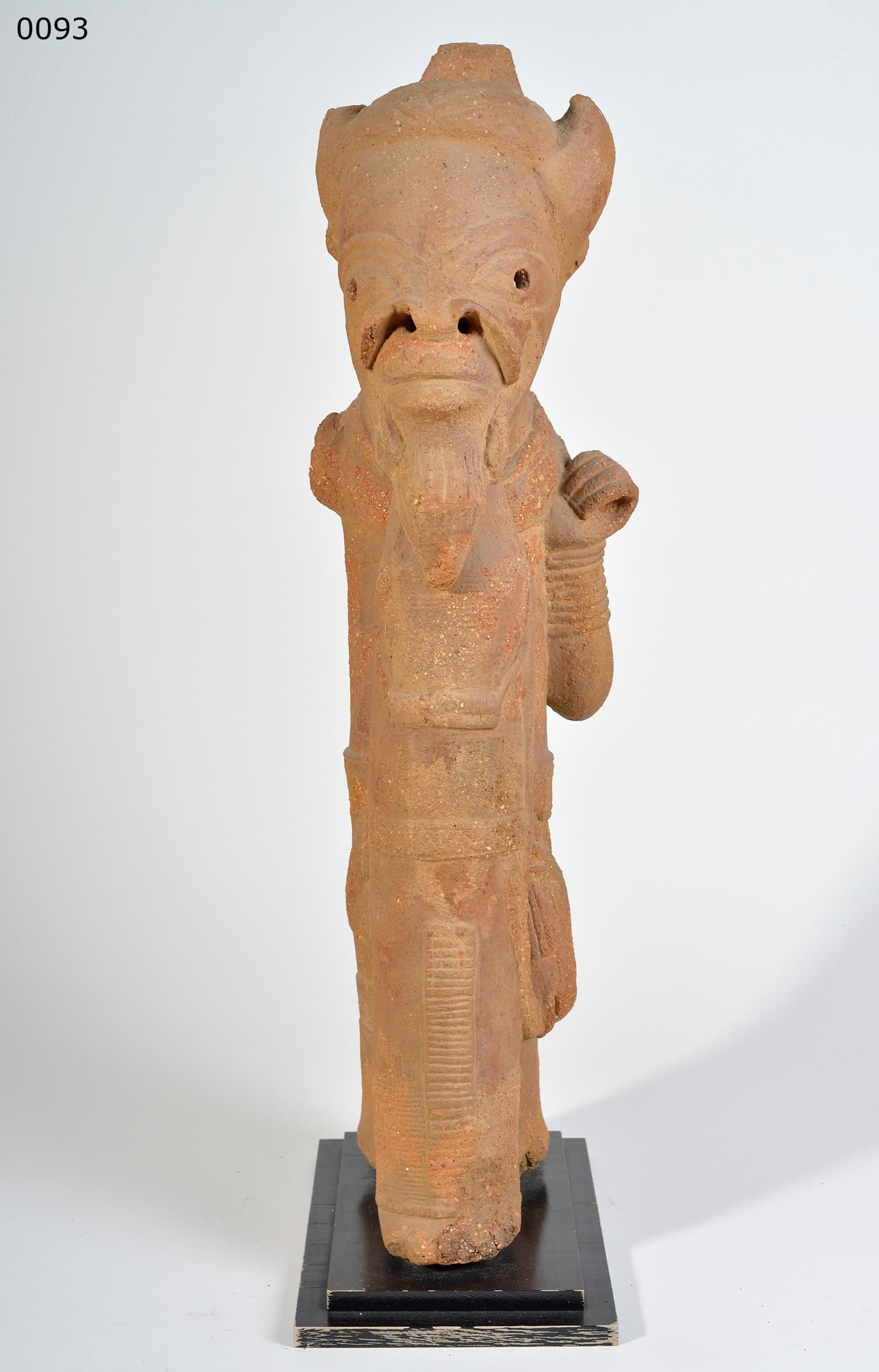
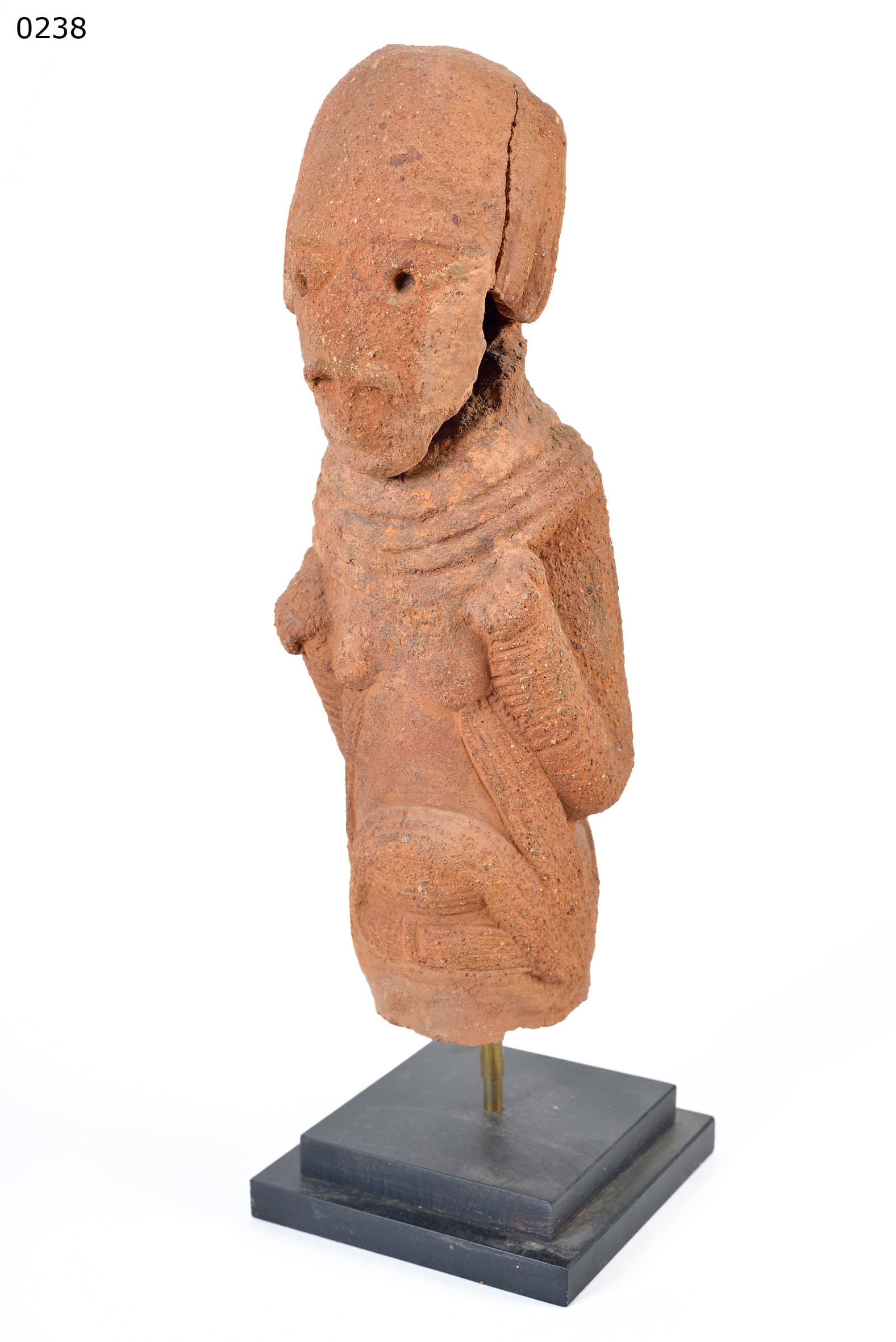
A monumental ca. 2,000-year-old terracotta sculpture (62 cm) from the Nok of Nigeria — a seated/kneeling male figure with pierced triangular eyes, a prominent jawline, and thick multi-layered body adornments.
1. The foundation of African art
The Nok civilization (c. 1500 BCE – 500 CE) represents the earliest known figurative sculptural tradition in Sub-Saharan Africa.
- Signature Eye Form: The deeply pierced triangular (or D-shaped) eyes and pierced nostrils are the defining hallmark of Nok aesthetics.
- Technical Function: These perforations were practical — they allowed trapped gases to escape the thick clay during firing, preventing explosive shattering.
2. Elite portraiture
The adornment program encodes extreme wealth and power.
- Multi-Layered Beads: Heavy stacked necklaces indicate access to trade networks and sumptuary privilege.
- Thick Armbands and Waist Wraps: The complete regalia signals that this is a portrait of supreme authority — a king, a high priest, or a deified founding ancestor rather than a common subject.
3. Monumental shrine use
At 62 cm, this is an exceptionally large example of ancient ceramics.
- Sophisticated Firing: Producing a hollow terracotta object of this mass without a kiln required significant technical skill and tight control over fuel, stacking, and cooling.
- Focal Point of the Community: The statue may have served as the focal point of a large community shrine, receiving reverence from the populace.
Summary
This Nok statue is a significant example of early West African ceramic art. It is a substantial terracotta figure, consistent with a style dating back approximately 2,000 years, that suggests a highly organized society with advanced technical skills thrived in Iron Age Nigeria.
Written with AI assistance from the collection appraisal, object photography and our own research; editorially reviewed. Mistakes are possible — corrections are welcome. How we work →