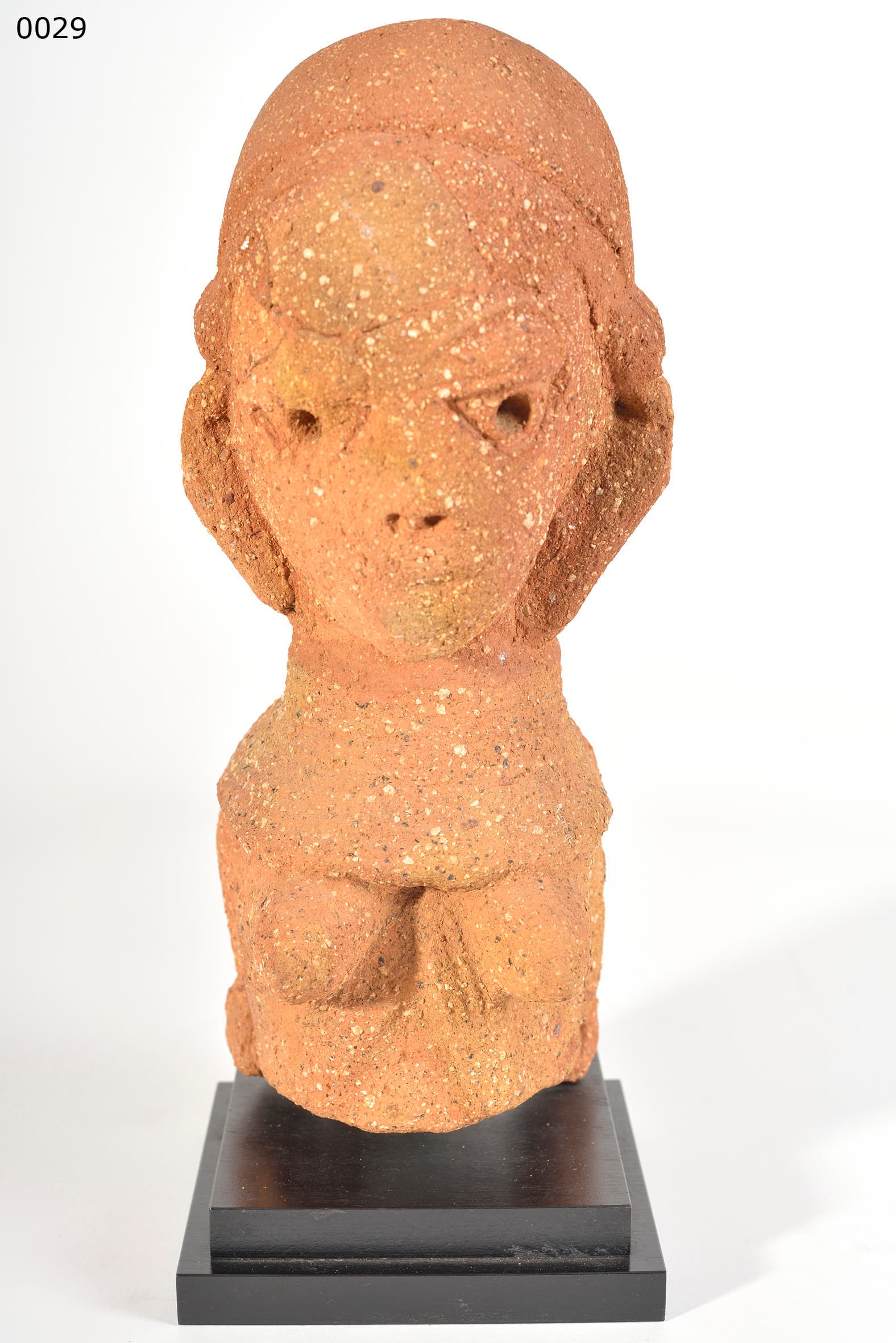
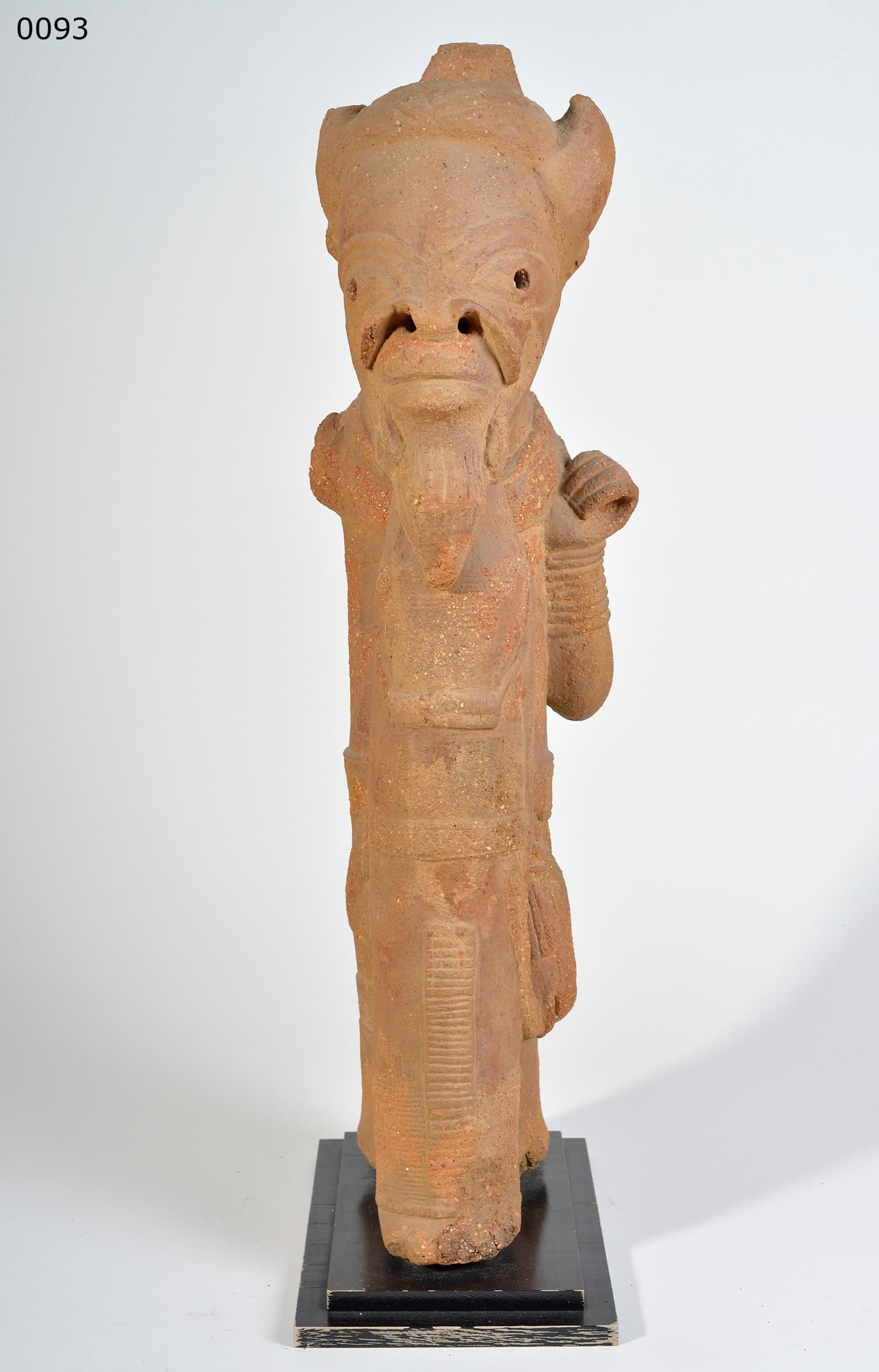
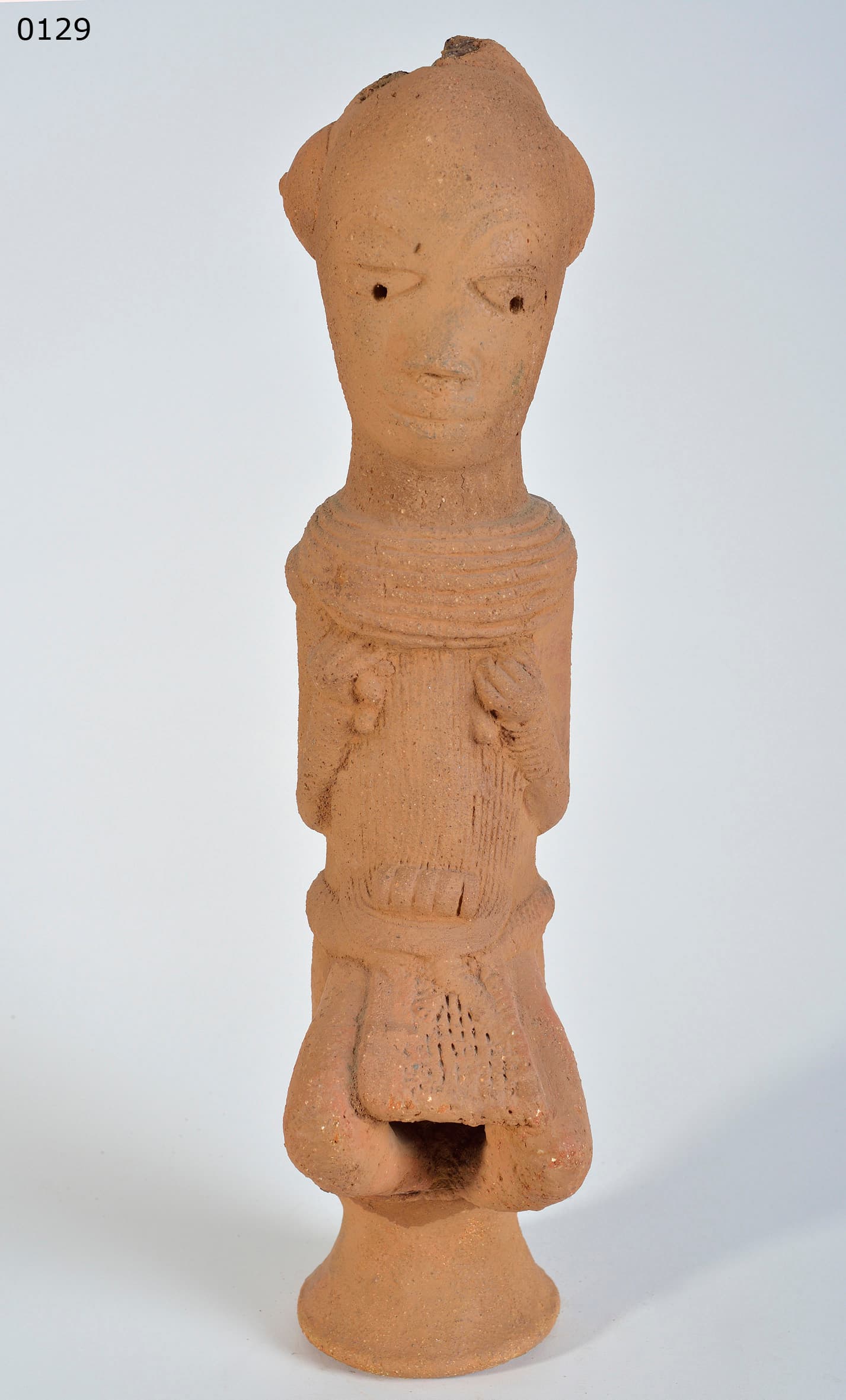
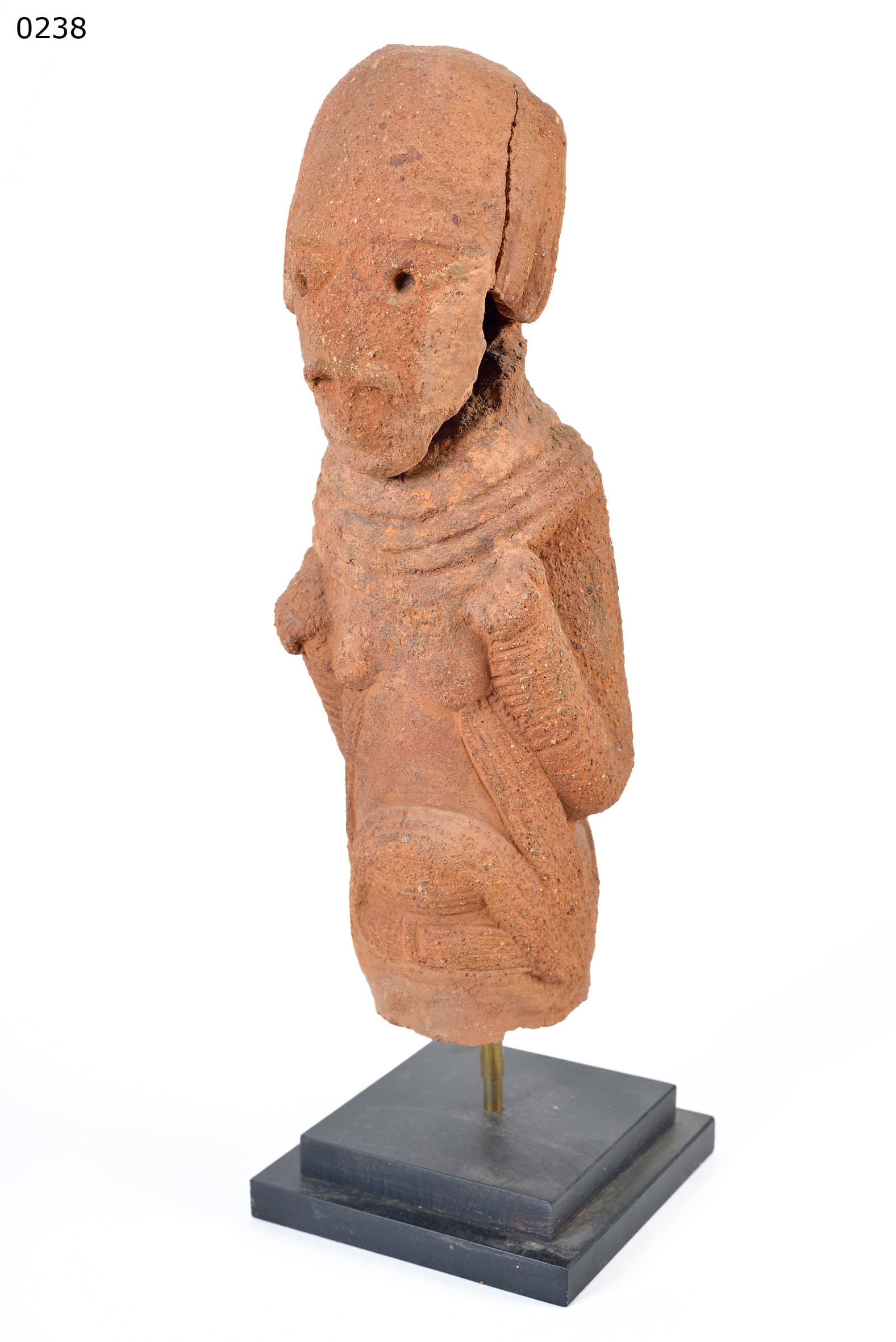
A rare and historically significant Nok terracotta figure (~2000 years old, 49 cm) from Nigeria — associated with the early history of figurative art in Sub-Saharan Africa.
1. The dawn of African portraiture
The Nok civilization (c. 1500 BCE – 500 CE) is widely considered a foundation of figurative art in Sub-Saharan Africa.
- The Pierced Gaze: A defining characteristic of Nok art is the treatment of the eyes — typically triangular or D-shaped, with deeply pierced pupils. The nostrils and lips are similarly pierced, a functional detail that likely allowed hot gases to escape the thick clay during open-pit firing and helped prevent the sculpture from cracking.
2. Aristocratic iconography
This figure is unlikely to represent a commoner.
- Status in Adornment: The detailed rendering of the complex tiered coiffure and implied heavy jewelry suggests a depiction of a wealthy individual — perhaps a leader, a revered priest, or a deified founding ancestor.
- Wealth in Clay: The sheer amount of clay used to build this heavily ornamented body may reflect the wealth and surplus of Nok society.
3. Archaeological context
- Mastery of Fire: Firing a hollow clay sculpture of this size (49 cm) in an open bonfire required significant technical skill. The surviving reddish-brown slip and grog-tempered clay speak to a highly developed artistic tradition.
- Shrine or Grave: Most Nok terracottas have been discovered accidentally during tin mining operations in alluvial deposits. Their monumental scale and formal postures suggest potential placement in grave sites or central village shrines to honor founding ancestors.
Summary
This figure is a significant archaeological find that contributes to our understanding of the timeline of African art history. It indicates that a sophisticated civilization with advanced technical skill in terracotta thrived in central Nigeria millennia before European contact.
Written with AI assistance from the collection appraisal, object photography and our own research; editorially reviewed. Mistakes are possible — corrections are welcome. How we work →