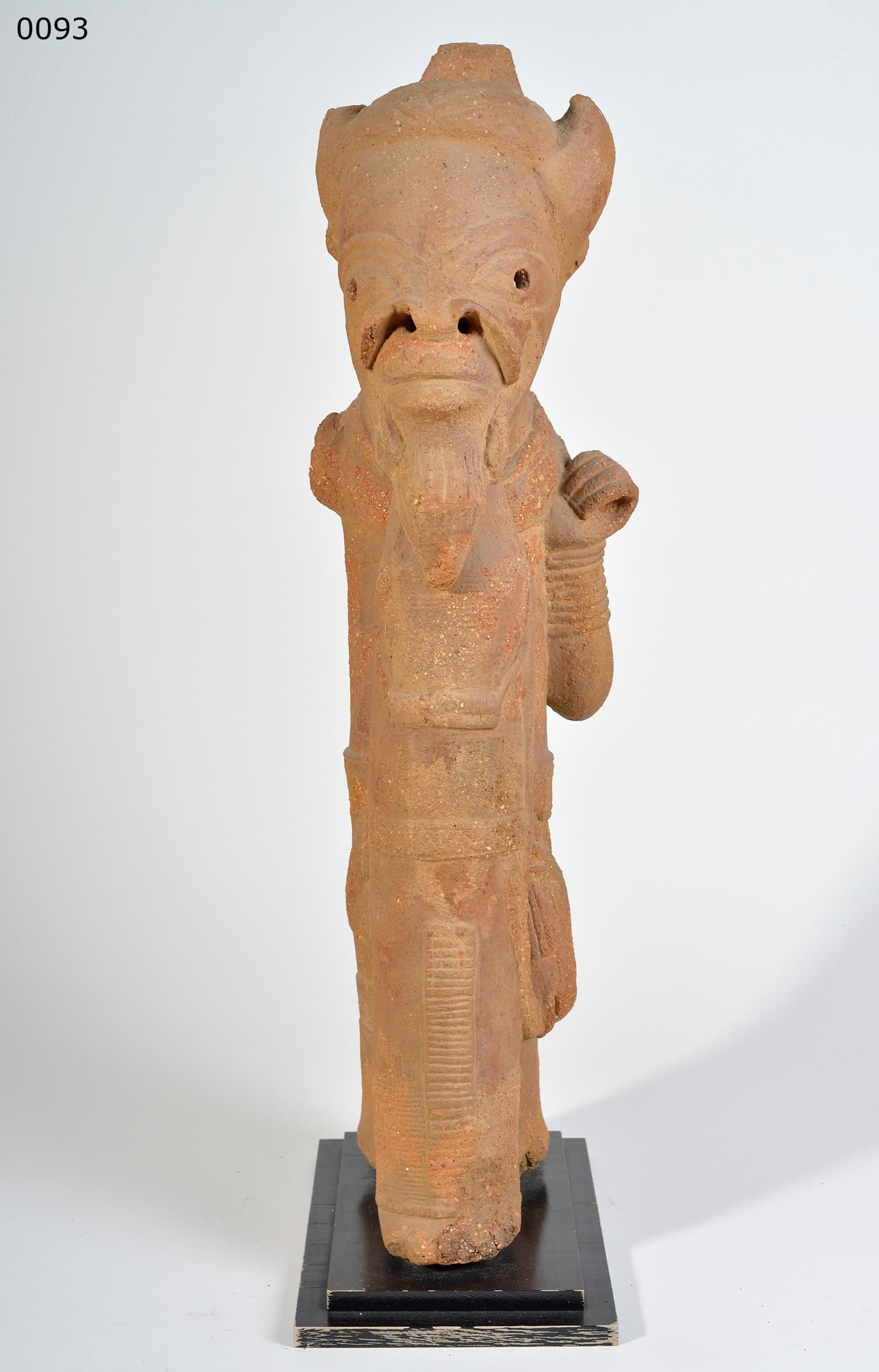
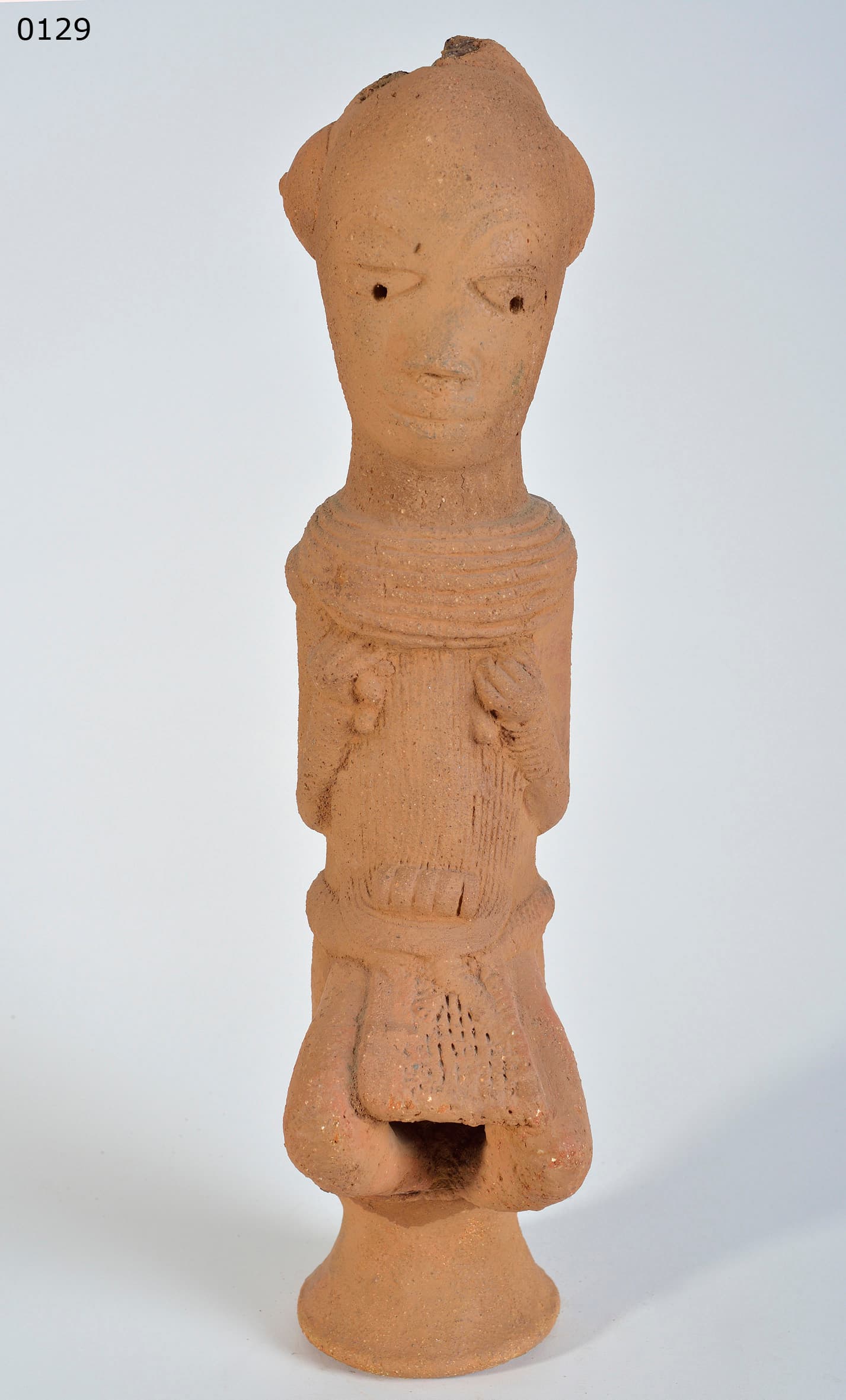
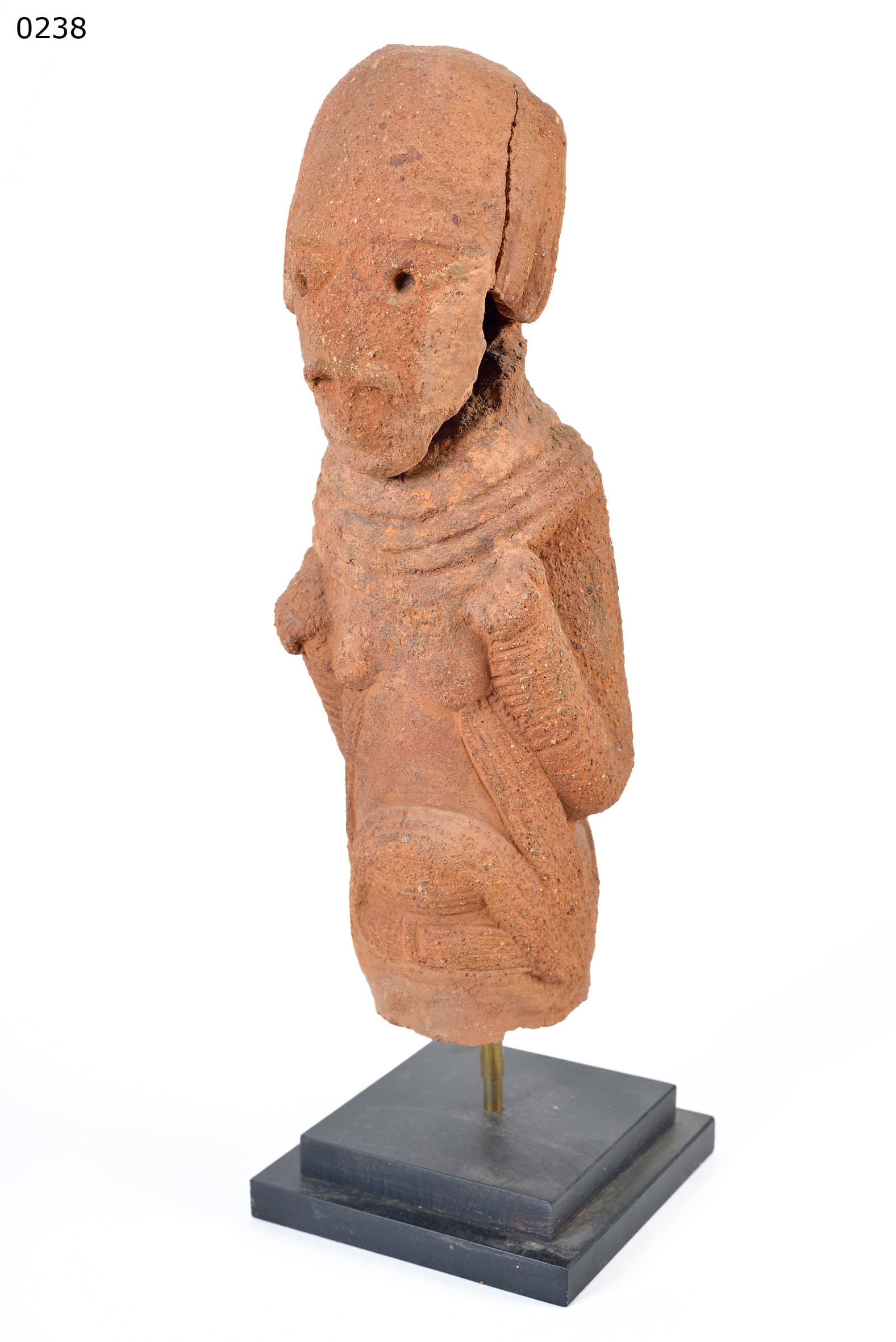
An ancient terracotta sculpture (~2000 years old, 36 cm) from the Nok of Nigeria — a female torso and head with signature pierced triangular eyes, prominent breasts, and a complex tiered coiffure.
1. The Nok aesthetic signature
The Nok civilization (c. 1500 BCE – 500 CE) represents the dawn of figurative art in Sub-Saharan Africa.
- The Pierced Gaze: A defining hallmark of Nok aesthetics: large triangular (or D-shaped) eyes with deeply pierced pupils. The nostrils and mouth are similarly pierced — a functional detail that allowed hot gases to escape the thick clay during open-pit firing, preventing the sculpture from exploding.
2. High-status female portraiture
- A Woman of Rank: The detailed rendering of her elaborate tiered hairstyle, implied jewelry, and prominent breasts suggests she may represent a woman of high social rank — perhaps a queen-mother, a revered priestess, or a female founder within the ancient society.
- Wealth in Clay: The sheer amount of clay and time dedicated to her adornment reflects the wealth of the Nok culture.
3. Archaeological importance
- Surviving Two Millennia: Figures of this scale (36 cm) are significant archaeological survivals that have endured roughly 2,000 years. They were likely part of elite burial complexes or central shrines.
- Material Characteristics: The warm reddish-orange clay and heavy quartz inclusions (grog) are consistent with early Nigerian ceramics.
Summary
This Nok female figure is a significant example of early African art. It supports the view that a highly stratified, artistically sophisticated society valuing female authority thrived in Iron Age Nigeria.
Written with AI assistance from the collection appraisal, object photography and our own research; editorially reviewed. Mistakes are possible — corrections are welcome. How we work →