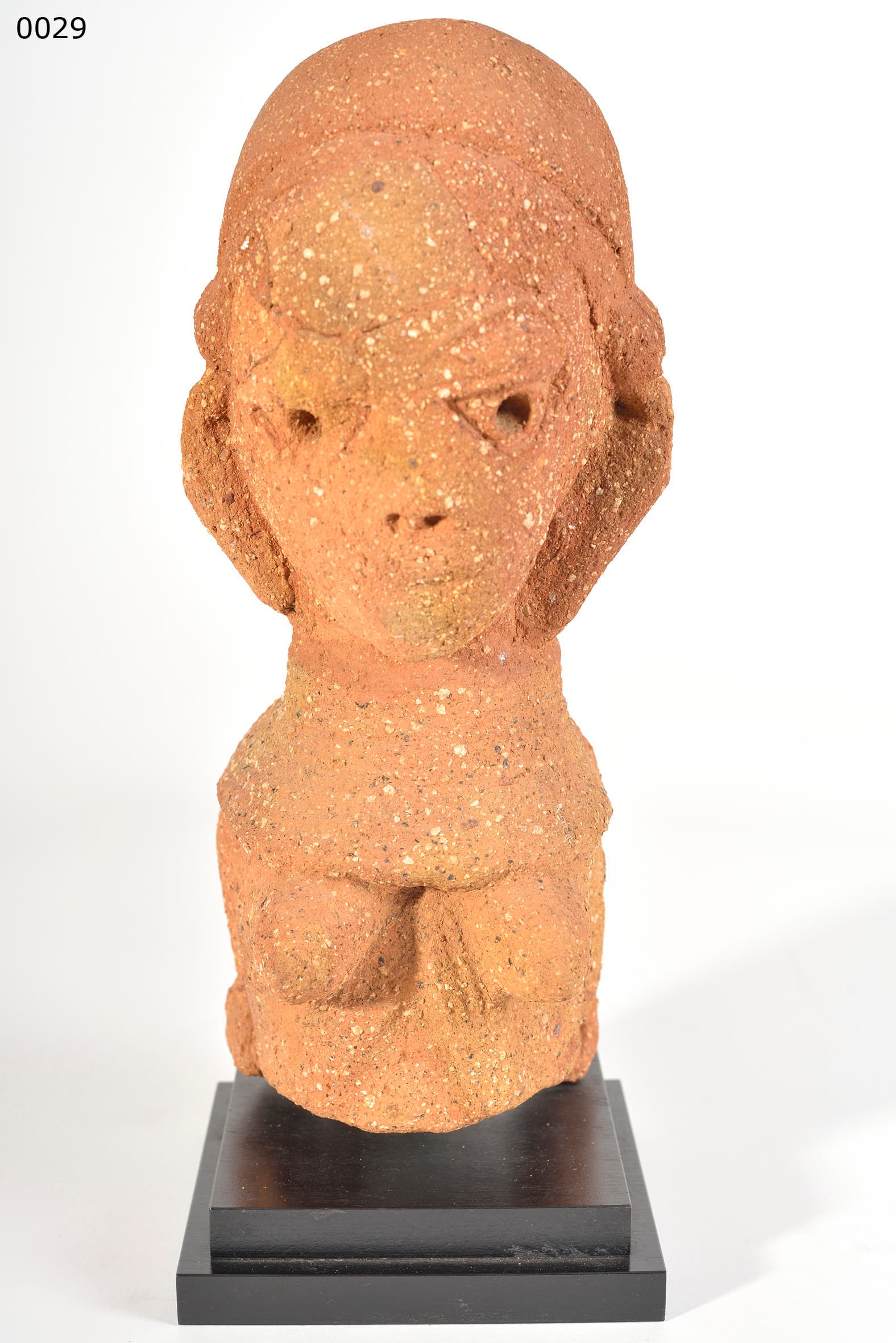
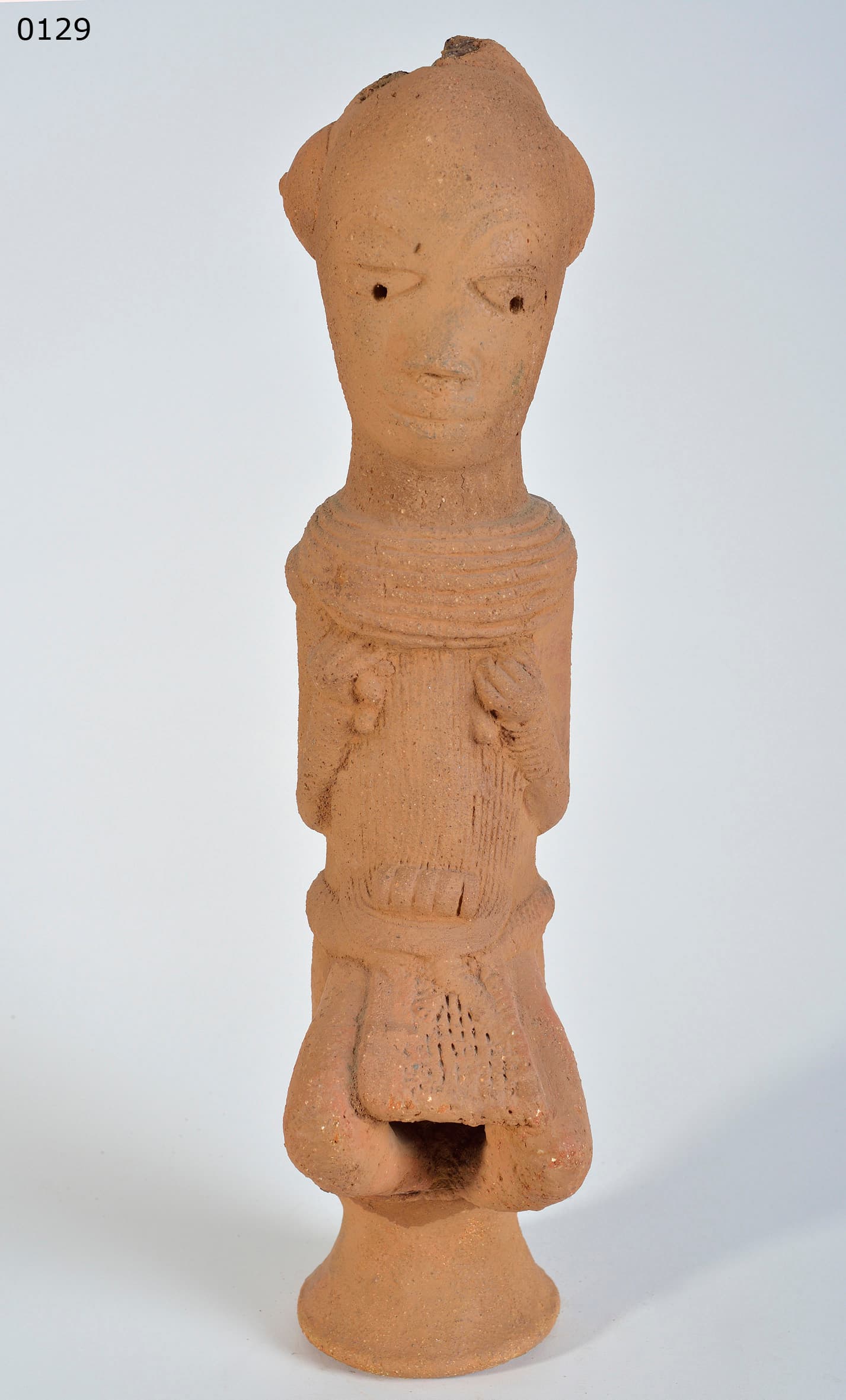
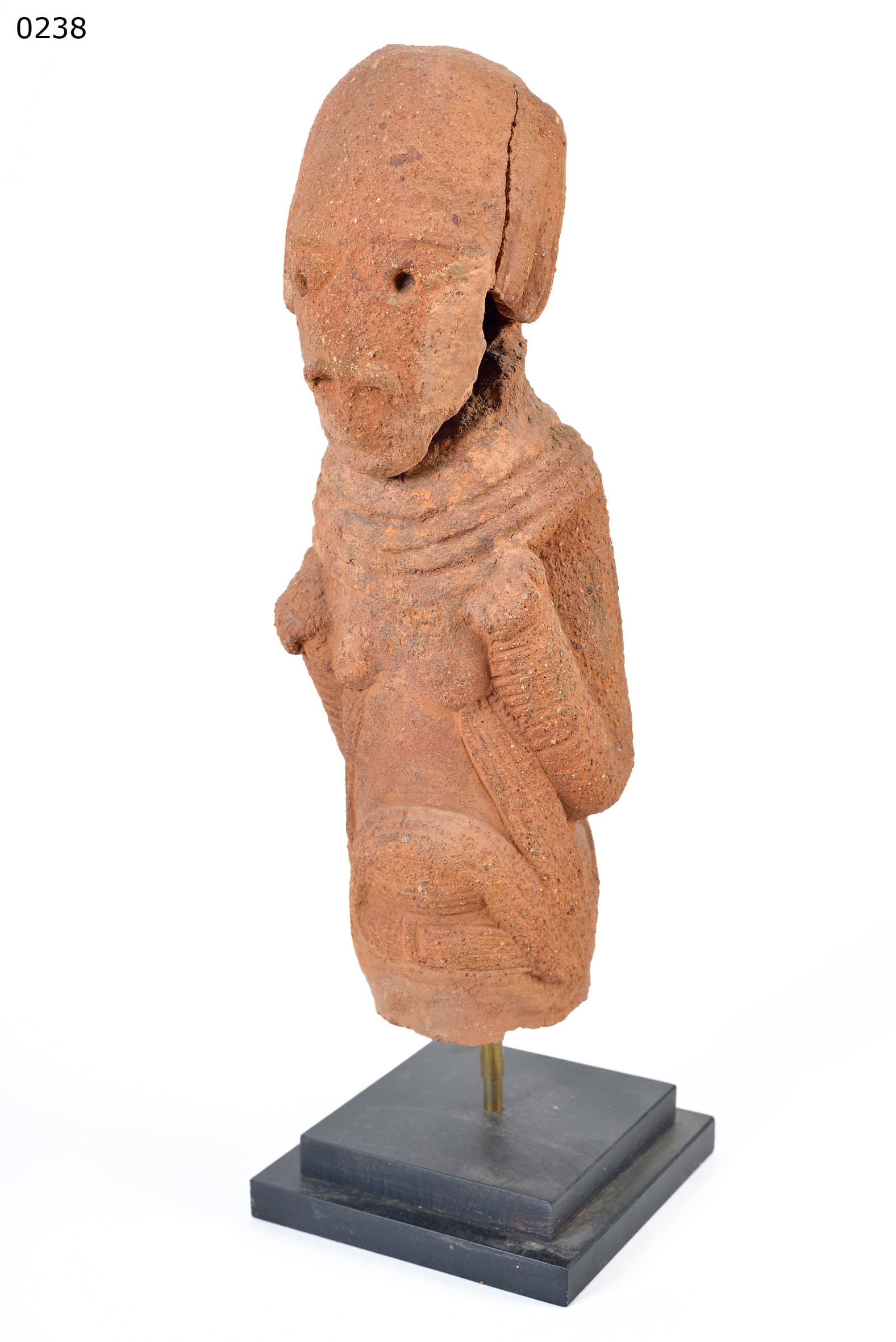
A massive heavy terracotta figure (~2000 years old, 98 cm) from the Nok culture of Nigeria — a seated or kneeling male with classic pierced D-shaped eyes, a prominent goatee, and elaborate adornment.
1. The dawn of African portraiture
The Nok civilization (c. 1500 BCE – 500 CE) represents the earliest known sculptural tradition in Sub-Saharan Africa. This piece features characteristic hallmarks of Nok aesthetics: deeply pierced triangular (or D-shaped) eyes and pierced nostrils. These perforations were both stylistic and highly functional — allowing hot gases to escape the thick clay during open-pit firing to prevent the sculpture from exploding.
2. Aristocratic iconography
The iconography suggests this figure does not represent a commoner. The styled beard, thick multi-layered beaded necklaces, and complex armbands suggest a portrait of an authority figure — likely a leader, a high priest, or a deified founding ancestor. The sheer quantity of clay used to build this heavily ornamented body reflects the wealth and surplus of Nok society.
3. Monumental scale and firing
At nearly a meter tall, this is an exceptionally large example of ancient ceramics. Firing a hollow terracotta object of this mass without a modern kiln required sophisticated technical skill and metallurgical control. It may have served as the focal point of a community shrine or the tomb marker of a leader.
Summary
This Nok statue is a significant archaeological find — a massive terracotta monument, estimated to be approximately 2,000 years old, that suggests a highly developed, stratified society with sophisticated technical mastery thrived in Iron Age Nigeria.
Written with AI assistance from the collection appraisal, object photography and our own research; editorially reviewed. Mistakes are possible — corrections are welcome. How we work →