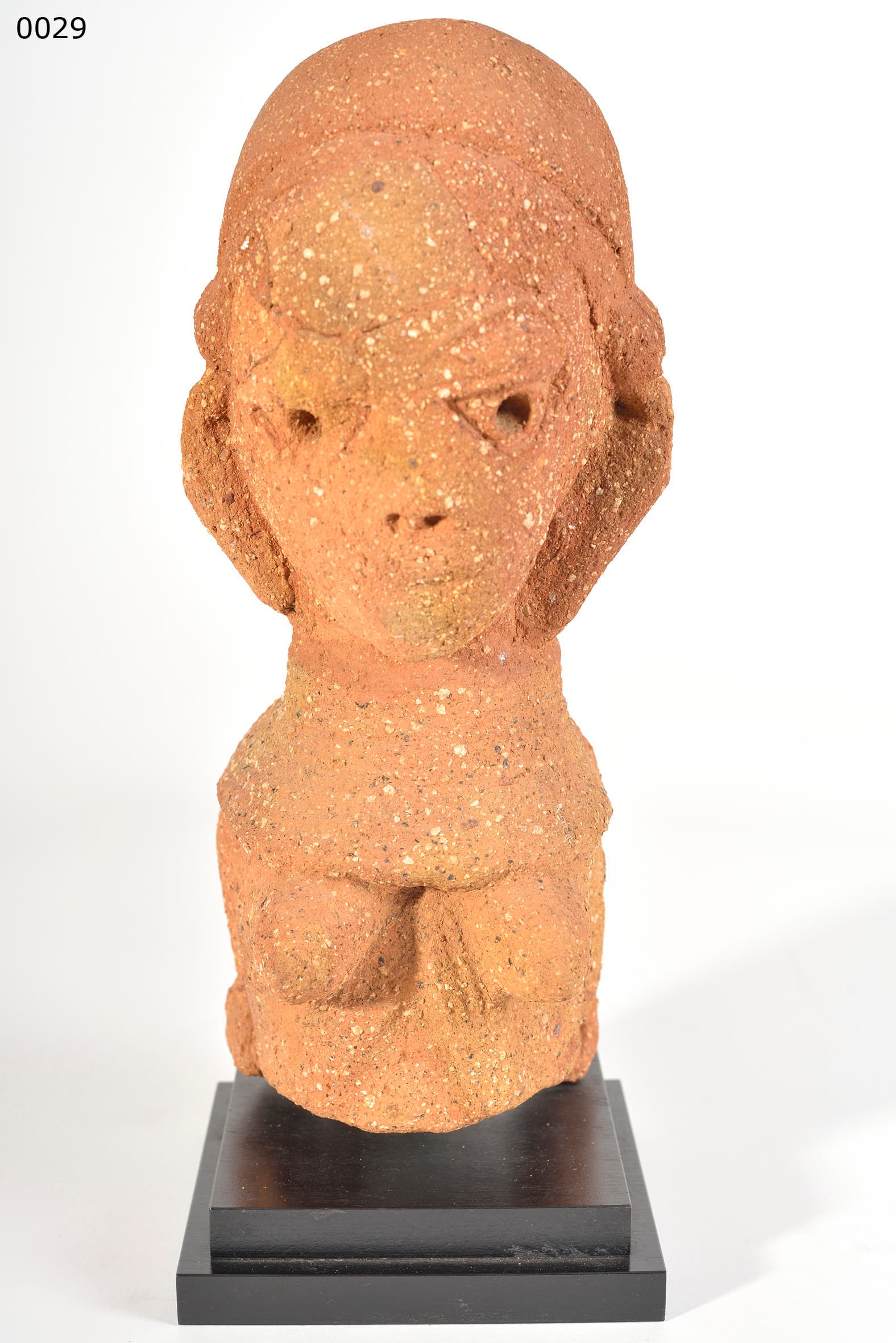
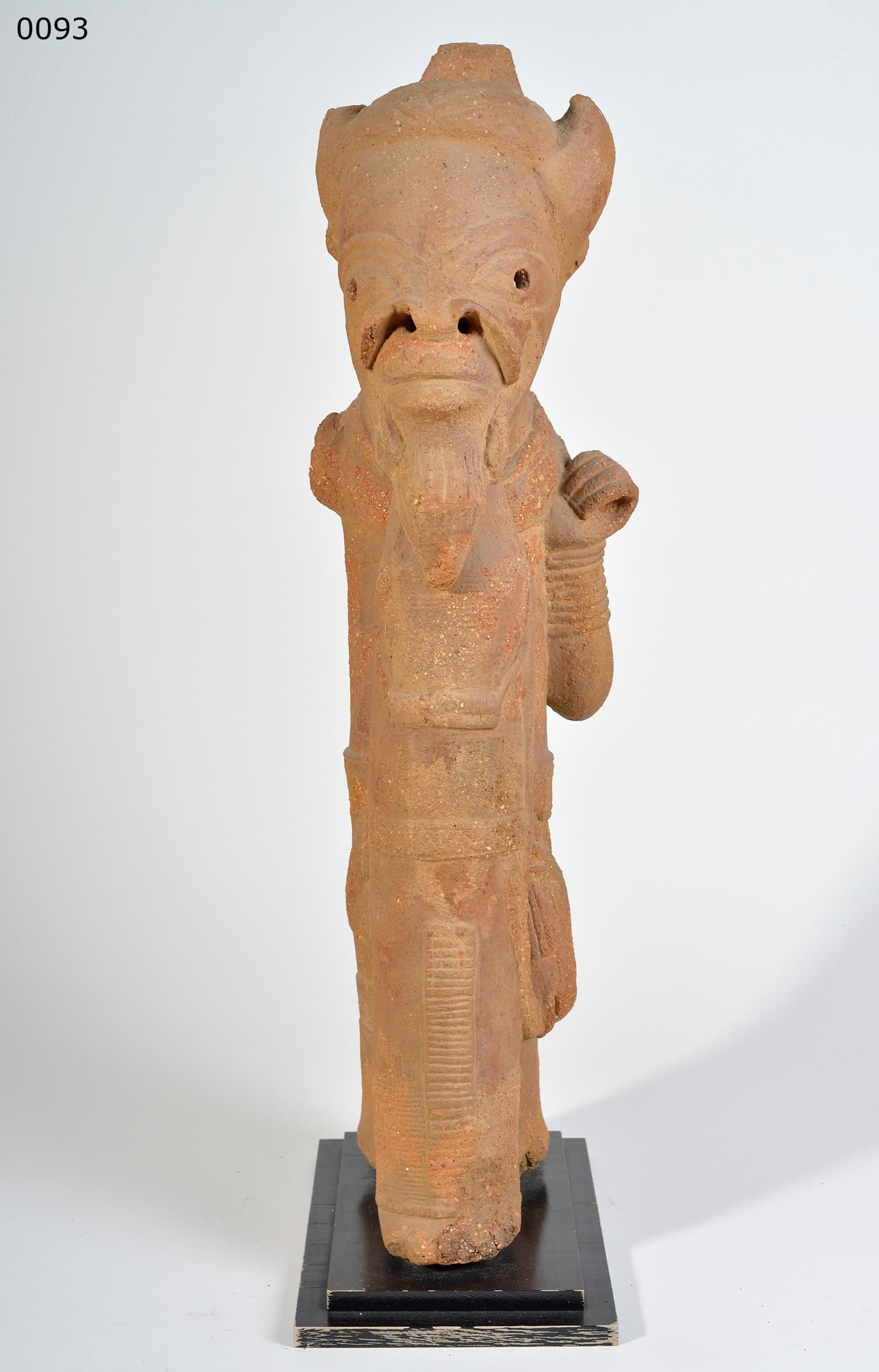
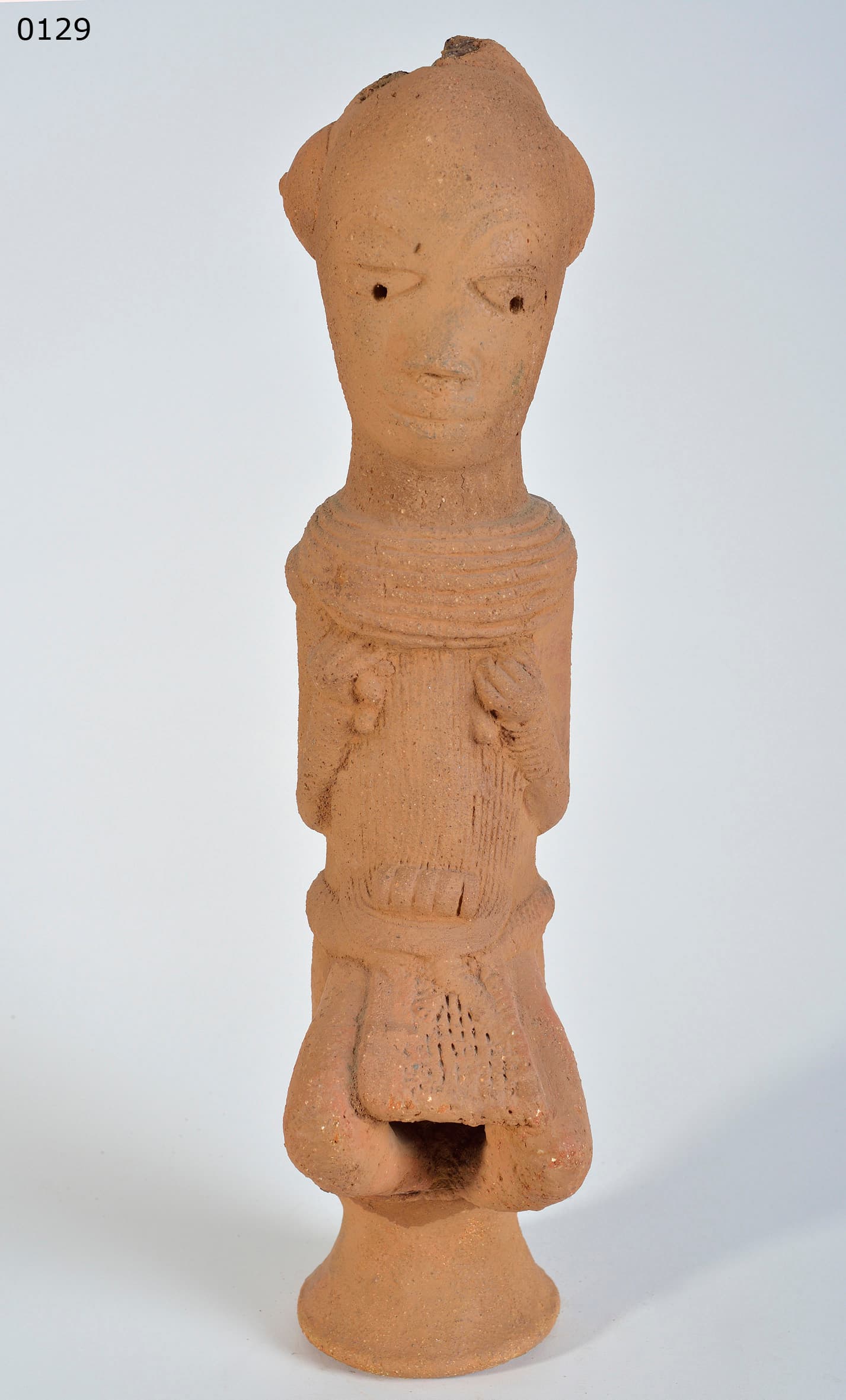
This 40 cm terracotta half-figure depicts a heavily adorned female with a prominent bun coiffure, layered necklaces, and a waist sash. The fired clay exhibits a deeply eroded, highly granular surface with significant archaeological pitting and earthen calcification.
1. Aesthetic style — Nok geometric elaboration
The Nok civilization (500 BCE – 200 CE) is renowned for establishing Sub-Saharan Africa's earliest known sculptural tradition. This figure beautifully demonstrates their mastery of geometric elaboration, using highly stylized, deeply pierced triangular eyes and a swept-back, bun-like coiffure. The elaborate, beaded collars and thick waist sash are sculpted with meticulous precision, providing a permanent, fired-clay record of ancient Nigerian aristocratic dress and bodily ornamentation.
2. Ritual function — elite commemoration and subterranean shrines
Monumental terracotta figures of this scale were likely utilized as commemorative portraits of queens, high priestesses, or female deities. In Nok culture, these heavy, fragile objects were often placed in centralized shrines or dedicated burial complexes to serve as eternal focal points for ancestor veneration and agricultural rituals. The intense focus on the head and elaborate neck jewelry signifies the seat of spiritual power and the elevated, quasi-divine status of the female elite in antiquity.
3. Physical patina — two-millennia archaeological weathering
The physical state of this terracotta shows wear consistent with its estimated age. The original smooth slip has been eroded by long-term exposure to the acidic, iron-rich soils of the Jos Plateau. What remains is a highly coarse, granular ceramic matrix riddled with micro-pitting, root marks, and deeply ingrained, calcified soil accretions. This geological erosion is consistent with an extended period of subterranean burial.
Summary
Capturing the sophisticated geometry and aristocratic ornamentation of ancient Nigeria, this female Nok terracotta is a notable example of early African ceramic art. Its highly granular, calcified surface is consistent with a long-term subterranean burial.
Written with AI assistance from the collection appraisal, object photography and our own research; editorially reviewed. Mistakes are possible — corrections are welcome. How we work →