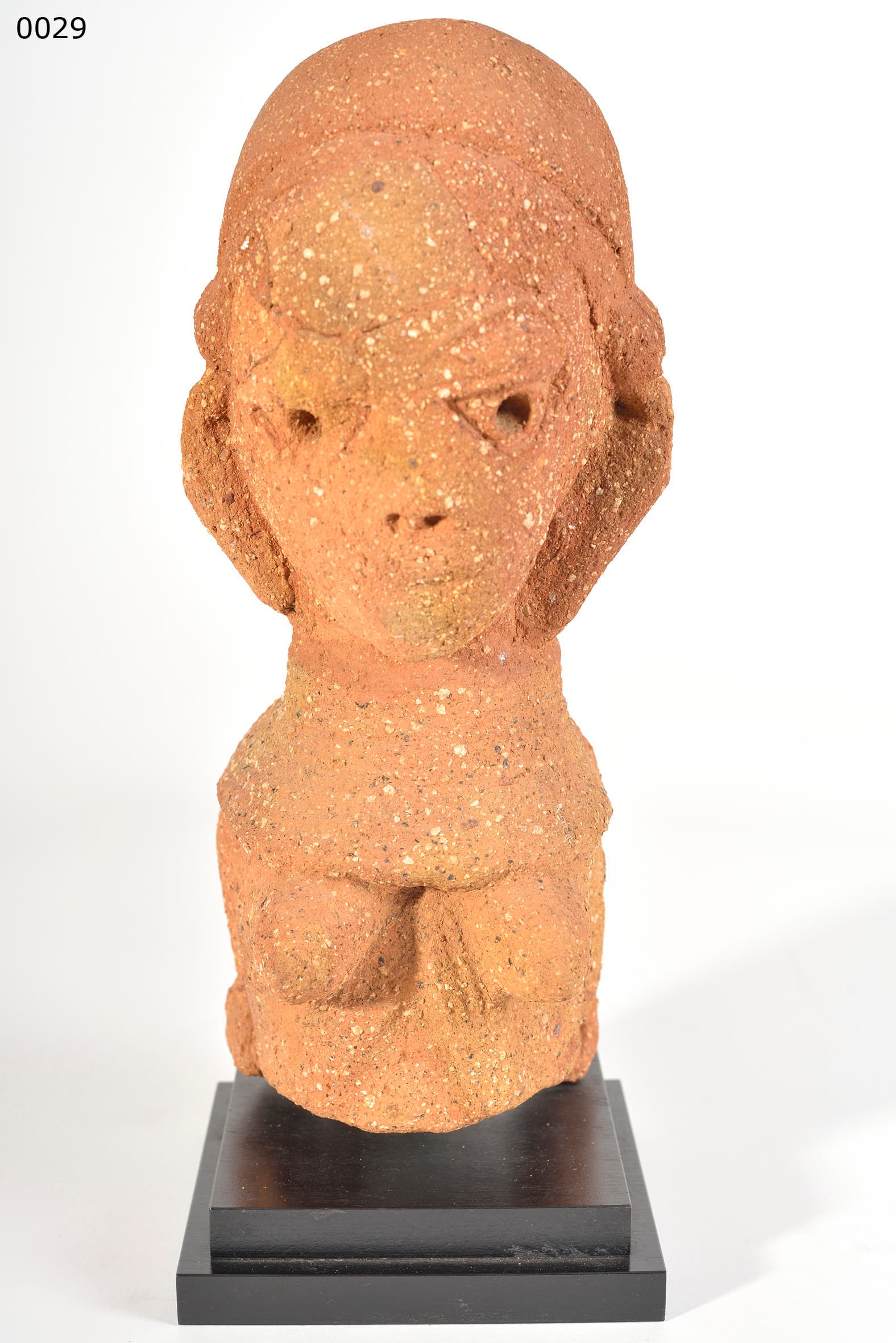
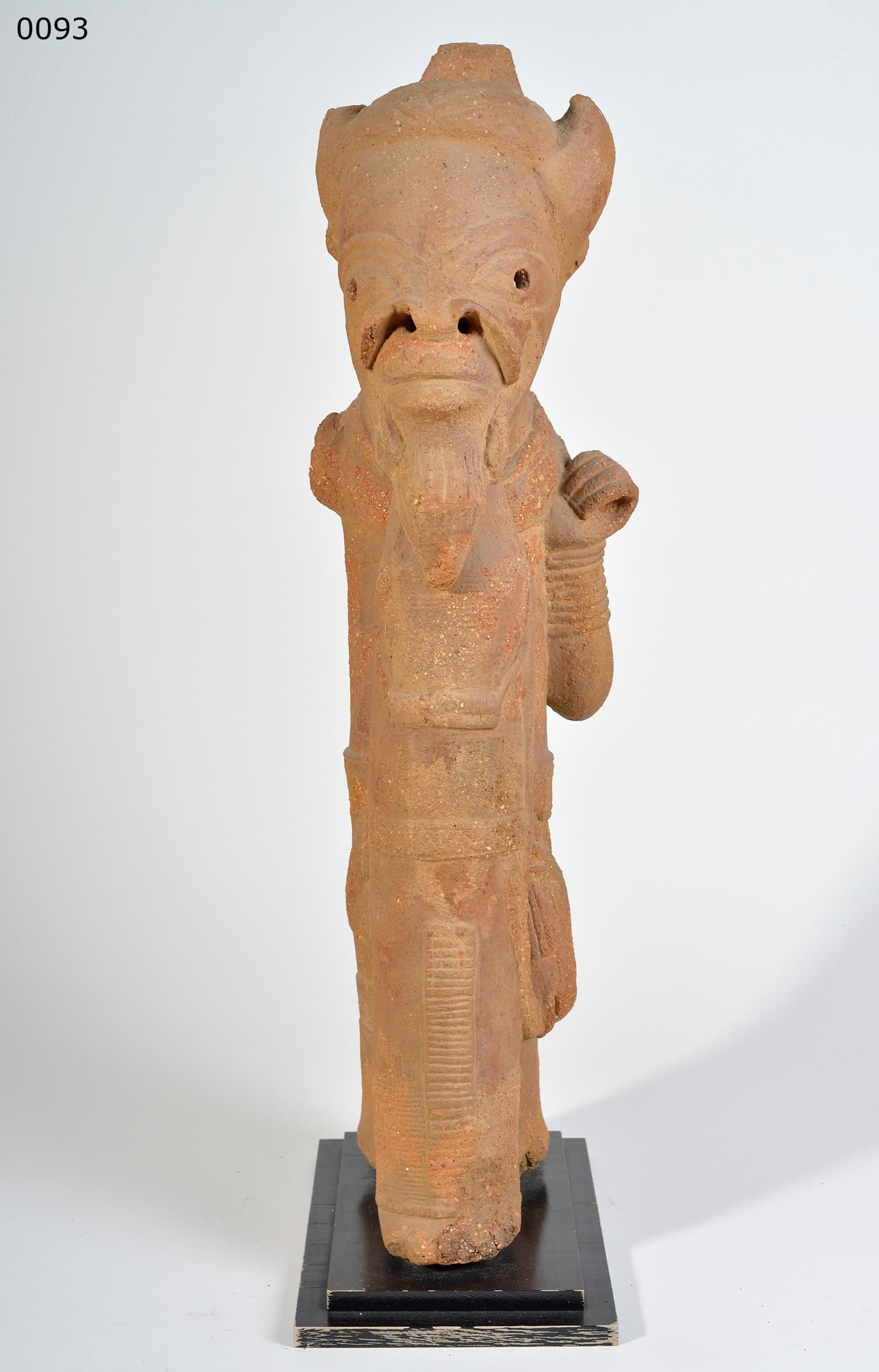
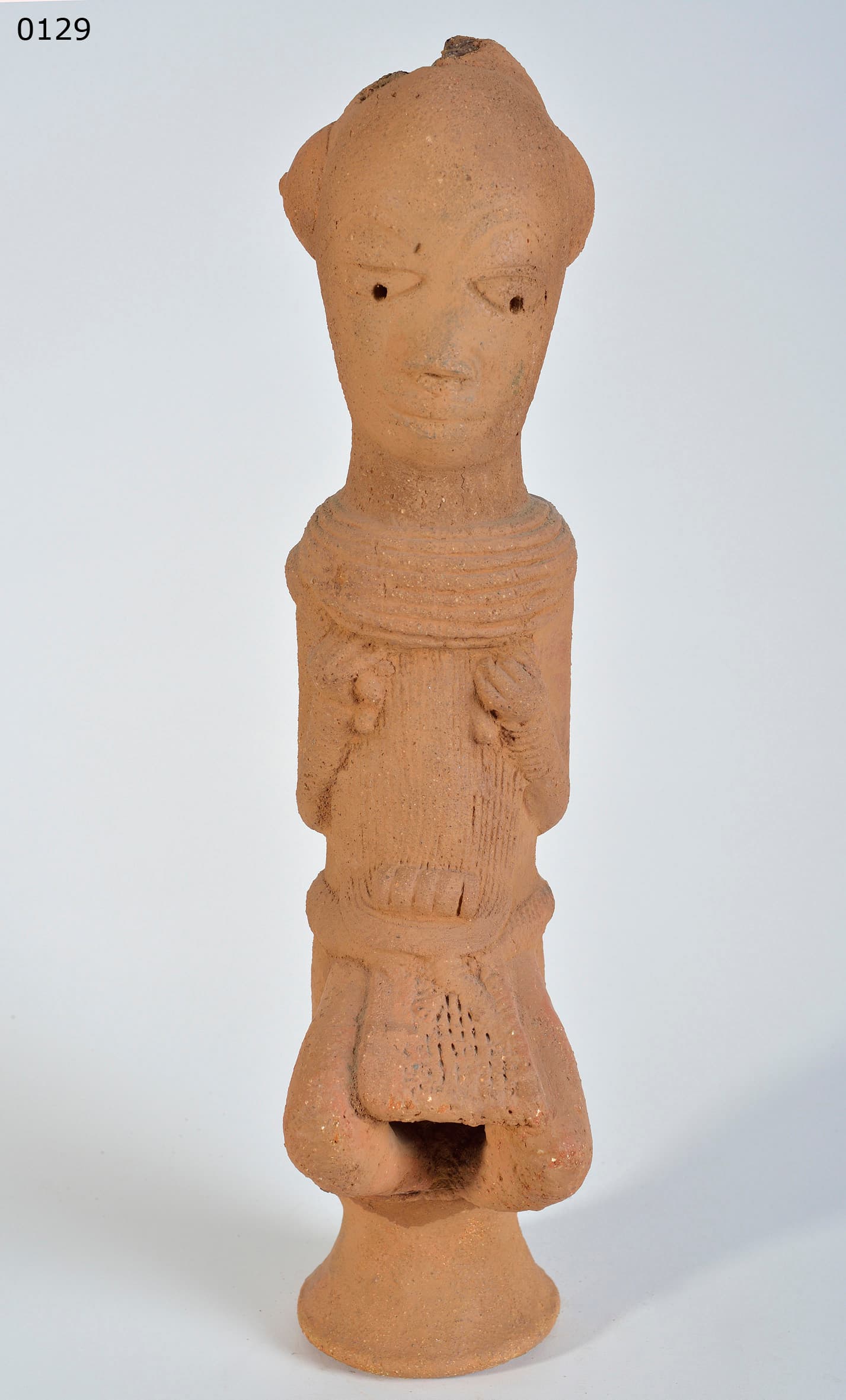
This massive 22 cm terracotta head is distinguished by a prominent, wide-brimmed hat or complex coiffure, overarching classic Nok pierced triangular eyes and a prominent, projecting upper lip. The surface is heavily eroded, exposing a highly granular, quartz-tempered clay matrix filled with white calcified spots.
1. Aesthetic style — aristocratic adornment in antiquity
This monumental Nok head moves beyond simple facial geometry by incorporating elaborate social signifiers. The prominent, wide-brimmed structure atop the head represents either a highly complex, mud-packed aristocratic coiffure or a specific type of woven hat/crown. In Nok society, such elaborate headgear is traditionally interpreted as an indicator of elevated social rank, potentially identifying the subject as a chief, a specialized priest, or an elite warrior. It suggests that during this early period, central Nigeria possessed a stratified, status-conscious society.
2. Ritual function — monumental clay engineering
Creating a terracotta head of this size (22 cm, meaning the original full figure was likely life-sized or near life-sized) represents a significant achievement in ancient ceramic technology. Nok artisans utilized a precise mixture of local clay and coarse quartz temper (visible in the eroded surface) to give the wet clay the structural integrity needed to support its own weight before firing. The deep, dark piercing of the eyes and the mouth served to hollow out the thickest parts of the clay, ensuring a successful firing.
3. Physical patina — severe calcification and subterranean chemistry
The physical state of this terracotta reflects a long period of burial. The surface is entirely stripped of its original finish, revealing a coarse, gravel-like interior. A key indicator consistent with significant age is the heavy, white speckling across the entire face. This is calcification — minerals from the surrounding Nigerian soil that have leached out of the ground water, precipitated, and chemically bonded with the porous ceramic over a long period. This deep-tissue chemical integration is highly difficult to replicate.
Summary
Crowned with the elaborate headgear associated with an ancient elite, this monumental Nok head represents a significant achievement in early African ceramic technology. Its severely eroded, quartz-heavy matrix and profound chemical calcification are consistent with a highly ancient origin, making it a notable highlight of the collection.
Written with AI assistance from the collection appraisal, object photography and our own research; editorially reviewed. Mistakes are possible — corrections are welcome. How we work →