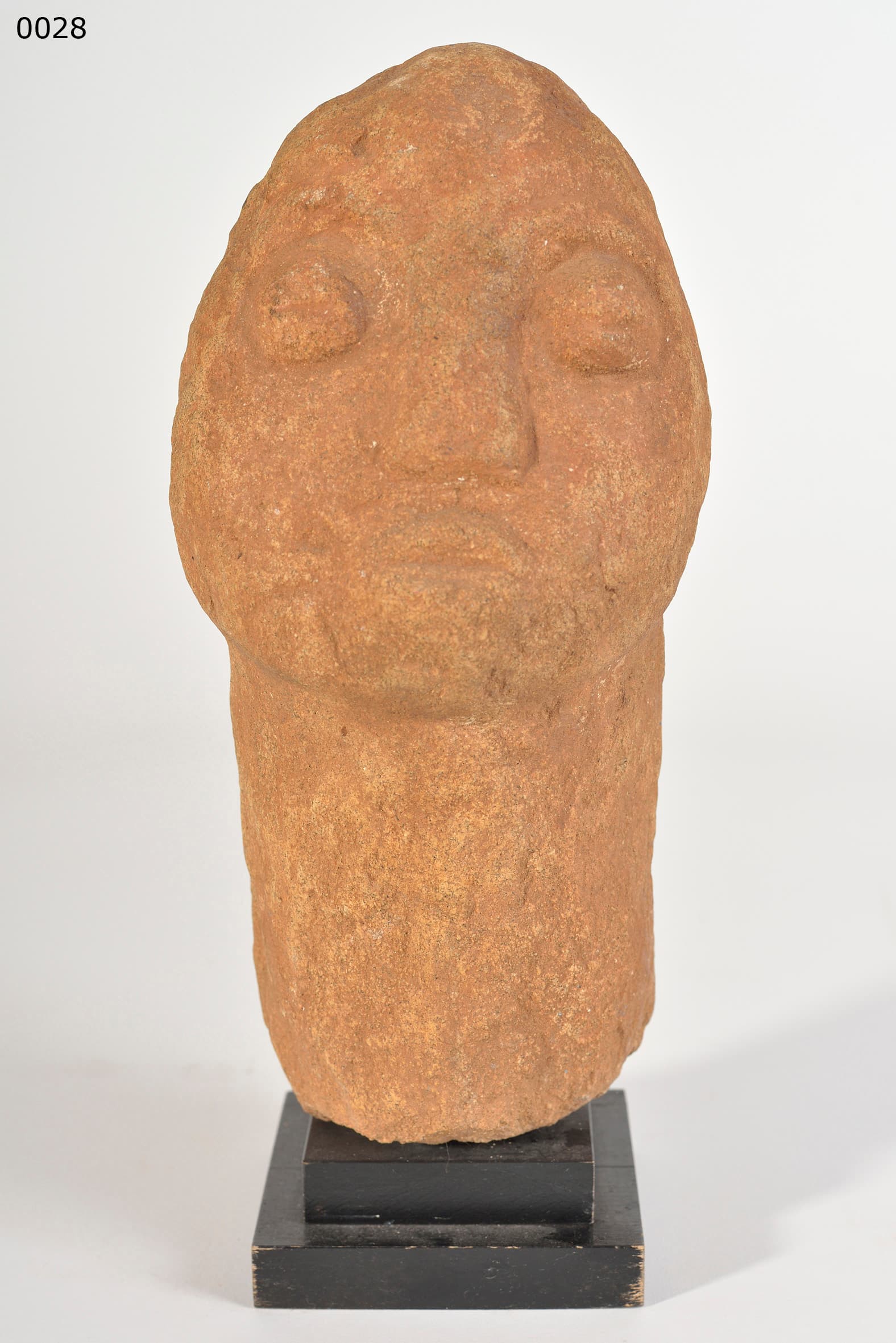
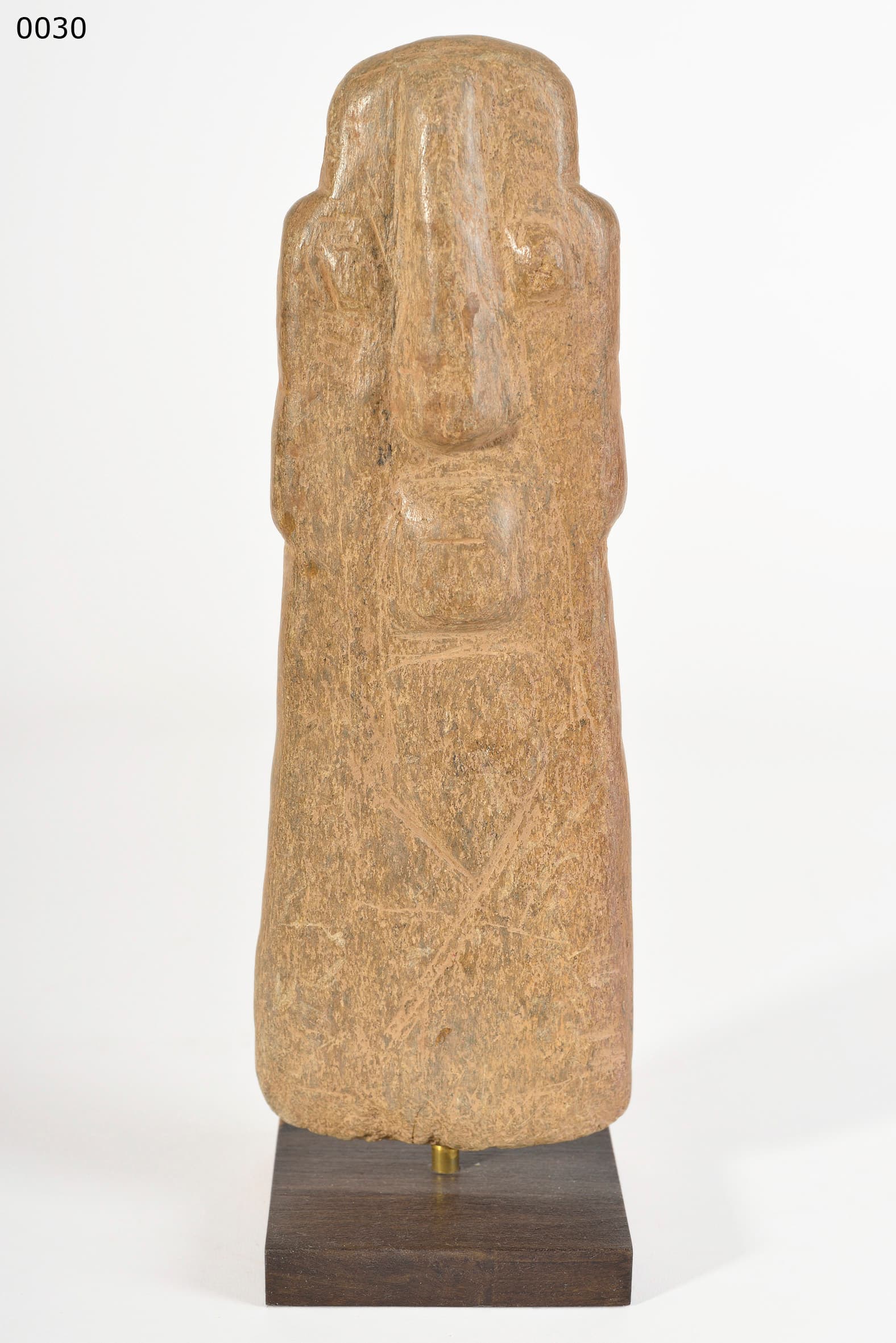
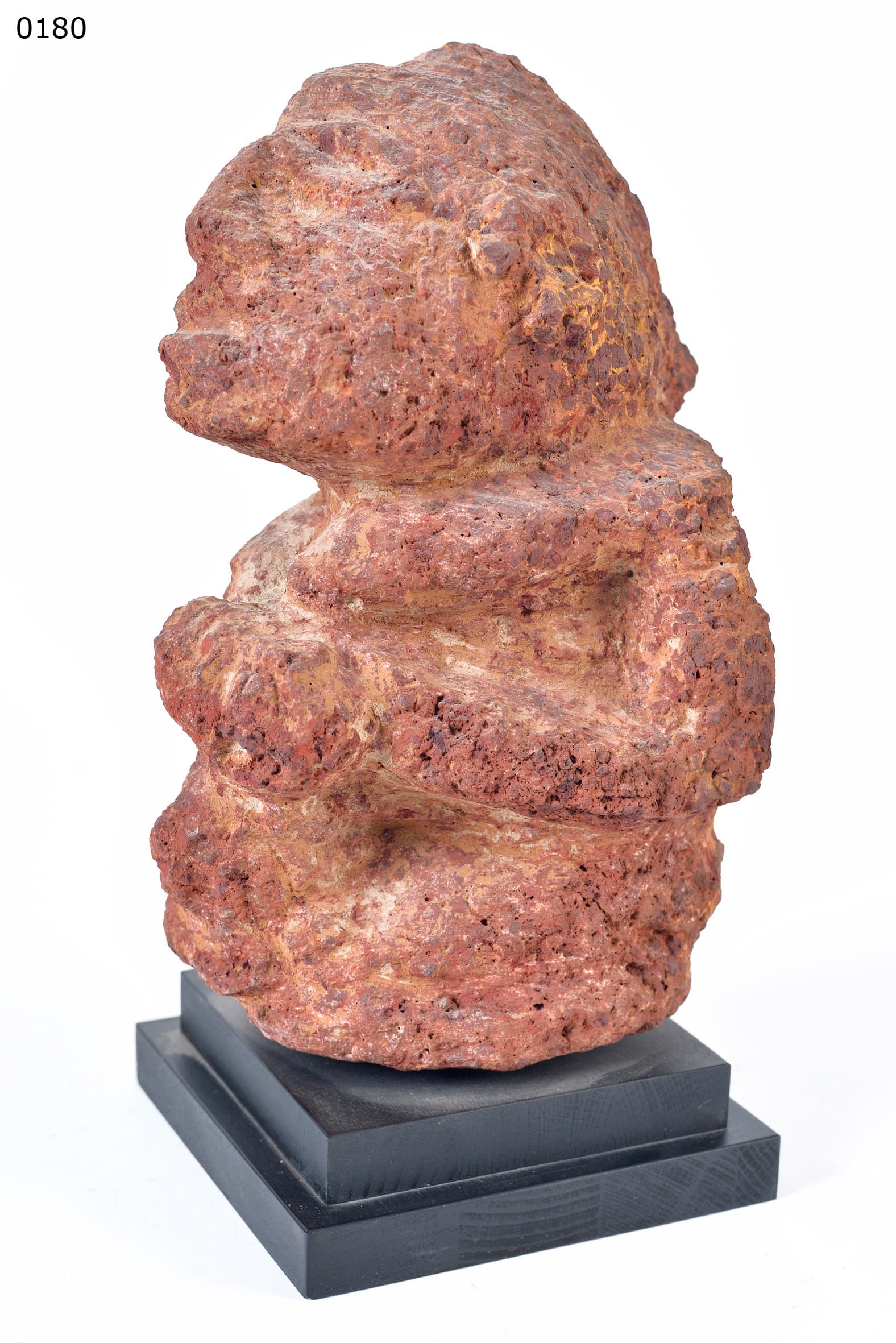
The Kurumba (also Kouroumba) of northern Burkina Faso are best known for their polychrome wooden antelope masks, but earlier stone-carving traditions produced rare funerary and ancestral head sculptures of significant antiquity. This 14-centimetre carved stone head, schematised in form with a domed cranium, simple facial plane, and vestigial ear indication, belongs to the pre-Islamic Kurumba artistic horizon. Stone, unlike wood or terracotta, offered permanence appropriate to ancestral memorialization across generations.
1. Aesthetic style — geometric reduction
The KURUMBA stone head operates at the extreme end of formal reduction: the face is barely differentiated from the dome, reduced to two shallow orbital depressions, a raised median ridge for the nose, and a horizontal incision for the mouth. Yet this geometric restraint produces an object of quiet authority. The stone's natural grain and colour — warm sandstone or laterite — lends a geological solidity that reinforces the head's role as a permanent ancestral marker. The scale, at 14 centimetres, suggests personal or shrine ownership rather than large-scale public display.
2. Ritual function — lapidary ancestral anchor
Unlike perishable wooden masks, stone heads in the Kurumba context served as permanent anchors for ancestral presence. Placed in family shrines or deposited at sacred sites, they accumulated the prayers and sacrificial residues of multiple generations. The Kurumba cosmology identifies certain spirits with rocky outcroppings and boulders — a conceptual framework within which carved stone figures naturally participated. This head may have been considered a localised avatar of a territorial ancestor spirit.
3. Physical patina — laterite weathering and encrustation
The stone surface displays the characteristic weathering of laterite or ferruginous sandstone exposed to Sahelian conditions: a reddish-orange iron-oxide skin overlying a grey-brown interior matrix. Recessed areas retain a dark sacrificial deposit — possibly the residue of blood, millet porridge, or oil applied in ancestral ritual. The base is abraded and slightly flattened, consistent with the head having been set upright on a shrine surface for extended periods. No modern tool marks are detectable.
Summary
This KURUMBA carved stone head, approximately 14 centimetres and dating to the 12th-16th century, represents a rare instance of Sahelian stone portraiture from northern Burkina Faso. Its geometric reduction, sacrificial residue deposits, and laterite weathering pattern identify it as a genuine ancestral shrine object from the pre-Islamic Kurumba cultural horizon.
Written with AI assistance from the collection appraisal, object photography and our own research; editorially reviewed. Mistakes are possible — corrections are welcome. How we work →