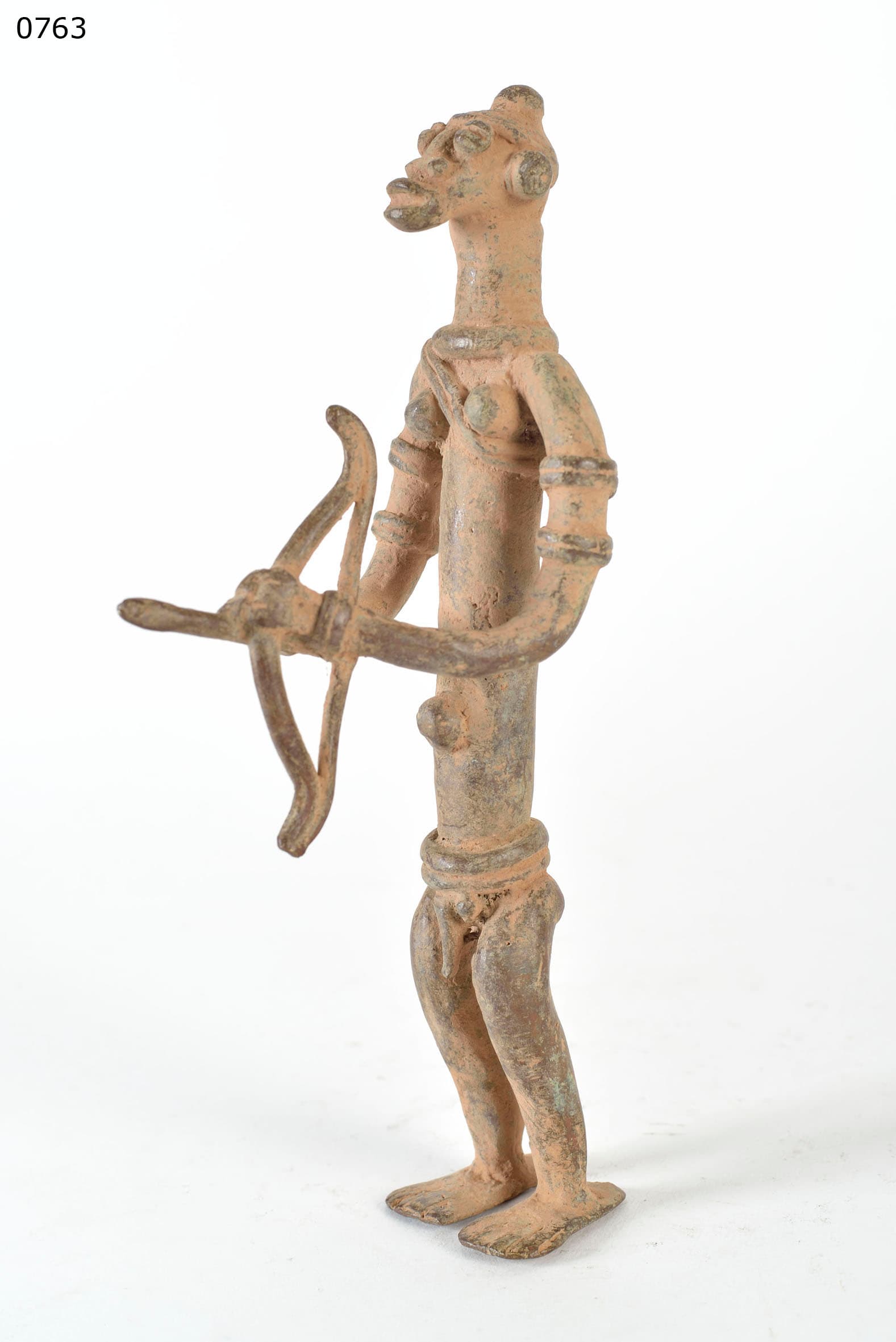
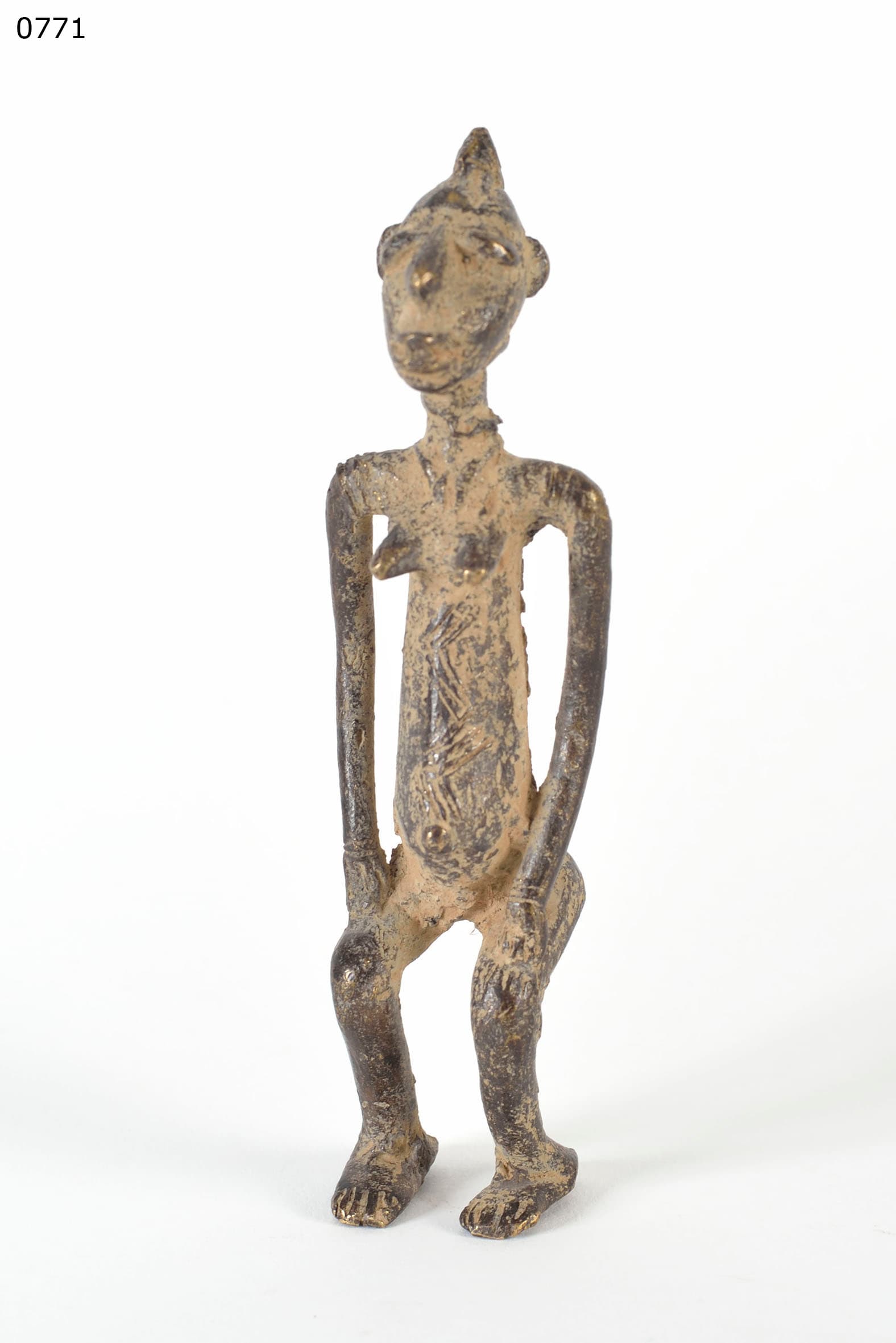
This heavy, cast bronze figure depicts an elongated standing female with stylized, geometric facial features and pendulous breasts, holding a small child across her hip. The surface is heavily textured and oxidized, displaying a deep bronze core overlaid with patches of green malachite and brown earth.
1. Aesthetic style — early voltaic metallurgical aesthetics
The Gan people of southern Burkina Faso possess an ancient, highly distinct, and until recently, little-studied bronze-casting tradition. This maternity figure exemplifies the classic Gan aesthetic, which favors extreme vertical elongation and a rigid, almost skeletal abstraction over naturalistic volume. The arms are long and rope-like, the facial features are sharply incised, and the bodily proportions are deliberately stretched to emphasize spiritual presence over anatomical accuracy. This piece represents a critical link in West African metallurgical history, bridging the styles of the deep Sahara and the coastal kingdoms.
2. Ritual function — matrilineal power and royal shrines
The Gan society was organized around powerful royalties and a strict religious hierarchy where the Queen Mother wielded immense political and spiritual influence. Bronze maternity figures were not simple fertility charms; they are traditionally understood as significant power objects representing the founding mothers of the royal lineage. Housed in specialized, heavily guarded dynastic shrines, these heavy bronze statues served to anchor the maternal ancestors to the living court. They were petitioned during times of crisis to ensure the continuity of the royal bloodline and the agricultural prosperity of the kingdom.
3. Physical patina — cire perdue taphonomy and mineral oxidation
Attributed to a period between the 16th and 19th centuries, this bronze is a notable example of ancient taphonomy. Produced via the lost-wax (cire perdue) method, the casting exhibits archaic flaws and a slightly porous surface typical of pre-industrial African foundries. Having been buried or kept in semi-subterranean shrines, the metal has undergone profound geochemical alteration. The deep, stable layers of cuprite (red-brown) and malachite (green) oxidation are consistent with significant age and support its historical attribution.
Summary
This Gan maternity figure is a haunting and elegant example of the bronze-casting traditions of Burkina Faso. Its severe, elongated abstraction and deeply oxidized patina are consistent with a highly significant historical object.
Written with AI assistance from the collection appraisal, object photography and our own research; editorially reviewed. Mistakes are possible — corrections are welcome. How we work →