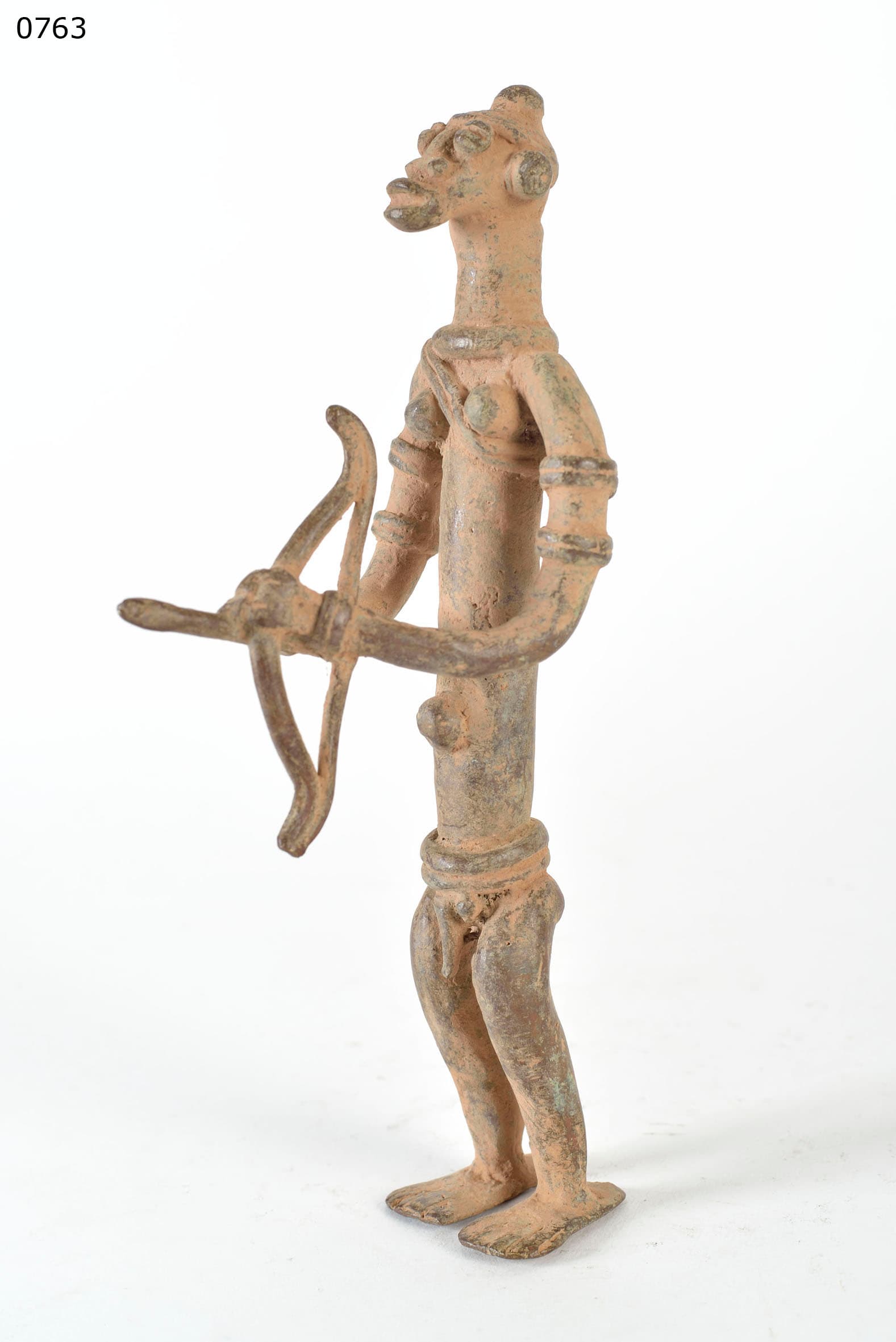
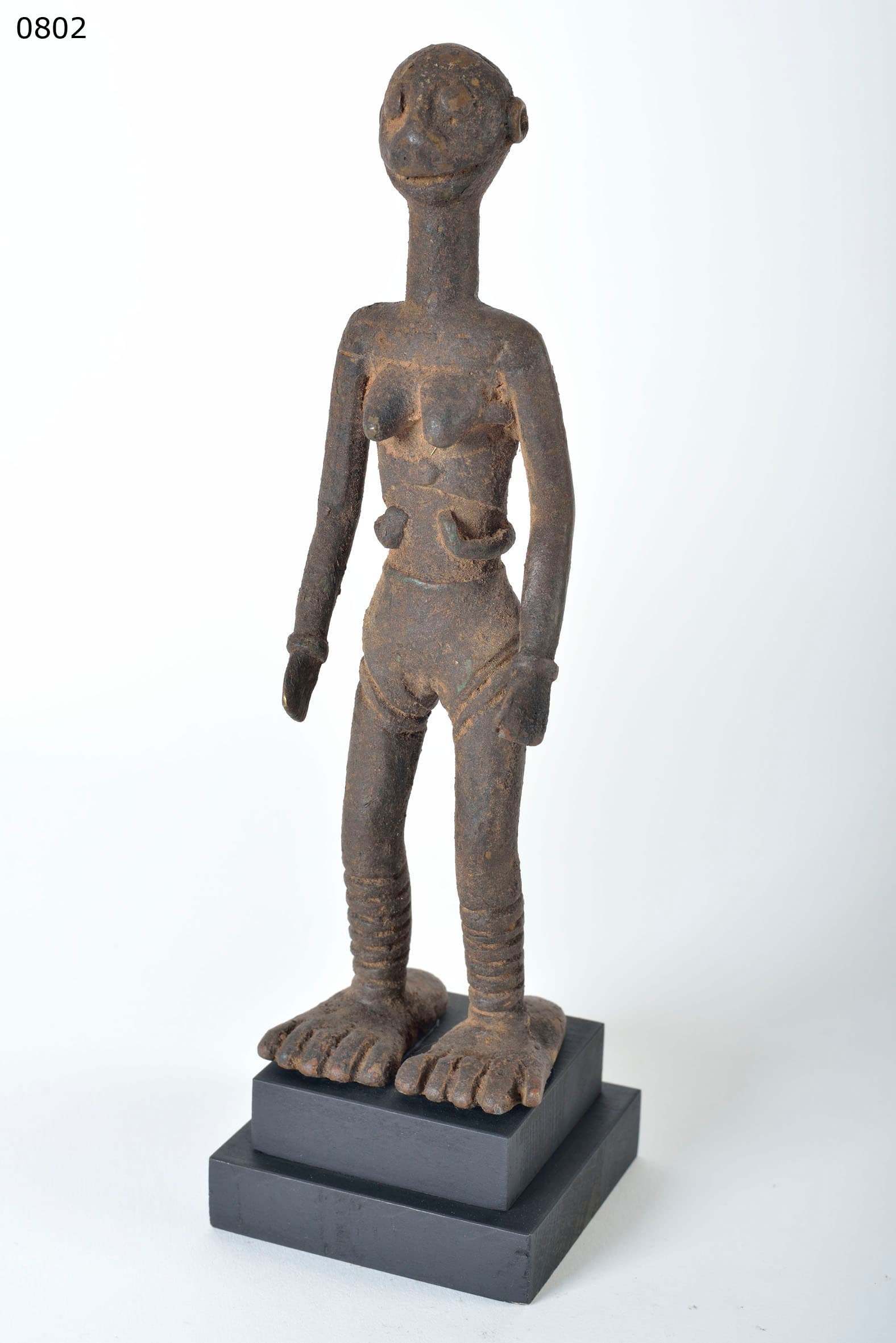
A small, highly attenuated bronze female figure standing with slightly bent knees and arms resting near the hips, topped by a sharply pointed, conical head. The metal is heavily encrusted with a dry, crusty, verdigris and earth-toned archaeological patina.
1. Aesthetic style and regional traits
The Gan people are known for pushing human proportions to distinctive extremes in their bronze casting. This figure is a characteristic example, defined by its extreme, wire-like slenderness and the highly unusual, sharply pointed conical head. This is not meant to be a portrait, but a formalized, mythological representation of an ancient spirit, cast by highly specialized blacksmith-priests. Gan bronze pushes its formal signatures further than neighboring traditions — its unique abstraction is itself a key regional trait.
2. Ritual function and protective veneration
Due to its small size (13 cm), this figure likely functioned within an intimate, personal protective context or as a secondary figure on a larger royal shrine. Cast in permanent bronze, it was intended to serve as a lasting sentinel, anchoring the prayers of the living to the realm of the ancestors and warding off spiritual contamination. The choice of bronze over wood specifically signals long-term institutional commitment — bronze figures outlast their commissioners by centuries while wooden figures are typically more susceptible to decay.
3. Physical patina and age assessment
The appearance of significant age is suggested by its surface. The bronze has undergone significant chemical breakdown, resulting in a thick, crusty layer of malachite (green) and cuprite (red/brown) oxidation that obscures the finer casting details. This heavy archaeological weathering is consistent with a 16th–19th century dating, suggesting long-term burial or exposure. The corrosion penetrates the metal substrate rather than coating its surface, distinguishing it from typical post-hoc chemical patination.
Summary
A distinctive and stylized Gan bronze, capturing the culture's unique penchant for elongated, mythological abstraction. Its heavily oxidized archaeological patina makes it a notable survivor of Burkina Faso's metallurgical history.
Written with AI assistance from the collection appraisal, object photography and our own research; editorially reviewed. Mistakes are possible — corrections are welcome. How we work →