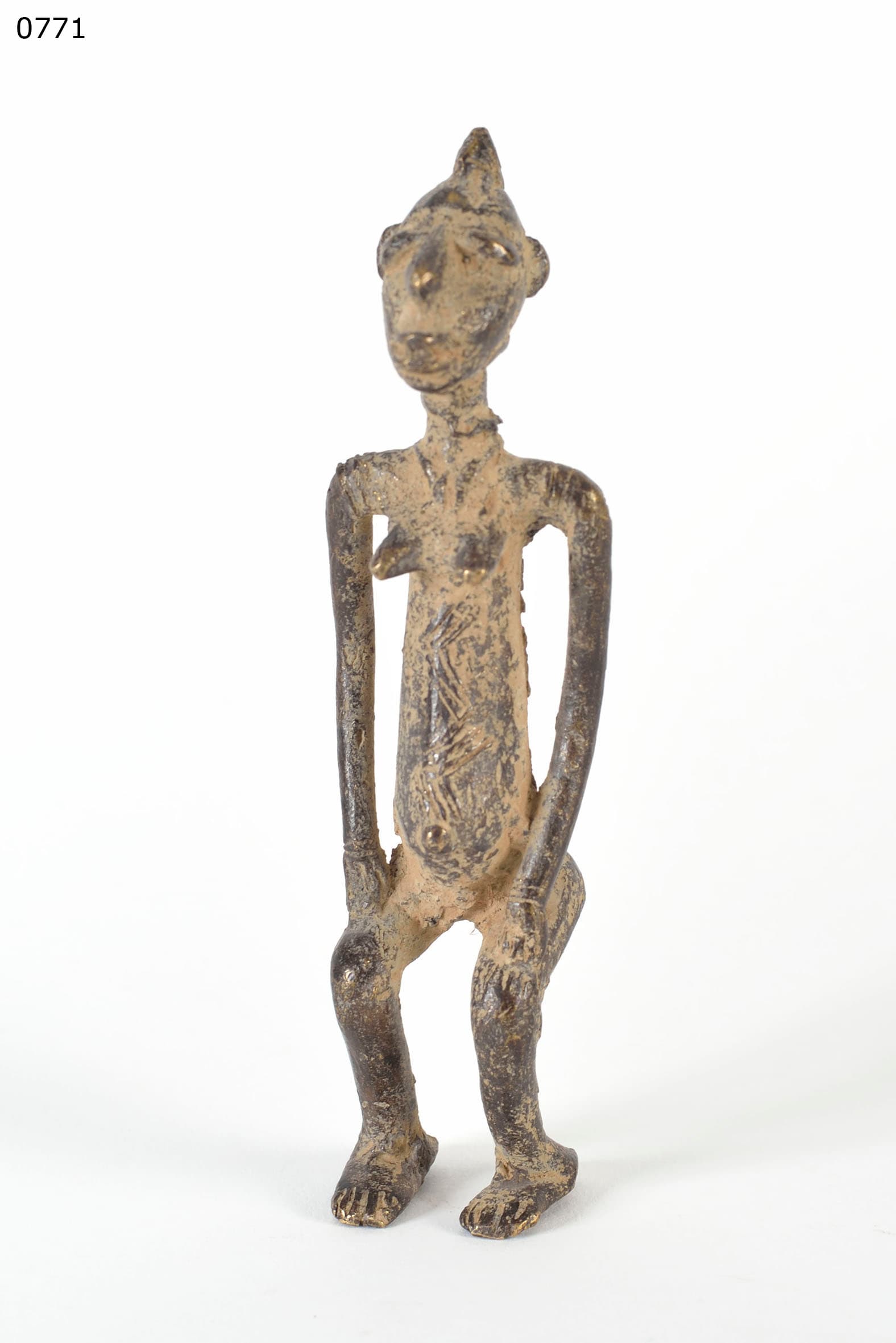
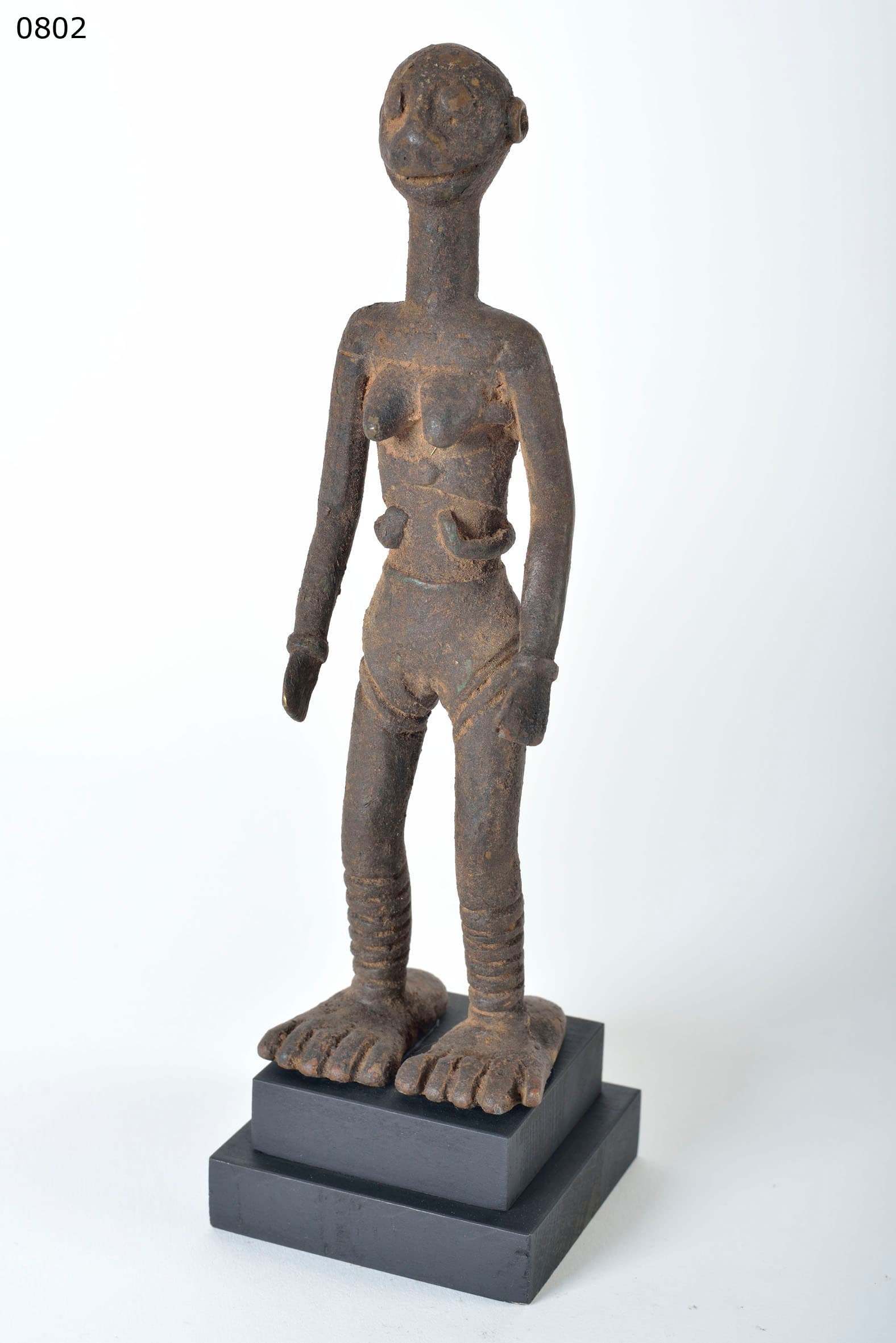
A stylized, elongated bronze figure standing upright, gripping a large bow in both hands. The figure features protruding, disc-like ears, an elongated neck, and a dry, heavily oxidized, crusty green-brown patina.
1. Aesthetic style and regional traits
This figure demonstrates the radical abstraction typical of ancient Gan bronze work. The human form is highly attenuated, with a tubular torso and limbs that visually echo the sweeping curve of the weapon it holds. The distinctive protruding ears, simplified facial features, and lack of fine muscular detail prioritize symbolic identity over anatomical accuracy, creating a timeless, mythical silhouette. The elongation and disc-like ears are characteristic Gan formal markers, distinguishing the corpus from the more naturalistic registers of nearby Akan or Mossi bronze.
2. Ritual function and martial ideology
The depiction of a warrior armed with a bow is a clear invocation of defense, hunting prowess, and historical societal preservation. Kept in a royal or community shrine, this figure likely represented a legendary founding ancestor, a hero of the lineage, or a specific martial deity, serving to magically protect the Gan kingdom from physical and spiritual incursions. The armed figure's role was not commemorative but operational — its presence was understood to actively deter threats rather than merely remember past defenders.
3. Physical patina and age characteristics
The extreme degradation of the bronze is consistent with deep antiquity. The surface is entirely coated in a thick, crusty layer of cuprite and malachite (verdigris), indicating prolonged burial or centuries of environmental exposure. The loss of crisp casting details due to this heavy weathering is characteristic of 16th–19th century West African bronzes. The differential corrosion pattern — heaviest where moisture and earth concentrated — suggests long natural exposure rather than chemical patination.
Summary
This ancient Gan warrior figure is a striking example of attenuated, martial abstraction in West African metallurgy. Its profound archaeological weathering and commanding posture align it with rare antiquities from Burkina Faso.
Written with AI assistance from the collection appraisal, object photography and our own research; editorially reviewed. Mistakes are possible — corrections are welcome. How we work →