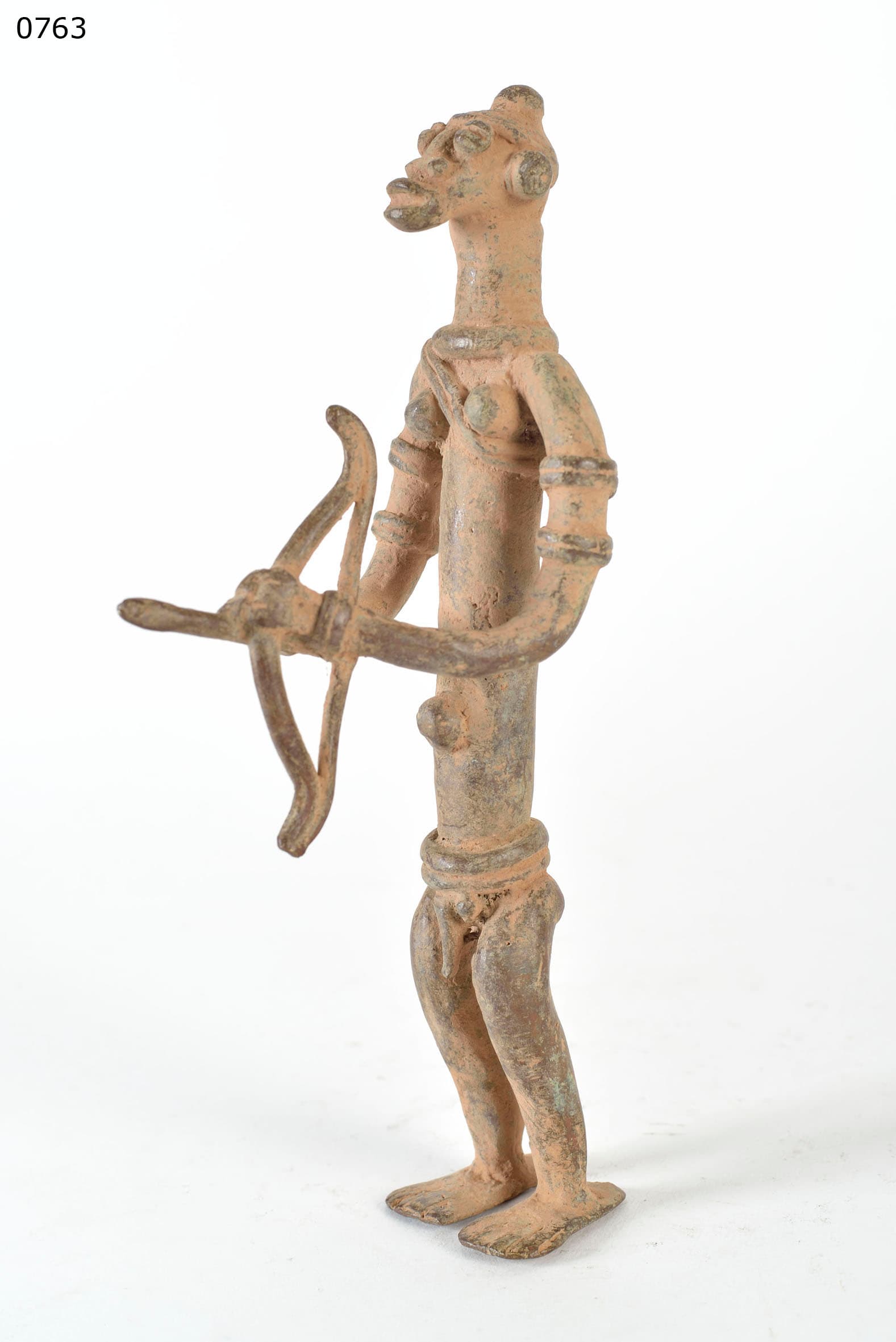
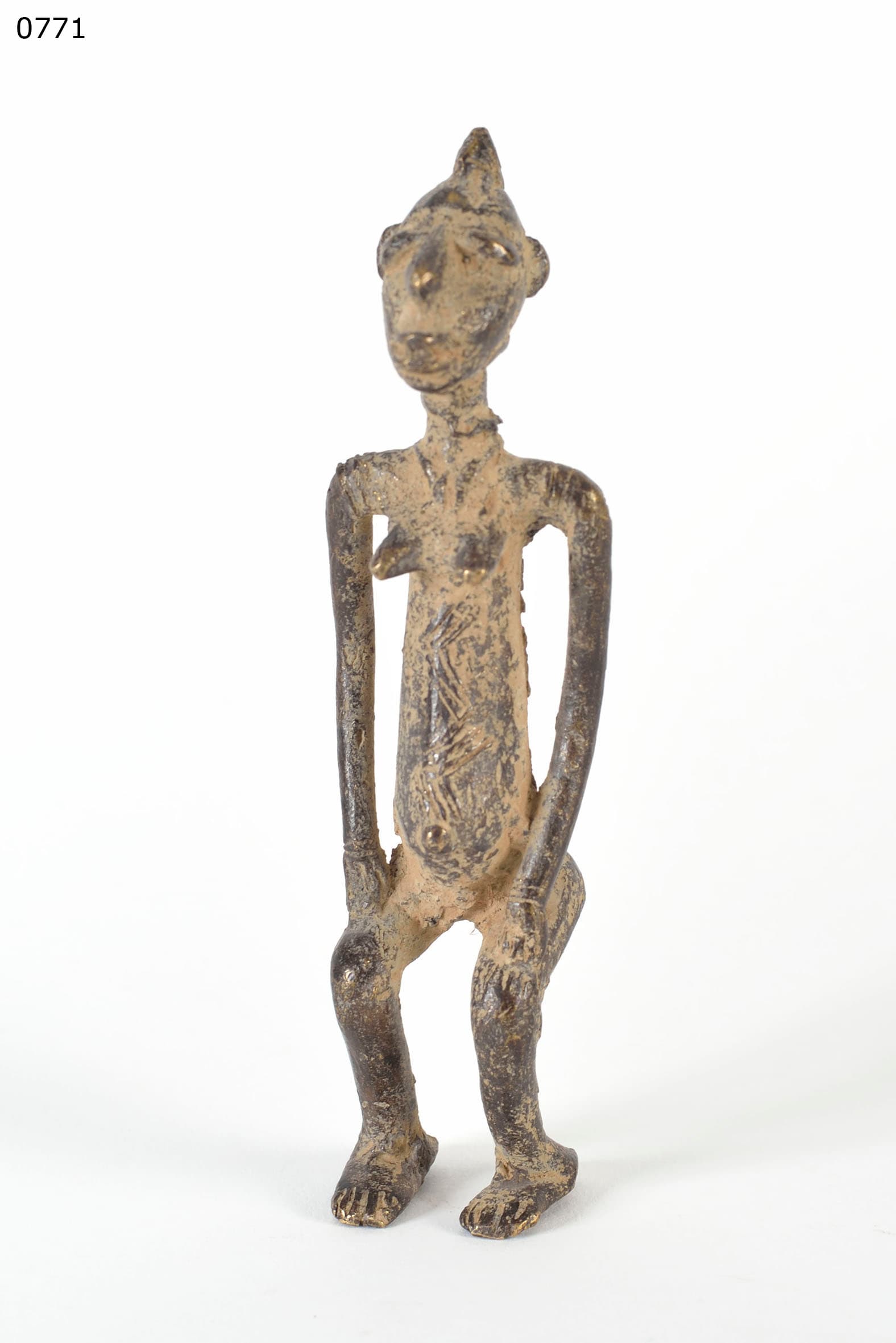
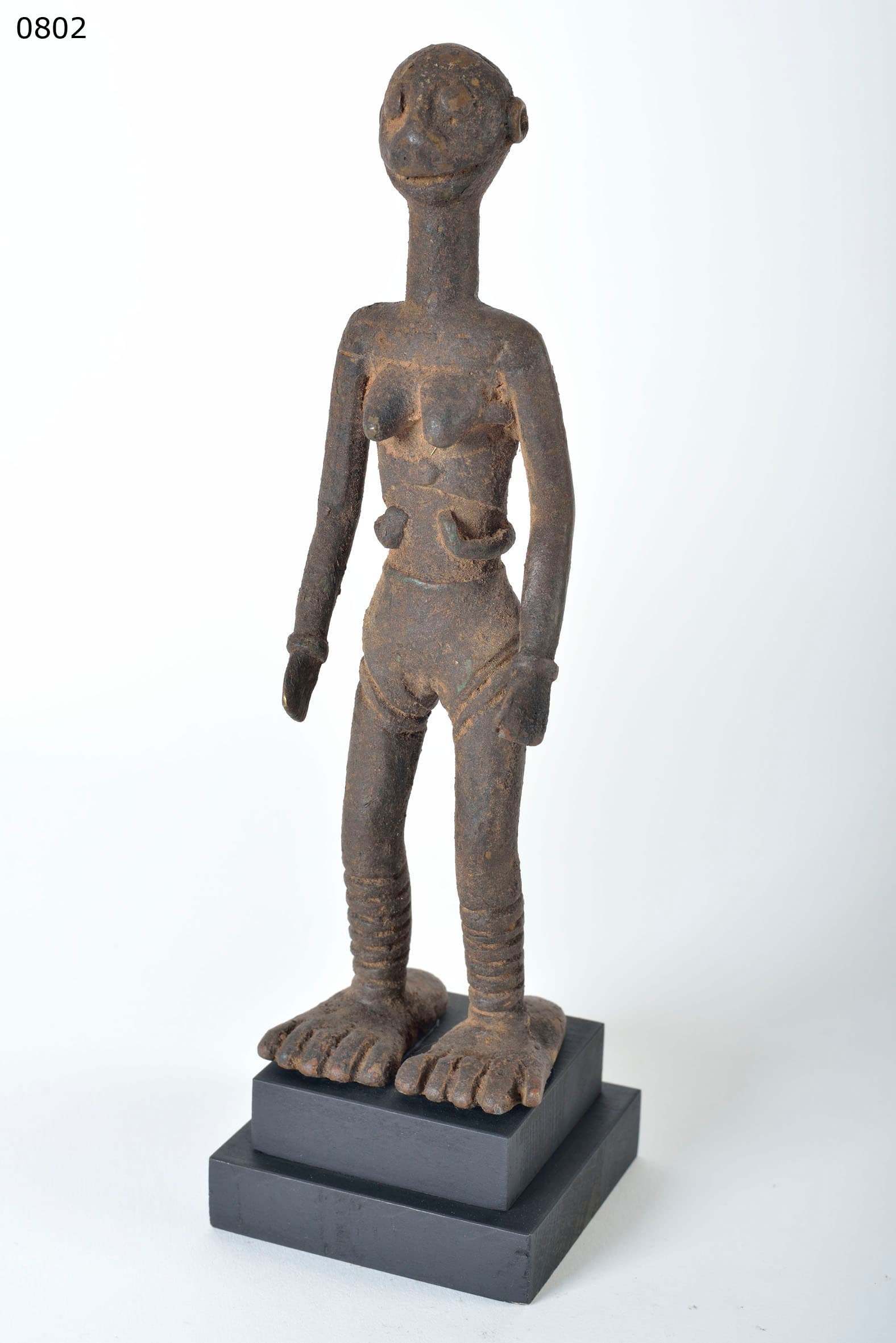
This rare pairing features two stylized bronze figures with prominent, duck-like, projecting mouths, seated side-by-side on a miniature bench. The metal shows substantial aging, featuring a dry, matte, verdigris-heavy patina and significant surface erosion.
1. Aesthetic style and regional traits
The Gan people of Burkina Faso are known for their highly distinctive, almost surreal bronze castings. The exaggerated, beak-like mouths and protruding eyes on these figures are traits associated with traditional Gan metalwork, placing human representation into the realm of the mythological and the otherworldly. Unlike the more naturalistic registers of nearby Akan or Mossi bronze, the Gan idiom embraces an aggressive grotesquerie that encodes spiritual seriousness through visual disruption — these are not portraits but visualizations of beings who do not belong fully to the human world.
2. Ritual function and ancestral duality
Depictions of couples in West African art typically represent primordial founders or significant ancestral pairs. The physical linkage of the two figures on a shared bench underscores themes of unity, lineage continuity, and balanced gender roles within the spiritual realm. These were likely kept in a royal or chiefly shrine to ensure societal stability, where the couple's permanent paired arrangement modeled the foundational cooperation between male and female ancestors that the living community needed to recreate generation after generation.
3. Physical patina and indications of age
The dry, heavily oxidized surface — dominated by malachite green and deep pitting — suggests this piece was buried or kept in highly exposed conditions for centuries. The dating of 16th–19th century aligns with the intense metallurgical breakdown observed, supporting its attribution as a significant historical antiquity. The depth of corrosion penetrates the metal rather than coating it, a pattern consistent with multi-century burial cycles in the iron-rich lateritic soils of southwestern Burkina Faso.
Summary
A rare Gan bronze, this ancestor couple showcases the surreal, elongated aesthetics associated with this culture. Its deep patina and intricate paired casting make it a significant example of historical West African art.
Written with AI assistance from the collection appraisal, object photography and our own research; editorially reviewed. Mistakes are possible — corrections are welcome. How we work →