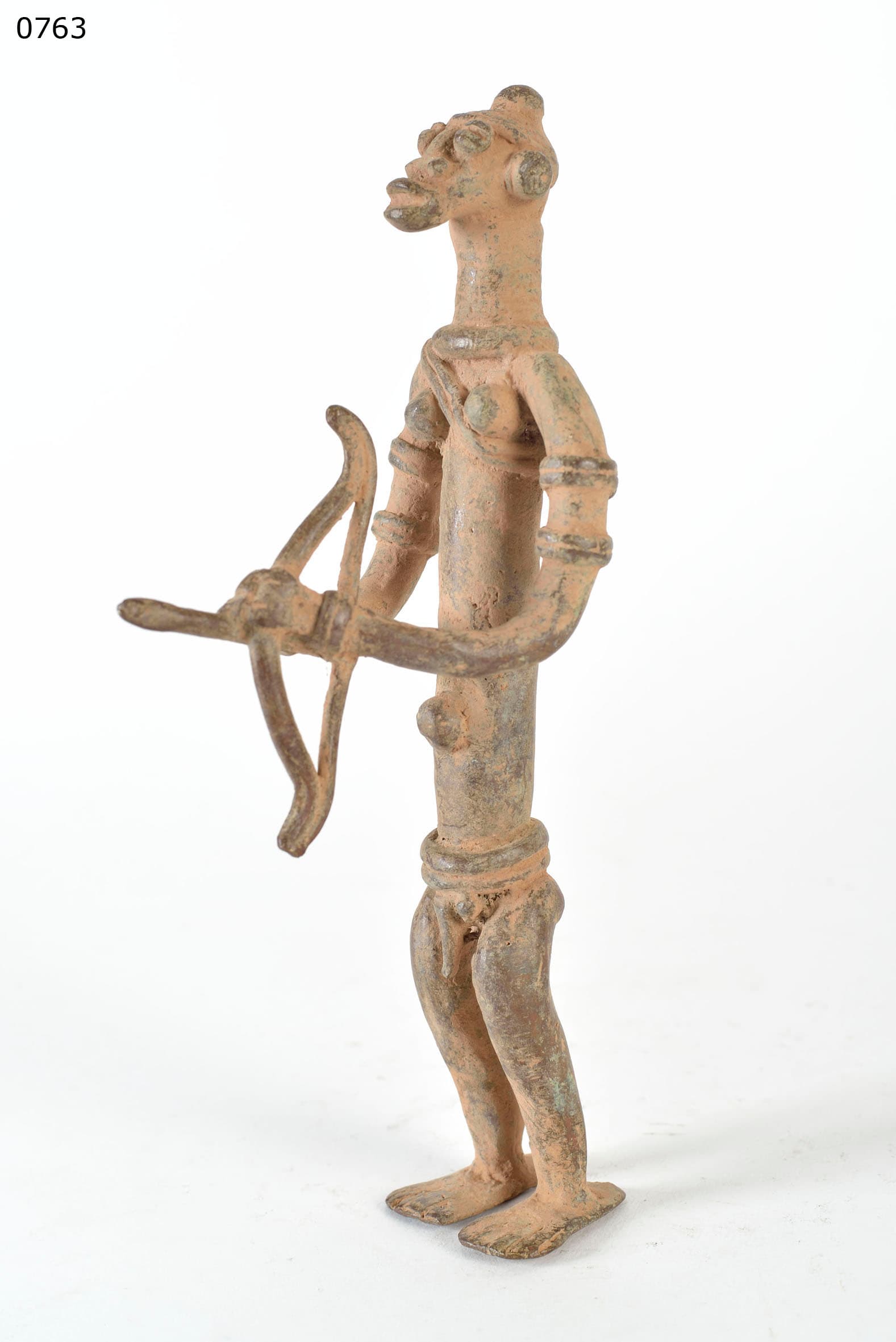
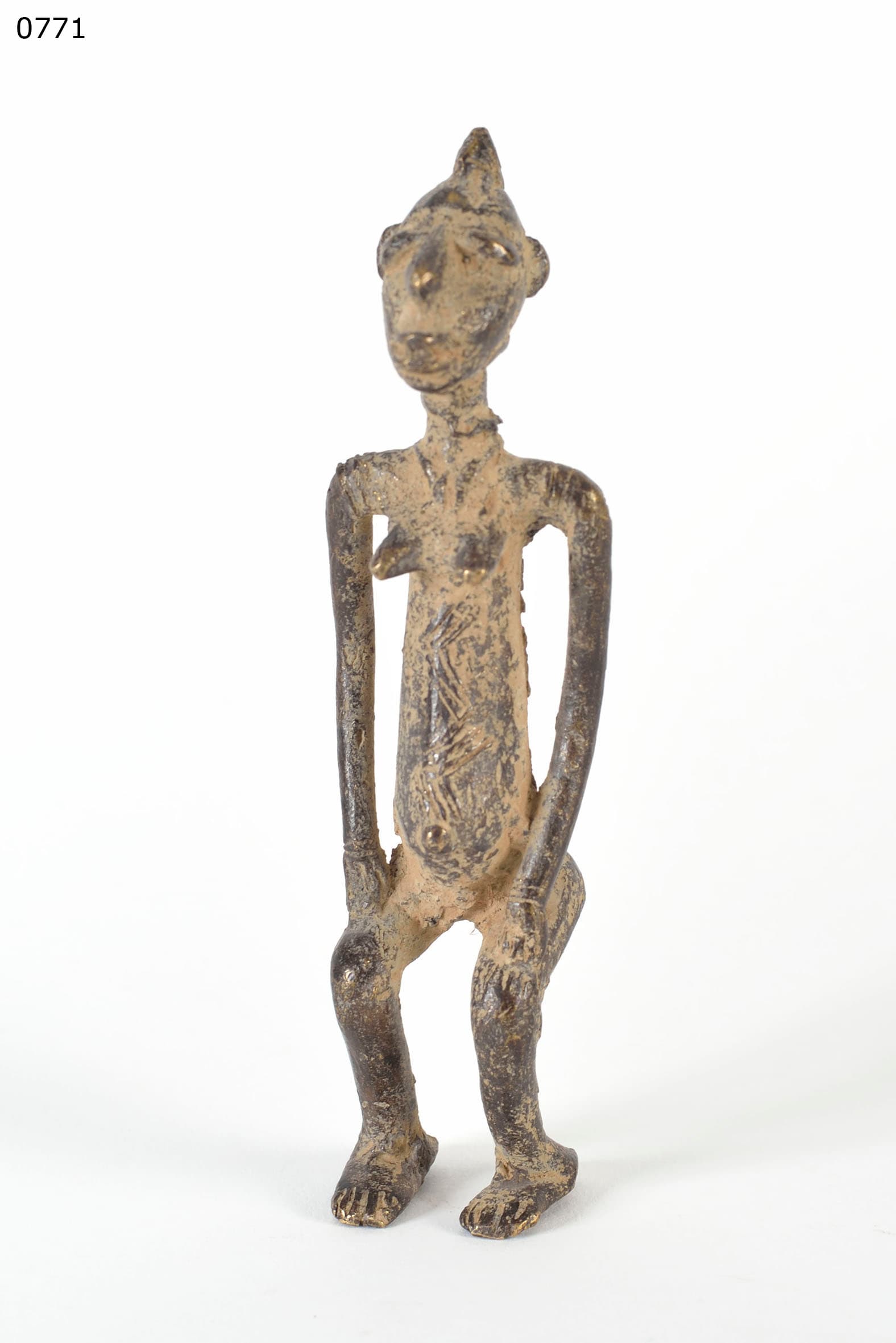
This complex, small bronze vessel features a bulbous body heavily decorated with geometric casting, supported by standing anthropomorphic figures that act as legs. The domed lid is surmounted by a zoomorphic figure, likely a chameleon or lizard, and the entire object is heavily encrusted with dark green and brown oxidation.
1. Aesthetic style — complex iconography in Gan castings
This altar container is a triumph of Gan metallurgical design, seamlessly blending utilitarian form with complex spiritual iconography. The vessel itself is a microcosm of the Gan universe. The anthropomorphic figures supporting the bowl represent the founding ancestors or the populace sustaining the royal court. The geometric zig-zags (representing water or serpents) adorn the body, while the chameleon on the lid represents ancient wisdom, transformation, and a direct link to the supreme creator god. To cast such a complex, multi-figured object using the lost-wax method requires a high level of mastery of foundry techniques.
2. Ritual function — divination and royal medicinal shrines
Containers of this specific, elaborate nature were restricted to the highest echelons of Gan society, primarily utilized by the Maga (King) or elite diviners. The vessel was used to house highly potent, sacred materials — often a mixture of shea butter, medicinal roots, and crushed minerals — used to anoint the monarch or to enact state-level protective magic. The heavy, enclosed nature of the bronze ensured that the volatile spiritual energy of the medicine inside was safely contained, guarded by the ancestors at the base and the divine chameleon at the apex.
3. Physical patina — millennial taphonomy and earth encrustation
The rich patina on this bronze vessel is consistent with a 16th to 19th-century origin. Having likely been buried for safety or housed in a mud-walled shrine that eventually collapsed, the bronze has chemically bonded with the surrounding earth. The deep malachite (green) and cuprite (red) oxidation layers are not superficial; they are integral to the metal matrix. The thick, cement-like crust in the recesses of the figures and the geometric bands is characteristic of archaeological taphonomy, suggesting a long period of undisturbed history.
Summary
This Gan bronze container is a miniature architectural marvel, condensing profound Voltaic cosmology into a highly functional, elite ritual object. Its intricate lost-wax casting and deep patina make it a significant example of West African metallurgy.
Written with AI assistance from the collection appraisal, object photography and our own research; editorially reviewed. Mistakes are possible — corrections are welcome. How we work →