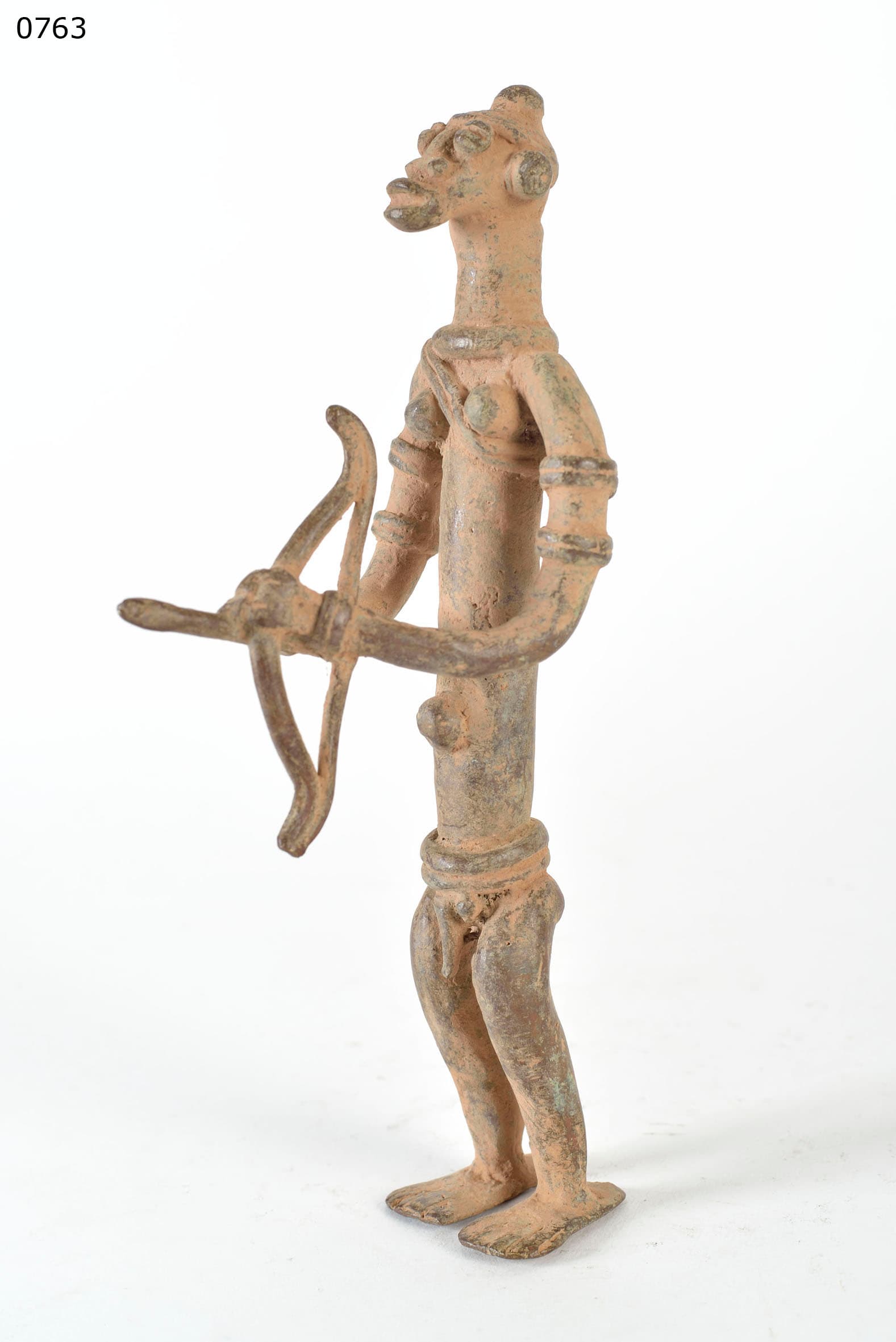
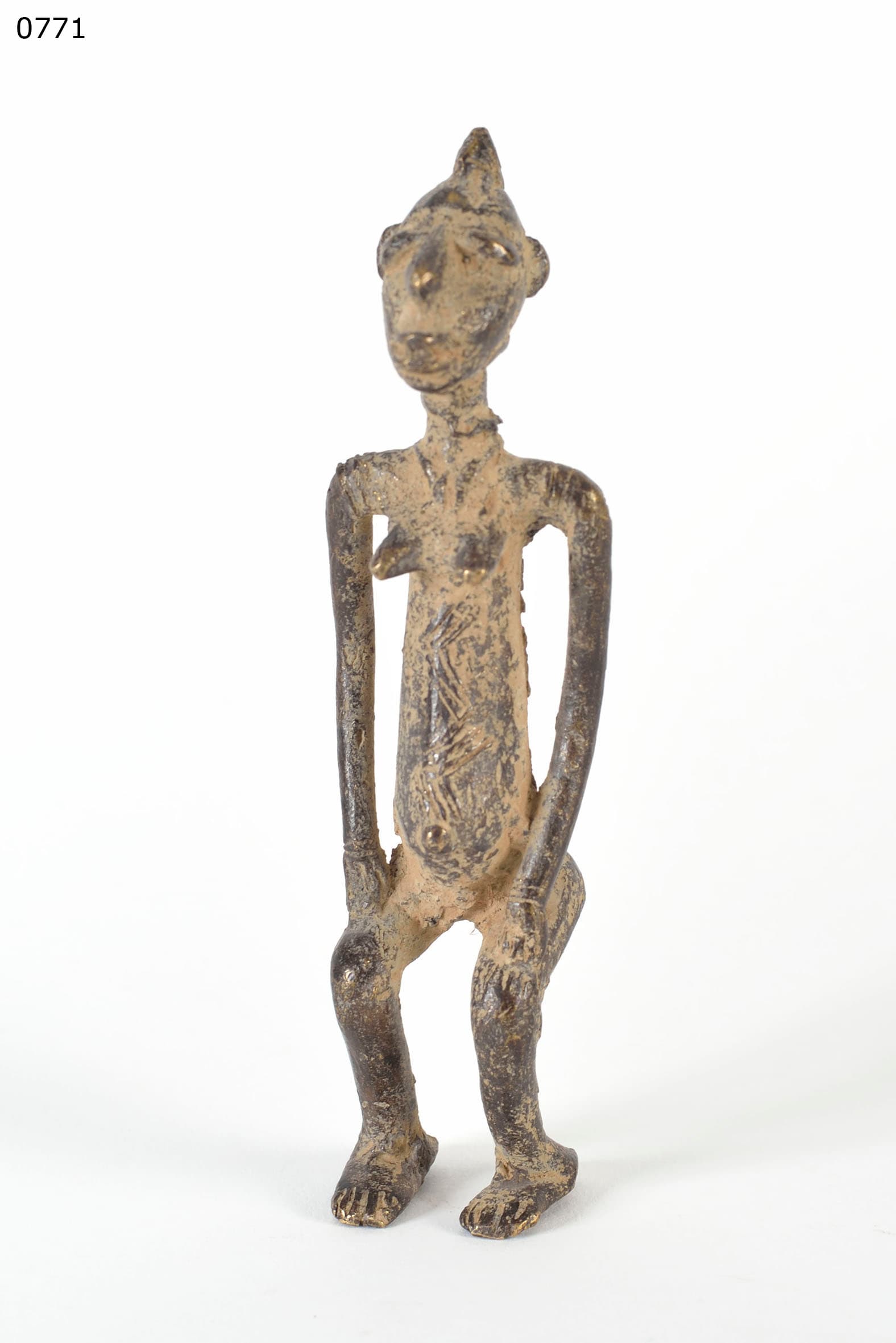
This grouping consists of three small, heavily oxidized cast bronze animals: a tightly coiled snake, a stylized crocodile or monitor lizard with zigzag motifs, and a sleek, four-legged creature with pointed ears. All three pieces exhibit deep, crusty, green and brown archaeological patinas.
1. Aesthetic style — zoomorphic taxonomy in Gan casting
The Gan bronze casters excelled in creating a vast taxonomy of zoomorphic figures, which are central to their religious and historical identity. These three figures — the snake, the crocodilian, and the quadruped — represent a cross-section of the powerful bush animals that dominate Voltaic mythology. The abstraction is highly specific: the snake is reduced to a pure geometric spiral of kinetic energy; the crocodile features jagged dorsal casting to represent its armored, dangerous nature. This economy of form demonstrates the mastery of the Gan artisans in capturing the spiritual essence of animals rather than mere biological likeness.
2. Ritual function — clan totems and dynastic altars
In traditional Gan society, specific animals serve as the protective totems for different clans and royal lineages. These small, solid bronze castings were created to be placed on restricted, dynastic altars within the royal compound. By gathering these metal avatars together, the priests anchored the protective spirits of the wilderness to the human world. They served as durable sacrifices to the earth deities, ensuring the fertility of the land and the military protection of the Gan people against invading forces.
3. Physical patina — subterranean oxidation and malachite encrustation
The condition of these three bronzes is consistent with archaeological taphonomy, supporting an attribution to the 16th-19th centuries. Having been buried or left undisturbed in mud-brick shrines for hundreds of years, the metal has undergone massive chemical changes. The surfaces are no longer smooth bronze; they are completely covered in thick, stable layers of green malachite and brown iron-rich soil encrustations. This level of granular, integrated oxidation is consistent with long-term environmental exposure, supporting their attribution as early, sacred objects.
Summary
This trio of Gan bronze animals offers a fascinating window into the totemic and metallurgical history of Burkina Faso. Their sleek, potent abstractions and deeply encrusted archaeological patinas make them notable examples of early West African bronze casting.
Written with AI assistance from the collection appraisal, object photography and our own research; editorially reviewed. Mistakes are possible — corrections are welcome. How we work →