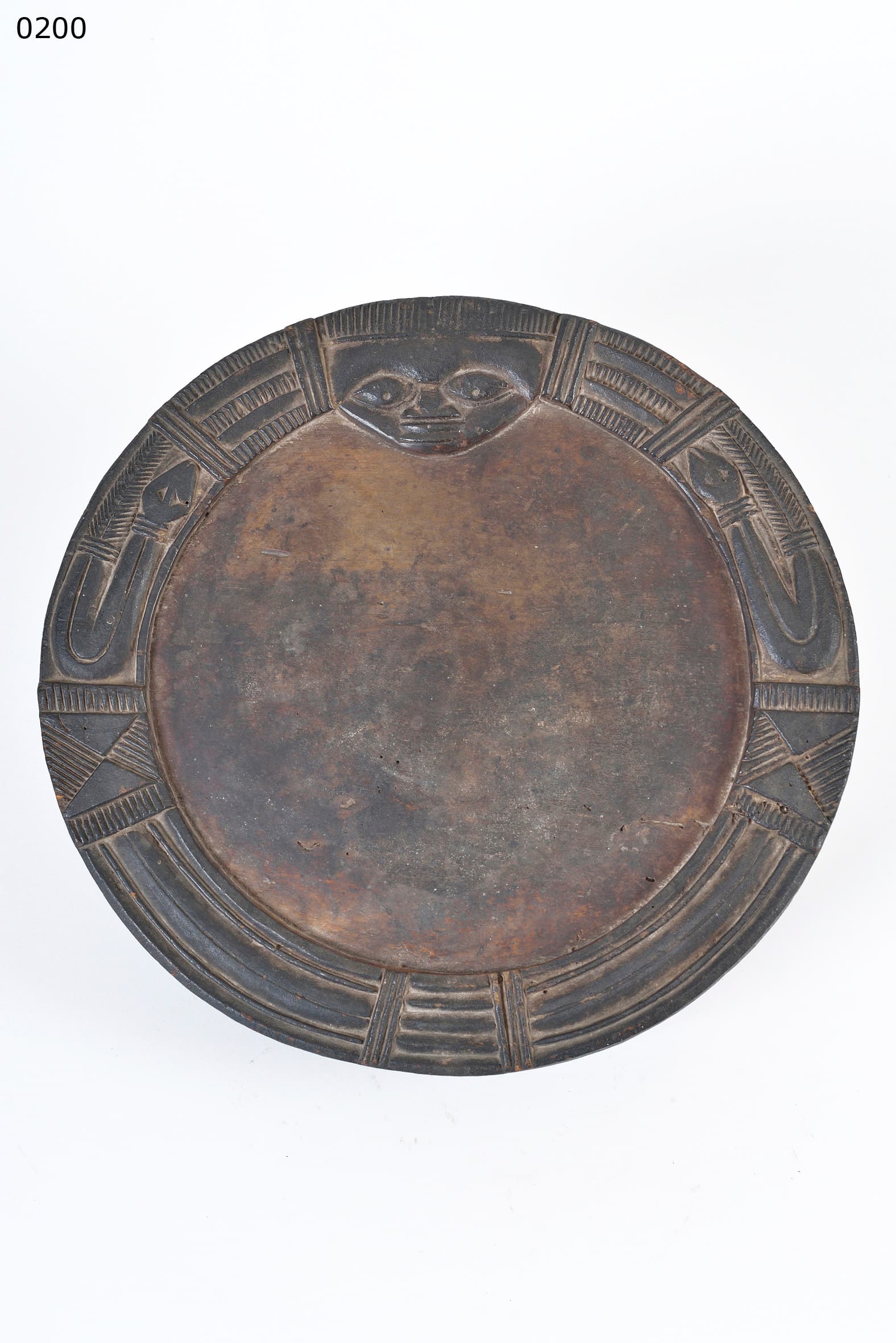
This compact wooden twin figure depicts a female with sharply carved, protruding breasts, arms resting firmly at her sides, and a sweeping, high-crested coiffure. The dense wood is completely smoothed over, possessing a dark, lustrous, deeply oiled and sweat-burnished handling patina.
1. Aesthetic style — regional aesthetics of the Oyo/Oshogbo axis
This female Ere Ibeji is a superb example of the carving styles prevalent in the Oyo or Oshogbo regions of Yorubaland. The carver has perfectly captured the idealized form of an adult woman in miniature, emphasizing reproductive maturity through the prominent, conical breasts. The facial features are bold and deeply cut, with large, almond-shaped eyes that dominate the face, reflecting the Yoruba belief that the eyes are the windows to the inner spirit. The tall, crested hair is a classic marker of civilization and high social status in traditional Nigerian society.
2. Ritual function — the veneration of the twin spirit
Yoruba cosmology views twins as exceptional beings who share a single soul and possess the ability to bring either immense wealth or terrible misfortune to their parents. When a twin dies, this wooden surrogate is consecrated to house the wandering half of the soul. The mother treats this object exactly as she would her living child. It is tucked into her wrapper, offered portions of meals, and put to sleep. This figure is not an idol; it is an active, psychological focal point for grief, transformed by ritual into a powerful protective charm for the household.
3. Physical patina — intensive ritual handling and oil saturation
The most striking feature of this Ibeji is its extraordinary patination. The figure has virtually no sharp edges remaining; the wood has been organically melted and smoothed down by decades of continuous, devoted human touch. The dark, glossy surface is the result of countless applications of palm oil, shea butter, and osun (red camwood powder), which have deeply saturated the cellular structure of the hardwood. This glass-like, undulating finish is consistent with intense, genuine, early 20th-century maternal care.
Summary
This Yoruba Ere Ibeji is a notable example of Nigerian devotional carving, capturing the idealized human form in a powerful, compact architecture. Its smooth, oil-saturated handling patina represents the physical accumulation of decades of maternal love and spiritual veneration.
Written with AI assistance from the collection appraisal, object photography and our own research; editorially reviewed. Mistakes are possible — corrections are welcome. How we work →