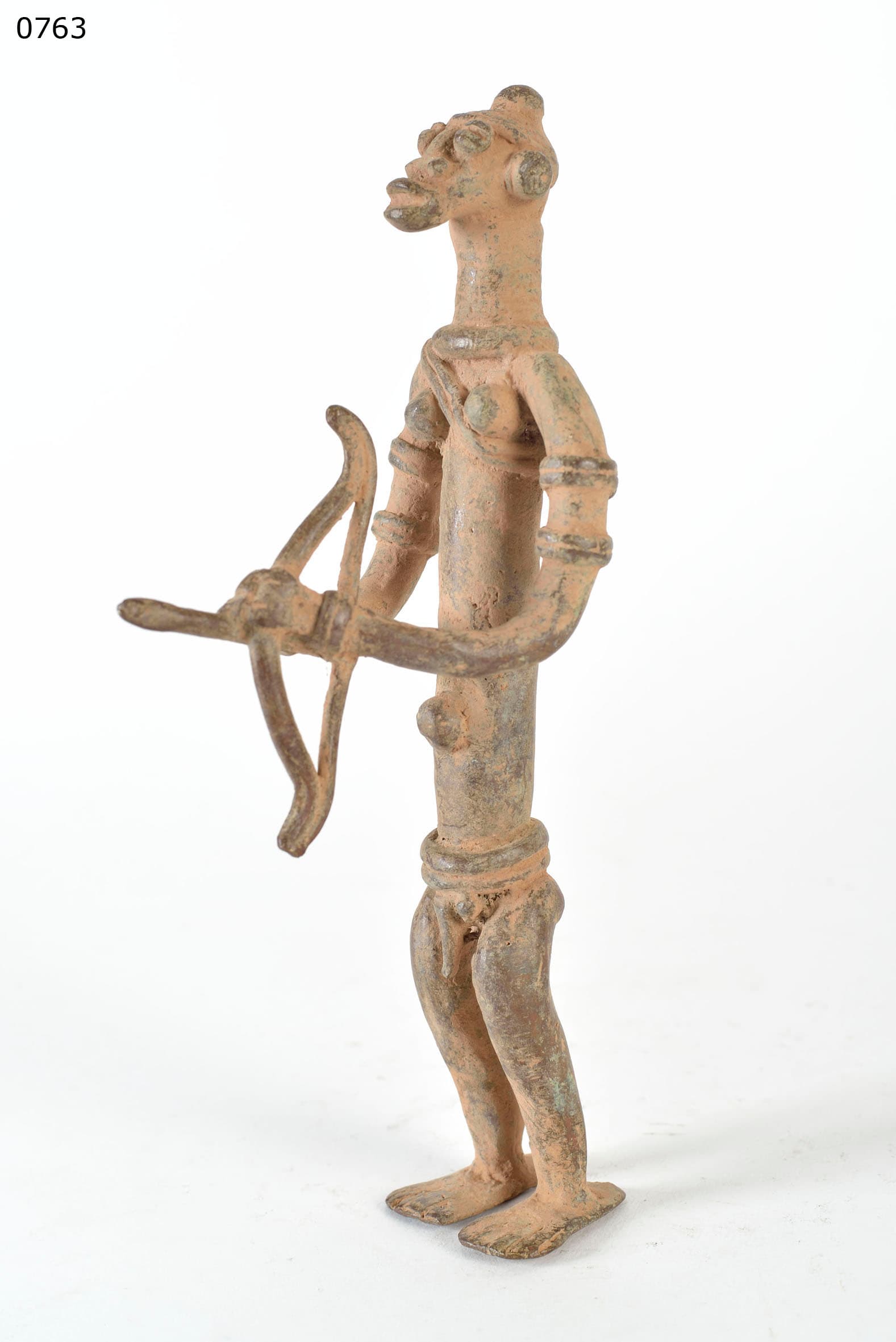
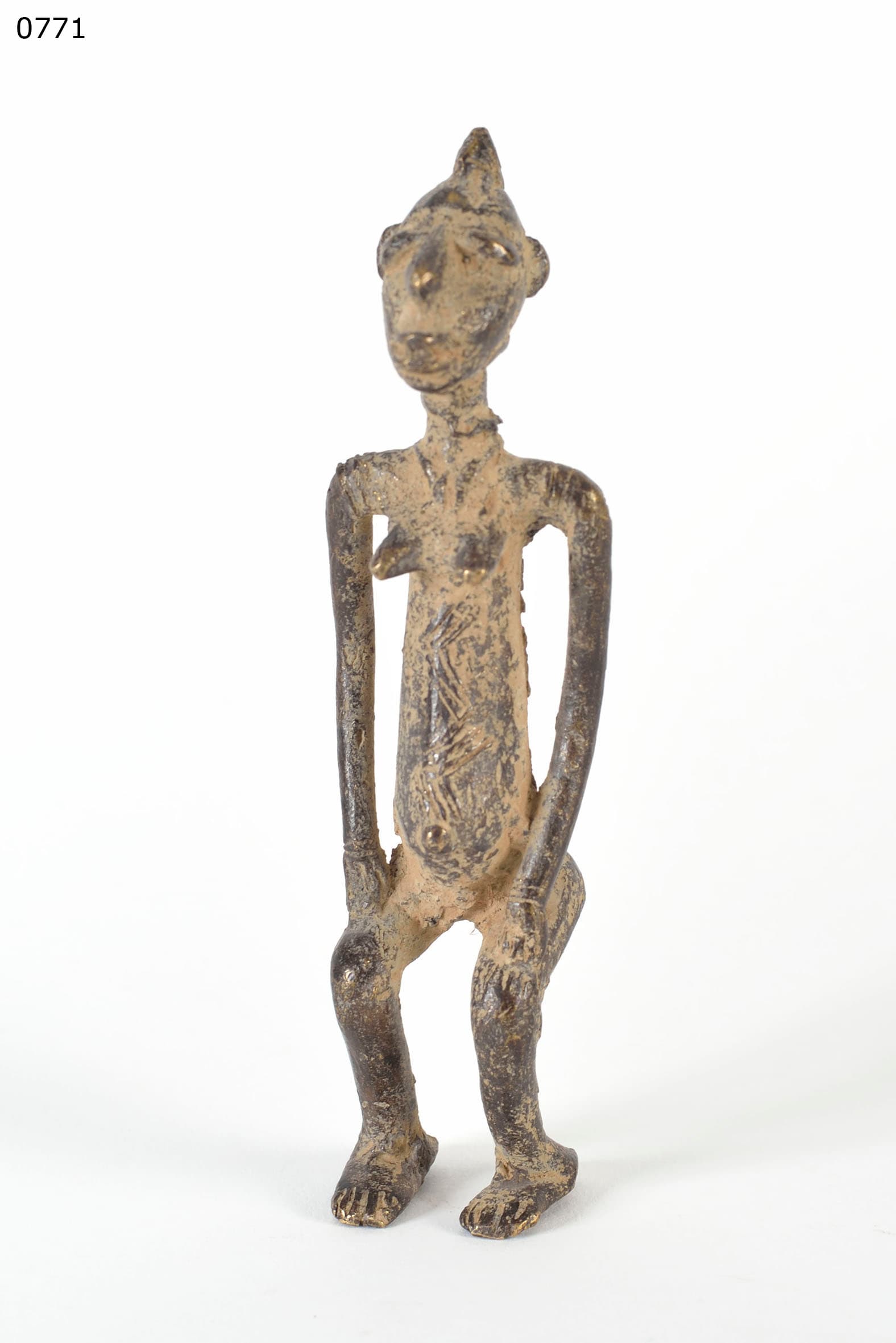
This elaborate, heavy bronze casting features an anthropomorphic figure whose head is entirely replaced or covered by a massive, spoked, wheel-like crest and a forward-projecting, conical snout. The metal is thick, covered in a crusty layer of green and reddish-brown oxidation.
1. Aesthetic style — cosmic symbolism and dynastic bronze casting
The Gan people's metallurgical tradition is known for its complexity, and this masked figure is a significant example of lost-wax casting. The figure is traditionally understood to represent a divine entity or a powerful royal ancestor wearing a specialized ritual mask. The massive, spoked wheel crest is interpreted as a cosmic symbol, likely representing the sun, the cyclical nature of time, or the radiating power of a supreme deity. The projecting snout or horn suggests the channeling of wilderness energies, combining cosmic and terrestrial associations.
2. Ritual function — royal shrines and the protection of the realm
A bronze of this scale, weight, and iconographic complexity is traditionally associated with the inner sanctums of the Gan royal court. It is understood to have functioned as an altar piece, an anchor for spirits guarding the kingdom. During annual dynastic rites or times of war, the king and high priests traditionally offered blood and millet beer over such bronzes to activate their protective presence. The permanence of the metal was intended to reflect the continuity of the Gan royal bloodline, standing as a symbolic force against disease, famine, and enemies.
3. Physical patina — severe subterranean taphonomy and malachite fusion
Attributed to the 16th-19th centuries, the patina on this bronze shows characteristics consistent with natural geochemical aging. Suggesting a long period buried or housed in a collapsed mud-brick shrine, the metal has deeply oxidized. The surface is enveloped in thick, stable layers of cuprite (red) and malachite (green). The texture is rough, granular, and fused with soil silicates within the intricate recesses of the spoked wheel. This level of integrated corrosion is consistent with a significant antiquity.
Summary
This Gan masked figure is a notable example of historical Voltaic metallurgy, displaying cosmic symbolism through its complex, spoked-wheel iconography. Its malachite and cuprite encrustation is consistent with historical West African bronzes.
Written with AI assistance from the collection appraisal, object photography and our own research; editorially reviewed. Mistakes are possible — corrections are welcome. How we work →