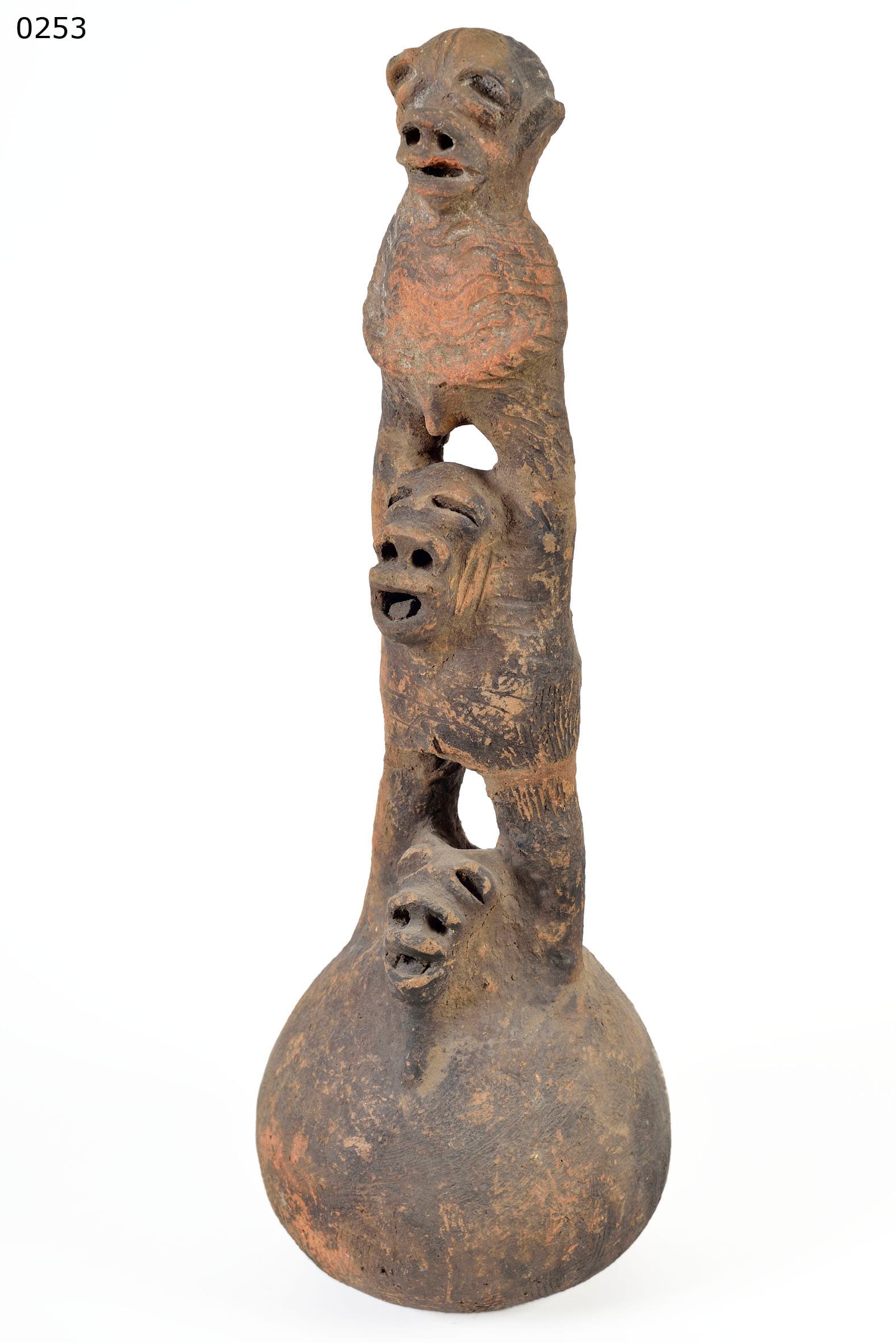
A complex disc-like terracotta grave marker (17th–19th C., 69 cm) from the Dakakari of Nigeria — a flat, halo-like disc surrounding a central figure who stands over a spherical base.
1. The aristocratic necropolis
Dakakari terracottas were public monuments of rank, not private shrine objects.
- Made by Women, Honoring Men: Female Dakakari potters specialized exclusively in creating these grave markers for male chiefs, warriors, and priests.
- Clustered Above Ground: The figure stood alongside dozens of others on the stone-lined burial mound of a single elite, transforming the cemetery into a sculpted civic record.
2. The disc as spiritual portal
Item 116 is far more esoteric than standard zoomorphic markers.
- Solar Halo: The massive disc surrounding the central figure reads as a sun, a halo, or a cosmic portal — a visual frame emphasizing the deceased's supernatural transformation.
- Axis Figure: The central standing figure straddles the disc and the spherical base, mediating between the celestial realm and the world of living descendants below.
3. Iron-age ceramic mastery
At 69 cm, this is a large and technically demanding piece.
- Open-Pit Firing: Coaxing a flat, hollow disc this size through an open bonfire without cracking required exceptional control over fuel, clay temper, and stacking.
- Centuries of Exposure: The pitted, weathered surface confirms centuries of Sahelian sun, wind, and rain — authenticating the piece as an in-situ grave monument rather than a protected shrine object.
Summary
This Dakakari crest figure is a spectacular cosmic portrait in clay. Combining a haloed disc with a standing ancestor, it transforms the grave into a permanent cosmological map — an eternal testament to the elite buried below.
Written with AI assistance from the collection appraisal, object photography and our own research; editorially reviewed. Mistakes are possible — corrections are welcome. How we work →

equestrian funerary figure
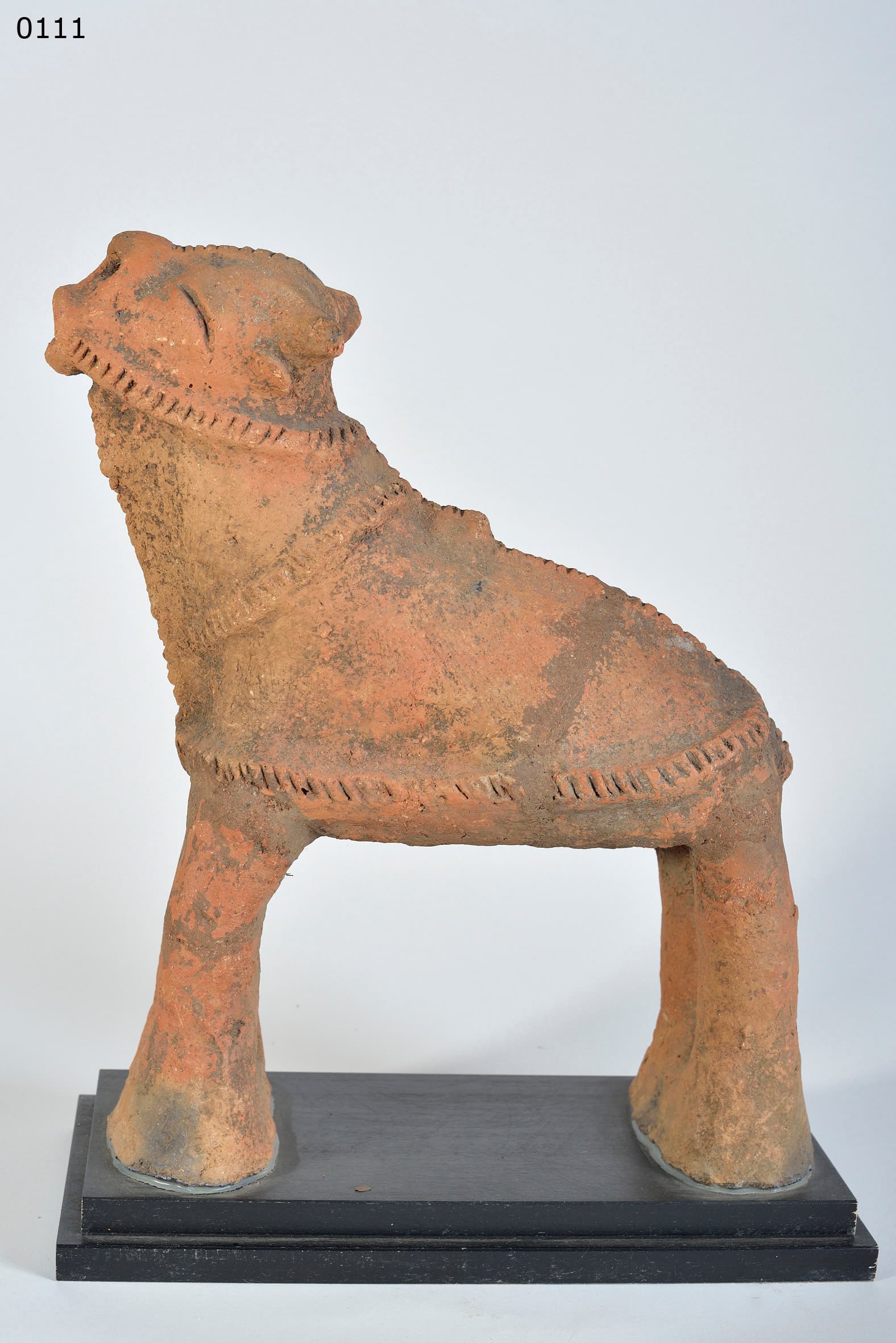
funerary zoomorphic figure
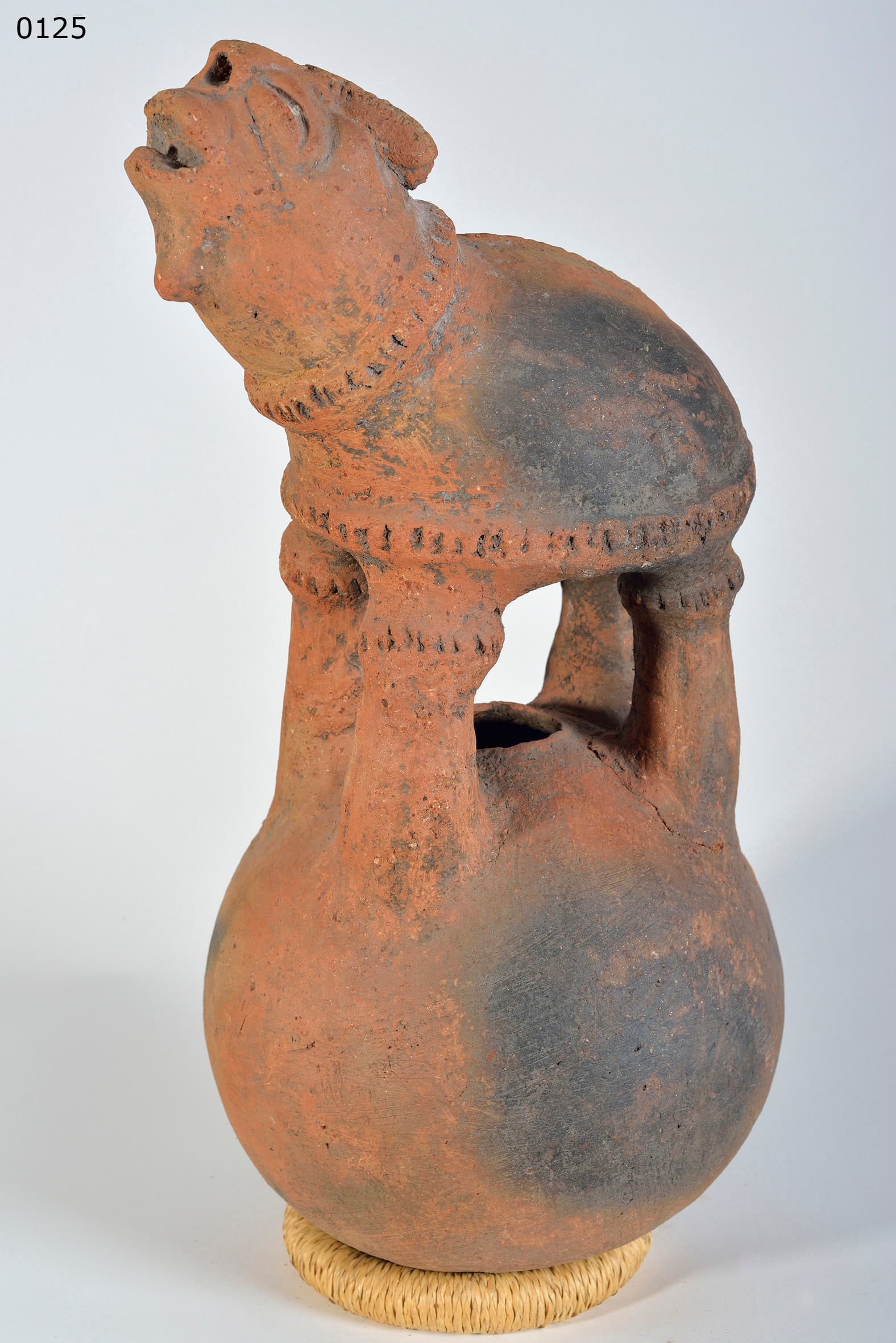
funerary figure