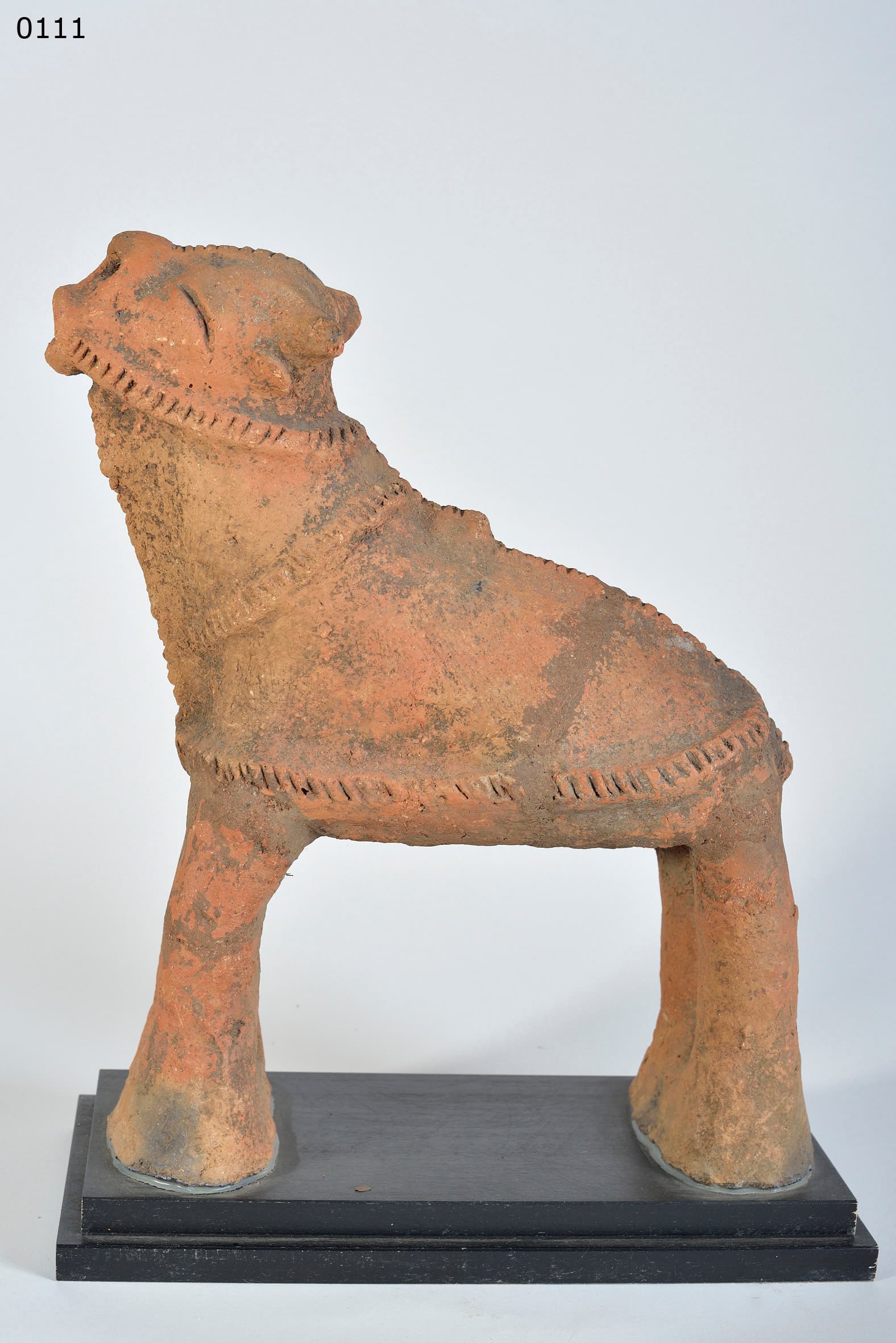
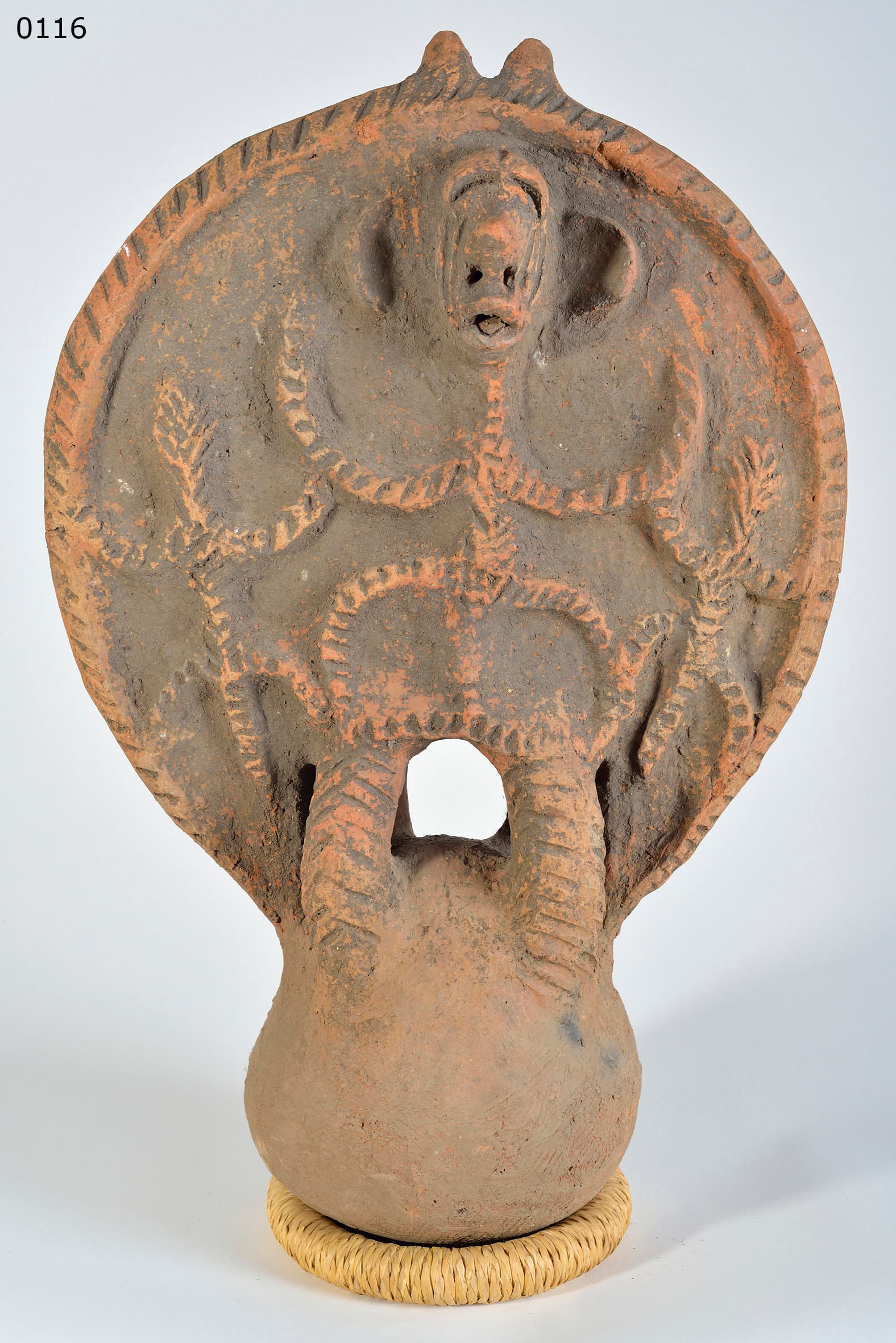
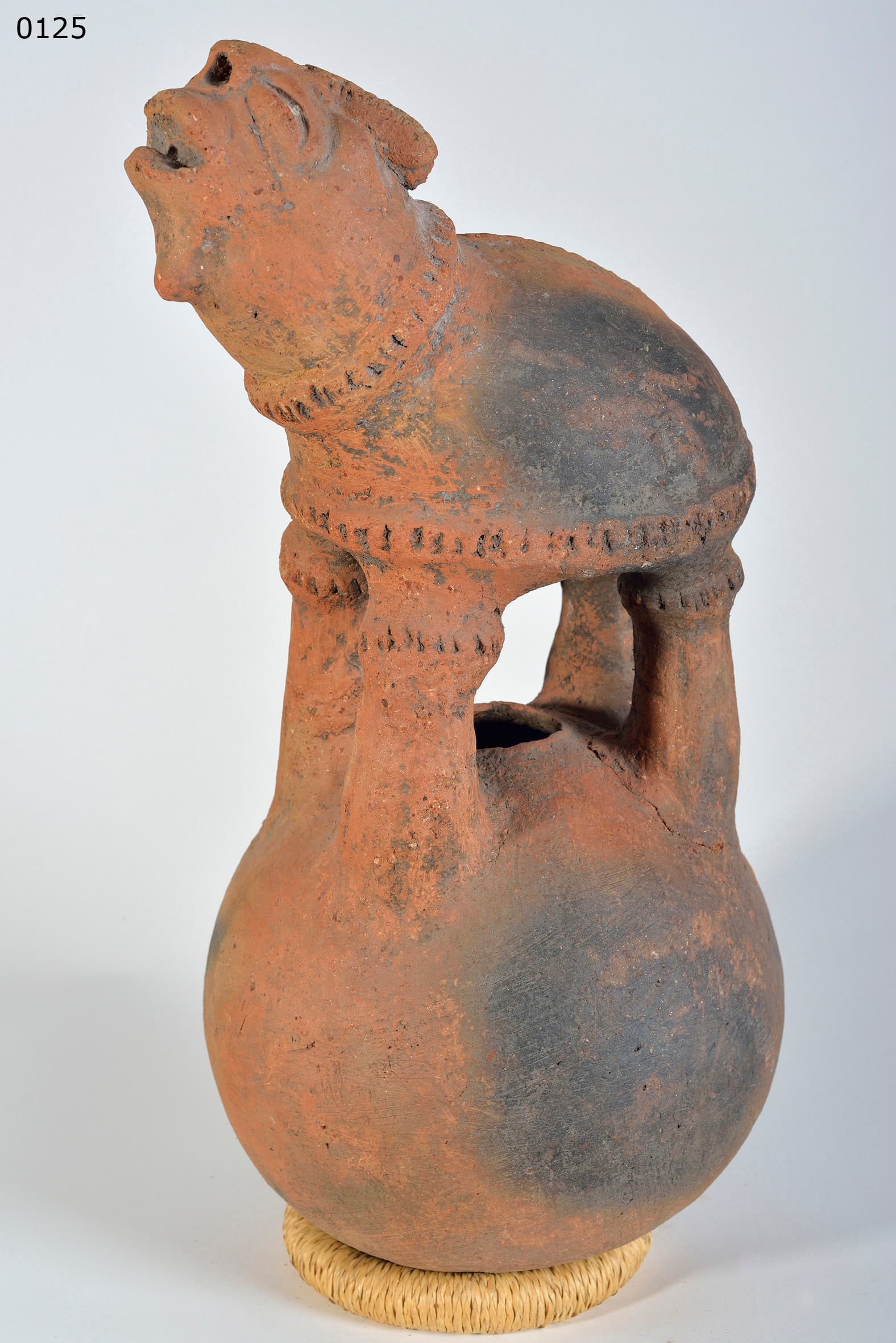
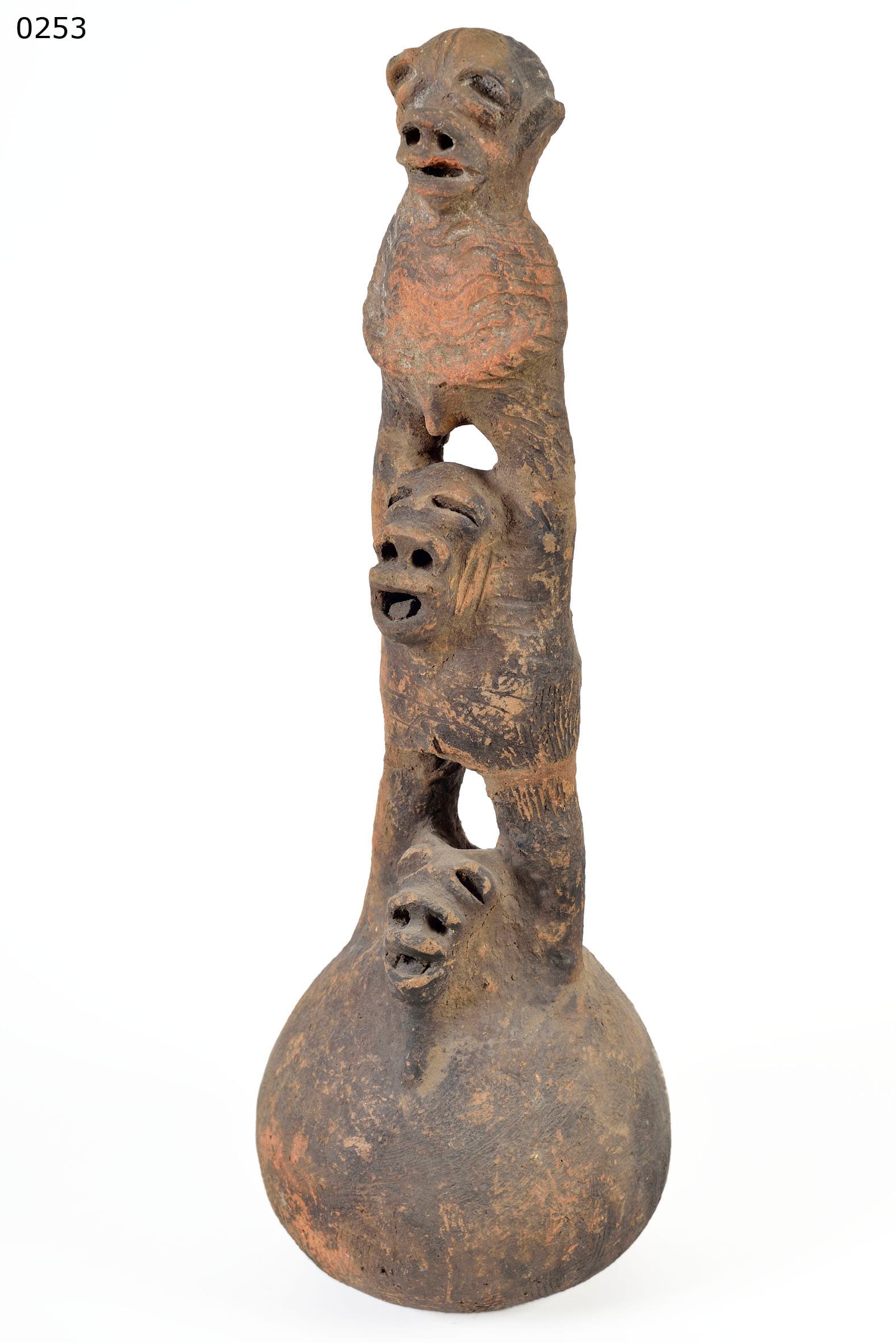
A large imposing terracotta sculpture (19th–20th C., 75 cm) from the Dakakari of Nigeria, depicting a highly stylized abstract rider mounted on a horse, covered in incised linear textures.
1. Elite grave markers
The Dakakari of northwestern Nigeria are renowned for their monumental terracotta funerary traditions.
- The Cemetery as Altar: These large ceramic sculptures were not kept in homes. They were placed directly above ground on top of the stone-lined graves of high-ranking individuals in communal cemeteries, fully exposed to the harsh weather of the West African savanna. Because centuries of such exposure would inevitably cause massive surface erosion and the loss of fine incised details, the excellent condition of this piece—with its superficial patina and remarkably sharp incisions—points to a more recent creation in the 19th to 20th century.
- Sacred Firing: Creating a terracotta piece of this size (75 cm) requires immense skill, as thick clay is prone to exploding in open-air firings. Successful creation was itself a testament to the artisan's control over the magical properties of earth and fire.
2. The equestrian symbol of aristocracy
- Wealth and Power: In the tsetse-fly-ridden regions of the Sahel and Savanna, keeping a horse alive was extraordinarily difficult and expensive. The horse became the ultimate symbol of wealth, military prowess, and aristocratic power.
- The Eternal Rider: Depicting the deceased on horseback was the highest honor possible. It signaled to the living and the spirit world that a great warrior or chief had transitioned to the ancestral realm. The abstraction of the rider — fusing almost seamlessly with the mount — emphasizes the mythical, otherworldly status of the deceased.
Summary
This Dakakari equestrian figure is a rare surviving monument from the 19th to 20th century — a powerful historical document of Nigerian aristocracy, erected to ensure the eternal prestige of a great leader and to serve as a focal point for ancestral veneration.
Written with AI assistance from the collection appraisal, object photography and our own research; editorially reviewed. Mistakes are possible — corrections are welcome. How we work →