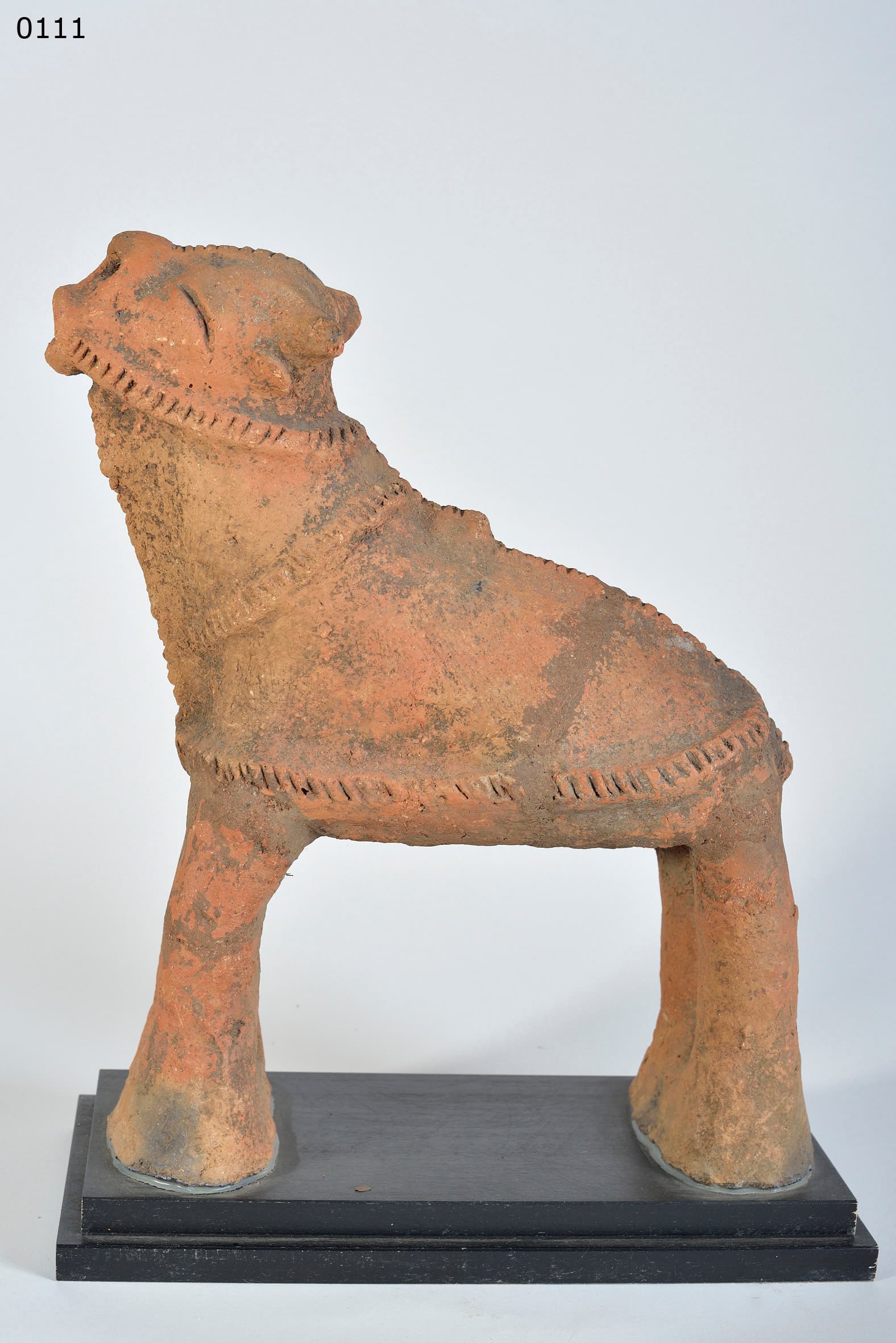
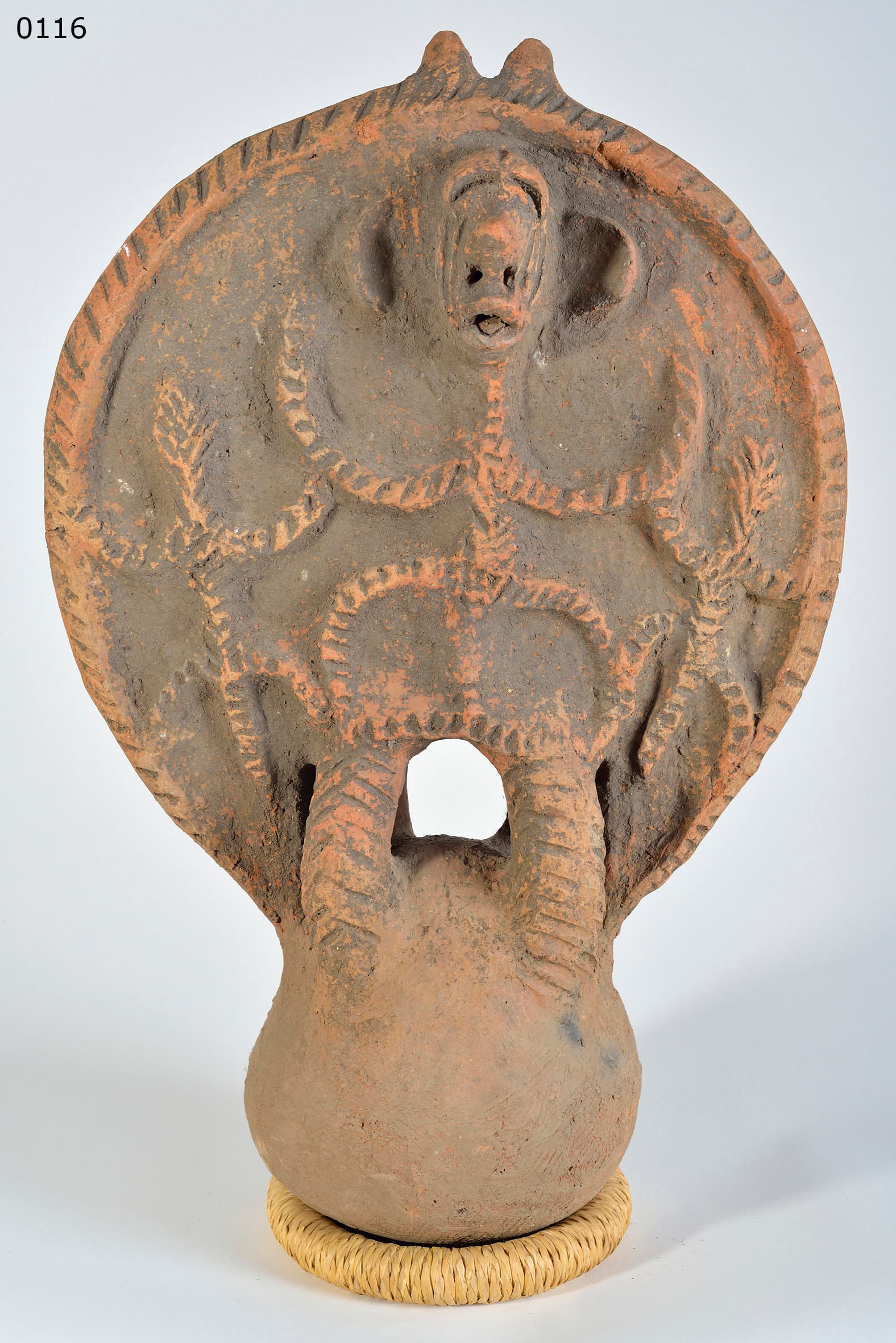
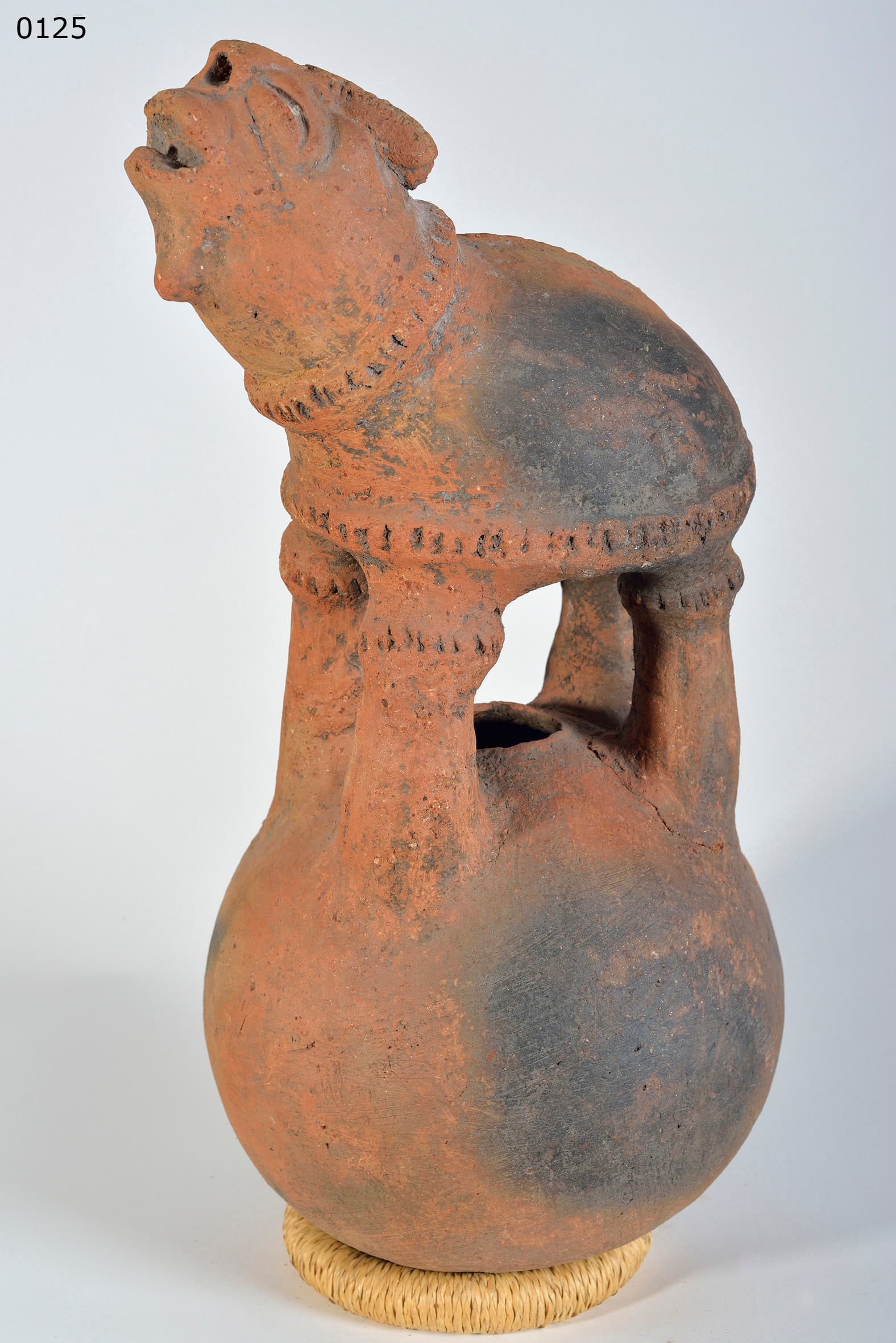
An extraordinarily complex Dakakari terracotta (17th–19th C., 74 cm) from Nigeria — a spherical base surmounted by a towering stacked superstructure of grotesque interlocking human and zoomorphic forms, the fired clay dark, highly textured, and heavily encrusted with earth and sacrificial matter.
1. Architectural complexity in Dakakari ceramics
The Dakakari (or Dakarkari) people of northwestern Nigeria are renowned for producing elaborate grave monuments crafted exclusively by specialized female potters.
- Towering Totem: This piece is exceptionally rare due to its totem-like complexity — multiple figures stacked in an intricate feat of ceramic engineering.
- Defying Fragility: The composition deliberately challenges the inherent fragility of clay, creating an imposing monument of social prestige that advertises the patron's wealth and standing.
2. Grave guardians and the afterlife
Placed directly over the graves of elite individuals, these ornate vessels were highly visible monuments of status and immortal guardians.
- Protective Spirits: The stacked gaping figures represent protective entities actively watching over the burial site.
- Deflecting Threat: They warded off grave robbers, malevolent magic, and evil spirits while serving as the focal point for the family's ongoing veneration.
3. Subterranean weathering and shrine use
The object bears a dark heavily oxidized crusty surface.
- Centuries of Exposure: Partially buried or exposed in a Nigerian cemetery for centuries, the clay is deeply pitted.
- Earth-Fused Recesses: Pale earth and sand are permanently fused into the intricate gaps between the stacked figures — confirming authentic 17th–19th century dating and survival through the harsh African elements.
Summary
A monumental feat of Nigerian ceramic architecture, this towering Dakakari grave vessel is breathtaking in its complexity. Its deeply weathered multi-tiered sculptural composition makes it an extremely rare and valuable historical artifact.
Written with AI assistance from the collection appraisal, object photography and our own research; editorially reviewed. Mistakes are possible — corrections are welcome. How we work →