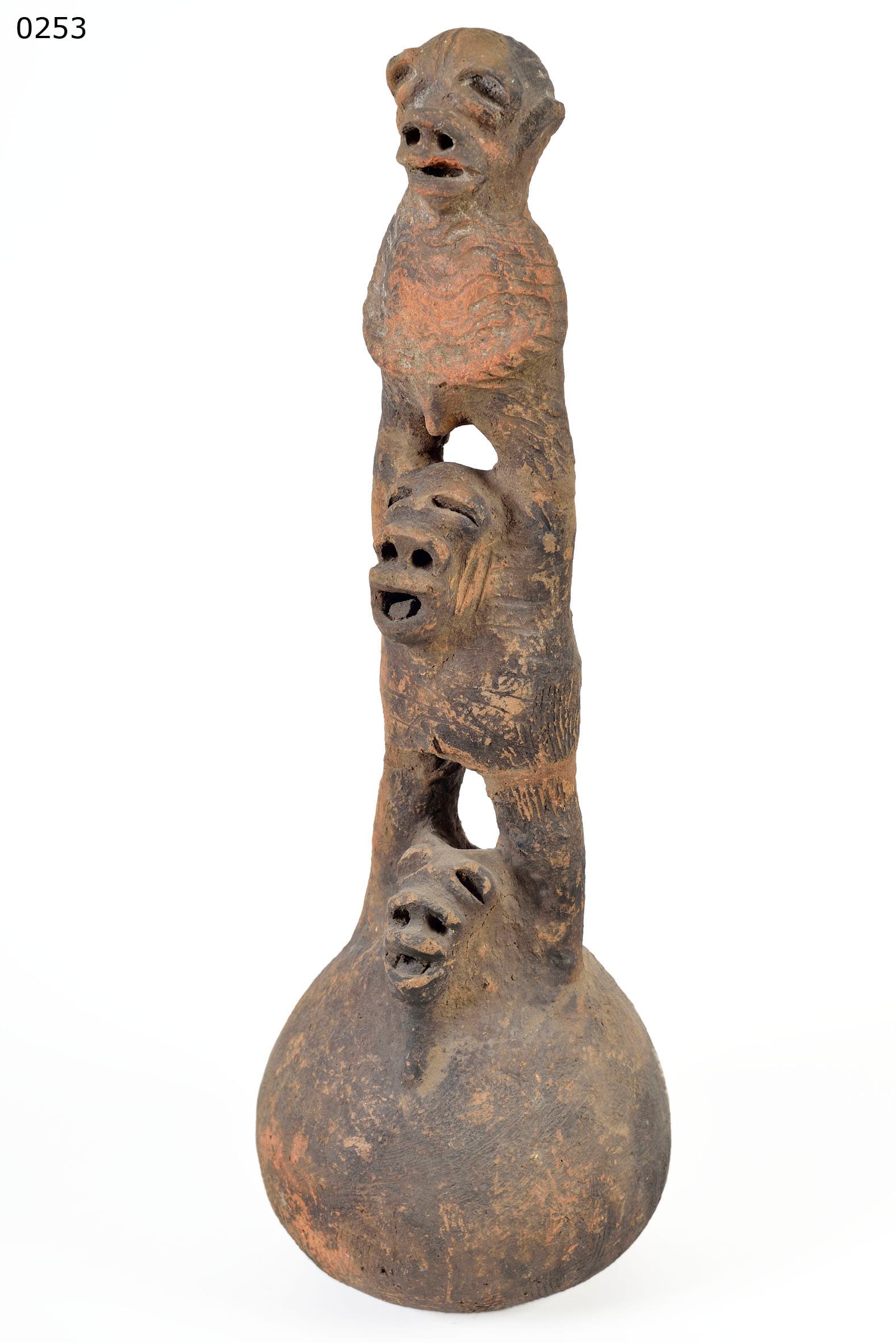
A large terracotta grave marker (17th–19th C., 62 cm) from the Dakakari of Nigeria — a massive spherical base supporting a stylized, tubular quadruped animal above.
1. The grave monument
The Dakakari of northwestern Nigeria marked elite graves with monumental hollow terracotta sculpture.
- Female Master Potters: Sculptures were produced exclusively by women potters, dedicated to commemorating male warriors and chiefs.
- On the Mound: Placed directly on stone-lined burial mounds in communal cemeteries. The hollow spherical base anchored the figure to the earth while allowing the spirit a vent to escape.
2. Zoomorphic wealth
The stylized animal atop the base encodes aristocratic status.
- Horse or Bull: The tubular quadruped most likely represents a mount or beast of burden.
- Military and Economic Power: In the Sahel, owning such an animal was the ultimate marker of wealth and warrior rank — placing one permanently on the grave broadcast the deceased's status across centuries.
3. The trial of fire
At 62 cm with a complex multi-tiered hollow build, this piece was enormously difficult to fire.
- Fracture Risk: Trapped air or uneven heat in an open-pit bonfire would have shattered the walls.
- Technical Triumph: Its intact survival is a direct testament to the supreme thermodynamic knowledge of the Dakakari female potters.
Summary
This Dakakari terracotta is a towering monument to Nigerian aristocracy. Surviving from the 17th–19th century, it uses robust hollow-built zoomorphic imagery to permanently mark the wealth and status of a fallen warrior.
Written with AI assistance from the collection appraisal, object photography and our own research; editorially reviewed. Mistakes are possible — corrections are welcome. How we work →

equestrian funerary figure
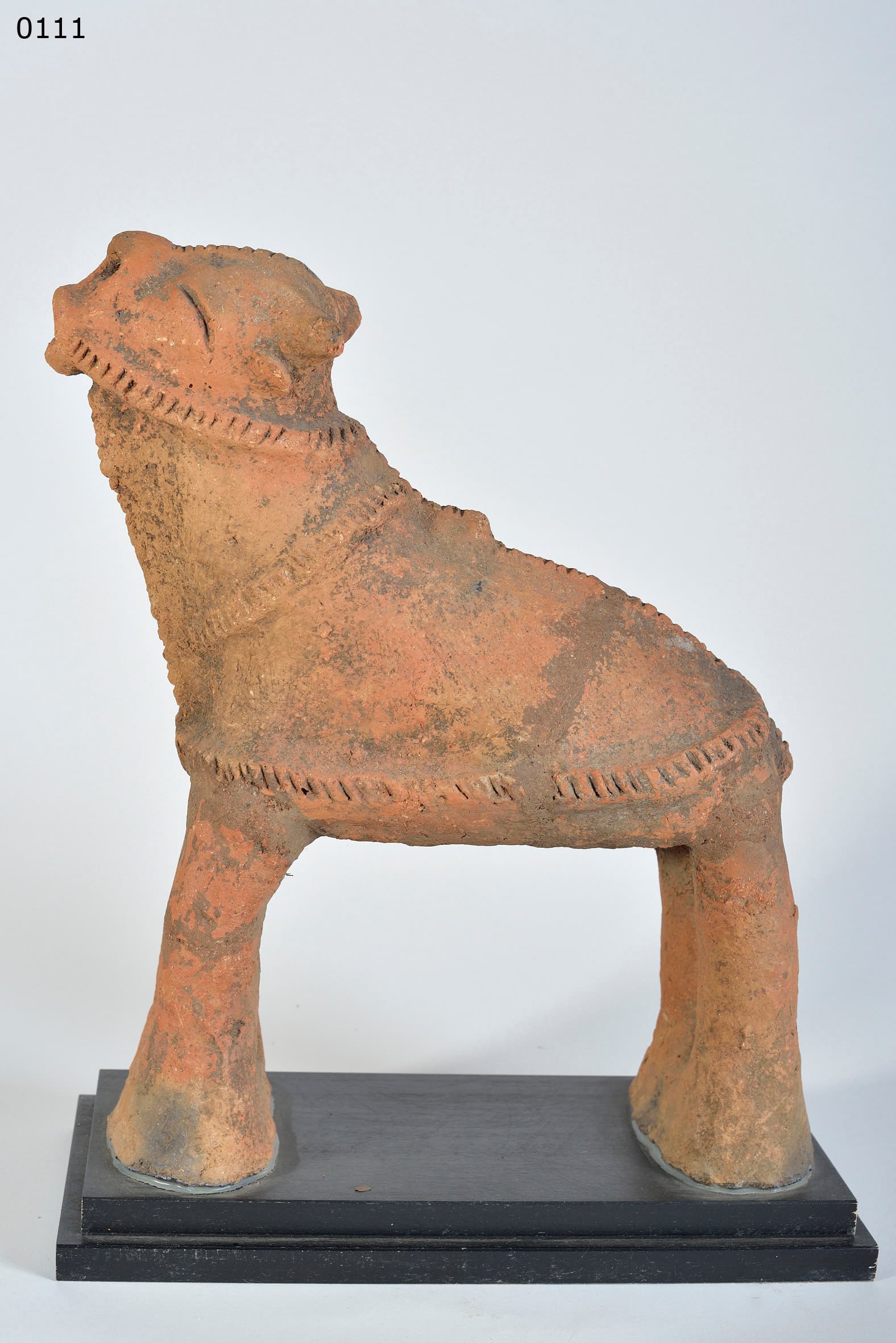
funerary zoomorphic figure
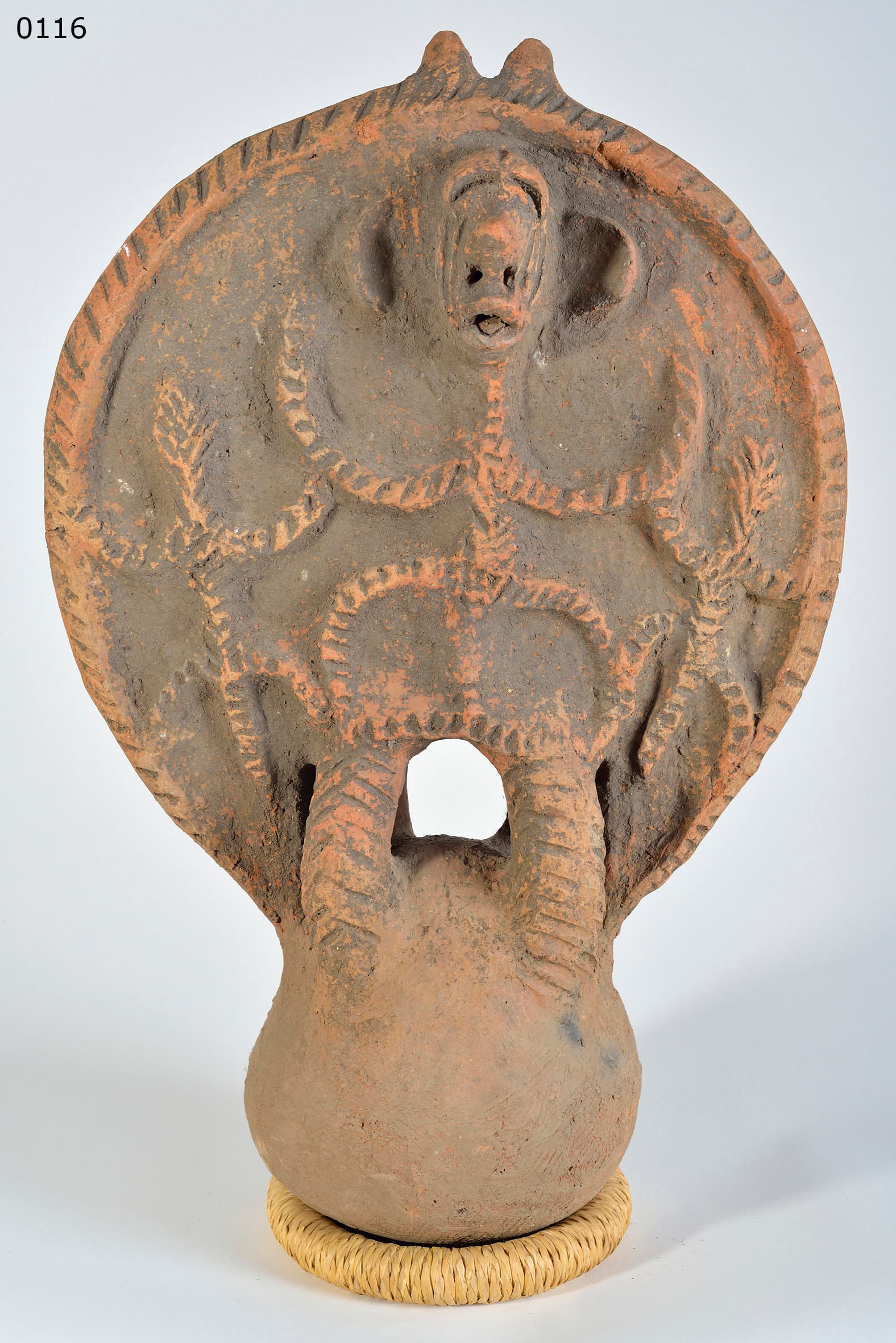
funerary figure