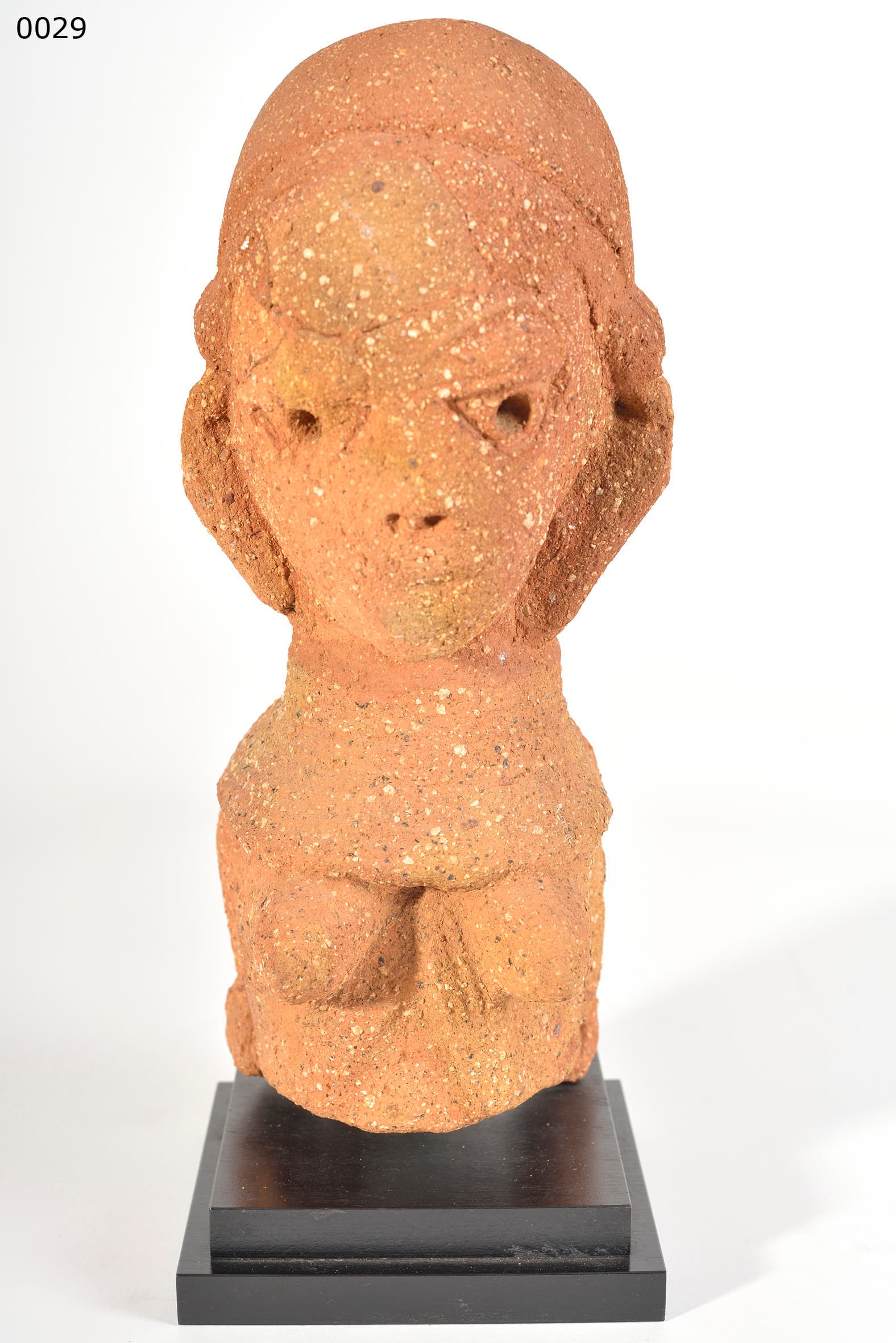
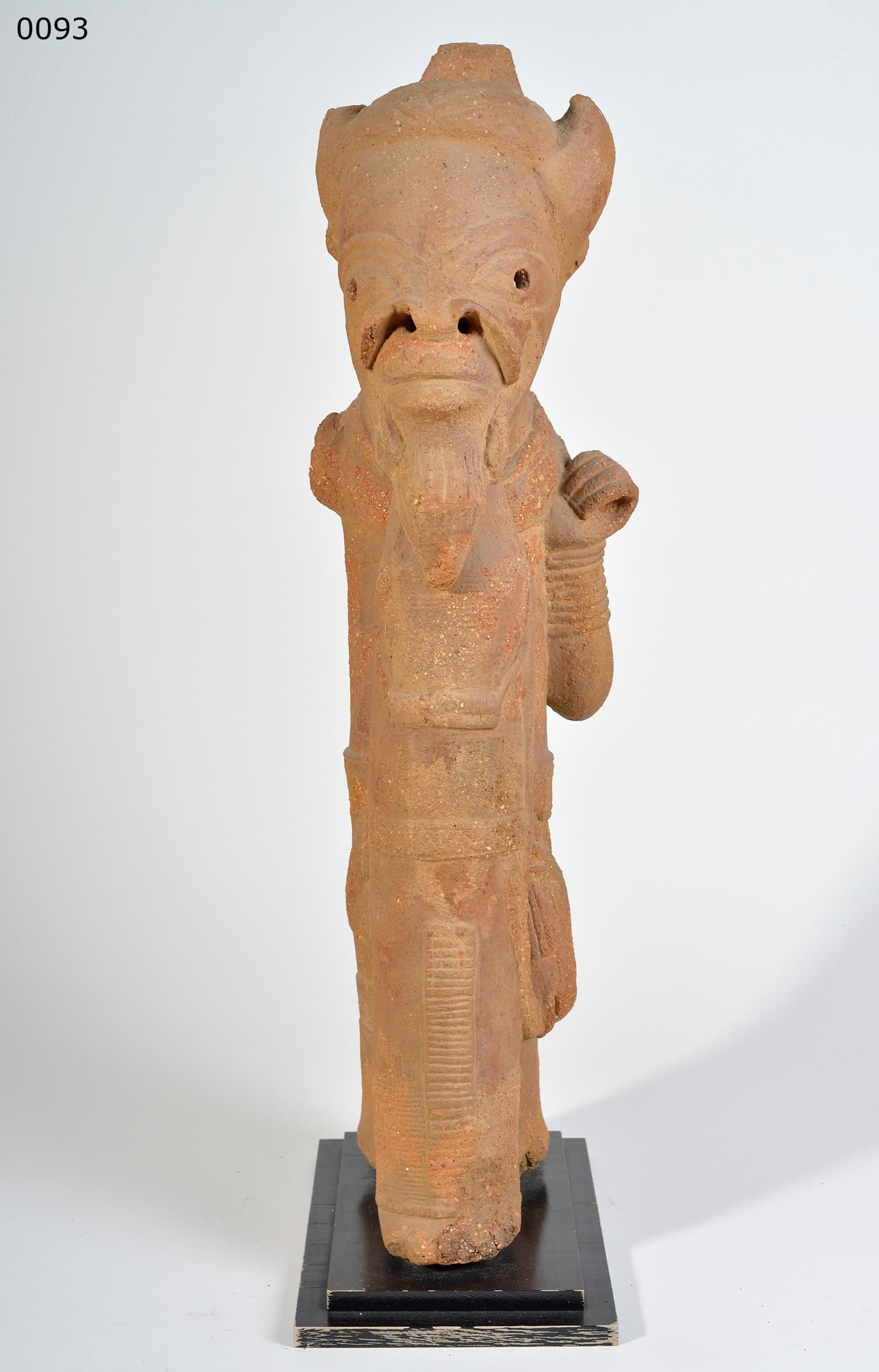
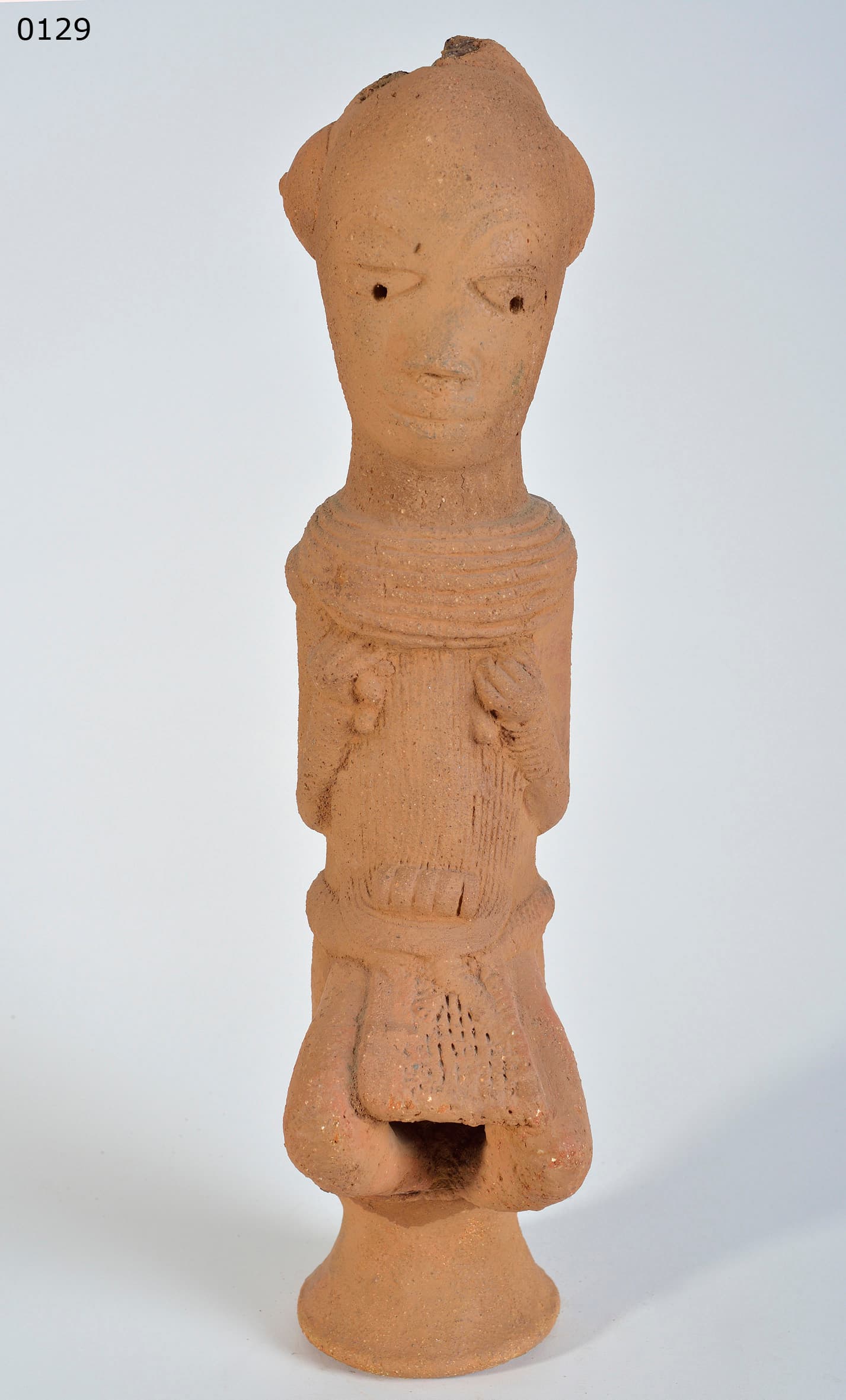
A detailed terracotta head and partial torso (estimated at approximately 2,000 years old, 40 cm) in the Nok style of Nigeria — featuring the classic Nok triangular pierced eyes, flared nostrils, and elaborate beaded jewelry around the neck, the fired clay coarse with broken edges and deep earth deposits inside the hollow core.
1. The classic Nok aesthetic
Dating from approximately 500 BCE to 200 CE, the Nok culture is the earliest known sculptural tradition in Sub-Saharan Africa.
- Pierced Triangular Eyes: The deeply pierced triangular eyes and open lips were technical solutions to prevent thick clay from exploding during firing — they became the defining stylistic signature of the culture.
- Elite Ornament: Intricate beaded necklaces and complex hairstyles suggest a highly sophisticated, deeply stratified Iron Age society rather than a subsistence-level culture.
2. Elite iron age portraiture
Nok figures of this scale and complexity are widely considered idealized portraits of royalty, high priests, or deities.
- Shrine and Grave Context: These are generally interpreted not as objects of daily use, but as sacred artifacts placed in foundational community shrines or the graves of the elite.
- Commanding Aura: The intense forward-looking gaze and elaborate ornamentation project an aura of authority, consistent with figures designed to command respect and devotion within the ancient community.
3. Pitting and sintering
The raw broken edges at the base of the torso suggest the figure was once part of a larger full-body sculpture — a common occurrence among Nok archaeological finds.
- Coarse Temper: The clay visibly contains the heavy quartz and mica inclusions added by Nok potters as temper.
- Sintered Soil: The deep fusion of soil into the pierced eyes, nostrils, and internal hollows is consistent with a prolonged burial in the Nigerian earth.
Summary
A classic example of Africa's oldest sculptural tradition, this Nok female figure reflects ancient prestige. Its pierced geometric eyes and profound geological sintering make it a significant addition to a collection of antiquities.
Written with AI assistance from the collection appraisal, object photography and our own research; editorially reviewed. Mistakes are possible — corrections are welcome. How we work →