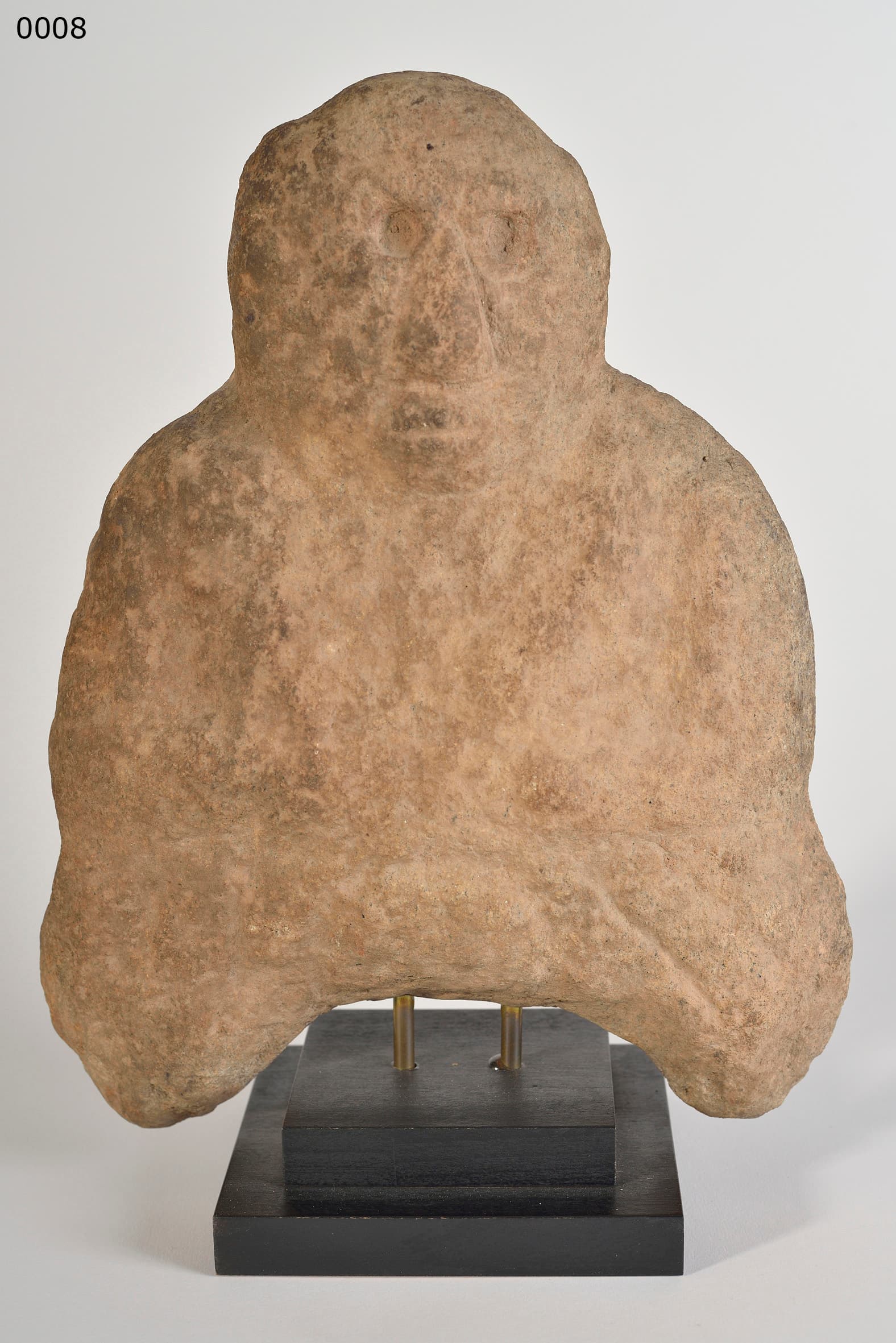
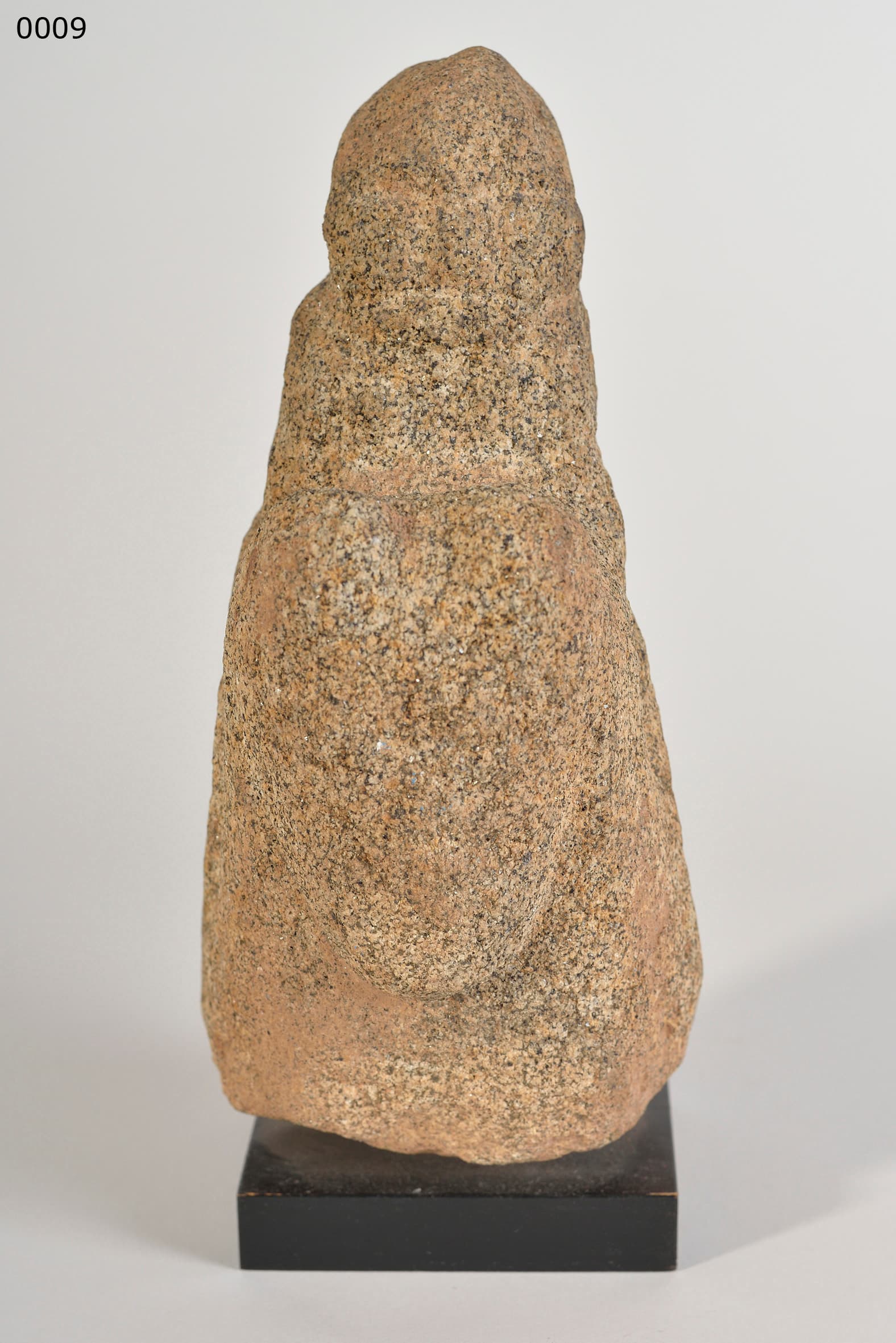
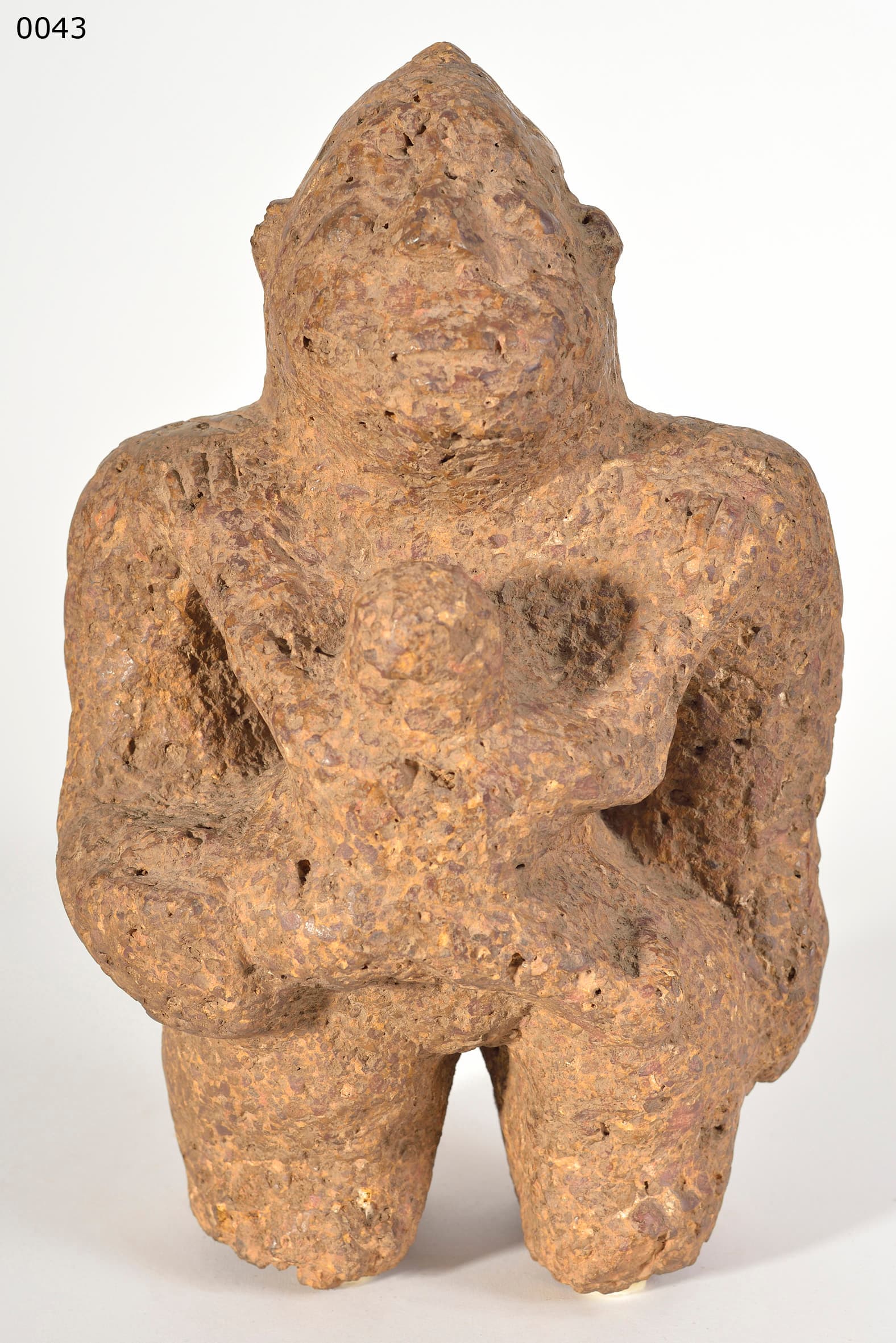
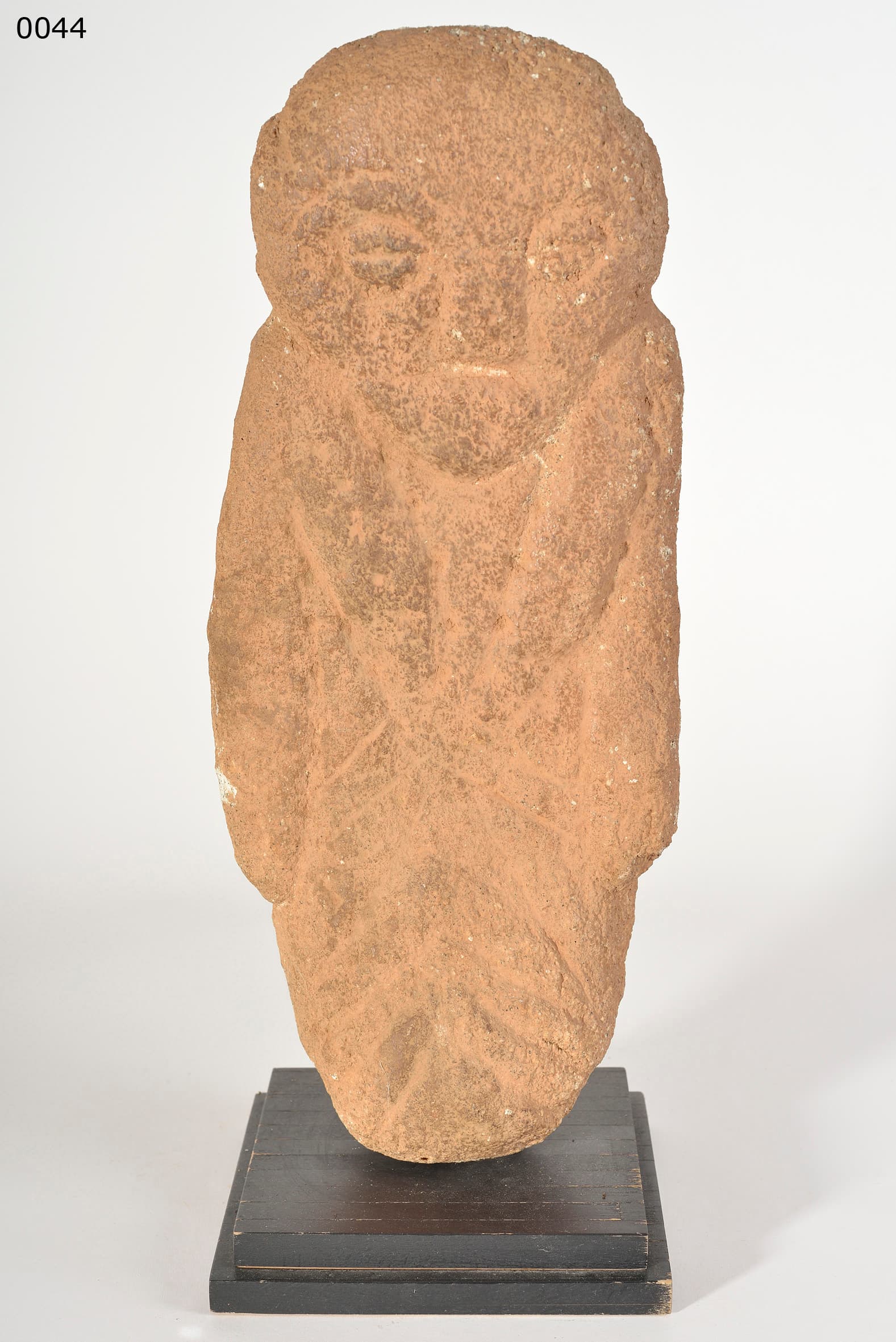
A towering Nyonyosi stone monolith (attributed to the 12th–16th C., 72 cm) from Burkina Faso — a heavily eroded stylized female form with relief-carved breasts and a prominent domed head, the laterite stone deeply pitted and coarse with a reddish-brown iron-oxide hue consistent with significant antiquity.
1. Voltaic lithic abstraction
The Nyonyosi are the ancient autochthonous (indigenous) inhabitants of Burkina Faso, predating the arrival of the Mossi empire.
- Kug-Tiise Tradition: Their stone-carving tradition is characterized by a stark, minimalist aesthetic.
- Volumetric Permanence: By stripping away delicate naturalism and relying on heavy masses — stylized breasts and domed head — the sculpture projects a sense of ancestral permanence against the Sahelian landscape.
2. Grave markers for elite women
While phallic or ungendered stone stelae are more common in West African antiquity, an explicitly female monolith is rare.
- High-Ranking Elder: This massive stone was planted vertically into the earth to mark the grave of a high-ranking female elder or a powerful earth priestess.
- Immortal Conduit: In ritual context, it anchored her soul to the community's geographic center — acting as a conduit for prayers, libations, and agricultural sacrifices.
3. Geological taphonomy and antiquity
The physical degradation is consistent with medieval (12th–16th century) origins.
- Dissolved Inclusions: Prolonged exposure to abrasive Sahelian winds and torrential seasonal rains has dissolved the softer mineral inclusions within the stone.
- Sponge-Like Texture: What remains is a deeply cratered sponge-like surface devoid of original carving marks — a geological signature consistent with significant antiquity.
Summary
Projecting grounded authority, this Nyonyosi female monolith is a rare survival of ancient Voltaic lithic art. Its profound geological erosion and explicit maternal iconography support its significance within the corpus of West African stone sculpture.
Written with AI assistance from the collection appraisal, object photography and our own research; editorially reviewed. Mistakes are possible — corrections are welcome. How we work →