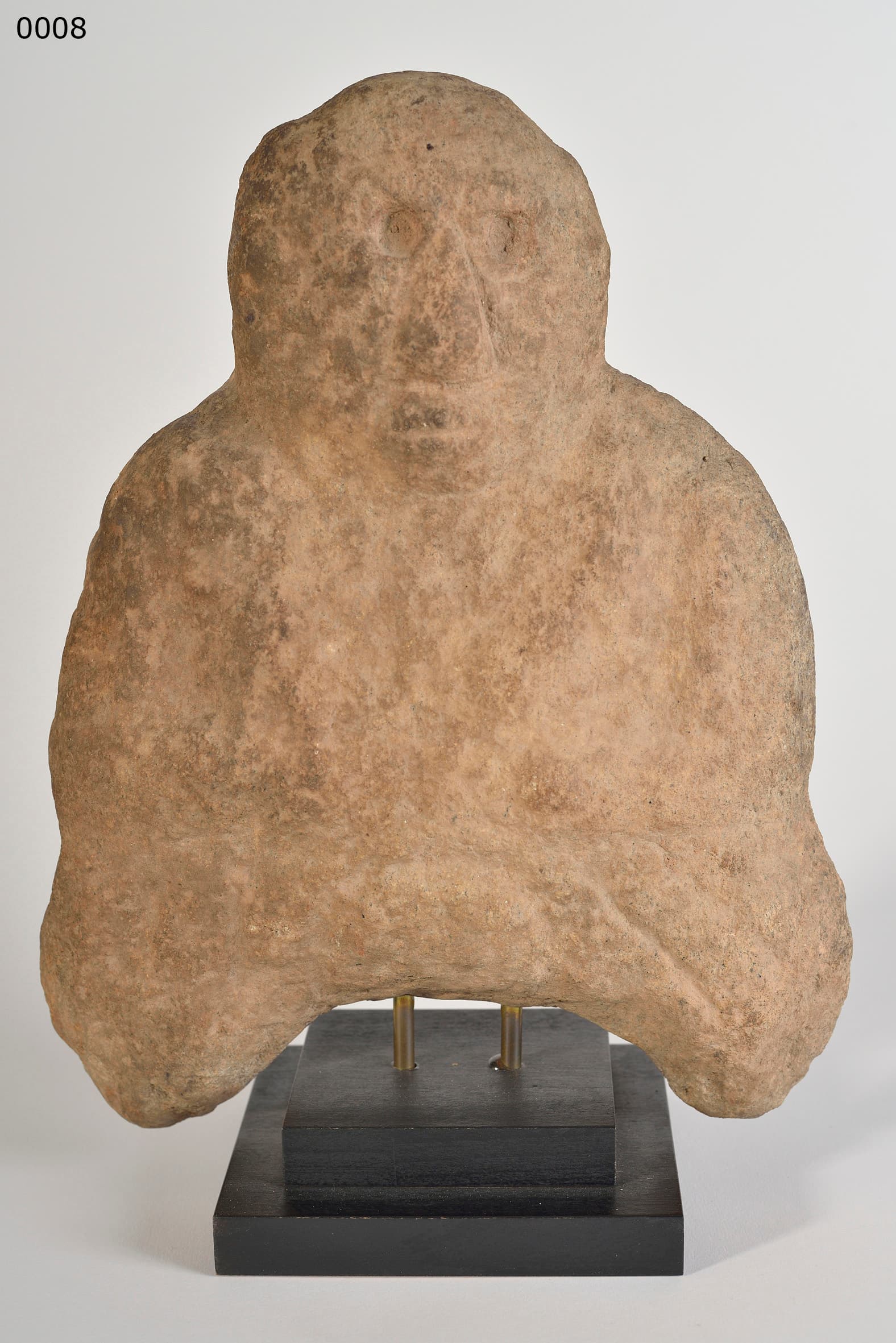
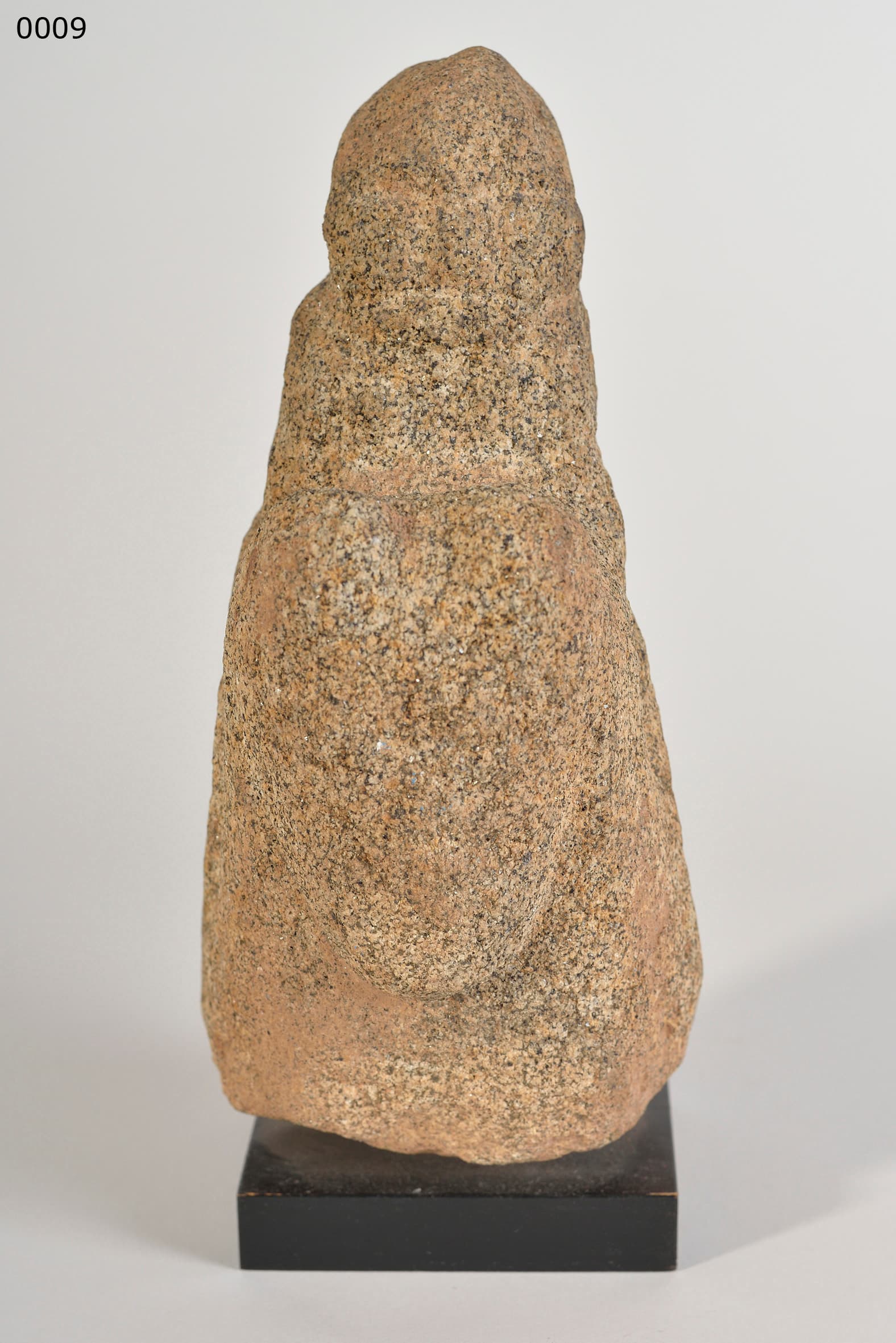
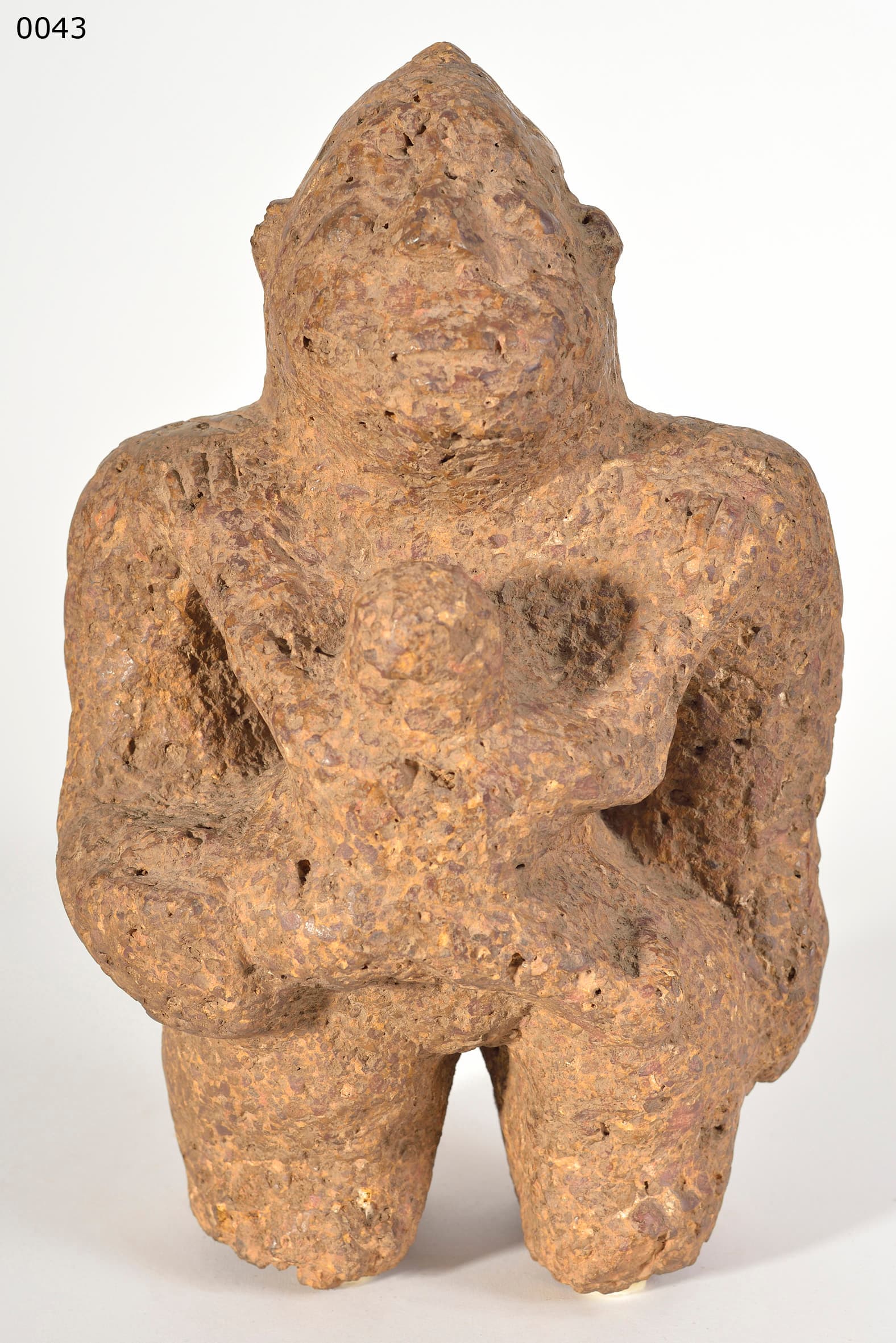
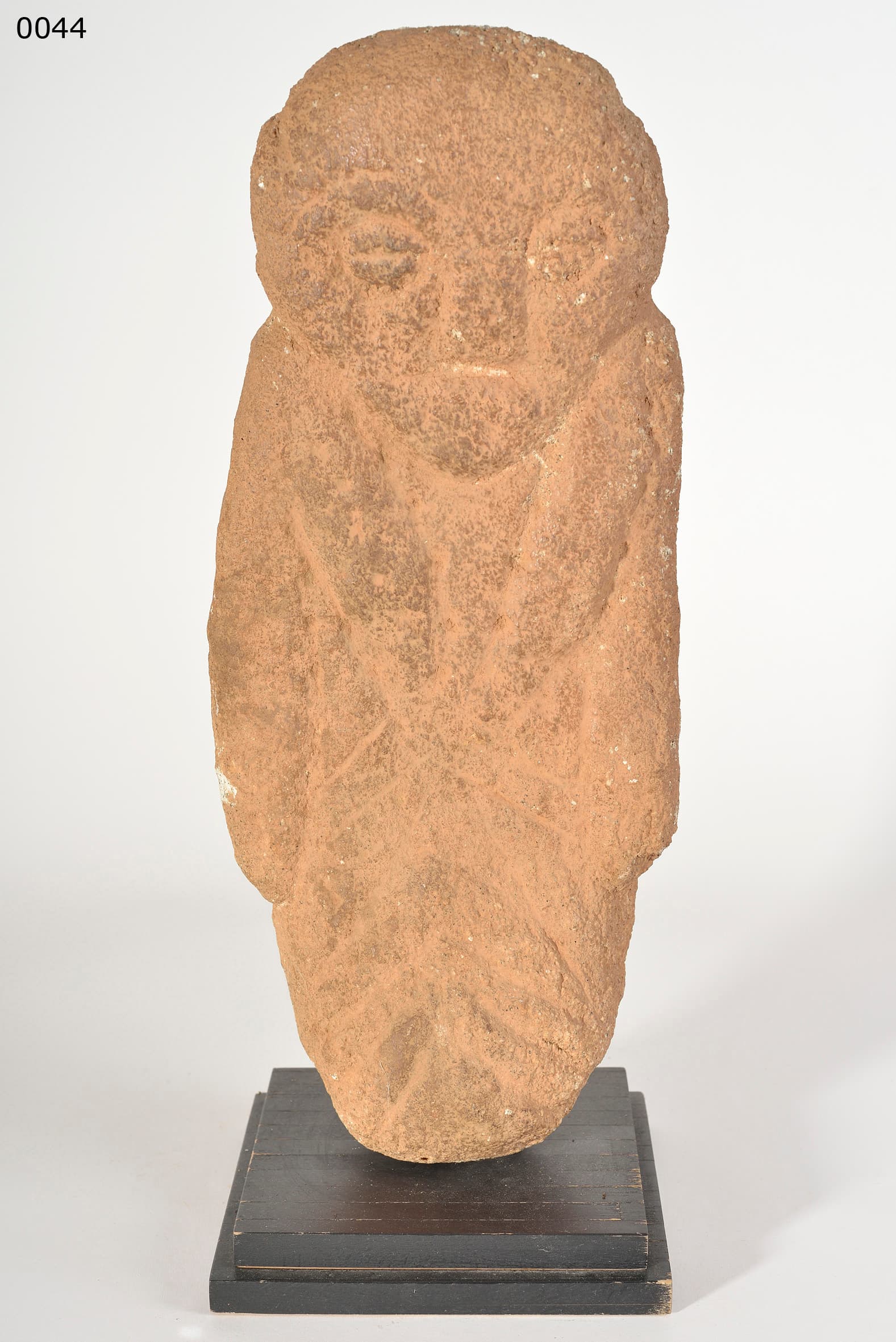
Ein hoch aufragender Nyonyosi-Steinmonolith (12.-16. Jh., 72 cm) aus Burkina Faso - eine stark erodierte, stilisierte Frauengestalt mit reliefierten Brüsten und einem markanten, gewölbten Kopf. Das Lateritgestein ist tief zerklüftet und grob mit einem rötlich-braunen Eisenoxid-Farbton, der auf ein hohes Alter verweist.
1. Voltaische Lithische Abstraktion
Die Nyonyosi sind die alten autochthonen (einheimischen) Bewohner von Burkina Faso, die vor der Ankunft des Mossi-Reiches lebten.
- Kug-Tiise-Tradition: Ihre Steinmetztradition ist durch einen ausgeprägten brutalistischen Minimalismus gekennzeichnet.
- Volumetrische Dauerhaftigkeit: Indem er auf naturalistische Details verzichtete und sich auf schwere Massen - stilisierte Brüste und gewölbte Köpfe - konzentrierte, schuf der Bildhauer ein Monument, das die Dauerhaftigkeit der Vorfahren in der rauen sahelischen Landschaft verkörpert.
2. Grabmäler für Elitefrauen
Während phallische oder ungeschlechtliche Steinstelen in der westafrikanischen Antike häufiger anzutreffen sind, ist ein explizit weiblicher Monolith eine Seltenheit.
- Hochrangige Älteste: Dieser massive Stein wurde vermutlich senkrecht in die Erde gesetzt, um das Grab einer hochrangigen weiblichen Ältesten oder einer Erdpriesterin zu markieren.
- Traditionelle Verbindung: Er sollte ihre Seele im geografischen Zentrum der Gemeinschaft verankern und diente traditionell als Mittler für Gebete, Trankopfer und landwirtschaftliche Opfer.
3. Geologische Taphonomie und Altertum
Der physische Abbau spricht für mittelalterliche (12. bis 16. Jahrhundert) Ursprünge.
- Aufgelöste Einschlüsse: Über Jahrhunderte hinweg haben die Winde der Sahelzone und saisonale Regenfälle die weicheren mineralischen Einschlüsse im Stein weitgehend aufgelöst.
- Schwammartige Textur: Was bleibt, ist eine tief zerkraterte, schwammartige Oberfläche ohne ursprüngliche Schnitzspuren - eine geologische Signatur, die auf ein hohes Alter hinweist.
Zusammenfassung
Dieser weibliche Monolith von Nyonyosi ist ein seltenes Zeugnis alter voltaischer Steinmetzkunst. Seine tiefgreifende geologische Erosion und seine explizite mütterliche Ikonographie unterstreichen seine Bedeutung als archäologisches Objekt.
KI-unterstützt erstellt aus Sammlungsgutachten, Objektfotografie und eigener Recherche, redaktionell geprüft. Fehler sind möglich — Hinweise darauf sind uns willkommen. Zum Verfahren →