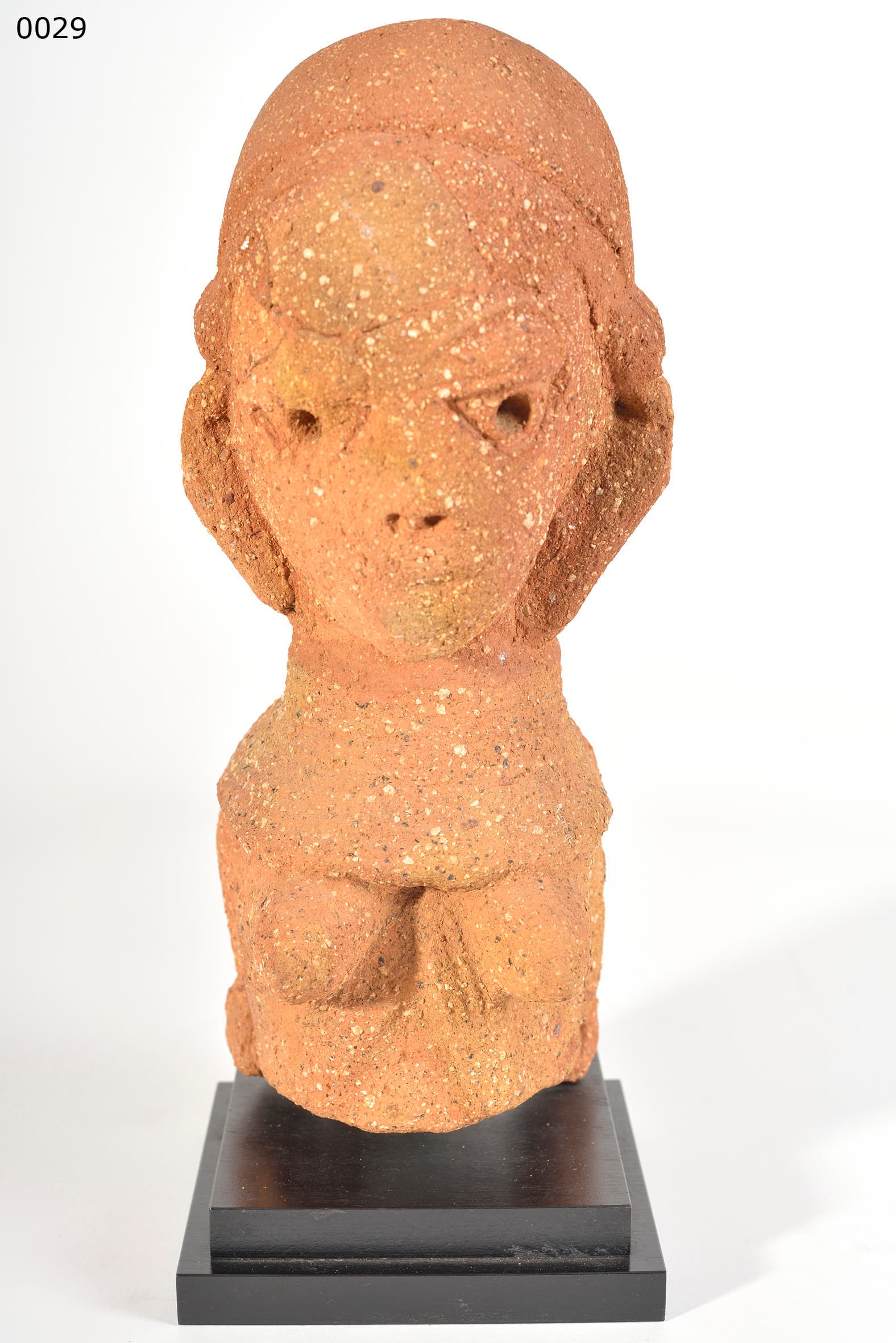
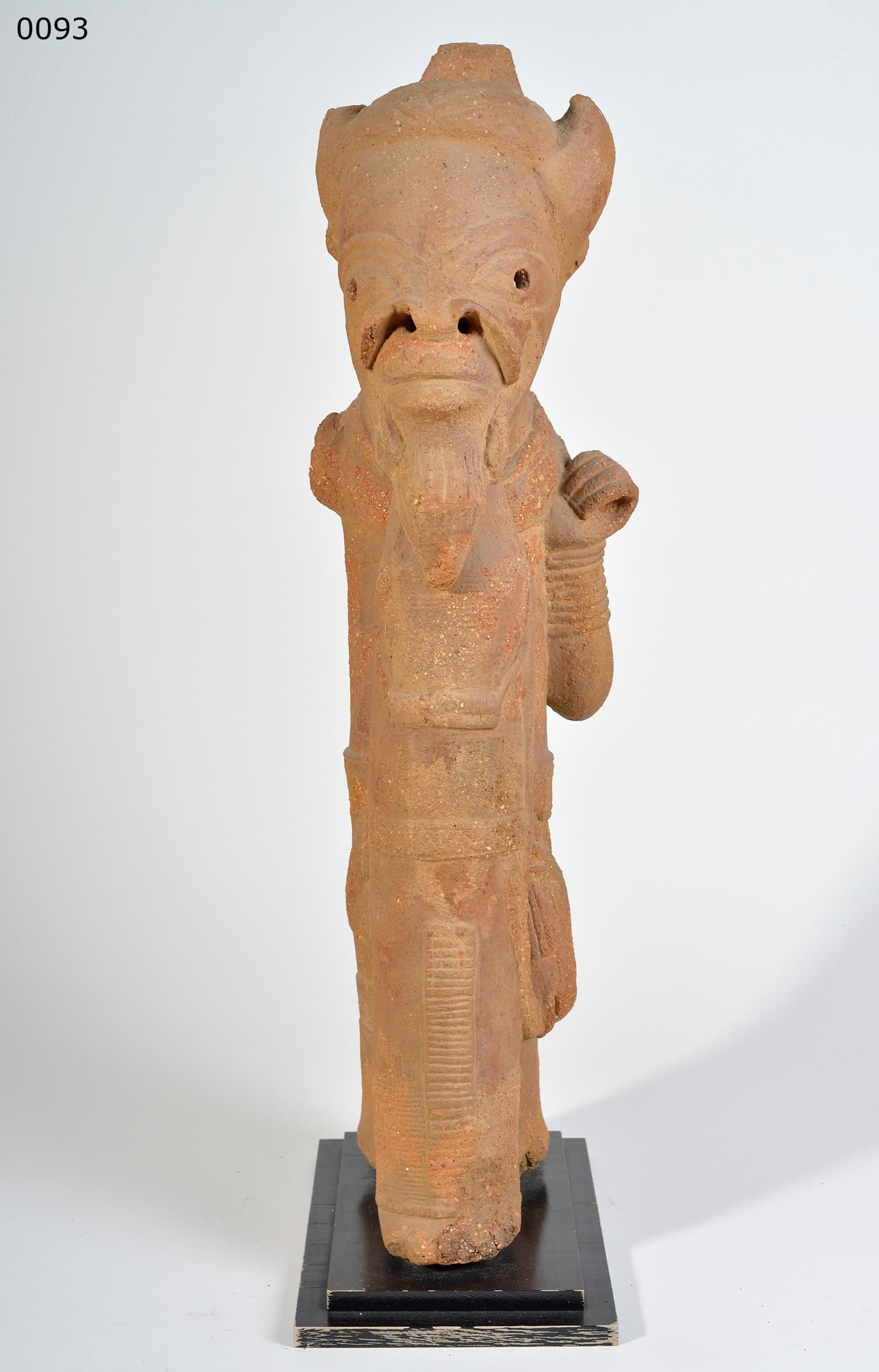
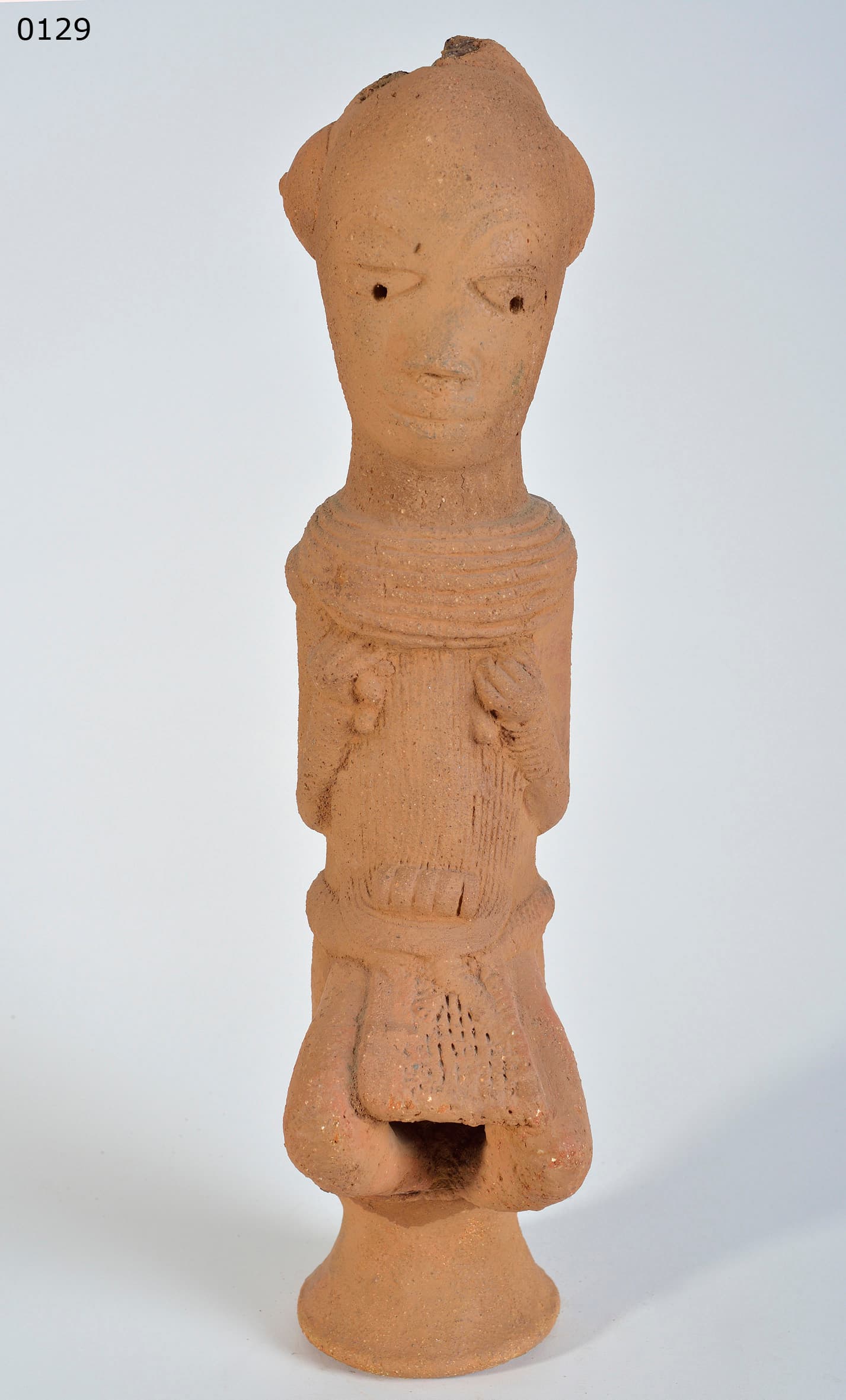
A classic Nok terracotta head (attributed to circa 2000 years ago, 20 cm) from Nigeria — featuring characteristic pierced triangular eyes, flared nostrils, and a highly textured ridged coiffure, the fired clay remarkably coarse and exhibiting deep sandy pitting and a dense fusion of reddish soil.
1. Early iron age art
Dating roughly 500 BCE to 200 CE, the Nok culture represents one of the earliest known highly developed sculptural traditions in Sub-Saharan Africa.
- Characteristic Pierced Eyes: The deeply pierced triangular eyes and open lips were technical solutions to prevent the thick clay from exploding during firing — a technique that became a defining stylistic signature of the tradition.
- Stratified Society: The intricate coiffure detailing is often interpreted as reflecting a sophisticated, stratified ancient society.
2. Elite portraiture and shrine deposition
Nok figures of this complexity are widely considered to represent idealized portraits of royalty, high priests, or founding deities.
- Sacred Placement: They are traditionally associated with placement in community shrines or graves.
- Divine Authority: The intense forward-looking gaze and meticulous ornamentation suggest an aura of authority, likely commanding respect and devotion within the ancient society.
3. Sintering and abrasion
The physical condition shows wear consistent with long-term burial.
- Quartz and Mica Temper: The clay is extremely coarse, visibly containing heavy quartz and mica inclusions added by Nok potters as temper.
- Geological Sintering: The deep fusion of soil into the pierced eyes, nostrils, and internal hollows is difficult to replicate synthetically — this profound geological integration supports an attribution to Iron Age origins.
Summary
A classic example of the Nok sculptural tradition, this head conveys a sense of ancient authority. Its pierced geometric eyes and profound geological sintering make it a significant addition to a collection of antiquities.
Written with AI assistance from the collection appraisal, object photography and our own research; editorially reviewed. Mistakes are possible — corrections are welcome. How we work →