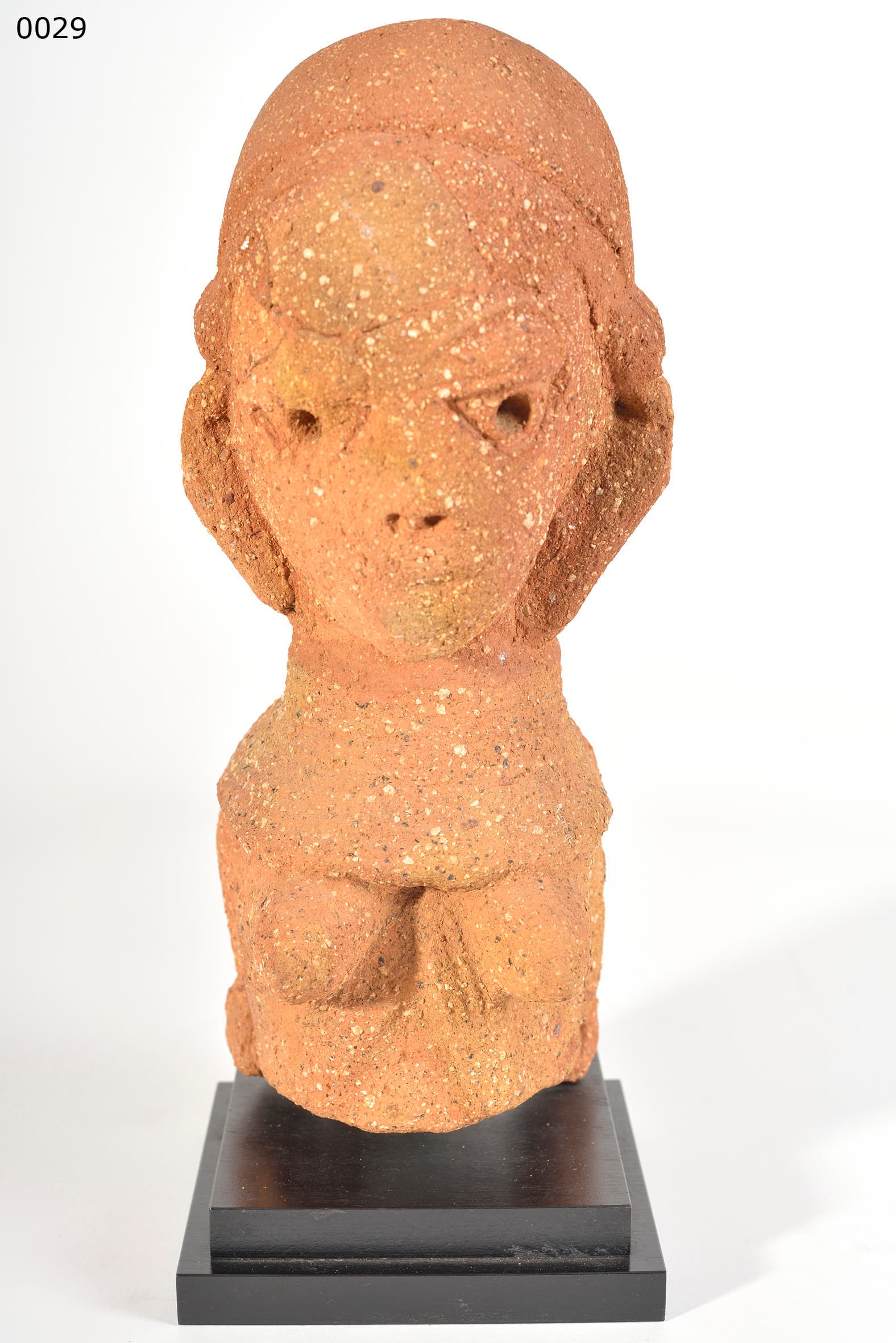
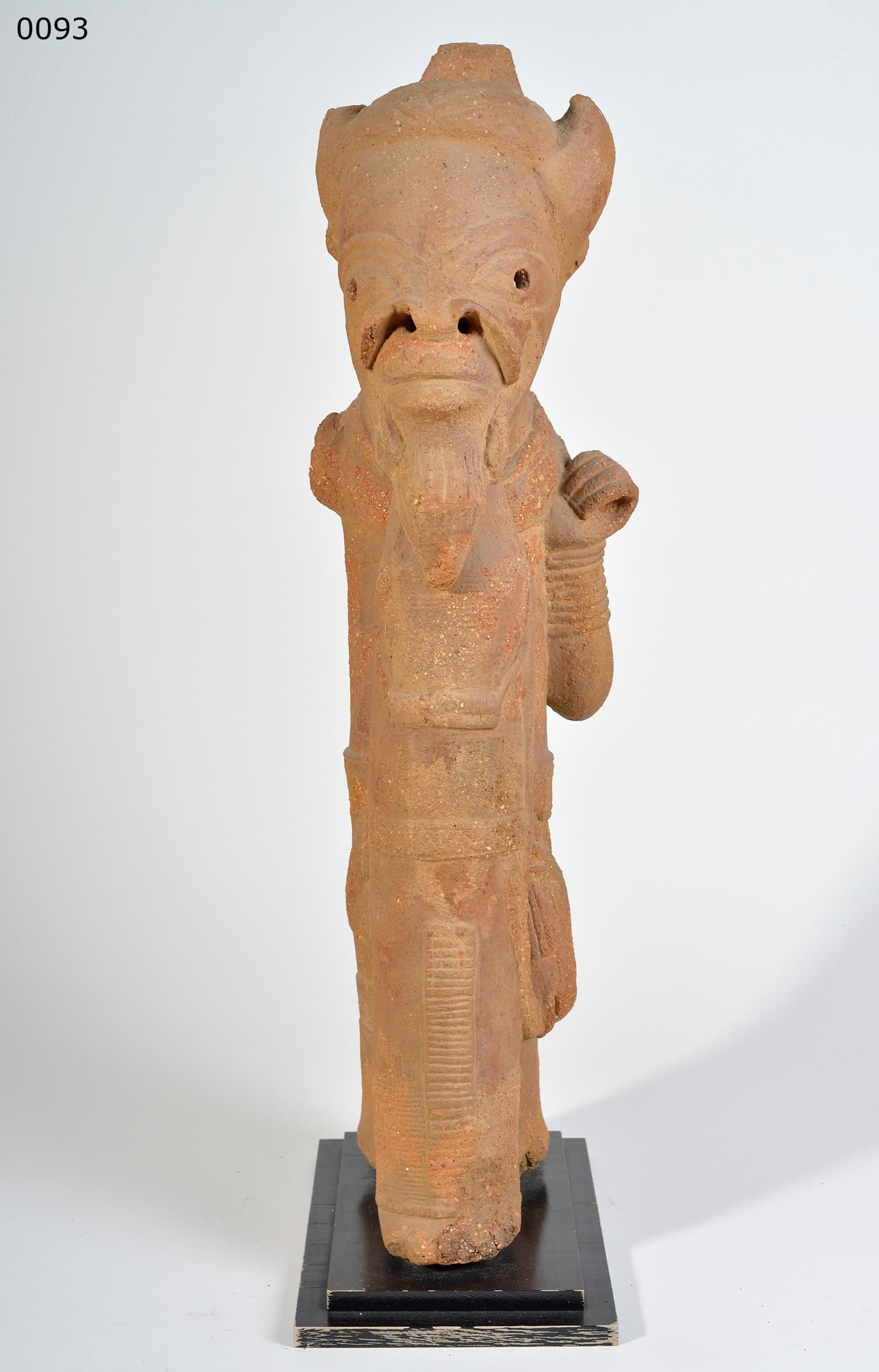
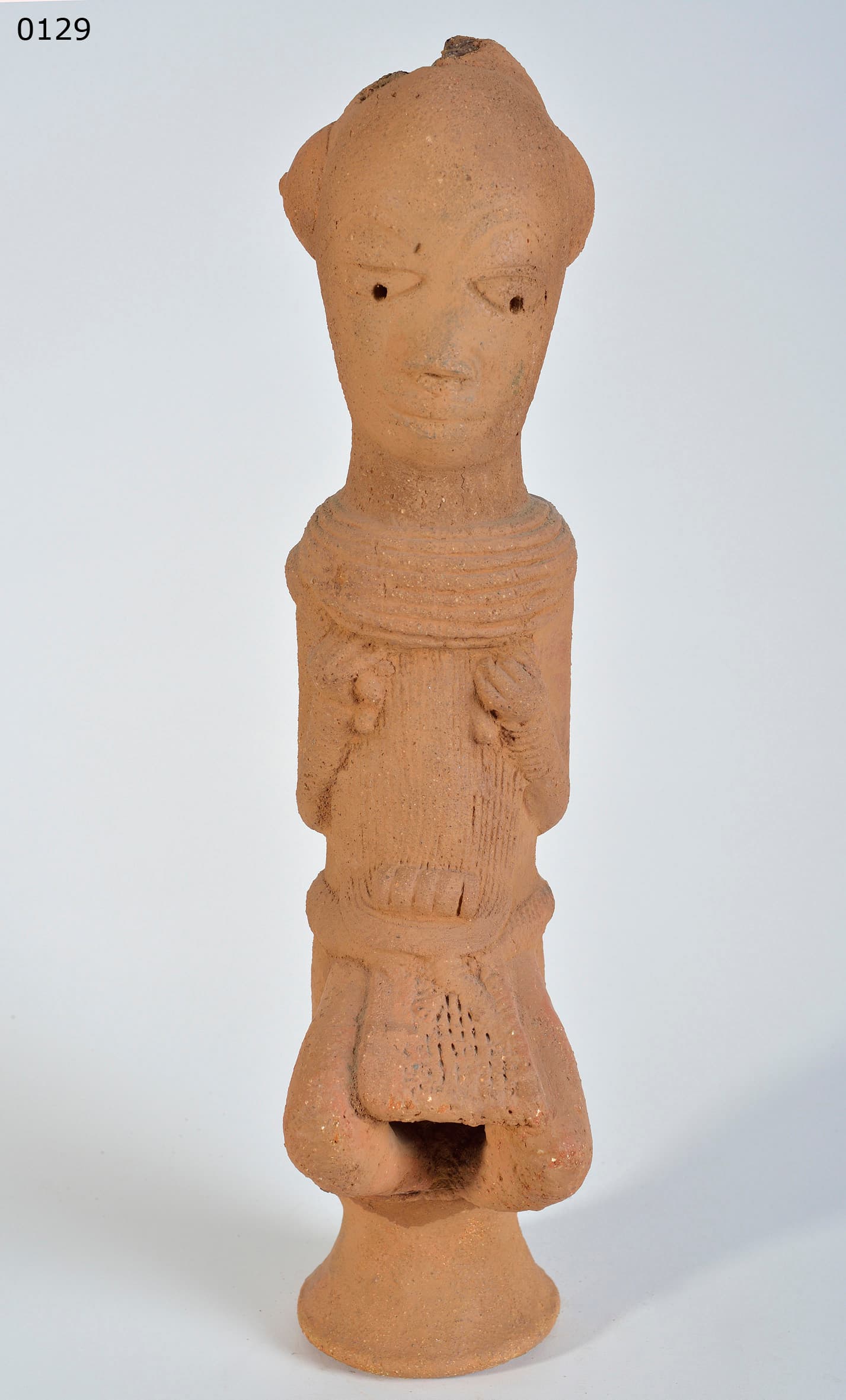
A classical Nok terracotta head (~2000 years old, 21 cm) from Nigeria — hallmark triangular pierced eyes, flared nostrils, and a swept coiffure adorned with intricate carved bun details, retaining a thick sandy-orange slip with considerable calcification and pale soil marks consistent with an ancient burial context.
1. Iron age mastery in sub-saharan Africa
Representing an early tradition of Sub-Saharan sculpture, the Nok culture (1500 BC to 500 AD) achieved a level of ceramic mastery comparable to classical antiquity in Europe.
- Geometric Abstraction: Sharply defined pierced triangular eyes and meticulously detailed hair elements exemplify the Nok aesthetic.
- Coil and Grog Technique: Artists used advanced coil-building with a high proportion of grog (crushed baked clay) to prevent massive thick-walled figures from cracking during firing.
2. The ritual mechanics of ancient shrines
Archaeological evidence suggests that large Nok figures were used in complex agricultural or funerary shrine rituals.
- Intentional Fragmentation: Because most Nok pieces are found fragmented, many scholars theorize they were intentionally broken during ceremonies — releasing spiritual energy contained within the clay.
- Life-Sized Petition: This head likely sat atop a complete life-sized or near-life-sized body, serving as a deity or revered ancestor petitioned for rain, fertility, or protection from disease.
3. Authentic accretions and geological markers
The patina shows wear consistent with long-term entombment.
- Calcified Adherence: Deep calcified soil adherence, micro-fissures in the slip, and faint root etchings are characteristic of ancient Nok ceramics.
- Katsina-Ala Laterite: The distinct color and texture of the embedded laterite soil are compatible with the geological profile of the Katsina-Ala and Jos Plateau regions of Nigeria.
Summary
Embodying the structural traditions of West African sculptural art, this Nok head is a significant example of ancient Nigerian artistic heritage. Its refined stylistic execution and characteristic patina are consistent with an authentic antiquity of this tradition.
Written with AI assistance from the collection appraisal, object photography and our own research; editorially reviewed. Mistakes are possible — corrections are welcome. How we work →