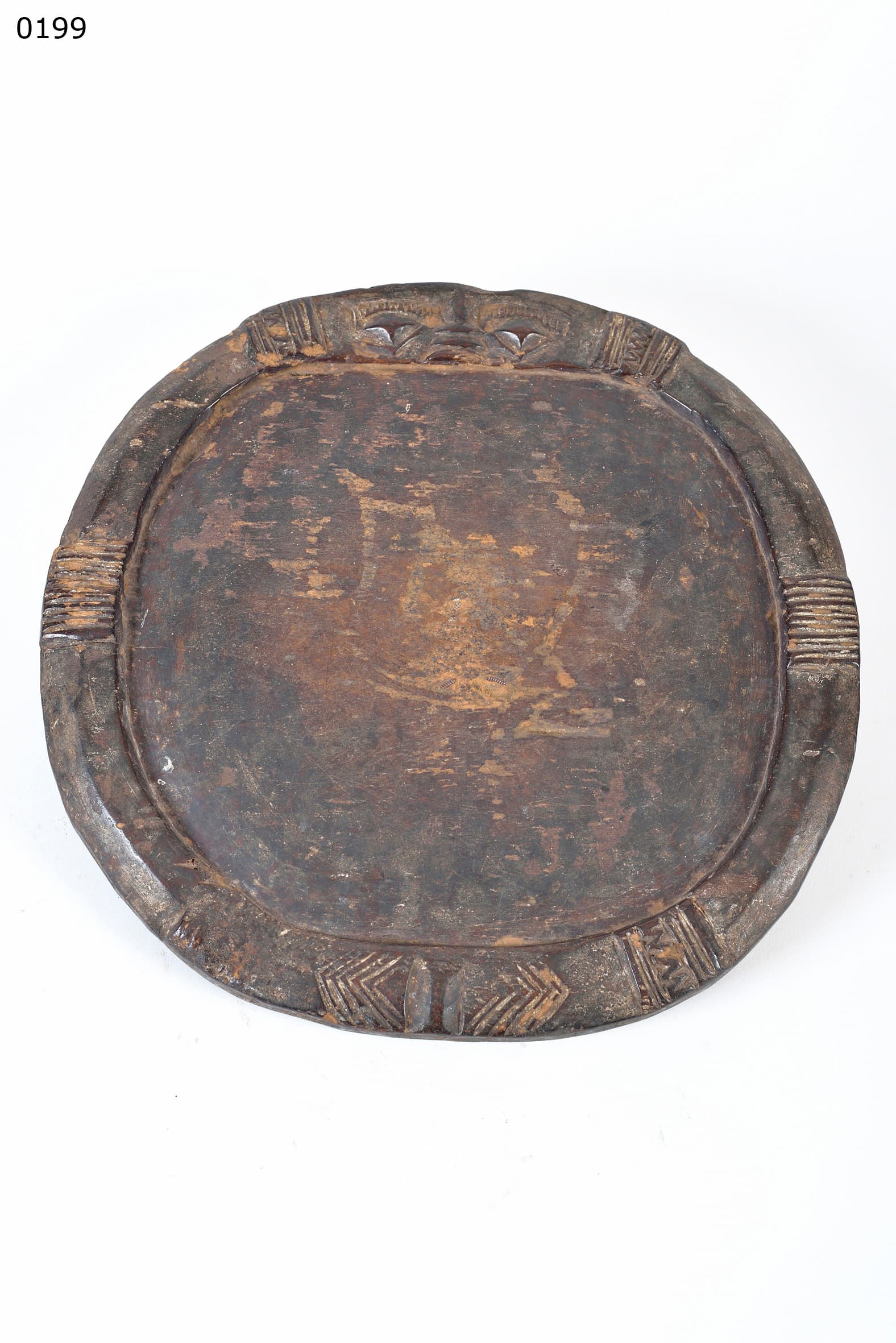
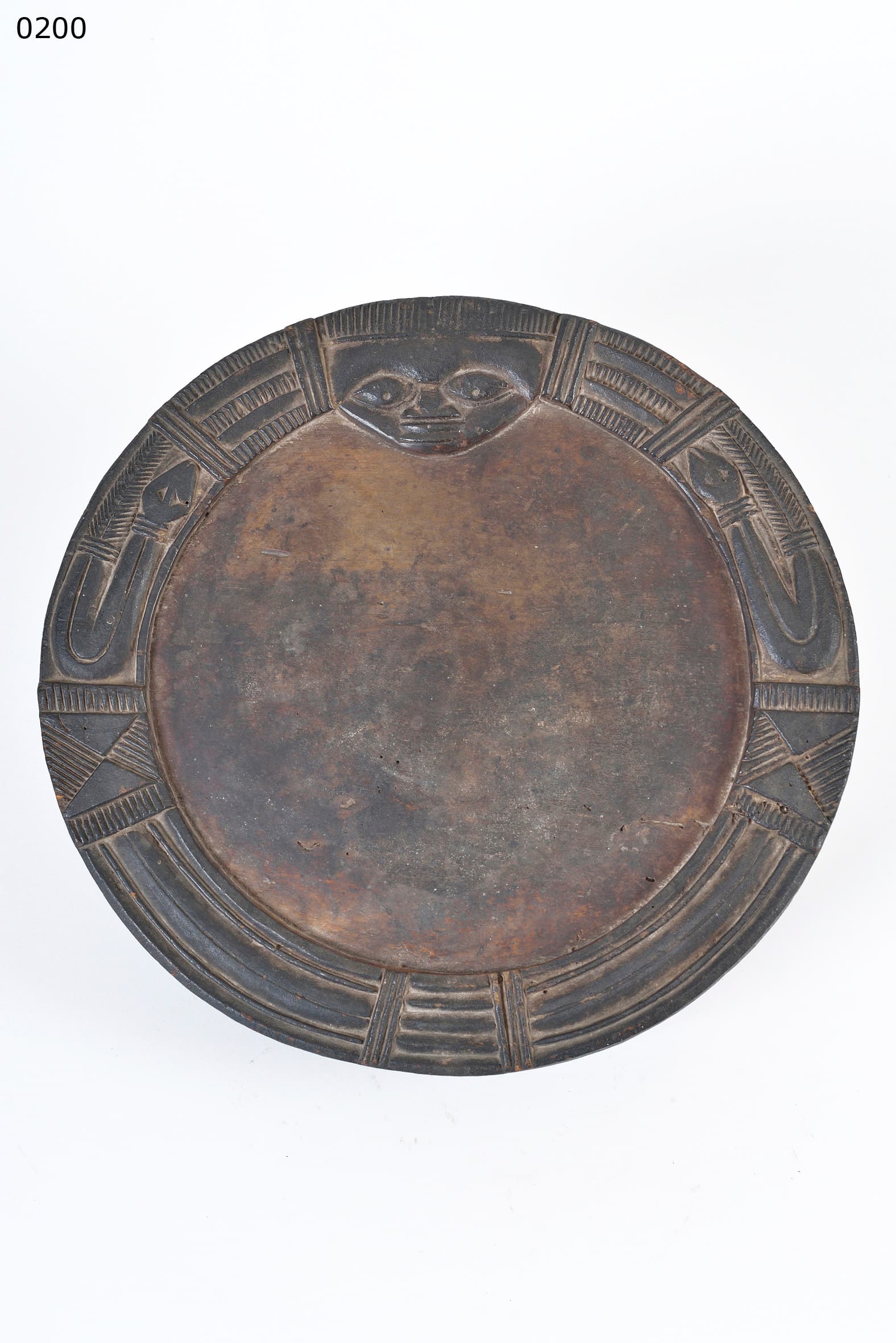
A towering multi-tiered Yoruba staff (1st half 20th C., 136 cm) from Nigeria — a central iron shaft interspersed with vertically stacked carved wooden anthropomorphic figures, topped with a prominent wrought-iron avian finial, bearing a rich complex patina combining deeply oxidized iron with soot-darkened organically encrusted wood.
1. Multimedia mastery and vertical hierarchy
This staff is a striking fusion of blacksmithing and woodcarving — merging the sacred domain of Ogun (orisha of iron and war) with complex figural wood art.
- Hierarchical Ascent: Vertical stacking of the wooden figures creates a deliberate hierarchy of spiritual power — drawing the eye upward from the terrestrial base past human supplicants to the commanding iron avian finial that pierces the spiritual realm.
- Classic Yoruba Faces: The figures are carved in the classic Yoruba style — large almond-shaped eyes and poised dignified expressions.
2. Opa osanyin and the herbalist's command
This monumental object operates within the context of the Opa Osanyin (the staff of the god of herbal medicine) or the Osun Babalawo (the diviner's staff).
- Iron Bird Apex: The iron bird at the apex represents the Babalawo's mystical control over "our mothers" (aje or witches), who often transform into nocturnal birds.
- Tutelary Wooden Supplicants: The carved wooden figures represent tutelary spirits, assisting ancestors, or grateful clients. When planted firmly in the ground at a shrine, the staff acts as a magical lightning rod — establishing a zone of protection and medicinal authority.
3. Complex composite patination
The first-half-20th-century dating is consistent with the differential aging of the composite materials.
- Stable Iron Rust: The iron elements exhibit a deep stable dark rust scale compatible with development over many decades.
- Resinous Wood Crust: The wooden figures have absorbed applications of palm oil, shrine smoke, and sacrificial libations — producing a dark resinous slightly sticky crust. Physical smoothing on the faces shows wear consistent with generations of hands-on handling.
Summary
A towering monument of Yoruba ceremonial art, this power staff unites iron forging and wood sculpture into a cohesive expression. Its commanding scale, complex iconography, and composite patina mark it as a significant artifact of the diviner's art.
Written with AI assistance from the collection appraisal, object photography and our own research; editorially reviewed. Mistakes are possible — corrections are welcome. How we work →